Grading of Piles: Understanding Hemorrhoid Stages
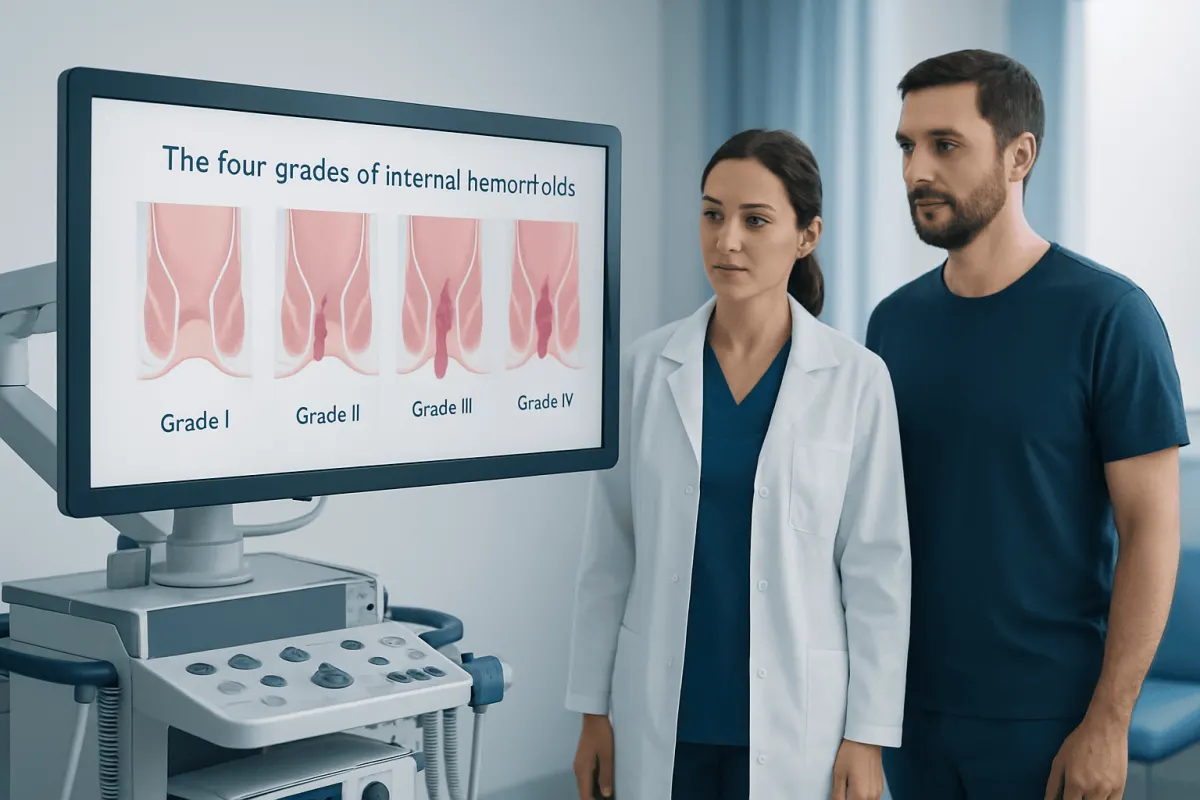
Grading of piles describes how far internal hemorrhoids have enlarged and whether they prolapse, or move outside the anus. The four-grade system helps clinicians discuss symptoms and choose care, but the grade alone does not determine whether treatment is needed.
Overview: what does grading of piles mean?
Grading of piles is a clinical system used to describe internal hemorrhoids according to whether they protrude from the anus (prolapse) during a bowel movement and whether they return inside on their own. Internal hemorrhoids develop in the lower rectum, above the area that is highly sensitive to pain. They are common and may cause bright-red rectal bleeding, mucus, itching, or a sensation of fullness.
The most widely used classification has four grades. It is useful because prolapse can influence which treatment options are considered. However, grading is only one part of assessment: the severity of bleeding, discomfort, anemia, bowel habits, other medical conditions, and a person’s preferences are also important.
External hemorrhoids arise under the skin around the anus and are not included in the grade 1-to-4 system. A painful external lump may represent a thrombosed external hemorrhoid, which has a blood clot inside it. Anal fissures, skin tags, infections, Ulcerative Colitis, and Flares" class="ahp-ilk">inflammatory bowel disease, polyps, and colorectal cancer can also cause rectal symptoms, so self-diagnosis is not always reliable.
The four grades of internal hemorrhoids
Grade 1: The hemorrhoids are enlarged but remain inside the anal canal. They do not prolapse outside the anus. Bleeding with bowel movements may be the main symptom, often seen as a small amount of bright-red blood on toilet paper or in the toilet bowl. Some people have no symptoms.
Grade 2: The hemorrhoids prolapse during straining or a bowel movement but return inside spontaneously afterward. A person may notice a temporary soft bulge, mucus, irritation, or a feeling that bowel emptying is incomplete. Symptoms can vary from one episode to another.
Grade 3: The hemorrhoids prolapse with a bowel movement or physical strain and do not return inside without manual help. They can often be gently pushed back into the anus. Grade 3 hemorrhoids may cause more persistent irritation, bleeding, discharge, or difficulty keeping the area clean.
Grade 4: The hemorrhoids remain prolapsed outside the anus and cannot be pushed back in. They may be associated with considerable swelling, mucus leakage, skin irritation, or discomfort. Although grade 4 prolapse warrants medical assessment, urgent care is particularly important if there is severe pain, heavy bleeding, fever, or a rapidly worsening swollen lump.
Symptoms and what the grade does—and does not—show

Internal hemorrhoids may bleed without causing much pain because of their location. The blood is typically bright red and may occur with a bowel movement. Other possible symptoms include anal itching, dampness, mucus, prolapse, mild discomfort, or a feeling of pressure. Symptoms do not always match the grade: a small grade 1 hemorrhoid can bleed frequently, while a higher-grade hemorrhoid may cause little bleeding.
Pain is more often linked to an external hemorrhoid, a clot in an external hemorrhoid, an anal fissure, or another anorectal condition. A prolapsed internal hemorrhoid can become swollen, irritated, or rarely have its blood supply compromised, which may also be painful. It is therefore important not to assume that all anal pain is caused by piles.
Grade can also change over time. Constipation, repeated straining, prolonged time on the toilet, and pregnancy may worsen prolapse temporarily. After bowel habits improve or swelling settles, a person’s symptoms may lessen. A clinician grades hemorrhoids during an examination rather than relying only on a description of symptoms.
Why piles develop: causes and risk factors
Hemorrhoidal tissue is a normal part of the anal canal that contributes to continence. Piles develop when the supporting tissues weaken and the blood vessels become enlarged or descend. Increased pressure during bowel movements is a common contributing factor, especially with constipation, hard stools, or repeated straining.
Factors associated with hemorrhoids include a low-fiber diet, inadequate fluid intake, sitting on the toilet for long periods, chronic diarrhea, pregnancy, aging, obesity, and frequent heavy lifting. Some people are more susceptible because of inherited tissue characteristics. Hemorrhoids can occur in adults of any sex and are especially common during pregnancy and after childbirth.
Improving bowel regularity can reduce strain and help prevent symptoms from recurring. Still, it is important to remember that rectal bleeding should not automatically be attributed to hemorrhoids. A clinician may recommend additional assessment depending on age, personal and family history, associated symptoms, and examination findings.
How clinicians diagnose and grade piles
Diagnosis begins with a discussion of symptoms, including the appearance and pattern of bleeding, changes in bowel habits, pain, itching, weight loss, medication use, and family history of colorectal conditions. The clinician may inspect the area around the anus and perform a digital rectal examination. These examinations are brief and are performed respectfully, with privacy and comfort in mind.
Anoscopy, a short examination using a small illuminated instrument, can help identify internal hemorrhoids and determine their grade. It can also help distinguish hemorrhoids from other causes of anal or rectal symptoms. A clinician may ask the person to bear down during the examination to assess whether prolapse occurs.
Further tests are not necessary for every person with suspected piles. However, colonoscopy or another bowel investigation may be advised when bleeding is unexplained, persistent, recurrent, accompanied by warning signs, or when routine colorectal cancer screening is due. This approach helps ensure that significant conditions are not missed.
Treatment options by grade and symptom burden
For many people, first-line care focuses on making stools softer and easier to pass. This can include gradually increasing dietary fiber through vegetables, fruit, legumes, and whole grains; drinking adequate fluids; remaining physically active; and responding to the urge to have a bowel movement. Fiber supplements or stool-softening treatments may be suggested by a clinician or pharmacist when appropriate.
Simple habits can also make a difference. Avoid straining, avoid sitting on the toilet for extended periods, and use gentle cleaning rather than vigorous wiping. Brief warm baths may relieve discomfort for some people. Over-the-counter creams or suppositories can provide short-term symptom relief in selected cases, but they should not replace medical advice when bleeding, pain, or prolapse persists.
If symptoms continue despite conservative care, office-based procedures may be considered, particularly for many grade 1, 2, and selected grade 3 internal hemorrhoids. These may include rubber band ligation, injection therapy, or infrared coagulation. The most suitable option depends on the hemorrhoid grade, the main symptom, and the person’s overall health.
Surgery may be considered for grade 3 or grade 4 hemorrhoids, recurrent prolapse, large external components, or symptoms not controlled with less invasive treatments. Procedures can include hemorrhoidectomy or operations designed to reduce prolapse. A colorectal surgeon can explain expected recovery, potential risks, and alternatives so that treatment is tailored to the individual.
Prevention and self-care for bowel comfort
Regular, comfortable bowel movements are central to hemorrhoid self-care. Fiber should usually be increased gradually to reduce gas and bloating, and fluids should be sufficient for the person’s health needs. People with heart, kidney, or fluid-restriction conditions should ask their clinician for individualized guidance about fluid intake.
Establishing a calm toilet routine may help. Going when the urge occurs, allowing enough time without forcing, and keeping toilet visits short can reduce pressure on hemorrhoidal tissue. A small footstool may help some people adopt a more comfortable squatting-like position, although it is not essential for everyone.
Exercise and weight management can support bowel regularity and overall health. People who sit for long periods may benefit from taking regular movement breaks. During pregnancy, dietary measures, activity as advised by the maternity team, and discussion with an obstetric clinician can help manage hemorrhoid symptoms safely.
When to seek medical care
Medical assessment is recommended for any new rectal bleeding, especially if it recurs or does not clearly settle. A person should also arrange an appointment for a persistent lump, prolapse, pain, itching, changes in bowel habits, unexplained fatigue, unintended weight loss, or symptoms that do not improve with conservative measures. These symptoms are often treatable, but they deserve a proper diagnosis.
Urgent medical care is appropriate for heavy or ongoing rectal bleeding, dizziness or fainting, severe or rapidly worsening anal pain, fever, black or tar-like stools, or an inability to pass stool or urine. These features may indicate a problem that needs prompt evaluation and should not be managed at home alone.
For people travelling for care, Acıbadem Health Point’s multidisciplinary specialists and JCI-accredited hospitals can assess anorectal symptoms and discuss suitable treatment options for international patients. The appropriate care plan should always follow an in-person clinical evaluation.
Frequently asked questions
01What is the difference between grade 1 and grade 4 piles?
Grade 1 internal hemorrhoids stay inside the anal canal and do not prolapse. Grade 4 hemorrhoids remain outside the anus and cannot be pushed back in. Both can be treatable, but grade 4 prolapse is more likely to need specialist assessment.
02Can grade 2 piles go away without surgery?
Many grade 2 hemorrhoids improve with fiber, fluids, avoiding straining, and short-term symptom treatments when needed. If bleeding or prolapse continues, an office-based procedure may be considered. Surgery is not automatically required.
03Can grade 3 piles be treated without an operation?
Some grade 3 hemorrhoids can be managed with conservative care or office procedures, depending on symptoms and anatomy. Others respond better to surgery, particularly when prolapse is frequent or troublesome. A colorectal specialist can discuss the options after examination.
04Are external piles graded from 1 to 4?
No. The four-grade system is used for internal hemorrhoids, which arise inside the anal canal. External hemorrhoids occur under the skin around the anus and are described differently.
05Does blood on toilet paper always mean piles?
No. Hemorrhoids are a common cause of bright-red blood, but bleeding can also result from fissures, bowel inflammation, polyps, and other conditions. New, recurrent, or unexplained bleeding should be discussed with a healthcare professional.
06Can piles become cancer?
Hemorrhoids do not turn into cancer. However, colorectal or anal conditions can sometimes cause symptoms similar to hemorrhoids, including bleeding or a lump. This is why persistent or new symptoms should be evaluated rather than assumed to be piles.
This article is for general information only and is not a substitute for professional medical advice. Please consult a qualified doctor about your individual situation.
Persistent digestive symptoms? Get evaluated in Turkey
JCI-accredited · board-certified surgeons · reply within 24h
Add us as a Preferred Source to see more of our trusted health content across Google Search, AI Overviews and Discover.