Giant Cell Tumor of Bone: Diagnosis and Treatment
A giant cell tumor of bone is an uncommon tumor that is usually noncancerous but may grow aggressively within a bone, weaken it, and sometimes return after treatment. Care typically involves specialist imaging, biopsy confirmation, and treatment planned to protect both bone strength and joint function.
Overview: what is a giant cell tumor of bone?
A giant cell tumor of bone is an uncommon growth that begins in bone. It is typically classified as benign, meaning it is not considered a conventional bone cancer. However, it can be locally aggressive: it may enlarge, destroy surrounding bone, extend toward a nearby joint, and increase the chance of a fracture if it is not treated.
These tumors are made up of several types of cells, including characteristic osteoclast-like giant cells. They most often affect skeletally mature adolescents and adults, especially people in early to middle adulthood. Common sites include the ends of long bones near major joints, such as the knee, wrist, shoulder, and ankle, although other bones can be affected.
A small minority of giant cell tumors behave more aggressively, including spread to the lungs. This is uncommon, but it is one reason assessment and follow-up by an orthopedic oncology team are important. A giant cell tumor is different from other bone lesions that may also contain giant cells, so an accurate diagnosis matters.
Symptoms and signs of a giant cell bone tumor
The most common symptom is gradually worsening pain in or near a joint. The discomfort may initially be mild and activity-related, then become more persistent as the tumor expands. Swelling, tenderness, stiffness, or reduced movement in a nearby joint may also occur.
Because a giant cell tumor can thin and weaken the bone, some people develop a fracture after a relatively minor injury. In some cases, the first sign is sudden severe pain caused by a pathological fracture. A visible lump may be present when the affected bone is close to the surface of the body.
Symptoms depend on the tumor location. A tumor near the knee may cause limping or difficulty climbing stairs, while one near the wrist can affect grip and hand use. These symptoms are not specific to a bone tumor and are more commonly caused by less serious conditions, but persistent or unexplained symptoms deserve medical assessment.
How giant cell tumors develop and who may be affected

The exact cause of giant cell tumor of bone is not fully understood. It is not generally linked to an injury, exercise, diet, or anything a person has done. Research has identified genetic changes within the tumor cells in many cases, but these changes are usually acquired in the tumor and are not typically inherited from a parent.
Giant cell tumors usually occur after skeletal maturity, when bone growth is complete. They are most often found in adults between approximately 20 and 40 years old, although they can occur outside this age range. They are slightly more common in women in some populations.
Very rarely, a similar lesion can occur in association with conditions affecting parathyroid hormone levels, such as a brown tumor related to hyperparathyroidism. Doctors may order blood tests when symptoms, imaging features, or medical history suggest that another condition could be contributing. The diagnostic process is designed to distinguish these possibilities carefully.
How is giant cell tumor of bone diagnosed?
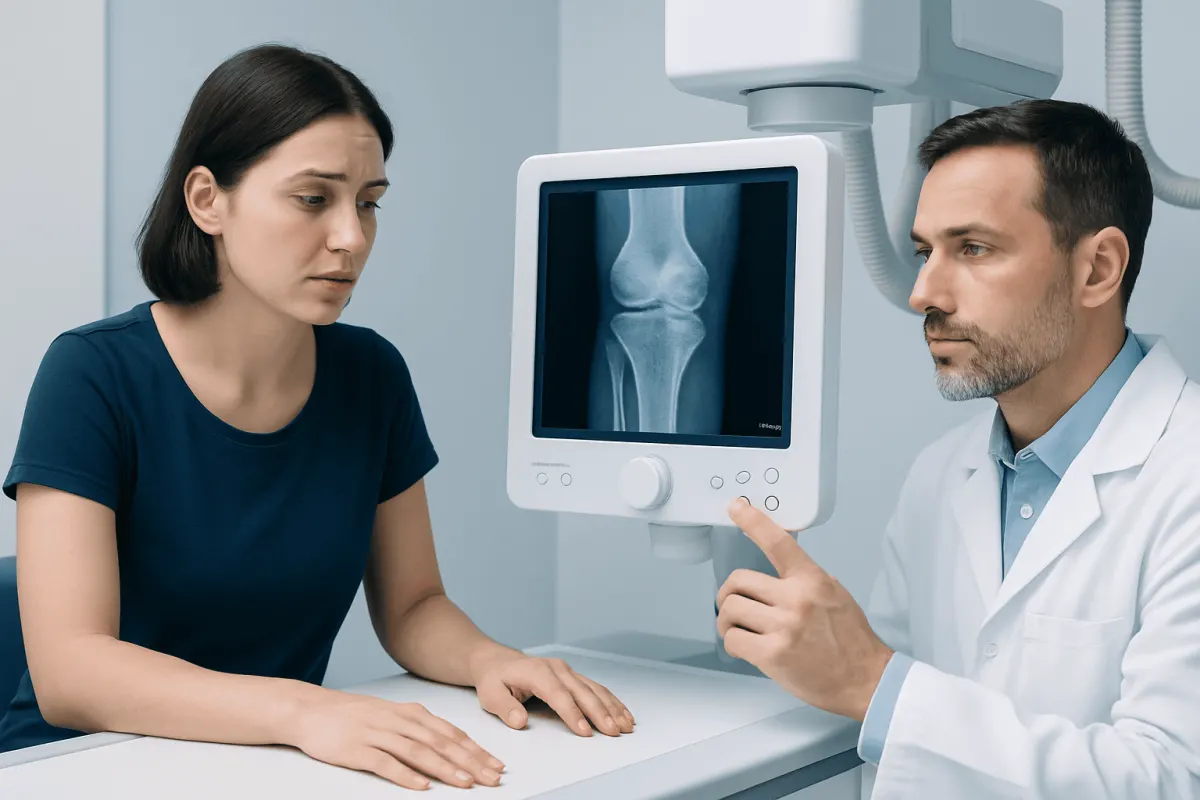
Diagnosis begins with a medical history and physical examination. A clinician will ask about pain, changes in function, previous injuries, and the duration of symptoms. Plain X-rays often provide important early clues, as a giant cell tumor may appear as an area of bone loss near the end of a bone.
Magnetic resonance imaging (MRI) and computed tomography (CT) scans can show the size of the lesion, the condition of the surrounding bone, and whether nearby soft tissues or a joint are involved. Chest imaging may also be considered, particularly when staging is needed, because rare tumors can spread to the lungs.
A biopsy is generally required to confirm the diagnosis before definitive treatment. During a biopsy, a specialist takes a small tissue sample for examination by a pathologist. Biopsy planning is important because the route used to obtain the sample should not complicate later surgery. The care team may also use blood tests to exclude other causes of bone changes.
- X-ray: assesses bone structure and the location of the lesion.
- MRI or CT: defines the tumor extent and helps surgical planning.
- Biopsy: confirms the tumor type and excludes look-alike conditions.
- Chest imaging: may be used to assess for uncommon lung involvement.
What are the treatment options for giant cell bone tumors?
Treatment is individualized according to the tumor site, size, whether it has broken through the bone, its relationship to a joint, and whether it has returned after earlier care. A multidisciplinary team, often including orthopedic oncologists, radiologists, pathologists, medical oncologists, and rehabilitation professionals, helps select the most appropriate approach.
Surgery is the main treatment for most operable giant cell tumors. When possible, surgeons may remove the tumor from inside the bone, a procedure called curettage, and then use methods to lower the risk of residual tumor cells. The resulting bone cavity may be reconstructed with bone graft, cement, or other materials to improve stability. In some cases, a wider removal of the affected section of bone is needed, followed by reconstruction or joint replacement.
For tumors that cannot be safely removed at first, are likely to cause major loss of function with surgery, or have returned, medicines that target bone-resorbing cells may be considered. Denosumab is one option used in selected situations under specialist supervision. It can reduce tumor activity and may help make certain tumors more manageable, but it also has important risks and does not replace careful long-term monitoring.
Other options may include embolization, which reduces blood flow to a tumor in selected difficult locations, or radiation therapy when surgery is not feasible. Radiation is used cautiously because of potential long-term risks. Rehabilitation after treatment can help restore movement, strength, balance, and confidence with daily activities.
Is a giant cell tumor serious?
A giant cell tumor of bone should be taken seriously because, although it is usually benign, it can damage bone and nearby joints. Without treatment, ongoing growth can lead to pain, loss of function, bone collapse, or fracture. The effect on everyday life can be significant, particularly when the tumor is close to a weight-bearing joint.
At the same time, a diagnosis does not mean that a person has a typical high-grade bone cancer. Many giant cell tumors can be treated effectively with well-planned surgery and appropriate follow-up. The outlook depends on the individual tumor, including its location, size, whether it has recurred, and whether there are unusual aggressive features.
Rarely, giant cell tumors spread to the lungs or undergo malignant transformation. These situations require care in a specialist sarcoma or orthopedic oncology center. Discussing the pathology report, scan findings, treatment choices, and follow-up plan with the treating team can help patients understand their own level of risk.
What is the prognosis for giant cell tumor of the bone?
The prognosis for giant cell tumor of the bone is often favorable when the tumor can be managed with appropriate specialist treatment. A major goal is long-term control of the tumor while preserving as much bone, joint function, and mobility as possible. Recovery also depends on the operation required and the bone involved.
Recurrence can happen, especially after procedures that preserve the joint by removing the tumor from within the bone. The likelihood varies with the tumor and treatment approach, so clinicians avoid using one estimate for every person. Recurrences are often detected during scheduled follow-up before they cause major symptoms, which is why ongoing imaging is important.
Follow-up commonly includes examinations and repeat imaging of the treated area. Chest imaging may also be included when clinically appropriate. A person should report new or worsening pain, swelling, or changes in function between appointments rather than waiting for the next planned review.
Which bone tumor is the most aggressive?
There is no single bone tumor that is always “the most aggressive,” because aggressiveness depends on tumor type, grade, stage, location, and how it responds to treatment. Among primary malignant bone tumors, high-grade osteosarcoma, Ewing sarcoma, and some high-grade chondrosarcomas can behave aggressively and require prompt specialist care.
Giant cell tumor of bone is usually considered benign but locally aggressive rather than a conventional malignant bone tumor. It can still require complex treatment because of its tendency to affect joint-adjacent bone and its potential to recur. A pathology review and staging assessment are the reliable ways to establish exactly what type of tumor is present.
People should avoid drawing conclusions based on imaging language alone. Terms such as “aggressive lesion” can describe how an abnormality appears on a scan, not necessarily whether it is cancer. A biopsy and review by experienced specialists provide the clearest answer.
When to seek medical care
Medical care should be sought for persistent bone or joint pain that does not improve, especially if it occurs at rest or at night, is associated with swelling, or gradually limits normal movement. A new lump over a bone, unexplained limping, or repeated discomfort in the same area also warrants assessment.
Urgent medical evaluation is appropriate for sudden severe pain after a minor injury, inability to bear weight or use a limb, or visible deformity, as these can be signs of a fracture. People already treated for a giant cell tumor should contact their clinical team if new pain, swelling, or reduced function develops.
Acıbadem Health Point’s multidisciplinary specialists and JCI-accredited hospitals evaluate and treat bone tumors for international patients, with care coordinated across imaging, pathology, orthopedic oncology, and rehabilitation services.
Frequently asked questions
01Can a giant cell tumor of bone become cancerous?
Most giant cell tumors of bone remain benign. Malignant transformation is rare, but some tumors can behave aggressively or, uncommonly, spread to the lungs. Pathology review and regular follow-up help identify unusual features and guide care.
02Does a giant cell tumor of bone always need surgery?
Surgery is the main treatment for many operable tumors because it removes the lesion and helps restore bone stability. However, the best approach depends on the tumor location, size, prior treatment, and the risks of surgery. Medicines, embolization, or radiation may be considered in selected situations.
03Can giant cell tumor of bone come back after treatment?
Yes, recurrence is possible, particularly after joint-preserving surgery. The risk varies between individuals and depends on the tumor and treatment method. Follow-up examinations and imaging are important for detecting recurrence early.
04Is giant cell tumor of bone hereditary?
In most cases, it is not hereditary. Genetic changes found in the tumor are generally acquired changes within tumor cells rather than changes passed through families. A doctor can advise whether genetic assessment is appropriate if there is an unusual personal or family history.
05What is recovery like after giant cell tumor surgery?
Recovery depends on the affected bone and the type of reconstruction needed. It may involve temporary limits on weight-bearing or limb use, followed by physiotherapy to improve strength and movement. The surgical team provides an individualized rehabilitation plan and monitoring schedule.
06Can a giant cell tumor spread to the lungs?
Lung spread is uncommon but can occur in a small proportion of cases. It does not always behave like spread from a typical high-grade cancer, but it needs specialist assessment and monitoring. Chest imaging may be included in staging and follow-up plans when appropriate.
This article is for general information only and is not a substitute for professional medical advice. Please consult a qualified doctor about your individual situation.
Joint and spine care in Turkey — expert assessment & treatment
JCI-accredited · board-certified surgeons · reply within 24h
Add us as a Preferred Source to see more of our trusted health content across Google Search, AI Overviews and Discover.