Gallstone Symptoms: Signs, Causes and When to See a Doctor

Key Takeaways
- Gallstones may cause no symptoms at all until they block bile flow or irritate the gallbladder.
- Typical gallstone symptoms include upper-right abdominal pain, nausea, vomiting, and discomfort after fatty meals.
- A fever, jaundice, or persistent severe pain can suggest a complication and should be evaluated promptly.
- Ultrasound is the most common test used to look for gallstones and gallbladder inflammation.
- Treatment depends on symptoms and complications; some people need only monitoring, while others may need surgery.
Gallstone symptoms often appear as sudden pain in the upper right abdomen, sometimes with nausea, bloating, or pain after meals. Some people never notice any symptoms, while others develop warning signs that should be assessed by a doctor.
Overview
Gallstone symptoms usually begin when a stone moves and blocks the normal flow of bile from the gallbladder. The most familiar sign is a sudden, steady pain in the upper right side of the abdomen, although some people feel it in the center of the upper belly or under the right shoulder blade. This discomfort often appears after eating, especially after a heavier or fatty meal.
Not every gallstone causes trouble. Many are found by chance during an ultrasound or other imaging test done for another reason. When symptoms do occur, they can range from a brief episode of discomfort to more persistent pain that interferes with eating, resting, or traveling. For people planning care from another country, understanding whether symptoms are likely to be simple gallbladder colic or a more urgent problem helps guide the next step.
Gallstones are small, hardened deposits that form in the gallbladder, a small organ beneath the liver that stores bile. Bile helps digest fat. When stones remain silent, observation may be enough. When they begin to cause pain or inflammation, a doctor should assess the situation and decide whether treatment is needed.
Symptoms
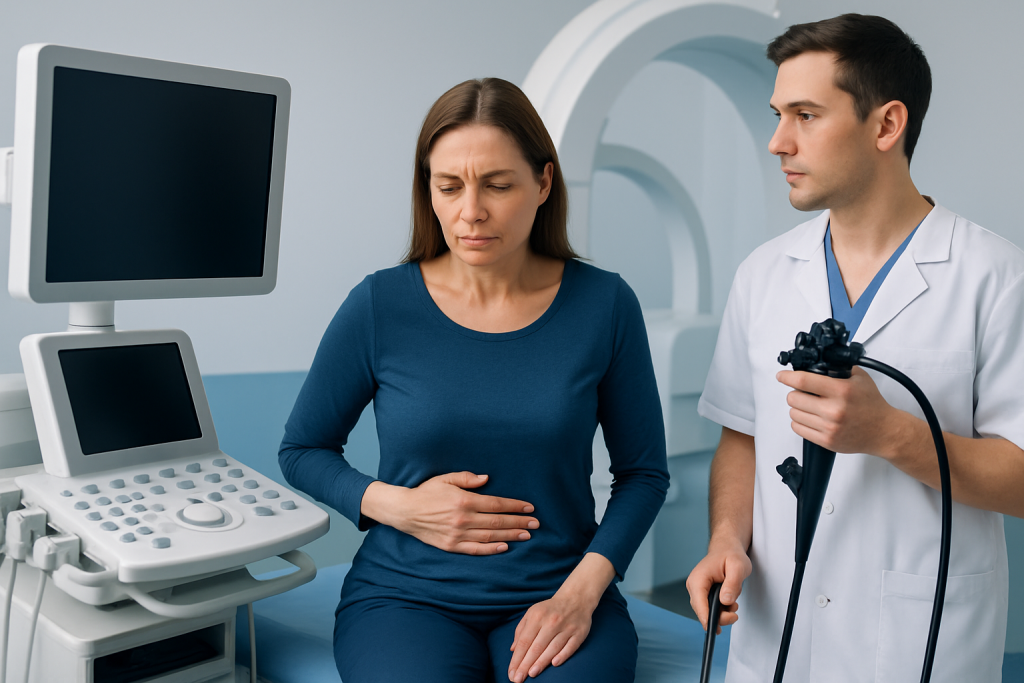
The most common gallstone symptoms are fairly recognizable once they appear, but they can still be mistaken for indigestion or stomach upset. Pain from gallstones often comes on quickly, builds to a steady level, and may last from minutes to several hours. It is frequently felt after meals and may be strong enough to wake someone from sleep.
Other symptoms may include:
- Nausea or vomiting
- Bloating or a feeling of fullness
- Indigestion-like discomfort after eating
- Pain that spreads to the back or right shoulder
- Tenderness in the upper abdomen
Some people notice that symptoms follow rich or fried foods, but the trigger is not always obvious. It is also possible for gallbladder inflammation or a blocked bile duct to produce more severe symptoms, such as fever, yellowing of the skin or eyes, dark urine, or pale stools. Those signs deserve prompt medical attention because they can point to a complication rather than a simple attack.
Causes & Risk Factors

Gallstones form when substances in bile harden into crystals. In many cases, this happens when bile contains too much cholesterol, too much bilirubin, or not enough substances that keep bile properly balanced. The gallbladder may also empty poorly, allowing bile to sit long enough for stones to form.
Several factors can increase the likelihood of developing gallstones. These include being overweight, losing weight very quickly, having a family history of gallstones, being pregnant, and having certain digestive or blood conditions. Age and sex can also play a role, and some medications or liver and intestinal disorders may contribute to risk.
It is important to remember that risk factors do not predict symptoms with certainty. Some people with many risk factors never develop stones, while others with few obvious risks do. The pattern of symptoms, not risk alone, is what usually prompts medical evaluation.
Diagnosis
Doctors usually begin by listening carefully to the symptom pattern. The timing of the pain, its location, what seems to trigger it, and whether it comes with fever or jaundice all help distinguish gallstones from other causes of abdominal pain. A physical examination may reveal tenderness in the upper abdomen, but it does not confirm the diagnosis on its own.
An ultrasound is the most common first test because it can show gallstones clearly and also check for signs of gallbladder inflammation. Blood tests may be ordered to look for infection, blocked bile flow, or irritation of the liver and pancreas. If symptoms suggest a stone in a bile duct rather than only in the gallbladder, additional imaging such as MRCP or endoscopic ultrasound may be considered.
For patients traveling internationally for care, diagnosis is often efficient because the testing pathway can be organized in a short time frame once symptoms are reviewed. What matters most is a careful assessment rather than a rushed assumption, since similar pain can also come from ulcers, acid reflux, liver problems, or pancreatic disease.
Treatment Options
Treatment depends on whether gallstones are silent, occasionally painful, or causing complications. If gallstones are found but never cause symptoms, a doctor may recommend watchful waiting. This means the person is monitored, with no immediate procedure unless the situation changes.
When gallstones do cause repeated pain or complications, the most common treatment is gallbladder removal, known as cholecystectomy. This is often done with minimally invasive surgery, and many patients recover relatively quickly, though the timeline depends on the person’s overall health and whether inflammation is present. If a stone is stuck in a bile duct, another procedure may be needed to remove it before or instead of gallbladder surgery.
Symptom-relief medicines may be used in some situations, and antibiotics may be needed if infection is suspected. Non-surgical stone-dissolving options exist in limited cases, but they are not suitable for everyone and are generally less definitive than surgery. A doctor can explain which approach fits the type of gallstone problem, the urgency of symptoms, and the patient’s travel plans and recovery needs.
Prevention & Self-care
Not all gallstones can be prevented, but some habits may lower the chance of new stones forming or reduce the stress that triggers symptoms. A steady, balanced approach to weight management is generally better than rapid weight loss. Regular meals, good hydration, and a diet that is easier on the digestive system may also help some people feel more comfortable.
Self-care during a mild episode focuses on observation and avoiding known triggers while arranging medical review if symptoms recur. Some people find that larger, fatty meals aggravate discomfort, so smaller meals may be easier to tolerate. However, self-care should not be used to ignore severe or unusual symptoms.
- Avoid crash dieting or very rapid weight loss
- Choose balanced meals rather than heavy, greasy ones if they worsen symptoms
- Stay active in a way that suits overall health
- Follow up on repeated attacks instead of waiting for the pain to “settle for good”
For international patients, it can help to keep a simple symptom diary before traveling: when the pain starts, how long it lasts, what it feels like, and whether fever or jaundice has appeared. That information can make the first consultation more precise and shorten the path to a clear decision.
When to See a Doctor
Medical review is sensible when abdominal pain keeps returning, interferes with eating, or seems clearly linked to meals. Even if the pain goes away, repeated episodes can be a sign that gallstones are becoming more active and may eventually cause a complication.
Prompt care is especially important if gallstone symptoms are accompanied by fever, chills, yellowing of the skin or eyes, dark urine, pale stools, persistent vomiting, or severe pain that does not ease. These findings can indicate gallbladder inflammation, a blocked duct, or pancreatitis, all of which need timely assessment.
Anyone unsure whether the pain is from gallstones should seek medical advice rather than trying to self-diagnose. A qualified doctor can sort out the cause, explain whether the situation is urgent, and recommend the safest next step. At Acibadem Health Point, multidisciplinary specialists and JCI-accredited hospitals diagnose and treat gallstone disease for international patients with coordinated evaluation and follow-up.
Frequently asked questions
01What do gallstone symptoms usually feel like?
Gallstone symptoms most often feel like a sudden, steady pain in the upper right abdomen or upper middle abdomen. The pain may spread to the back or right shoulder and can be accompanied by nausea or vomiting. Some people notice that it happens after eating, especially after heavier meals.
02Can gallstones cause symptoms every day?
They can, but many people have symptoms only during attacks. Repeated episodes suggest that the gallstones are becoming more active or that the gallbladder is inflamed. If symptoms are frequent, a doctor should evaluate them rather than assuming they will settle on their own.
03Are gallstone symptoms always severe?
No. Some attacks are mild and short-lived, while others are intense and persistent. Even mild symptoms matter if they keep coming back, because they can still signal a problem that needs treatment.
04How are gallstones diagnosed?
Ultrasound is the main test used to look for gallstones and gallbladder inflammation. Doctors may also order blood tests to check for infection or blockage. If a bile duct stone is suspected, further imaging may be needed.
05Can gallstones go away without treatment?
Gallstones usually do not disappear on their own. If they are silent and never cause symptoms, they may simply be monitored. If they cause pain or complications, treatment is often needed.
06When is gallstone pain an emergency?
Severe ongoing pain, fever, jaundice, repeated vomiting, or a very unwell feeling should be assessed promptly. These signs can point to a blocked duct, infection, or pancreatitis. Seeking timely care helps prevent the problem from becoming more serious.
This article is for general information only and is not a substitute for professional medical advice. Please consult a qualified doctor about your individual situation.
Persistent digestive symptoms? Get evaluated in Turkey
JCI-accredited · board-certified surgeons · reply within 24h
Add us as a Preferred Source to see more of our trusted health content across Google Search, AI Overviews and Discover.