Fertility Definition: Meaning, Biology, and Common Concerns

Fertility is the ability to conceive a pregnancy through natural reproductive processes, including the production of viable eggs or sperm and the ability for pregnancy to develop in the uterus. It is influenced by age, reproductive anatomy, hormones, general health, and factors affecting either partner.
Fertility definition: the answer in medical terms
The fertility definition is the natural biological ability to conceive a pregnancy or contribute to conception. In a person who produces eggs, this includes releasing an egg, having open fallopian tubes, and having a uterus able to support implantation and pregnancy. In a person who produces sperm, fertility includes making, transporting, and ejaculating enough healthy sperm capable of reaching and fertilizing an egg.
Fertility is not the same as becoming pregnant immediately. Even when both partners are healthy and have no recognized reproductive condition, conception may take several menstrual cycles. Pregnancy depends on a sequence of events, including ovulation, sperm reaching the egg, fertilization, embryo development, implantation, and early pregnancy development.
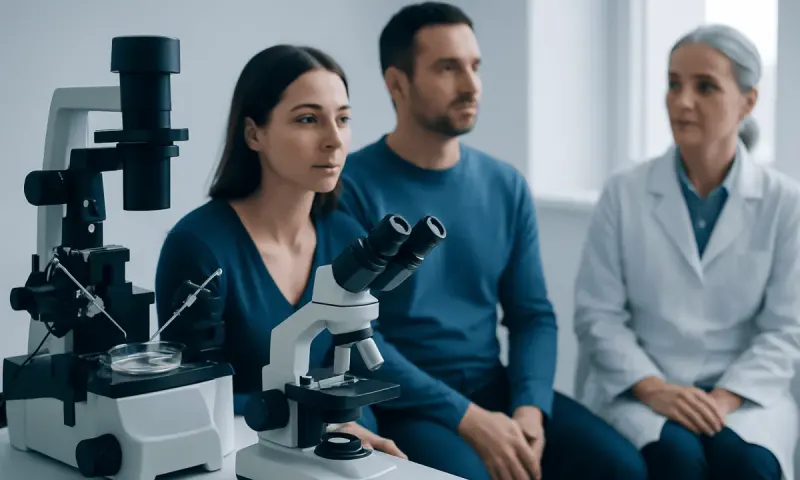
Fertility is a shared reproductive health issue when a couple is trying to conceive. It can be affected by factors in either partner, factors involving both partners, timing of intercourse, and sometimes causes that remain unclear after evaluation.
What does fertility actually mean?
In everyday language, fertility often means the ability to have children. Clinically, it refers more specifically to reproductive potential: the capacity to produce eggs or sperm, achieve fertilization, establish a pregnancy, and carry a pregnancy forward. A person may be fertile at one stage of life and have reduced fertility later because reproductive function naturally changes over time.
Fertility should not be understood as a simple yes-or-no characteristic. It exists along a spectrum. Some people conceive without difficulty, while others may need more time, lifestyle changes, treatment for an underlying condition, or assisted reproductive care. A diagnosis of infertility does not necessarily mean that pregnancy is impossible.
For people with menstrual cycles, regular periods can suggest that ovulation is occurring, but they do not confirm that every part of the reproductive system is functioning normally. Likewise, semen appearance or sexual function alone cannot determine sperm health. Medical assessment may be needed when pregnancy does not occur as expected.
How fertility works in the body
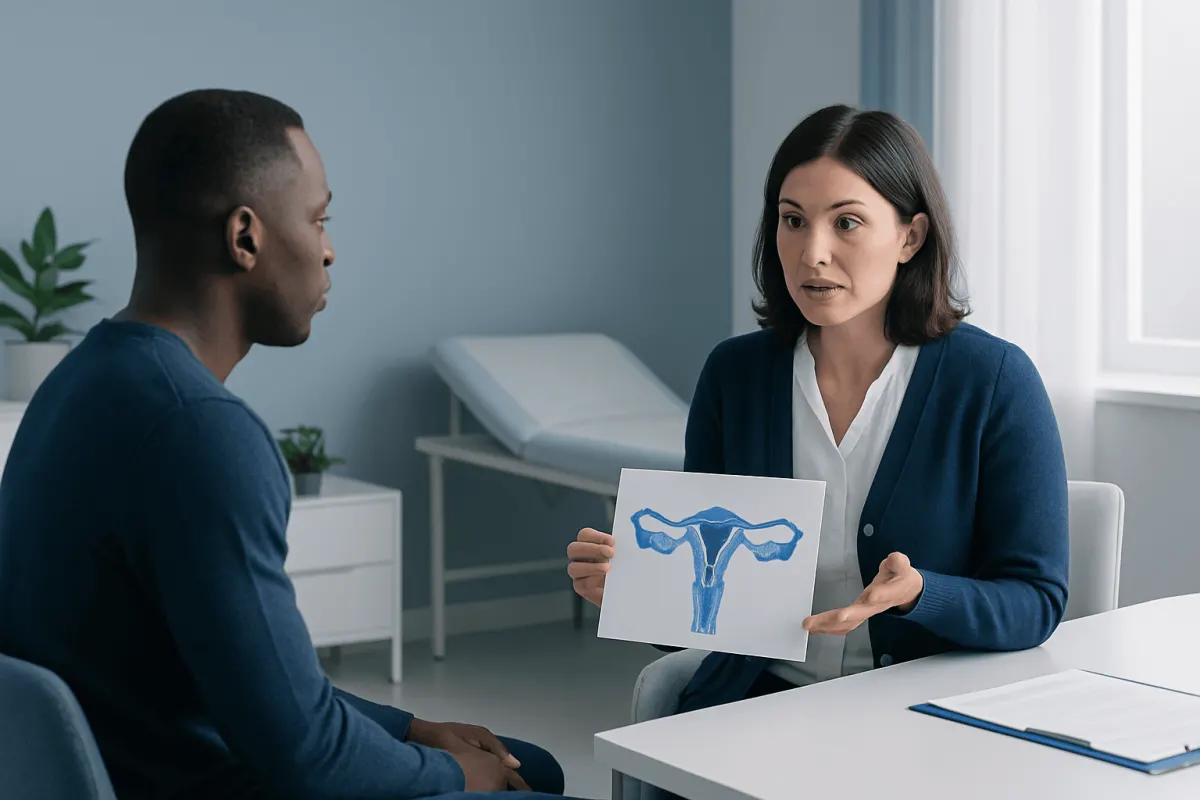
For conception to occur without medical assistance, an egg must mature and be released from an ovary, a process called ovulation. Sperm must enter the reproductive tract and travel through the cervix and uterus toward a fallopian tube. Fertilization usually occurs in the fallopian tube, after which the early embryo travels to the uterus and implants in the uterine lining.
Hormones coordinate many of these steps. In people who ovulate, hormones from the brain, pituitary gland, ovaries, and thyroid all play important roles. Conditions that disrupt hormone signaling can affect menstrual cycles and ovulation. In people who produce sperm, the brain, pituitary gland, and testes regulate testosterone and sperm production.
Reproductive anatomy matters as well. Blocked fallopian tubes, uterine growths, endometriosis, pelvic scarring, varicocele, obstruction of sperm transport, or prior surgery may affect fertility. Some issues can be treated, while others may be managed with in vitro fertilization (IVF) or other forms of assisted reproductive technology when appropriate.
At what age are 90% of your eggs gone?
Research on ovarian aging suggests that approximately 90% of a person’s lifetime egg supply has been lost by around age 30. This is an estimate based on population-level mathematical models, not a test that can precisely determine how many eggs an individual has remaining. Egg number begins to decline before birth, continues throughout life, and decreases more rapidly as menopause approaches.
At birth, the ovaries contain a large number of immature eggs. By puberty, only a fraction remain, and during reproductive life many eggs are lost naturally each month in addition to the egg that may mature and ovulate. Egg quality also changes with age, particularly from the mid-30s onward, which contributes to lower chances of conception and a higher likelihood of chromosomal differences in embryos.
Age is important, but it is not the only predictor of reproductive potential. Menstrual history, medical conditions, prior ovarian surgery, family history of early menopause, cancer treatment, and laboratory or ultrasound findings may all be relevant. Tests such as anti-Müllerian hormone (AMH) and antral follicle count can provide information about ovarian reserve, but they cannot reliably predict the chance of natural pregnancy for every individual.
Fertility changes with age and health
Female fertility generally reaches its highest level in the late teens and 20s, then gradually declines. The decline becomes more noticeable in the 30s and accelerates later in that decade and into the 40s. This pattern reflects changes in both the number of eggs available and the likelihood that remaining eggs will develop normally.
Male fertility does not have the same fixed reproductive endpoint, because sperm production can continue later in life. However, sperm quantity, movement, shape, and genetic quality may change with age. Older paternal age may also be associated with a longer time to conception and certain pregnancy or child health risks, although many older men conceive without difficulty.
Health conditions can influence fertility at any age. Examples include polycystic ovary syndrome (PCOS), thyroid disorders, diabetes, endometriosis, uterine fibroids, sexually transmitted infections, pelvic inflammatory disease, testicular conditions, and some genetic disorders. For example, endometriosis may affect fertility through inflammation, scarring, or changes involving the ovaries and fallopian tubes.
Smoking, frequent heavy alcohol use, recreational drug use, significant underweight or obesity, untreated chronic illness, and exposure to some environmental toxins may also affect reproductive health. These factors do not explain every fertility problem, but addressing modifiable risks can support general health and pregnancy planning.
What are the three types of infertility?
The three commonly described types of infertility are primary infertility, secondary infertility, and unexplained infertility. These terms describe a person’s or couple’s reproductive history or the findings of an evaluation; they do not identify a single cause.
- Primary infertility means a pregnancy has never been achieved after an appropriate period of trying to conceive.
- Secondary infertility means difficulty becoming pregnant after a previous pregnancy, whether that pregnancy ended in a live birth, miscarriage, ectopic pregnancy, or termination.
- Unexplained infertility is used when standard testing does not identify a clear cause despite evaluation of ovulation, reproductive anatomy, and semen parameters.
Infertility may also be described by the likely source of the concern, such as ovulatory infertility, tubal-factor infertility, uterine-factor infertility, male-factor infertility, or combined-factor infertility. In some cases, more than one factor is present. A complete assessment generally considers both partners at the same time when possible.
Evaluation and treatment options for fertility concerns
Healthcare professionals usually begin with a detailed health and reproductive history. Questions may cover menstrual patterns, prior pregnancies, sexual history, medications, surgery, infections, chronic conditions, family history, and lifestyle. Evaluation may include blood tests, ovulation assessment, pelvic ultrasound, testing of the uterus and fallopian tubes, and semen analysis.
Treatment depends on the underlying findings and personal circumstances. It may include managing a hormone condition, helping ovulation occur, treating thyroid disease or other medical concerns, addressing structural problems, treating infections when present, or making lifestyle adjustments. Some people may benefit from procedures or assisted reproductive options, including intrauterine insemination or IVF treatment.
Fertility treatment decisions should be individualized. Age, duration of trying to conceive, test results, previous pregnancy history, genetic considerations, and personal preferences can all guide care. A fertility specialist can explain the possible benefits, limitations, and risks of each option before a plan is chosen.
Acıbadem Health Point’s multidisciplinary specialists and JCI-accredited hospitals support international patients undergoing evaluation and treatment for fertility concerns.
When to seek medical care
It is reasonable to seek medical advice after 12 months of regular unprotected intercourse without pregnancy if the person trying to conceive is under age 35. For those aged 35 to 39, an evaluation is commonly recommended after 6 months. People aged 40 or older may benefit from discussing fertility assessment sooner, as time can be more important when egg quantity and quality are declining.
Earlier assessment is also appropriate for irregular or absent periods, known PCOS, endometriosis, prior pelvic infection, previous ectopic pregnancy, known fallopian tube disease, repeated miscarriage, prior chemotherapy or radiation, or a history suggesting reduced ovarian reserve. Men should consider evaluation sooner if there is a history of testicular injury, undescended testes, cancer treatment, erectile or ejaculation concerns, or known low sperm count.
Medical care can provide clarity and support rather than assigning blame. Fertility concerns are common, and timely assessment can help identify treatable causes, clarify options, and support informed decisions about next steps.
Frequently asked questions
01What is the medical definition of fertility?
Medically, fertility is the ability to conceive a pregnancy or contribute to conception through normal reproductive processes. It depends on factors such as ovulation, egg and sperm health, hormone function, reproductive anatomy, and the ability of an embryo to implant in the uterus.
02Is fertility the same as infertility?
No. Fertility refers to reproductive potential, while infertility is a medical term used when pregnancy has not occurred after a recommended period of regular unprotected intercourse. Infertility can have many causes, and it does not necessarily mean that pregnancy cannot occur.
03At what age are 90% of eggs gone?
Population-based research estimates that about 90% of a person’s lifetime egg supply may be gone by around age 30. This is an average estimate rather than an exact measure for any one person, and egg quality also changes as age increases.
04Can someone have regular periods and still have fertility problems?
Yes. Regular menstrual periods often suggest ovulation, but they do not confirm that the fallopian tubes are open, the uterus is healthy, or that egg quality is sufficient for pregnancy. Fertility can also be affected by sperm factors or conditions that do not alter menstrual cycles.
05What are the three types of infertility?
The three common terms are primary infertility, secondary infertility, and unexplained infertility. Primary infertility refers to no previous pregnancy, secondary infertility refers to difficulty conceiving after a previous pregnancy, and unexplained infertility means standard tests have not found a clear cause.
06When should a couple see a fertility specialist?
Couples should generally seek assessment after 12 months of trying if the female partner is under 35, or after 6 months if she is 35 to 39. Earlier assessment is appropriate at age 40 or older and when there are irregular periods, known reproductive conditions, prior cancer treatment, or concerns about sperm health.
This article is for general information only and is not a substitute for professional medical advice. Please consult a qualified doctor about your individual situation.
IVF & fertility treatment in Turkey — success rates and costs
JCI-accredited · board-certified surgeons · reply within 24h
Add us as a Preferred Source to see more of our trusted health content across Google Search, AI Overviews and Discover.