Fertility by Age: How Reproductive Potential Changes
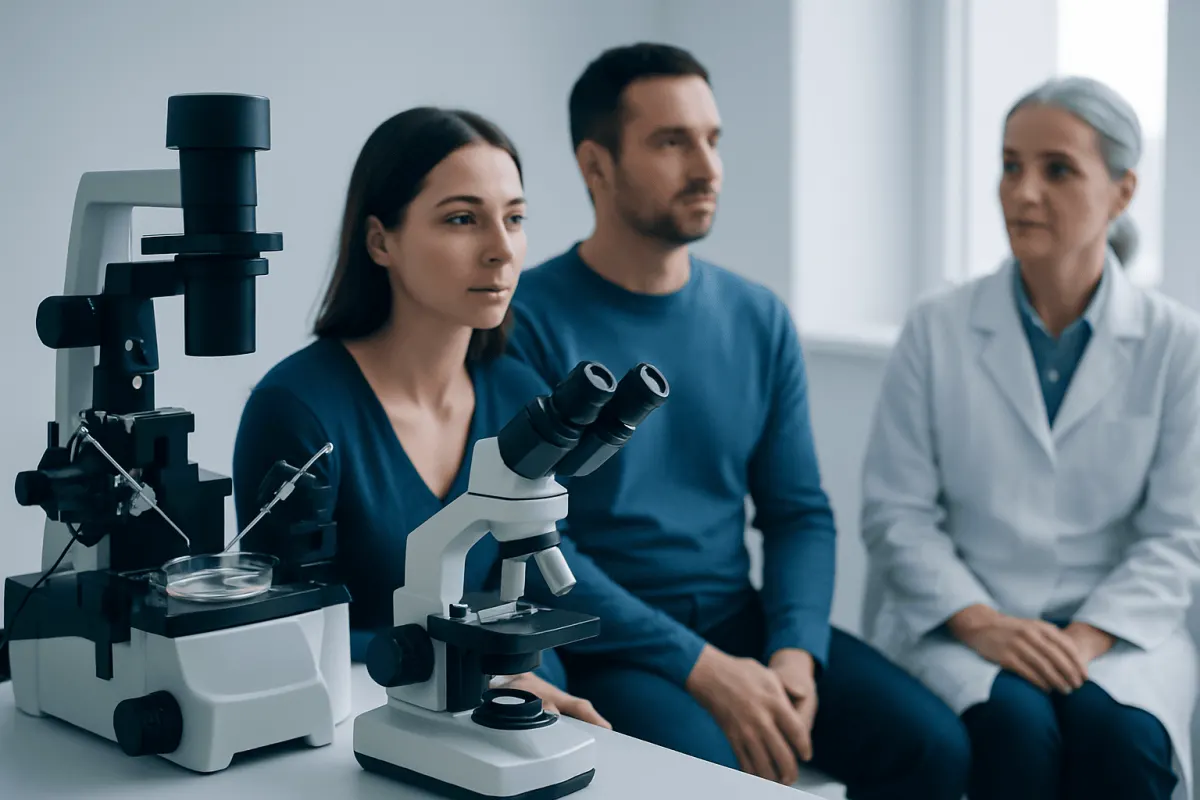
Fertility by age reflects changes in egg number and quality, sperm health, and the health factors that affect conception and pregnancy. Age is important, but it is not the only influence: many people conceive naturally at older ages, while others benefit from timely fertility assessment and treatment.
Fertility by age: the short answer
Fertility by age changes because reproductive cells and hormone patterns change over time. For women, the chance of conceiving in a given menstrual cycle is usually greatest in the 20s, declines gradually in the early 30s, and declines more rapidly after about age 35; however, individual fertility varies considerably.
For men, age-related changes are usually slower, but sperm count, movement, genetic integrity, and sexual health can also be affected over time. This age and fertility guide for patients explains broad patterns rather than predicting an individual outcome, since reproductive health, timing, medical conditions, and lifestyle all matter.
Fertility is not an all-or-nothing state. A person may have reduced reproductive potential and still conceive without treatment, while someone younger may experience difficulty because of ovulation disorders, blocked fallopian tubes, endometriosis, low sperm quality, or other factors.
How fertility differs across reproductive ages
People assigned female at birth are born with a finite supply of immature eggs. This ovarian reserve naturally falls throughout life. In addition to fewer remaining eggs, the proportion of eggs with chromosome abnormalities rises with age, which can make fertilization, implantation, and continuing pregnancy less likely.
In broad terms, fertility is highest from the late teens through the 20s. A gradual decline often begins around age 30 and becomes more clinically significant in the mid-30s. Natural conception can still occur in the late 30s and early 40s, but it may take longer and the likelihood of miscarriage and some pregnancy complications is higher.
Fertility by age statistics are population estimates, not a personal forecast. They are useful for understanding trends, but they cannot account for an individual’s menstrual regularity, ovarian reserve, partner factors, medical history, or reproductive plans. A clinician can help put age into a more meaningful personal context.
Menopause marks the end of natural menstrual cycles and natural conception. The transition toward menopause can start years earlier, and fertility may decline before periods become irregular. The timing of this transition differs between individuals and families.
Fertility by age and gender

Fertility by age and gender is best understood as a shared reproductive issue. Female age is often emphasized because egg quantity and quality change more sharply over time. Yet male factors contribute to infertility in many couples, so both partners should usually be considered during an assessment.
With increasing male age, semen volume, sperm concentration, movement, and shape may change, although many men remain fertile later in life. Older paternal age has also been associated with a somewhat higher likelihood of certain genetic changes and some pregnancy or child health outcomes. These associations are generally small for any one pregnancy and should be discussed in an individualized way.
Age can also affect sexual function and the prevalence of health conditions that influence reproduction, including diabetes, obesity, high blood pressure, thyroid disease, and medication use. Smoking, heavy alcohol use, anabolic steroids, recreational drugs, some environmental exposures, and untreated sexually transmitted infections can affect fertility at any age.
A complete evaluation commonly includes menstrual and ovulation history, assessment of the uterus and fallopian tubes where indicated, and semen analysis. Depending on the findings, clinicians may also evaluate conditions such as endometriosis or hormonal disorders that can interfere with ovulation.
At what age are 90% of your eggs gone?
There is no single age at which exactly 90% of eggs are gone for every person. Ovarian reserve begins declining before birth and continues throughout life, with substantial variation between individuals. Scientific models of egg loss suggest that a large proportion of the original egg supply has already been lost by the early 30s, but these models cannot tell how many usable eggs a particular person has.
At birth, the ovaries contain a large number of immature eggs, and only a small proportion will ever mature and ovulate. The body continuously loses eggs through a natural process called atresia, not only during menstrual periods. The rate of loss tends to accelerate as menopause approaches.
Tests such as anti-Müllerian hormone (AMH), antral follicle count on ultrasound, and sometimes follicle-stimulating hormone testing can estimate ovarian reserve. They are most useful for helping plan fertility treatment or understand expected response to ovarian stimulation. A low or high result does not, by itself, determine whether someone can conceive naturally or when menopause will occur.
A fertility specialist can interpret test results alongside age, cycle history, ultrasound findings, prior pregnancies, and partner factors. This approach is more informative than relying on a single egg-count statistic from a fertility by age study.
At what age is a woman's body most fertile?
Biologically, a woman’s body is generally most fertile in the late teens through 20s. During these years, ovulation is often more regular and eggs are more likely to have the chromosome pattern needed for healthy development. This does not mean pregnancy is right, safe, desired, or practical for every person at those ages.
Fertility is only one part of reproductive decision-making. Emotional readiness, relationships, education, work, finances, access to care, chronic health conditions, and personal values also shape family-planning choices. People who expect to delay pregnancy may wish to discuss their options with a gynecologist or fertility specialist.
Egg freezing may be considered by some people who wish to preserve the possibility of using younger eggs later. It does not guarantee a future baby, and expected outcomes depend on the age at freezing, number of eggs collected, laboratory factors, sperm source, and embryo development. egg freezing counseling should include benefits, limitations, possible risks, and alternatives.
For those trying to conceive, having intercourse every one to two days during the fertile window can improve the chance that sperm are present when ovulation occurs. The fertile window includes the five days before ovulation and the day of ovulation.
Is 38–39 too old to have a baby?
No. Ages 38 and 39 are not too old to have a baby, and many people have healthy pregnancies and babies at these ages. However, pregnancy may take longer to achieve than it did earlier, and the chances of miscarriage, chromosome-related conditions, gestational diabetes, high blood pressure disorders, and some delivery complications are higher on average.
Pre-pregnancy care can be especially useful in the late 30s. A clinician may review medications, vaccinations, chronic conditions, family history, weight-related health, smoking and alcohol use, and the need for folic acid before conception. Once pregnant, recommended prenatal screening and diagnostic options can help patients make informed choices.
People aged 35 or older who have been trying for pregnancy for six months without success should generally seek fertility evaluation. Earlier review is appropriate for irregular or absent periods, known uterine or tubal conditions, prior cancer treatment, recurrent miscarriage, suspected male-factor infertility, or other concerns.
Depending on the cause of infertility, care may include ovulation support, treatment of uterine or tubal concerns, sperm-focused treatment, intrauterine insemination, or in vitro fertilization (IVF). The most suitable approach depends on the findings and the person’s goals.
How clinicians assess fertility and support planning
Fertility assessment starts with a detailed history. Clinicians ask about menstrual cycles, prior pregnancies, contraception, pelvic pain, sexually transmitted infections, surgeries, chronic illnesses, medications, and family history of early menopause. A physical examination, pelvic ultrasound, blood tests, and semen analysis may be recommended.
It is important to recognize what testing can and cannot show. Ovulation testing may identify whether an egg is being released, imaging may identify uterine or tubal factors, and semen analysis can assess key sperm characteristics. Even with normal results, pregnancy is not guaranteed; conversely, concerning results may still be manageable with treatment.
For people using donor eggs, donor sperm, embryos, or a gestational carrier, age-related fertility considerations differ according to the source of eggs and sperm as well as the health of the person carrying a pregnancy. These decisions often benefit from medical, psychological, and legal counseling appropriate to local regulations.
Acıbadem Health Point’s multidisciplinary specialists and JCI-accredited hospitals assess fertility concerns and provide individualized reproductive care for international patients. A consultation can help patients understand which tests or IVF options may be relevant to their situation.
When to seek medical care
Medical advice is appropriate when pregnancy has not occurred after 12 months of regular unprotected intercourse for people under 35, or after six months for those aged 35 and older. People aged 40 or older may benefit from seeking advice before trying or soon after beginning to try, because time can be an important consideration.
Evaluation should not be delayed for irregular, infrequent, or absent periods; severe pelvic pain; known endometriosis; previous pelvic infection; prior surgery involving the pelvis or testes; a history of chemotherapy or radiation; recurrent pregnancy loss; or concerns about erectile, ejaculation, or semen problems.
Urgent medical care is needed for severe sudden pelvic or abdominal pain, fainting, heavy vaginal bleeding, fever with pelvic pain, or symptoms during early pregnancy that could suggest an ectopic pregnancy. These symptoms are not specific to fertility, but they should be assessed promptly.
Fertility concerns can be emotionally demanding. Support from a trusted clinician, counselor, partner, family member, or support group may help people navigate uncertainty and make decisions that fit their circumstances.
Frequently asked questions
01How does fertility by age affect the chance of pregnancy?
Female fertility generally declines gradually after age 30 and more noticeably after age 35 because egg number and quality decrease. Male fertility changes more gradually, but sperm factors and general health can also affect conception. Individual chances vary widely, so age should be considered alongside medical and partner-related factors.
02How old was Jennifer Aniston when she did IVF?
Jennifer Aniston has publicly discussed trying IVF, but she has not provided a definitive public timeline that allows clinicians or the public to confirm her exact age during treatment. Celebrity experiences should not be used to estimate another person’s likelihood of success. IVF outcomes depend on age, egg source, diagnosis, embryo factors, and laboratory and clinical care.
03Can fertility tests tell whether someone will get pregnant naturally?
No single test can reliably predict natural conception for an individual. Ovarian reserve tests, ovulation assessment, ultrasound, tubal testing, and semen analysis can identify factors that may affect fertility. A clinician interprets the combined results with age and reproductive history.
04Can a woman get pregnant naturally at 40?
Yes, natural pregnancy at 40 is possible, although it is less likely per menstrual cycle than at younger ages. It may take longer to conceive, and miscarriage and pregnancy-related risks are higher on average. Early pre-pregnancy and fertility advice can help with planning.
05Does male age matter for IVF and pregnancy?
Yes. Male age may affect semen quality, sperm DNA integrity, embryo development, and certain pregnancy outcomes, although its effect is usually less pronounced than egg age. Semen analysis and medical history can help determine whether male-factor testing or treatment is needed.
06What can help protect fertility before trying for pregnancy?
Avoiding smoking and recreational drugs, limiting alcohol, maintaining overall health, treating chronic conditions, and seeking prompt care for sexually transmitted infections may support reproductive health. People facing chemotherapy, radiation, or surgery that could affect reproductive organs should ask about fertility preservation before treatment when possible.
This article is for general information only and is not a substitute for professional medical advice. Please consult a qualified doctor about your individual situation.
IVF & fertility treatment in Turkey — success rates and costs
JCI-accredited · board-certified surgeons · reply within 24h
Add us as a Preferred Source to see more of our trusted health content across Google Search, AI Overviews and Discover.