Fat Transfer to the Breasts: Natural Augmentation and Limitations

Fat transfer to the breasts is a natural augmentation technique that uses a person’s own fat to add subtle volume and improve breast shape. It can be a good option for selected patients, but it has important limitations, including modest size increase, variable fat survival and the possible need for more than one procedure.
Overview
Fat transfer to the breasts, also called breast fat grafting or autologous fat transfer, is a cosmetic procedure that uses a person’s own body fat to enhance breast volume and contour. Fat is removed with liposuction from areas such as the abdomen, thighs, flanks or hips, processed to select healthy fat cells, and then injected in small amounts into the breast tissue. Because no implant is used, many patients consider it a natural breast augmentation option.
The procedure is most suitable for patients who want a modest increase in breast size, improved symmetry or soft contour refinement. It may also be used in reconstructive breast surgery to improve irregularities after lumpectomy, mastectomy reconstruction or implant-based procedures. In cosmetic breast augmentation, the goal is often a subtle, balanced change rather than a dramatic transformation.
Fat transfer has two treatment areas: the donor area where liposuction is performed and the breast area where the fat is placed. This means recovery involves both mild breast swelling and healing in the liposuction sites. The final result depends on how much transferred fat develops a blood supply and remains long term, which varies from person to person.
How the Procedure Works
Breast fat transfer usually begins with a detailed consultation and physical examination by a qualified plastic surgeon. The surgeon evaluates breast shape, skin quality, body proportions, donor fat availability and the patient’s goals. Medical history, previous breast procedures, family history of breast cancer and any current breast symptoms are also reviewed. Depending on age and risk profile, breast imaging such as mammography or ultrasound may be recommended before surgery.
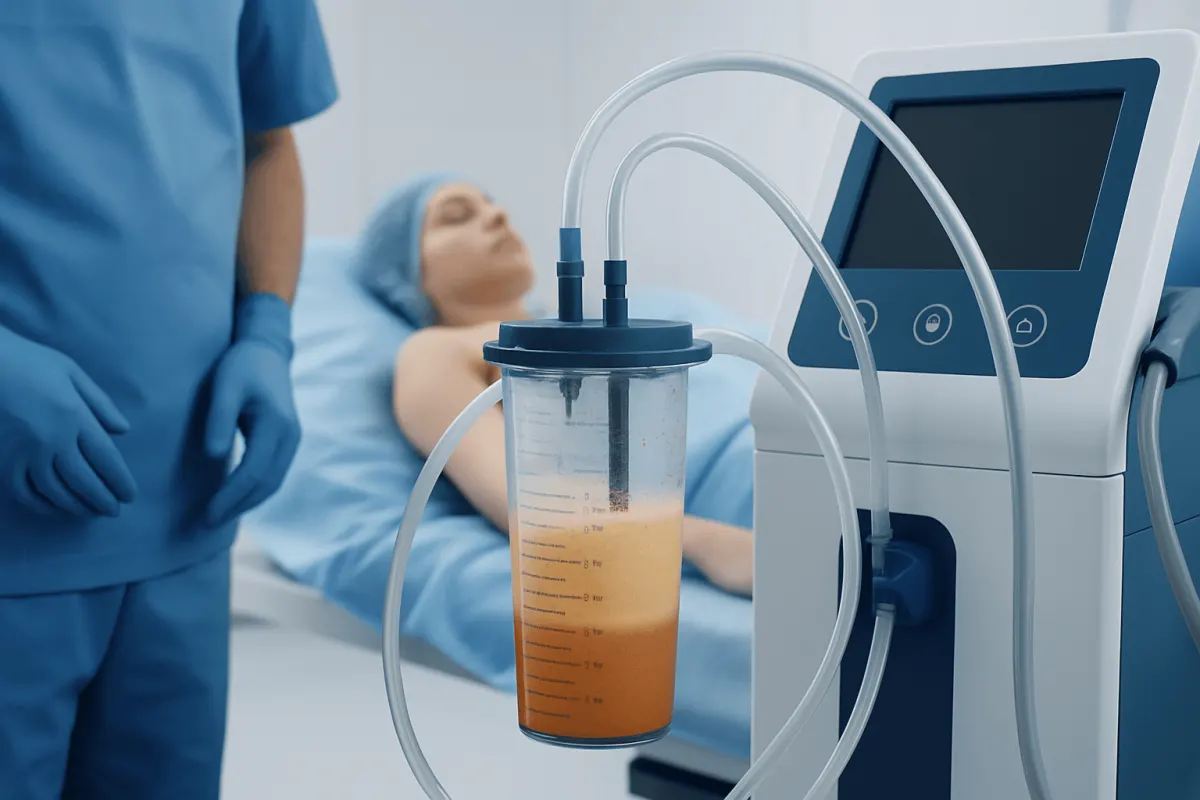
During the procedure, fat is removed using liposuction through small incisions. The collected fat is then purified or prepared to separate healthy fat cells from excess fluid, oil and blood. The prepared fat is injected through tiny entry points using small cannulas. Surgeons usually place many small droplets of fat in different layers to help the cells receive oxygen and nutrients from nearby tissue.
This careful placement is important because transferred fat does not have its own blood supply at first. If too much fat is placed in one area, some of it may not survive. For this reason, a skilled surgeon avoids overfilling and works gradually to create a smooth shape. In some cases, more than one treatment session may be recommended to build volume safely.
Expected Results and Aesthetic Benefits

One of the main advantages of fat transfer to the breasts is the natural look and feel it can provide. Because the material used is the patient’s own fat, the breast usually remains soft and moves naturally. The procedure can be especially helpful for improving mild asymmetry, filling upper breast volume loss, softening visible implant edges, or enhancing the transition between the chest wall and breast.
Another potential benefit is body contouring in the donor areas. Liposuction can reduce localized fat deposits in areas such as the waist, abdomen or thighs. However, the amount of liposuction performed should be appropriate and safe; the primary goal is not major weight loss. Patients should understand that this is a body contouring procedure, not a substitute for weight management.
Final breast size is not seen immediately. Swelling after surgery can make the breasts look fuller at first, and then some of the transferred fat is gradually absorbed by the body. The remaining fat typically stabilizes over several months. Once stable, the transferred fat behaves like other body fat: it may increase or decrease with significant weight changes.
Patients who are happiest with this procedure usually want a refined, proportional result. For someone seeking a large cup-size increase, a breast implant or another surgical plan may provide a more predictable change. A consultation helps match the technique to the desired outcome.
Limitations and Suitability Factors
Fat transfer to the breasts has clear limitations. It usually provides a small to moderate increase in size, often less than what can be achieved with implants. The amount of fat that can be safely transferred depends on breast tissue capacity, skin tightness, blood supply and the quality of harvested fat. Very slim patients may not have enough donor fat to achieve their desired result.
Fat survival is also variable. Even with excellent technique, not all transferred fat remains permanently. Some patients may need a second session to reach a more noticeable result or to improve symmetry. Surgeons may intentionally avoid placing too much fat at once because overfilling can increase the risk of lumps, oil cysts or fat necrosis.
Fat transfer is not designed to lift significantly sagging breasts. If nipples sit low or there is substantial skin laxity, a breast lift may be more appropriate, either alone or combined with another technique. Fat transfer can add volume, but it cannot reliably tighten loose skin or reposition the nipple to the same degree as a mastopexy.
Good candidates are generally healthy, do not smoke or can stop nicotine use as advised, have stable weight, have enough donor fat and have realistic expectations. Patients with active breast disease, unexplained breast lumps, untreated infections, poor wound healing risk or certain medical conditions may need additional assessment or may not be suitable for the procedure.
Risks, Safety and Breast Screening
As with any surgical procedure, breast fat transfer has possible risks. These may include bruising, swelling, infection, bleeding, changes in sensation, contour irregularities, asymmetry, scarring at incision sites and complications related to anesthesia. In the breast, some transferred fat may form firm areas, oil cysts or calcifications. These findings are usually benign, but they should be assessed properly if noticed or seen on imaging.
A common concern is whether breast fat transfer interferes with breast cancer screening. Modern breast imaging specialists are generally familiar with post-surgical changes such as fat necrosis and calcifications. It is important for patients to tell their radiologist and breast care team about any previous fat grafting or breast surgery. This helps imaging findings be interpreted in the right context.
Breast fat transfer is not known to replace or reduce the need for routine screening. Patients should continue mammography, ultrasound, MRI or clinical follow-up according to their age, risk factors and doctor’s recommendations. Any new breast lump, nipple change, skin dimpling, persistent pain or unusual discharge should be evaluated promptly, whether or not a patient has had cosmetic surgery.
Recovery and Self-care
Recovery varies depending on the extent of liposuction and the amount of fat transferred. Many patients experience swelling, bruising and soreness in both the breasts and donor areas for the first days to weeks. Compression garments may be recommended for liposuction sites to support healing and reduce swelling. The breasts are usually protected from firm pressure during the early healing period.
Patients are commonly advised to avoid strenuous exercise, heavy lifting and sleeping directly on the breasts until cleared by their surgeon. Gentle walking is often encouraged early because it supports circulation and reduces stiffness. Return to office-based work may be possible within a short period for some patients, while physically demanding jobs may require more time.
Healthy habits can support recovery, although they cannot guarantee fat survival. Patients should follow wound care instructions, attend follow-up appointments, avoid smoking and nicotine, maintain good nutrition and stay hydrated. Weight stability is important because significant weight loss after surgery may reduce breast volume, while weight gain may enlarge both treated and untreated fat areas.
- Follow the surgeon’s instructions about bras, compression garments and activity.
- Protect the breasts from pressure during early healing.
- Report increasing redness, severe pain, fever, drainage or sudden swelling.
- Keep routine breast screening appointments as advised.
When to Consult a Plastic Surgeon
A consultation with a board-qualified or appropriately certified plastic surgeon is the best way to decide whether fat transfer to the breasts is suitable. The surgeon can explain the realistic amount of volume that may be achieved, whether donor fat is adequate, and whether another procedure such as breast implants or a breast lift may better match the patient’s goals. Before-and-after photos of similar body types can help clarify expectations, but individual results always vary.
Patients should seek medical advice if they are considering breast enhancement after pregnancy, weight loss, previous breast surgery or breast cancer treatment. A coordinated approach may be needed when cosmetic goals overlap with reconstructive or breast health concerns. People with a personal or strong family history of breast cancer should discuss screening and risk assessment before any elective breast procedure.
Acıbadem Health Point’s multidisciplinary specialists and JCI-accredited hospitals evaluate and treat breast aesthetic and reconstructive concerns for international patients, including those considering fat transfer. As with any elective procedure, patients should take time to understand the benefits, limitations, recovery and alternatives before making a decision.
Frequently asked questions
01How much larger can breasts become with fat transfer?
Fat transfer usually creates a subtle to moderate increase in breast volume. The exact change depends on the amount of available donor fat, breast tissue capacity and how much fat survives after transfer. Patients seeking a large size increase may be better served by breast implants or a combined approach.
02Is breast fat transfer permanent?
Some of the transferred fat is naturally absorbed during the first months after surgery. The fat that survives and develops a blood supply can remain long term, but it still responds to weight changes like other body fat. Final results are usually assessed after swelling has settled and the fat has stabilized.
03Does fat transfer to the breasts leave scars?
The procedure uses small incisions for liposuction and fat injection, so scars are usually small and placed as discreetly as possible. Scar appearance depends on skin type, healing, incision care and individual biology. A surgeon can explain where incisions are likely to be placed.
04Can fat transfer lift sagging breasts?
Fat transfer can add volume and improve contour, but it does not significantly lift sagging breasts or remove excess skin. If the nipples are low or the breast skin is loose, a breast lift may be more appropriate. Some patients may benefit from combining procedures, depending on their anatomy and goals.
05Will fat transfer affect mammograms?
Fat transfer can sometimes cause benign imaging changes such as oil cysts or calcifications. Radiologists are trained to evaluate these findings, especially when they know the patient has had fat grafting. Patients should continue routine breast screening and inform imaging staff about any previous breast procedures.
06Who is not a good candidate for breast fat transfer?
Patients who are very thin may not have enough donor fat for the desired result. People with active breast disease, unexplained breast symptoms, uncontrolled medical conditions, poor healing risk or unrealistic expectations may need further evaluation or a different treatment plan. A qualified doctor should assess suitability on an individual basis.
This article is for general information only and is not a substitute for professional medical advice. Please consult a qualified doctor about your individual situation.
Medical weight-loss options in Turkey — costs & eligibility
JCI-accredited · board-certified surgeons · reply within 24h
Add us as a Preferred Source to see more of our trusted health content across Google Search, AI Overviews and Discover.