Eyebrow Transplant Price: What Affects the Cost?
Eyebrow transplant price is individualized rather than fixed. It depends mainly on the amount of restoration needed, the hair-graft plan, the clinical team, the setting and the follow-up care included in the treatment plan.
Eyebrow Transplant Price: What Patients Really Pay
Eyebrow transplant price varies because the procedure is tailored to each person’s brow shape, degree of hair loss, donor-hair availability and desired density. Rather than relying on a single advertised figure, patients should request a written, individualized plan that explains what the estimate includes, such as consultation, procedure fees, anesthesia, medicines, aftercare and any planned follow-up.
The number of follicular grafts required is often one of the main cost considerations. Rebuilding both eyebrows after extensive loss generally involves a different treatment plan from filling a small scar or adding density to naturally thin brows. The technique used, the complexity of placing hairs at a natural angle, the experience of the surgical team and the country or city where care is provided can also affect the final cost.
It is helpful to ask whether the quoted plan covers all stages of care and what may create additional charges. Price alone should not determine the choice of provider. Careful design, sterile surgical practice, appropriate donor-hair planning and reliable follow-up are important for both safety and a natural-looking result.
How an Eyebrow Transplant Works
An eyebrow transplant is a hair-restoration procedure that transfers healthy hair follicles, most commonly from the scalp, into the eyebrow area. The surgeon places each follicular unit through tiny openings in the skin, arranging the hairs to follow the natural direction, angle and pattern of eyebrow growth. This is a detailed procedure because eyebrow hairs sit flatter against the skin and change direction across the brow.
Follicles may be collected using follicular unit extraction (FUE), in which individual units are removed, or follicular unit transplantation (FUT), which involves taking a narrow strip of donor skin and separating it into grafts. The most suitable approach depends on the person’s donor area, hair characteristics, medical history and surgical goals.
The goal is not simply to add hair. A suitable plan considers facial proportions, existing brow hair, symmetry and the person’s preferences. People considering eyebrow transplant treatment should have a consultation with an experienced clinician who can explain what is realistic for their individual features.
Who May Be a Candidate and What Happens During the Procedure

Potential candidates include people with sparse eyebrows from genetics, overplucking, injury, burns, surgery or a stable medical condition that has caused permanent hair loss. A clinician first needs to establish why eyebrow hair is missing. Conditions such as thyroid disease, nutritional deficiencies, inflammatory skin disorders, alopecia areata or certain medications can contribute to hair loss and may need treatment before a transplant is considered.
Good candidates generally have a healthy donor area, stable hair loss and realistic expectations. Active infection, uncontrolled skin inflammation, a tendency to form problematic scars or unstable autoimmune hair loss may require postponement, additional assessment or a different approach. A transplant may not be the best option when hair loss is likely to continue or recur.
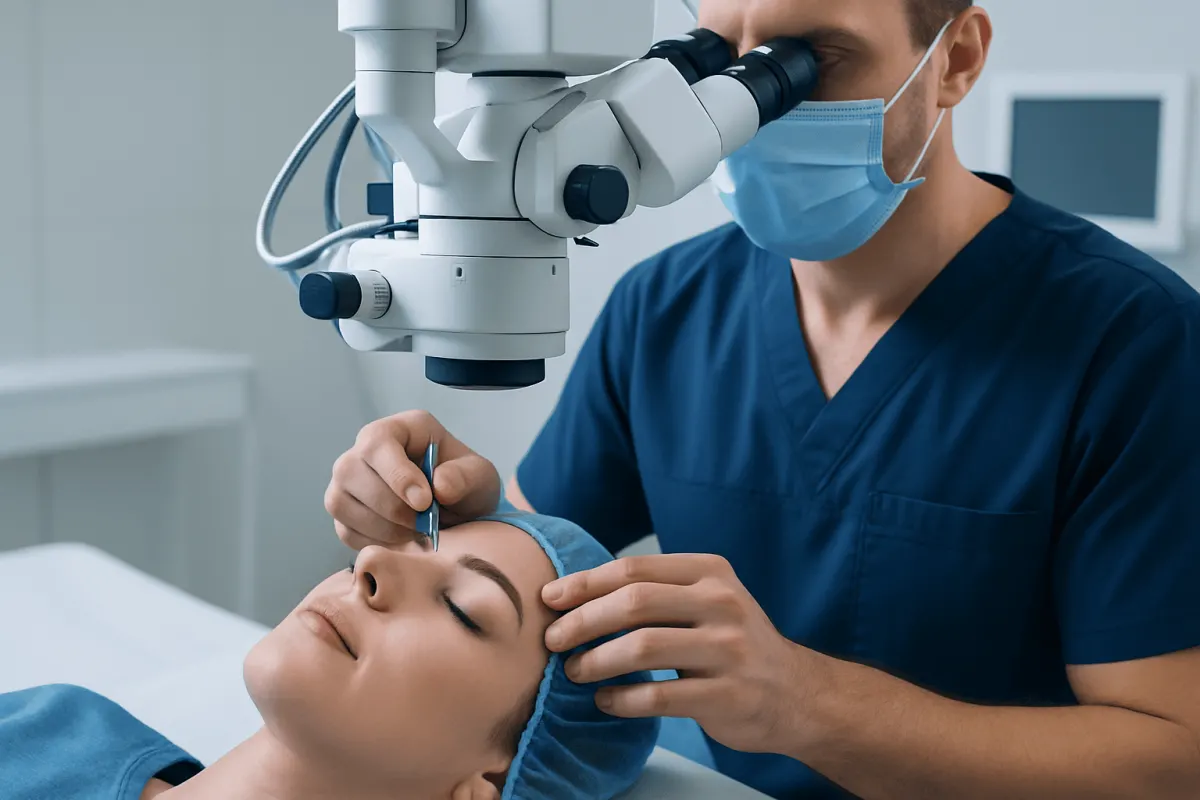
On the day of treatment, the clinician reviews the brow design and applies local anesthesia. Donor follicles are harvested, prepared under magnification and placed one by one into tiny recipient sites in the eyebrow. The procedure is usually performed on an outpatient basis. The exact duration varies with the number of grafts and the complexity of the design.
- Planning: assessment of hair loss, donor supply, brow shape and expected density.
- Harvesting: collection of suitable follicles from the donor area.
- Placement: precise insertion of grafts in the intended direction and angle.
- Aftercare: written instructions, wound review when needed and monitoring of new growth.
Recovery Timeline, Results and Everyday Care
Temporary redness, mild swelling, tenderness and small crusts are common in the first days after eyebrow transplantation. Patients are usually advised to keep the area clean, avoid rubbing or picking at grafts and follow the care instructions given by their surgical team. Strenuous exercise, swimming, heavy sweating and direct trauma to the area may need to be avoided for a short period.
Many transplanted hairs shed within the first few weeks. This expected shedding does not necessarily mean that the follicles have failed; the follicles remain beneath the skin and can later enter a new growth phase. Early growth is often seen after several months, while the overall appearance continues to mature over a longer period. A clinician can explain the expected timeline for the individual procedure.
Scalp-derived hairs continue to behave more like scalp hair after transplantation. They may grow longer and may need regular trimming, with grooming to guide their direction. Some people may also need professional brow shaping while the pattern settles. Results can improve gradually, and a touch-up procedure may occasionally be discussed if density is insufficient after healing.
Benefits, Limitations and Possible Risks
A potential benefit of eyebrow transplantation is the use of a person’s own living hair follicles to restore hair in a specific area. For appropriate candidates with stable eyebrow loss, it can provide a fuller, more defined brow and may reduce dependence on daily cosmetic products. Results depend on donor-hair quality, the reason for hair loss, technique, healing and long-term grooming.
Like every surgical procedure, it has possible risks. These include bruising, swelling, discomfort, bleeding, infection, scarring, numbness or altered sensation at the donor site, ingrown hairs and uneven or unnatural hair direction. Some grafts may not grow, or the eyebrows may heal with unequal density or shape. A revision or additional grafting session may be considered in selected cases.
Careful consultation helps reduce avoidable problems. Patients should share all medicines, supplements, allergies, smoking or nicotine use, health conditions and previous cosmetic procedures. They should also avoid trying to correct early unevenness themselves, as rubbing, plucking or using unapproved products can interfere with healing.
Is eyebrow transplant risky?
Eyebrow transplantation is generally considered a minor surgical procedure when performed by a properly trained, qualified clinician in an appropriate clinical setting. However, it is not risk-free. The most common short-term effects are temporary swelling, redness, crusting and tenderness, while less common complications include infection, scarring, poor graft growth and changes in hair direction.
The eyebrow area requires especially precise graft placement. Hair that is inserted at an unsuitable angle can look too upright or grow in an unwanted direction, and differences in density or shape may become noticeable after healing. Choosing an experienced team, following aftercare instructions and having the underlying cause of hair loss assessed can help lower risk.
How long do brow transplants last?
When transplanted follicles establish a blood supply and grow successfully, they are intended to be long-lasting. Because the follicles are usually taken from the scalp, they can continue producing hair for many years. However, long-lasting does not mean maintenance-free: the transplanted hairs commonly require regular trimming because they retain scalp-hair growth characteristics.
Long-term appearance can be affected by the initial graft survival, aging, changes in the surrounding natural eyebrow hair and any condition that caused eyebrow loss. If a person has an active inflammatory or autoimmune hair-loss disorder, the condition may affect the result. A clinician can discuss whether the hair loss appears stable enough for transplantation.
How painful are eyebrow implants?
Eyebrow hair transplantation is usually performed with local anesthesia, so patients should not feel sharp pain during graft harvesting or placement. They may feel brief pressure, pulling or small sensations during anesthetic injections. Some people also receive medication to help them feel more relaxed, depending on the clinical plan.
Afterward, mild soreness, tightness or tenderness can occur in the eyebrow and donor areas. This is commonly temporary and is managed according to the clinician’s aftercare advice. Patients should contact their care team if discomfort becomes severe, worsens rather than improves, or is accompanied by increasing redness, discharge or fever.
What is the success rate of eyebrow transplants?
There is no single success rate that accurately applies to every eyebrow transplant. Studies and clinic reports may use different definitions of success, such as graft survival, visible density, patient satisfaction or the need for a further session. Outcomes can vary with surgical technique, donor-hair quality, follicle handling, skin condition, aftercare and the underlying cause of eyebrow loss.
A reliable clinician should avoid guaranteeing a particular percentage of graft survival or a specific cosmetic result. Instead, they should explain the likely benefits and limitations for the individual, show how the design will be planned and describe how they monitor healing. A discussion about the possibility of uneven growth or future refinement is part of informed decision-making.
When to Seek Medical Care
Medical assessment is important if eyebrow hair loss is sudden, patchy, associated with itching, scaling, redness, pain or scarring, or accompanied by hair loss elsewhere on the body. These features can point to a health or skin condition that may benefit from diagnosis and treatment before any cosmetic procedure is considered.
People should also seek care if they develop signs of infection after a transplant, such as increasing pain, spreading redness, warmth, pus-like drainage or fever. Prompt advice from the treating clinic is appropriate if a grafted area is accidentally injured or if there are concerns during recovery.
Acıbadem Health Point’s multidisciplinary specialists and JCI-accredited hospitals can assess eyebrow hair loss and discuss appropriate Glaucoma Treatment Options: Drops, Laser, and Surgery Compared" class="ahp-ilk">treatment options for international patients. A consultation should focus on both the medical cause of hair loss and the person’s goals for restoration.
Frequently asked questions
01What is included in an eyebrow transplant price quote?
A quote may include the consultation, surgeon and facility fees, local anesthesia, graft harvesting and placement, medicines, aftercare supplies and follow-up visits. Inclusions vary between clinics, so patients should ask for a written breakdown and clarify whether future review visits or possible touch-up treatment are separate.
02Why does eyebrow transplant price vary between patients?
The plan is individualized according to the amount of hair loss, the desired brow density, the number of grafts, donor-hair characteristics and the complexity of placement. Geographic location, clinical facilities and the expertise of the surgical team can also influence the overall cost.
03Can an eyebrow transplant be done after overplucking?
It may be an option if overplucking has caused long-lasting loss of eyebrow follicles and the person has an adequate donor area. A clinician should first confirm that the hair loss is stable and rule out medical or skin-related causes of thinning.
04Will transplanted eyebrow hair need trimming?
Usually, yes. The follicles are often taken from the scalp, so the new hairs may keep growing longer than natural eyebrow hair. Regular gentle trimming and grooming are commonly needed to maintain the desired shape.
05When will eyebrow transplant results be visible?
Initial crusting and temporary shedding are expected during early recovery. New hair growth commonly begins gradually over the following months, and the appearance can continue to develop as the hairs mature and are groomed.
06Can an eyebrow transplant look natural?
A natural appearance depends on careful planning and precise placement of each graft at the correct angle, direction and density. Existing eyebrow shape, facial features, hair texture and realistic expectations all guide the treatment plan.
This article is for general information only and is not a substitute for professional medical advice. Please consult a qualified doctor about your individual situation.
Hair transplant in Turkey — costs, graft counts & a free assessment
JCI-accredited · board-certified surgeons · reply within 24h
Add us as a Preferred Source to see more of our trusted health content across Google Search, AI Overviews and Discover.