Eyebrow Scar Healing: When Will It Fade?
An eyebrow scar is commonly a harmless result of a cut, acne lesion, burn, surgery, or injury, and most scars become flatter and less noticeable as they mature. Healing takes time, but prompt medical assessment is important for deep wounds, infection signs, eyelid symptoms, vision changes, or scars that become painful or grow beyond the original injury.
Eyebrow Scar Overview: What Usually Happens
An eyebrow scar is an area of altered skin that develops after the body repairs an injury in or around the eyebrow. Common causes include cuts, falls, sports injuries, burns, acne, chickenpox, surgery, or previous cosmetic procedures. In many cases, it is medically harmless and gradually becomes less red, less raised, and less noticeable with time.
The eyebrow is a highly visible facial area, so even a small mark can feel significant. However, an early scar rarely predicts its final appearance. During the eyebrow scar healing process, the skin may look pink, purple, darker than the surrounding skin, pale, firm, or slightly uneven before it matures.
Hair growth may also change where the skin was injured. Hair follicles can recover after a superficial injury, while a deeper cut that damages follicles may leave a narrow area with reduced hair growth. A clinician can assess whether a change in brow density is likely to be temporary or long-lasting.
Red Flags First: When to Seek Medical Care
Medical care is needed urgently for a fresh eyebrow injury if bleeding does not stop with steady pressure, the wound is deep or widely separated, an object may remain in the wound, or the injury was caused by an animal or human bite. Wounds near the eye deserve particular attention because the eyelid, tear drainage system, eye surface, and surrounding nerves may be affected.
Prompt assessment is also important for blurred or double vision, eye pain, inability to move the eye normally, increasing swelling around the eye, severe headache after trauma, fainting, vomiting, or loss of sensation or movement in the face. These symptoms may indicate more than a simple skin injury.
For an existing scar, arrange a medical review if it becomes increasingly painful, warm, red, swollen, drains fluid or pus, opens again, or is associated with fever. A scar that continues to thicken, itch intensely, extend beyond the original wound, or causes eyelid pulling may benefit from treatment.
Eyebrow Scar Healing Time and the Stages of Repair

Eyebrow scar healing time varies with the depth and cause of the injury, skin type, wound care, infection, sun exposure, smoking, medical conditions, and individual healing response. A superficial wound may close within days to a few weeks, but the scar beneath it continues to change long after the skin surface has healed.
In the first days and weeks, inflammation helps clear damaged tissue and begin repair. The area can be red, swollen, tender, itchy, or firm. Over the next several weeks, the body produces collagen, which can make an eyebrow scar tissue feel thicker or raised. This phase is normal, although excessive thickening should be assessed.
Scar remodeling is the longest stage. Collagen fibers reorganize and the scar often softens and flattens over several months. Many scars continue to mature for 12 to 18 months, and sometimes longer. Photographs labeled eyebrow scar before and after should therefore be interpreted cautiously, because lighting, makeup, timing, and scar maturity can greatly change the apparent result.
How a Doctor Assesses an Eyebrow Scar
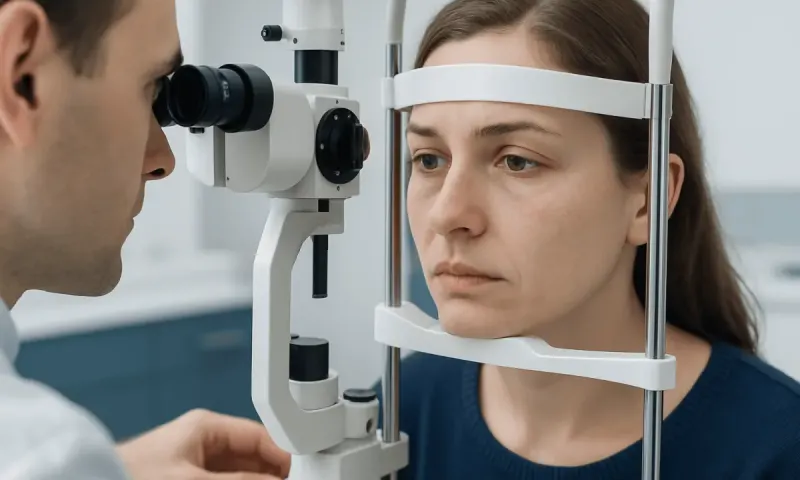
A doctor will usually begin by asking how and when the injury occurred, whether it was repaired with stitches or other closure methods, and whether there were infection symptoms or eye-related concerns. They may ask about prior scars, family history of raised scars, medications, allergies, and conditions that can affect wound healing, such as diabetes or immune suppression.
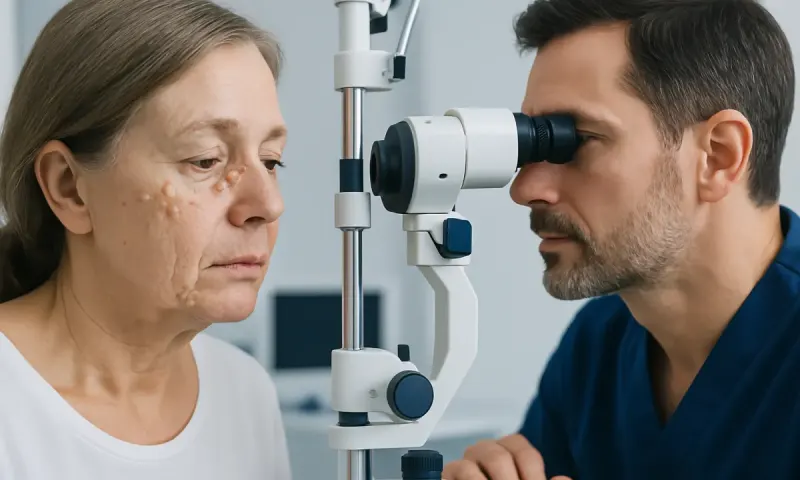
The examination considers the scar’s color, width, height, texture, direction, tenderness, mobility, and relationship to the eyelid and eyebrow hairs. The clinician may check facial sensation and muscle movement, eye movements, vision, and the surrounding skin. Most scars do not require scans or laboratory tests.
Additional tests may be needed when there is concern about a retained foreign body, fracture, deeper facial injury, infection, or a growth that may not be a typical scar. If the diagnosis is uncertain, a dermatologist, ophthalmologist, plastic surgeon, or other appropriate specialist may be involved.
Care That Supports the Eyebrow Scar Healing Process
For a recent injury, follow the wound-care instructions provided by the treating clinician. In general, gentle cleansing, keeping the wound protected as advised, and avoiding pulling at crusts or stitches can support healing. Do not apply strong acids, exfoliants, fragranced products, or unproven home remedies to an open wound or irritated skin.
Once the wound is fully closed and a clinician confirms it is appropriate, silicone gel or silicone sheets may help some scars become flatter and less symptomatic. Daily broad-spectrum sun protection is especially important because ultraviolet exposure can make a new scar darker or more noticeable. A hat or other physical sun protection can be useful alongside sunscreen when the skin has healed.
Avoid picking, shaving directly over a healing wound, or attempting to remove scar tissue at home. Gentle massage may be suggested in selected cases after full closure, but it is not suitable for every scar. People with darker skin tones may be more prone to post-inflammatory pigment changes, so early sun protection and individualized advice are particularly helpful.
- Keep a fresh wound clean and follow professional closure and dressing advice.
- Use sun protection after the skin has closed.
- Seek advice before using silicone, massage, makeup camouflage, or active skin-care products.
- Avoid smoking, as it can impair circulation and wound healing.
Treatment Options for Persistent or Noticeable Scars
Not every eyebrow scar needs treatment. If a scar remains raised, depressed, wide, tight, itchy, painful, or emotionally distressing after it has had time to mature, a clinician can discuss options based on its type and location. Treatment is usually planned after considering skin tone, hair growth, scar age, previous treatments, and proximity to the eye.
Options may include silicone-based therapy, pressure in selected situations, corticosteroid injections for some raised scars, vascular or resurfacing laser procedures, microneedling, or surgical scar revision. Scar revision does not erase a scar; its purpose is to improve features such as width, direction, contour, tension, or symptoms. Treatments close to the eye should only be performed by qualified professionals with appropriate expertise.
A depressed scar or area with missing eyebrow hair may sometimes be managed with camouflage techniques, hair restoration approaches, or reconstructive options after the scar is stable. The safest choice depends on the individual. Acıbadem Health Point’s multidisciplinary specialists and JCI-accredited hospitals can assess facial scars and coordinate appropriate care for international patients.
What Are the Best Brows for Older Ladies?
There is no single best brow shape for older women. A natural-looking brow that follows the person’s facial structure, has a soft arch, and avoids an overly dark or sharply drawn appearance often creates a balanced result. Brow hairs commonly become finer or sparser with age, so a lighter touch may look more natural than a heavily defined brow.
For someone with an eyebrow scar, the priority is to avoid irritating the area while it heals. A brow pencil, powder, tinted gel, or other camouflage product may be used only after the skin is completely closed and no longer irritated. A dermatologist or aesthetic clinician can advise on suitable options if there is fragile skin, active inflammation, or concern about hair loss.
Permanent makeup and microblading should be postponed over a new or changing scar. These procedures can irritate the skin and may heal unpredictably in scar tissue. A qualified practitioner should assess a mature scar before any cosmetic brow procedure is considered.
What Is the Synonym of Eyebrow?
The usual synonym or informal term for an eyebrow is “brow.” In anatomy, the brow refers to the raised area of skin and soft tissue above the eye, including the hair-bearing eyebrow. The term “superciliary region” may be used in clinical or anatomical writing.
It is useful to distinguish the eyebrow from the eyelid and the eye itself. A scar in the brow may affect skin and hair follicles, whereas an injury involving the eyelid margin, the eye, or vision needs more urgent specialist assessment.
In everyday language, people may say they have a brow scar, an eyebrow cut, or a mark above the eye. A clinician will identify the exact location because this helps guide safe treatment and determine whether nearby structures are involved.
Which Is the Best Eyebrow Procedure?
The best eyebrow procedure depends on the goal. For a mature scar, the appropriate option may range from no procedure at all to medical scar treatment, laser therapy, revision surgery, or a method to improve hair appearance. There is no one procedure that is best for every eyebrow scar.
For cosmetic shaping, options may include waxing, threading, tweezing, tinting, brow lamination, permanent makeup, or hair transplantation in carefully selected cases. These procedures should not be performed on an open wound, an infected area, or a scar that is still actively red, thickening, or changing.
Anyone considering a procedure near a scar should first obtain an assessment from a qualified clinician, particularly if the scar is close to the eyelid or there has been prior surgery or trauma. A careful plan can reduce avoidable irritation and help set realistic expectations.
What Is This Eyebrow?
The eyebrow is the curved strip of hair-bearing skin above each eye. It helps direct sweat and moisture away from the eyes, contributes to facial expression, and plays an important role in facial recognition and appearance.
Each eyebrow contains skin, hair follicles, muscles, nerves, blood vessels, and underlying tissue. Because the area is close to the eye and forehead, a significant injury can occasionally involve more than the skin. This is why new trauma accompanied by vision symptoms, unusual eye movement, numbness, or severe swelling should be assessed promptly.
An eyebrow scar can affect the skin alone or also alter eyebrow hairs, depending on the depth of injury. Many people find that the appearance improves with scar maturation and appropriate care, while persistent changes can be evaluated by a healthcare professional.
Frequently asked questions
01How long does an eyebrow scar take to heal?
The surface of a minor wound may heal within days to a few weeks, but the scar itself usually changes for many months. Many eyebrow scars continue to soften and fade for 12 to 18 months. Deep wounds, infection, sun exposure, and individual skin healing can extend this timeline.
02Will eyebrow hair grow back through a scar?
Hair may grow back if follicles were not permanently damaged. Superficial injuries are more likely to allow regrowth than deep cuts or burns that destroy follicles. A clinician can assess persistent patchy hair loss after the scar has matured.
03Can an eyebrow scar be removed completely?
No treatment can guarantee complete scar removal. Treatment can often improve a scar's color, thickness, contour, comfort, or visibility. The most suitable approach depends on the scar type, its age, skin characteristics, and its location near the eye.
04When can makeup be used on an eyebrow scar?
Makeup should not be placed on an open wound, draining area, or infected skin. Once the skin is fully closed and settled, gentle cosmetic products may be appropriate. It is sensible to ask the treating clinician for advice after stitches, surgery, or a significant injury.
05Is a raised eyebrow scar normal?
A scar can temporarily feel firm or raised during the early collagen-building phase of healing. If it continues to enlarge, becomes very itchy or painful, or grows beyond the edges of the original injury, medical assessment is recommended. Some raised scars respond to early treatment.
06Should an eyebrow cut be stitched?
Some eyebrow cuts need closure to bring the skin edges together, limit bleeding, and support healing, while others can heal safely with simpler care. The decision depends on depth, length, wound edges, contamination, timing, and whether nearby structures are involved. A deep, gaping, dirty, or eye-adjacent cut should be assessed promptly.
This article is for general information only and is not a substitute for professional medical advice. Please consult a qualified doctor about your individual situation.
Hair transplant in Turkey — costs, graft counts & a free assessment
JCI-accredited · board-certified surgeons · reply within 24h
Add us as a Preferred Source to see more of our trusted health content across Google Search, AI Overviews and Discover.