Eyeball Hurts When I Blink: What You Need to Know

Key Takeaways
- Pain with blinking is commonly linked to dry eye, a foreign body, eyelid inflammation, or a corneal irritation.
- Redness, light sensitivity, discharge, blurry vision, or injury make medical review more important.
- Home care may help mild irritation, but sudden or severe pain should not be ignored.
- Contact lens wearers need extra caution because infections can develop quickly.
- An eye exam can identify whether the problem is on the surface of the eye or deeper inside the eye.
When an eyeball hurts when blinking, the cause is often related to the surface of the eye, eyelids, or tear film rather than the eyeball itself. Many cases are minor, but some need prompt medical evaluation to protect vision and comfort.
Overview
When someone says, “my eyeball hurts when I blink,” the sensation is usually coming from the eye’s surface, the eyelids, or the tear film that keeps the eye comfortable. Blinking should be smooth and nearly unnoticed, so pain during that movement often suggests that something is rubbing, inflamed, dry, or irritated.
Some causes are simple and short-lived, such as a dust particle, eye strain, or mild dryness after screen use. Others deserve timely attention, especially if the pain started after an injury, if contact lenses are involved, or if the eye also looks red, watery, or unusually sensitive to light.
The good news is that eye pain with blinking can usually be evaluated clearly with an eye exam. A careful history, a surface check, and sometimes a dye test or pressure measurement can help a clinician separate a minor surface problem from conditions that may affect vision if left untreated.
Symptoms
The exact feeling can vary. Some people describe a sharp scratch with each blink, while others notice a sore, tender, or burning sensation. The discomfort may be constant, or it may only appear when the eyelid moves across the eye.
Related symptoms often provide important clues about the cause. These may include redness, tearing, grittiness, swelling of the eyelid, mucus or discharge, blurred vision, or light sensitivity. A foreign body sensation — the feeling that something is stuck in the eye even when nothing is visible — is especially common with surface irritation.
In some situations, the pain is mild but the eye feels “off,” and blinking becomes uncomfortable only after reading, driving, or prolonged screen time. In others, the pain is sudden and noticeable from the start, particularly if the cornea has been scratched or if an infection is developing.
- Scratchy or sandy sensation
- Redness or watery eyes
- Swollen or tender eyelids
- Light sensitivity
- Blurred or reduced vision
- Discharge or crusting
Causes & Risk Factors

Dry eye is one of the most common reasons the eye hurts with blinking. When the eye does not make enough tears, or when tears evaporate too quickly, blinking can create friction across the surface. Long hours on digital devices, air conditioning, dehydration, and aging can all make dryness more noticeable.
A corneal abrasion, which is a scratch on the clear front surface of the eye, can cause a sharp, painful blink. Even tiny particles, such as dust, sand, an eyelash, or makeup debris, can irritate the cornea or get trapped under the lid. Eyelid inflammation, including blepharitis or a stye, may also make blinking uncomfortable because the lid margin becomes swollen and tender.
Less commonly, pain with blinking can be related to infection, inflammation inside the eye, migraine-like eye discomfort, or a problem deeper in the eye. Contact lens wear is an important risk factor because it can increase the chance of corneal irritation and infection if lenses are worn too long, cleaned poorly, or used during sleep when not advised.
Several factors can raise the likelihood of eye pain when blinking:
- Dry environments, screen overuse, or infrequent blinking
- Contact lens use, especially extended wear
- Recent eye rubbing, dust exposure, or minor trauma
- Blepharitis, styes, or recurring eyelid inflammation
- Prior eye surgery or a history of dry eye
Diagnosis
An eye specialist usually begins by asking when the pain started, whether there was an injury, and whether the person wears contact lenses. The pattern of symptoms matters: pain only with blinking may point to a surface issue, while deeper aching or headache-like pain can suggest a different problem.
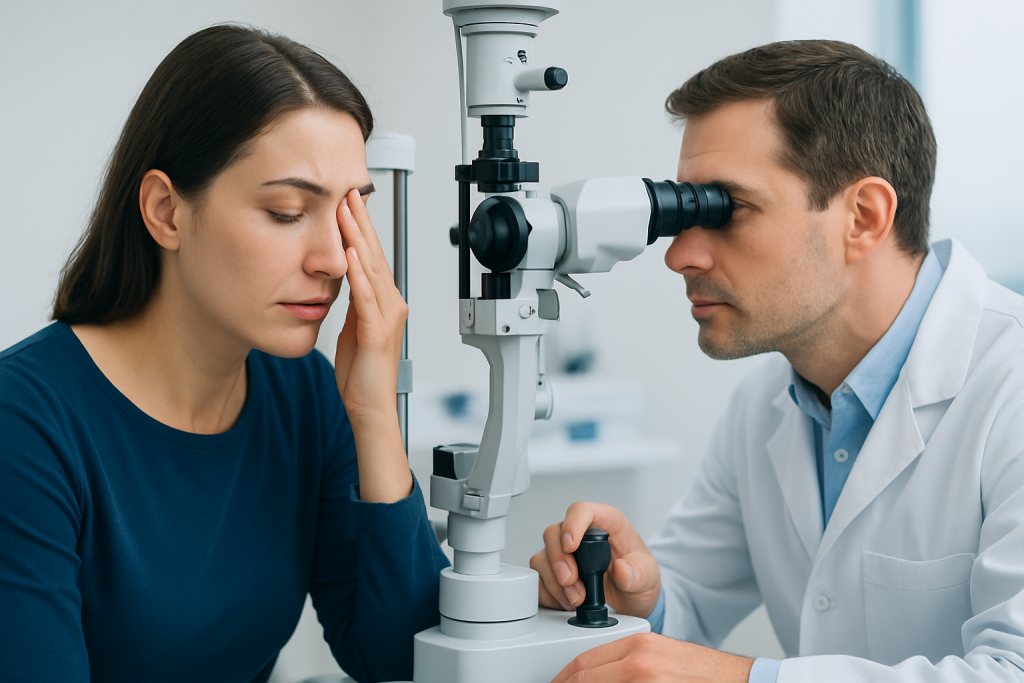
During the exam, the clinician typically checks visual acuity, the eyelids, and the eye surface. A slit-lamp examination allows a close look at the cornea and conjunctiva. Fluorescein dye may be used to highlight scratches, dry spots, or tiny foreign bodies that are difficult to see with the naked eye.
Depending on the findings, the doctor may also test eye pressure or look for signs of infection or inflammation. This step is especially important if the pain is severe, the vision has changed, or the person has a history of autoimmune disease, recent surgery, or contact lens-related symptoms.
Treatment Options
Treatment depends on the cause, so the first goal is to identify what is irritating the eye. A dry eye flare may improve with lubricating drops, environmental changes, and regular breaks from screens. If a foreign body is present, it may need careful removal by a clinician rather than repeated rubbing, which can worsen the surface injury.
For a corneal abrasion, treatment often focuses on protecting the eye and reducing the chance of infection while the surface heals. Eyelid inflammation may be managed with warm compresses, lid hygiene, and, in some cases, prescription medication. If an infection is suspected, the doctor may recommend targeted treatment based on the exam findings.
It is important not to self-treat with leftover eye drops, especially steroid drops, unless they were specifically prescribed for the current problem. Contact lens wear should usually be paused until the eye is fully assessed and the surface has healed, because continued lens use can slow recovery or worsen irritation.
For patients traveling from another country, a specialist visit may also include a clear follow-up plan that can be shared with a local eye doctor once they return home. This is particularly helpful when treatment needs monitoring, such as for corneal healing, infection control, or dry eye management.
Prevention & Self-care
Simple habits can reduce the chance of painful blinking, especially when the cause is dryness or irritation. Frequent screen breaks, conscious blinking, and using a humidifier in dry indoor spaces may help the eye surface stay more comfortable. Staying hydrated can also support tear film stability.
Good contact lens hygiene is essential. Lenses should be cleaned as directed, replaced on schedule, and never worn longer than recommended. If the eye feels irritated, it is safer to remove the lenses and switch to glasses until the eye is evaluated or symptoms settle.
For people prone to dry eye or blepharitis, consistent eyelid care can make a real difference. Warm compresses and gentle lid cleansing may reduce debris at the lash line and improve comfort. Sunglasses can help if light sensitivity is present, and avoiding eye rubbing can prevent small surface injuries from becoming worse.
- Use breaks during long computer or phone sessions
- Avoid rubbing the eyes
- Replace mascara and eye makeup regularly
- Protect the eyes during work or sports with appropriate eyewear
- Seek advice before using over-the-counter drops for ongoing symptoms
When to See a Doctor
Medical attention is wise when eye pain with blinking does not improve quickly, keeps returning, or follows an injury. An eye that is red and painful, especially with blurred vision or light sensitivity, should be checked rather than watched at home for too long.
Prompt evaluation is especially important if the person wears contact lenses, has discharge, cannot keep the eye open comfortably, or suspects a foreign body that cannot be flushed out easily. Sudden vision changes, severe pain, headache with nausea, or marked swelling around the eye deserve urgent assessment.
Any uncertainty is a good reason to ask for professional care. A qualified clinician can determine whether the problem is simple dryness, a corneal scratch, eyelid inflammation, or something that needs faster treatment to protect the eye.
For international patients seeking coordinated care, Acibadem Health Point offers multidisciplinary specialists and JCI-accredited hospitals that diagnose and treat eye conditions with a clear, patient-centered approach.
Living With and Recovering From Eye Pain
Recovery usually depends on identifying the trigger and giving the eye time to heal. For a minor scratch or irritation, symptoms may ease with rest and appropriate treatment, but the timeline can differ from person to person. It is helpful to avoid swimming, eye makeup, and contact lenses until a clinician confirms the eye is recovering well.
Follow-up matters when symptoms are not fully resolved or when a more complex condition is involved. This is particularly true for travelers who may return home before the issue is completely settled. A clear discharge plan, written medication instructions, and guidance on when to seek local follow-up can make recovery smoother and less stressful.
Most importantly, ongoing or repeated pain should not be accepted as normal. The eye is sensitive, and recurring discomfort is a signal to look for an underlying cause rather than simply masking the symptom.
Practical Questions to Ask at the Appointment
Many people feel more confident when they know what to ask during an eye visit. Questions can focus on the likely cause, whether the cornea is involved, and how soon normal activities can resume. For contact lens wearers, it is also helpful to ask when lenses can be safely restarted.
Patients traveling for care may want to ask how follow-up will work once they return home, which warning signs should prompt a return visit, and whether their local eye doctor should receive a summary of the treatment plan. Clear communication often improves comfort and helps prevent confusion after travel.
- What is the most likely cause of the pain?
- Do I have a corneal scratch, dry eye, or an eyelid problem?
- Should I stop wearing contact lenses, and for how long?
- Which symptoms mean I need urgent review?
- How should I follow up after returning home?
Frequently asked questions
01Why does my eyeball hurt when I blink but not all the time?
Pain only when blinking often points to a surface problem such as dry eye, a tiny foreign body, or a corneal scratch. Blinking moves the eyelid across the eye, so any rough spot on the surface can hurt more during that motion. An exam can help identify the exact source.
02Can dry eye make blinking painful?
Yes. When tears are too thin, too few, or evaporate too quickly, blinking can create friction and discomfort. Dry eye is common and often improves with a combination of self-care and targeted treatment from an eye clinician.
03Is eye pain with blinking an emergency?
Not always, but it should be taken seriously if it is sudden, severe, or comes with vision changes, light sensitivity, discharge, or injury. Contact lens wearers should be especially cautious because infections can develop quickly. If in doubt, it is better to be checked promptly.
04Should I keep wearing contact lenses if my eye hurts when I blink?
It is usually safer to remove contact lenses until the eye has been assessed. Continued lens wear can worsen irritation and may increase the risk of infection. A clinician can advise when it is safe to wear them again.
05Can I treat this at home?
Mild irritation sometimes improves with rest, lubricating drops, and avoiding eye rubbing. However, home care should not replace medical assessment if the pain is persistent, severe, or linked to redness, blurred vision, or injury.
06What if I feel like something is stuck in my eye?
That feeling can happen with dry eye, an eyelash, or a small scratch on the cornea. If rinsing the eye gently does not help, or if the pain continues, an eye specialist should examine it rather than trying repeated rubbing or digging at the eye.
This article is for general information only and is not a substitute for professional medical advice. Please consult a qualified doctor about your individual situation.
Explore treatments in Turkey — costs, top hospitals & a free quote
JCI-accredited · board-certified surgeons · reply within 24h
Add us as a Preferred Source to see more of our trusted health content across Google Search, AI Overviews and Discover.