

Exercise Routine for Legs: What You Need to Know
- 9 min read
- Published November 27, 2026
Key Takeaways
- A good leg routine usually combines strength, mobility, balance, and recovery.
- Proper form matters more than speed, load, or the number of repetitions.
- People with knee, hip, ankle, back, or circulation problems may need a tailored plan.
- Pain that is sharp, worsening, or associated with swelling should be assessed by a doctor.
- Consistency and gradual progression are more effective than occasional intense workouts.
An exercise routine for legs can support strength, balance, mobility, and everyday function when it is built around a person’s goals and physical condition. The safest approach is gradual, consistent, and adapted to any joint pain, injury history, or chronic health concerns.
Overview
An exercise routine for legs is not only about appearance or athletic performance. It is one of the most practical ways to support walking, climbing stairs, standing from a chair, carrying groceries, and maintaining independence over time.
Healthy leg training usually includes more than one type of movement. Strength exercises help the muscles around the hips, thighs, calves, and glutes. Mobility work keeps joints moving comfortably, while balance exercises reduce the chance of falls and help coordination. For many people, the best routine is the one they can repeat safely week after week.
This topic matters especially for people who are returning to activity after an injury, managing arthritis, living with weakness from a neurological condition, or planning rehabilitation after surgery. In those situations, an exercise plan should be individual rather than copied from a general fitness video.
What a balanced leg routine includes
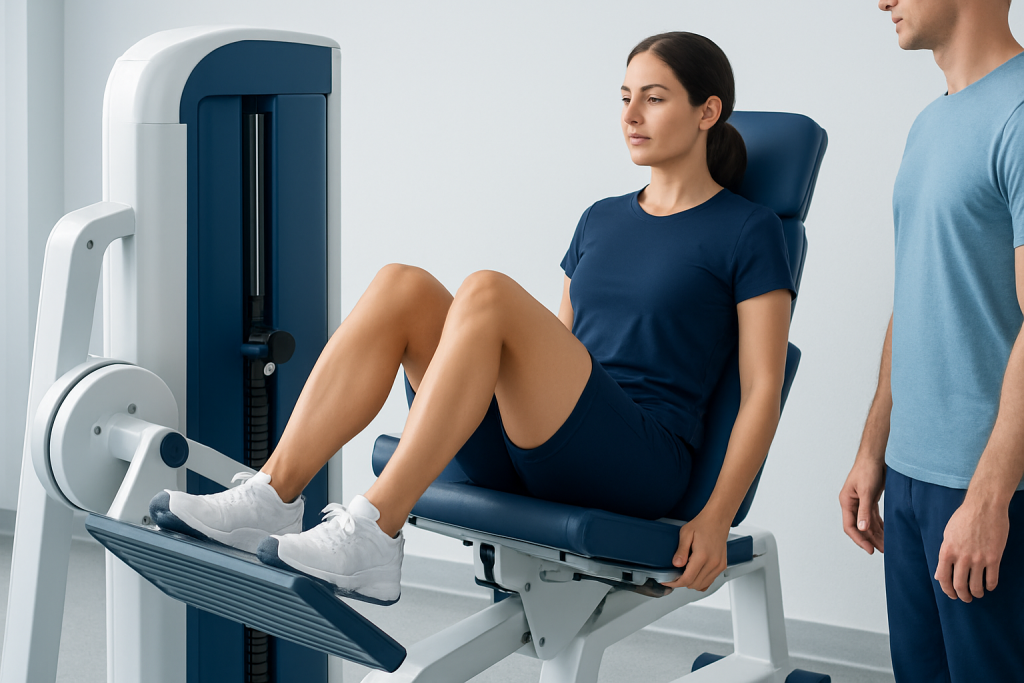
A well-rounded leg session is usually built from a few simple categories. Each one plays a different role, and together they create a routine that supports function rather than overloading a single area.
- Strength work: Movements such as squats, sit-to-stands, step-ups, lunges, calf raises, and bridges can build muscle support around the joints.
- Mobility work: Gentle range-of-motion movements for the hips, knees, and ankles can help the body move more freely.
- Balance work: Standing on one leg, tandem stands, or controlled heel-to-toe walking can improve stability.
- Recovery: Rest days, sleep, hydration, and light walking can help the body adapt between sessions.
The right mix depends on age, goals, and current fitness level. Someone who sits for long hours may benefit from basic mobility and glute activation before heavier training. Someone who is already active may use the same principles but at a higher intensity, with more attention to technique and progression.
It is also helpful to think about how the legs work as a system. The feet affect ankle alignment, the hips influence knee tracking, and core control can change how forces move through the lower body. That is why leg training often works best when it is connected to overall movement quality, not isolated muscle effort alone.
Common symptoms and signs that the routine needs adjusting

Leg exercises should challenge the muscles, but they should not create warning signs that suggest strain, injury, or irritation. A person may need to slow down, modify the routine, or get medical guidance if discomfort changes in character or persists beyond the workout.
Some signs that the plan may need adjustment include persistent joint pain, swelling, limping, sudden loss of strength, catching or locking in a joint, numbness, or pain that is worse at night or does not improve with rest. Muscle soreness after exercise can be normal, especially when starting a new routine, but it is usually dull, symmetrical, and gradually improving.
It can also help to pay attention to how daily activities feel. If stairs, standing from a chair, or walking become harder instead of easier, the routine may be too aggressive or poorly matched to the person’s current condition. In such cases, a clinician or physiotherapist can help identify the reason and suggest safer alternatives.
Causes and risk factors for poor leg function
People often search for leg exercises because they feel stiffness, weakness, imbalance, or fatigue. These concerns can come from many different causes, and the best routine depends on what is driving the problem.
Common contributors include sedentary habits, deconditioning after illness, arthritis, tendon irritation, muscle strain, nerve compression, poor footwear, or previous injuries to the hips, knees, ankles, or feet. Circulation problems and some metabolic or neurological conditions can also affect leg endurance and control.
Risk increases when the body is asked to do too much too soon. Jumping into high-volume workouts, repeating poor movement patterns, or training through pain can all make symptoms harder to manage. Older adults, people recovering from surgery, and those with chronic medical conditions often benefit from a slower and more supervised progression.
How doctors and therapists evaluate the problem
If leg symptoms are limiting activity, the first step is usually a clinical assessment. A doctor or physiotherapist may ask when the symptoms started, what makes them better or worse, whether there was an injury, and whether the issue affects one leg or both.
The physical examination often looks at range of motion, strength, balance, walking pattern, joint swelling, tenderness, and nerve-related signs. In some cases, additional tests may be needed, such as imaging studies, blood tests, or a more detailed musculoskeletal evaluation, especially if there is a history of trauma, persistent swelling, or unexplained weakness.
For international patients, clear planning is especially important. If care is being arranged from another country, bringing previous imaging reports, medication lists, and discharge summaries can help the treating team understand the full picture quickly and design an appropriate exercise and rehabilitation plan.
Treatment options and safe exercise choices
Treatment depends on the cause, but exercise is often part of the plan. In some cases, the goal is to strengthen weak muscles. In others, the goal is to protect an irritated joint, improve post-surgical recovery, or restore confidence with movement after a long break.
A safe starter routine may include sit-to-stands from a chair, gentle mini-squats, supported calf raises, bridges, step-ups on a low step, and balance work near a wall or countertop. Walking, stationary cycling, aquatic exercise, and guided physiotherapy can also be valuable when the joints need lower impact.
The best results usually come from gradual progression. That may mean starting with fewer repetitions, slower movement, and more rest, then increasing complexity only when the body responds well. If pain is part of the picture, a clinician may recommend temporary modifications rather than total rest, because movement can remain helpful when it is carefully dosed.
For some people, treatment may also include pain relief strategies, bracing, footwear changes, weight management, or medical care for an underlying condition. Surgery is not a routine answer for most exercise-related leg concerns, but it may be considered when there is significant structural damage, severe arthritis, or a persistent problem that does not improve with conservative care.
Prevention and self-care
Prevention starts with making leg exercise sustainable. A routine that is too intense may be impressive for a week and unhelpful for months, while a moderate plan can build lasting strength and confidence. Warm-up time, good technique, and recovery are part of the exercise, not optional extras.
Simple self-care habits can make a meaningful difference. Comfortable footwear, regular movement breaks during long sitting periods, staying hydrated, and alternating harder sessions with lighter activity can all reduce strain. People returning after injury or travel-related inactivity may need to rebuild gradually rather than resume where they left off.
Practical habits that support leg health include:
- Starting with bodyweight exercises before adding resistance
- Using a stable surface for balance practice
- Stopping if pain becomes sharp, sudden, or unstable
- Keeping at least one recovery day between harder sessions
- Reassessing the plan if symptoms change
For patients traveling internationally for care, it can help to discuss home-exercise instructions before leaving the hospital or rehabilitation setting. A clear written plan, ideally with demonstration and follow-up guidance, makes it easier to continue safely after returning home.
When to see a doctor
Medical review is sensible when leg pain, weakness, swelling, or stiffness is lasting longer than expected, especially if it interferes with walking or daily activity. It is also important to seek assessment if symptoms appear after a fall, twist, or direct impact.
Prompt evaluation is recommended if there is visible deformity, inability to bear weight, marked swelling, redness, fever, numbness, or one-sided calf pain with swelling. These signs do not always mean something serious, but they deserve professional attention so the correct cause can be identified.
People with diabetes, vascular disease, rheumatoid arthritis, recent surgery, or a history of blood clots should be cautious about new leg symptoms and discuss them early. A qualified clinician can determine whether the issue is muscular, joint-related, nerve-related, or something else, then guide the safest next step.
Acibadem Health Point works with multidisciplinary specialists and JCI-accredited hospitals to diagnose and treat leg-related orthopedic and rehabilitation concerns for international patients, with care plans shaped around recovery, mobility, and long-term function.
Frequently asked questions
01How often should a person do a leg exercise routine?
Many people do leg-focused strength work two to three times per week, with rest or lighter activity between sessions. The right frequency depends on fitness level, recovery, and whether there is pain or a medical condition involved. A clinician or physiotherapist can help choose a schedule that is realistic and safe.
02What is the best exercise routine for legs for beginners?
A beginner routine often starts with bodyweight movements such as sit-to-stands, mini-squats, calf raises, bridges, and short walks. The goal is to learn control and build tolerance before adding heavier resistance or complex movements. Starting small is usually more effective than trying to do too much at once.
03Can leg exercises help knee pain?
They can help in many cases because stronger muscles support the knee and improve movement control. However, the routine needs to match the cause of the pain, since some problems improve with exercise while others need temporary modification or medical assessment. Pain that worsens during or after exercise should not be ignored.
04Is it normal to feel sore after a leg workout?
Mild muscle soreness is common when someone begins a new routine or increases intensity. It should usually feel like a dull ache in the muscles and improve over a few days. Sharp pain, swelling, or joint-specific pain is less typical and should be assessed.
05Should a person stretch before or after leg exercise?
A short warm-up with dynamic movement is usually helpful before exercise because it prepares the muscles and joints for work. Gentle stretching can be useful after exercise if it feels comfortable, but it should not force a painful range. The most important factor is moving with control and good alignment.
06When should leg exercise be avoided?
Exercise may need to be paused or modified if there is a recent injury, significant swelling, inability to bear weight, fever, numbness, or sudden weakness. In those situations, it is better to seek medical advice before continuing. A tailored plan is often safer than trying to push through symptoms.
This article is for general information only and is not a substitute for professional medical advice. Please consult a qualified doctor about your individual situation.
Joint and spine care in Turkey — expert assessment & treatment
JCI-accredited · board-certified surgeons · reply within 24h
Add us as a Preferred Source to see more of our trusted health content across Google Search, AI Overviews and Discover.



How can we help you today?
Meet an Acibadem specialist by secure video, before you travel.
Book a video visit