Endoscope Vs Laparoscope: How They Enter the Body
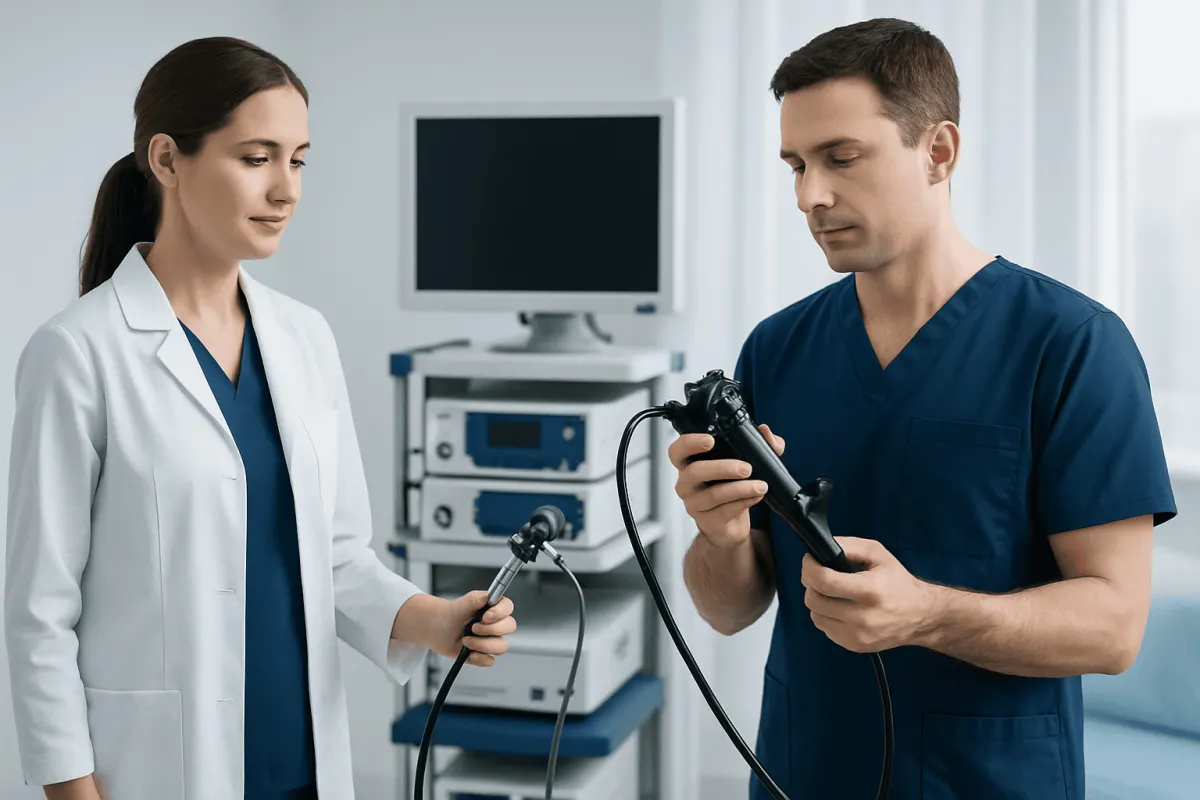
An endoscope and a laparoscope are camera-equipped instruments that help clinicians see inside the body, but they are used in different ways. Endoscopy usually passes through a natural body opening, while laparoscopy involves small incisions in the abdomen and can be used to diagnose or treat conditions.
Endoscope vs laparoscope: side-by-side comparison
Endoscope vs laparoscope: both are thin instruments with a light and camera that send images to a monitor, helping clinicians examine internal structures. The main difference is how they enter the body and what they are designed to assess. An endoscope generally passes through a natural opening, such as the mouth or rectum, whereas a laparoscope enters through small cuts in the abdominal wall.
The word endoscope is broad and includes several instruments, such as a gastroscope for the upper digestive tract, a colonoscope for the colon, and a bronchoscope for the airways. A laparoscope is a specific type of endoscope used in the abdomen and pelvis. It is commonly used during minimally invasive surgery as well as for selected diagnostic procedures.
| Feature | Endoscopy | Laparoscopy |
|---|---|---|
| Route into the body | Usually through a natural opening | Through small abdominal incisions |
| Main view | Inside the lining of hollow organs or passages | Outer surfaces of abdominal and pelvic organs |
| Typical examples | Gastroscopy, colonoscopy, bronchoscopy | Gallbladder surgery, appendectomy, evaluation of pelvic pain |
| Anesthesia | Often sedation; sometimes no sedation or general anesthesia | Usually general anesthesia |
| Recovery | Often same day, depending on procedure and sedation | Often same day or a short hospital stay, depending on surgery |
Neither approach is automatically “better.” Each gives different information and may be chosen because it is the safest, most direct way to answer a clinical question or provide treatment.
How clinicians tell endoscopy and laparoscopy apart
Clinicians first consider the location of the possible problem. If symptoms suggest a condition affecting the inner surface of the esophagus, stomach, small intestine, colon, bladder, or airways, an endoscopic examination may be useful. It can reveal inflammation, ulcers, bleeding, narrowing, polyps, or other visible changes in the lining.
Laparoscopy is considered when the clinical question concerns the abdominal cavity or pelvis, including organs and tissues that cannot be assessed well from inside the digestive tract. It may allow the surgeon to inspect the liver, gallbladder, appendix, bowel surfaces, uterus, ovaries, fallopian tubes, and the tissue lining the abdomen.
Imaging tests, blood tests and a person’s symptoms often guide this choice. Ultrasound, CT, MRI, or other studies may provide sufficient answers without an invasive procedure. If direct inspection, a tissue sample, or treatment is needed, the care team will discuss the expected benefits, alternatives, preparation, anesthesia, and possible complications before proceeding.
What happens during each procedure
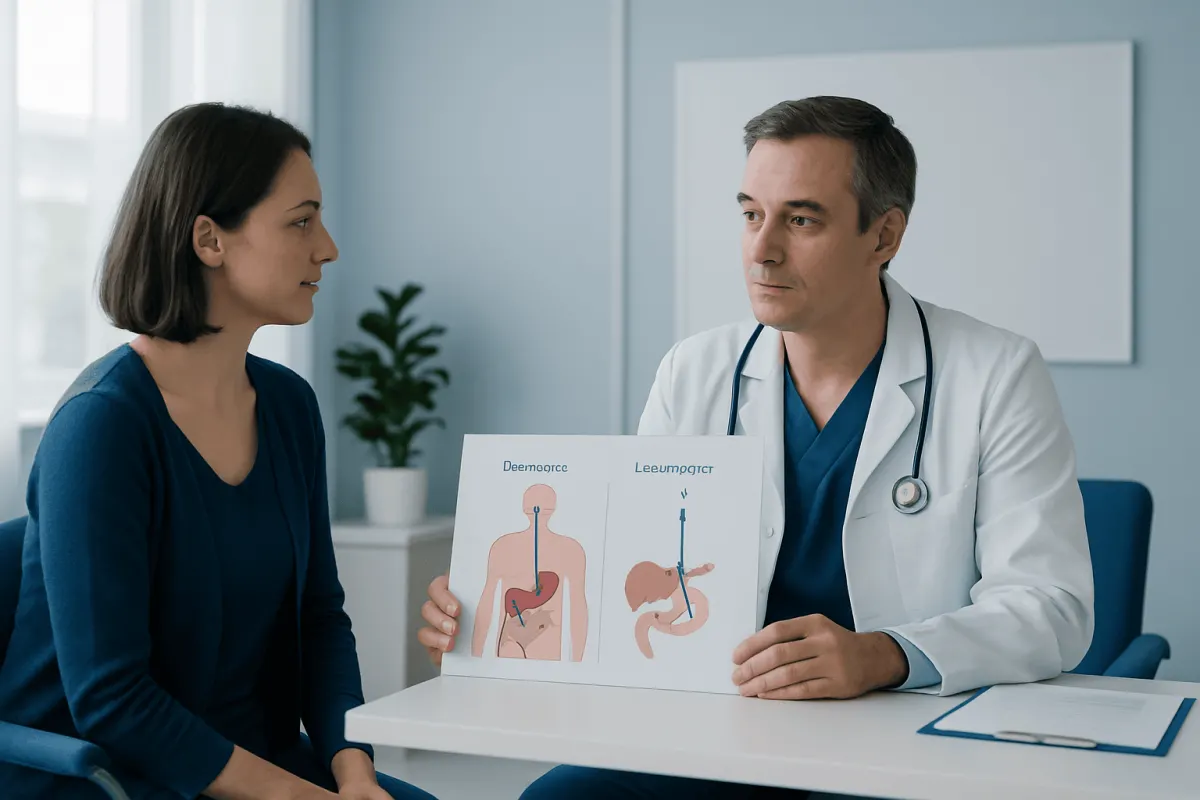
For many endoscopic procedures, the patient follows instructions about fasting and, for colonoscopy, bowel preparation. A flexible scope is gently advanced through the relevant natural opening. The clinician may take biopsies, remove certain polyps, stop some sources of bleeding, widen a narrowed area, or collect samples. Sedation is frequently used to improve comfort, and patients generally need someone to take them home afterward.
During laparoscopy, the patient is usually asleep under general anesthesia. The surgeon makes a small incision, often near the belly button, and introduces the laparoscope. Carbon dioxide gas is used to gently create working space inside the abdomen. One or more additional small incisions may be needed for surgical instruments.
A diagnostic laparoscopy may involve inspection and biopsy only, while an operative laparoscopy can include treatments such as removal of the appendix or gallbladder, treatment of endometriosis, repair of a hernia, or gynecologic surgery. The exact plan depends on the condition and whether minimally invasive surgery is appropriate.
Which one is more painful, an endoscopy or a colonoscopy?
Upper endoscopy and colonoscopy can both cause temporary discomfort, but experiences vary and neither should be expected to cause severe pain during a well-managed procedure. Sedation is commonly used for both. During upper endoscopy, people may notice throat pressure, gagging, or bloating; after the procedure, a mild sore throat or gas may occur briefly.
During colonoscopy, air or carbon dioxide introduced to expand the colon can cause fullness, pressure, or cramping. Afterward, temporary bloating or gas is common. Because the colonoscopy preparation involves clearing the bowel, some people find the preparation more burdensome than the examination itself.
Comfort depends on the procedure, sedation plan, individual sensitivity, anxiety level, and whether treatment such as polyp removal is required. Patients should tell the clinical team about prior difficult procedures, medication allergies, sleep apnea, or concerns about sedation so that care can be planned safely.
Why do they go through the belly button for laparoscopic surgery?
The belly button is a natural scar in the abdominal wall and often provides a central route into the abdomen. A small incision there can be relatively discreet after healing and can give the surgeon a useful overall view of the abdominal and pelvic organs. It is often the first site used to place the camera.
Using a laparoscope through this area also helps the surgeon position other small instruments in a way that supports safe movement and visibility. However, the belly button is not always used. Previous operations, scar tissue, a hernia, body anatomy, pregnancy, or the planned operation may lead the surgical team to choose a different entry point.
All abdominal entry techniques carry some risks, including bleeding, infection, injury to internal structures, and anesthesia-related complications. These are uncommon but important considerations, which is why the procedure is performed by trained teams with careful preoperative assessment and monitoring.
What cancers can a laparoscopy detect?
Laparoscopy can help assess suspected cancers in the abdomen or pelvis, especially when imaging does not fully show the extent of disease. It may identify visible tumor deposits, fluid, organ involvement, or spread within the abdominal lining, called the peritoneum. It can also allow tissue biopsies, which are needed to confirm a diagnosis.
Depending on the clinical situation, it may be used in the evaluation or staging of cancers involving the ovaries, uterus, stomach, pancreas, liver, bile ducts, colon, rectum, appendix, or peritoneum. It does not detect every cancer, and a normal laparoscopy cannot rule out all microscopic disease. Pathology from a biopsy and other tests remain essential.
For people with a known or suspected malignancy, the purpose of laparoscopy may be diagnosis, staging, planning treatment, or determining whether surgery is likely to be beneficial. Cancer evaluation is individualized and is best coordinated by an experienced multidisciplinary team.
Which is more painful, laparoscopy or open surgery?
In general, laparoscopic surgery tends to cause less incision-related pain than open surgery because it uses several small cuts rather than one larger incision. Many people also have a shorter recovery period, earlier return of movement, and smaller scars after minimally invasive surgery. However, pain levels vary according to the operation, the reason for surgery, the extent of treatment, and personal health factors.
Laparoscopy can cause shoulder-tip discomfort for a short time after surgery. This is related to the gas used to create space in the abdomen and irritation of the diaphragm. Abdominal soreness, fatigue, and mild bruising around incision sites can also occur. The surgical team can recommend an appropriate pain-control plan and recovery guidance.
Open surgery may be necessary when there is significant inflammation, complex anatomy, extensive disease, bleeding, prior scar tissue, or a need for a wider surgical approach. Sometimes a planned laparoscopic operation must be changed to open surgery to complete treatment safely. This is a clinical decision made with patient safety as the priority.
When to seek medical care
Medical assessment is important for persistent or unexplained digestive symptoms, including difficulty swallowing, ongoing vomiting, black stools, rectal bleeding, unexplained weight loss, persistent abdominal or pelvic pain, or a lasting change in bowel habits. These symptoms can have many causes, including common and treatable conditions, but they should not be self-diagnosed.
Urgent care is appropriate for severe or worsening abdominal pain, vomiting blood, black or bloody stools, fainting, a swollen rigid abdomen, fever with significant abdominal pain, chest pain, or trouble breathing. After endoscopy or laparoscopy, patients should contact their care team promptly if they develop severe pain, persistent vomiting, fever, heavy bleeding, worsening redness or drainage from an incision, or cannot pass urine.
For international patients, Acıbadem Health Point’s multidisciplinary specialists and JCI-accredited hospitals can assess digestive, abdominal, pelvic, and surgical concerns and discuss appropriate diagnostic and treatment options. The right procedure should always be selected after an individualized review by a qualified clinician.
Frequently asked questions
01Is a laparoscope an endoscope?
Yes. A laparoscope is a specialized type of endoscope designed for use inside the abdominal and pelvic cavity. Unlike many other endoscopes, it is inserted through small surgical incisions rather than through a natural body opening.
02Can an endoscopy and laparoscopy be done on the same day?
In selected situations, they may be performed on the same day, especially when both examinations are needed to investigate or treat a related problem. Whether this is suitable depends on the reason for testing, anesthesia needs, overall health, and the clinician’s plan.
03Does laparoscopy always mean surgery?
Laparoscopy is a surgical technique because it requires small incisions and anesthesia. It may be diagnostic only, or it may include treatment such as removing tissue, repairing a problem, or removing an organ.
04How long does recovery take after endoscopy?
Many people return home the same day after an endoscopy. Recovery from sedatives may take the rest of the day, and mild throat irritation, bloating, or gas can occur depending on the examination. More extensive endoscopic treatments may require specific follow-up instructions.
05How long does recovery take after laparoscopy?
Recovery varies widely based on whether the laparoscopy was diagnostic or involved a larger operation. Some people resume light activities within days, while recovery after therapeutic surgery can take several weeks. The surgeon’s discharge instructions should guide activity, wound care, and return to work.
06Can a laparoscopy diagnose endometriosis?
Laparoscopy may be used to confirm suspected endometriosis and to obtain tissue if needed. It can also allow a surgeon to treat visible areas of endometriosis during the same procedure when this is appropriate. Imaging and symptoms are also important in diagnosis and treatment planning.
This article is for general information only and is not a substitute for professional medical advice. Please consult a qualified doctor about your individual situation.
Persistent digestive symptoms? Get evaluated in Turkey
JCI-accredited · board-certified surgeons · reply within 24h
Add us as a Preferred Source to see more of our trusted health content across Google Search, AI Overviews and Discover.