Elbow Tendonitis: Symptoms, Causes and Treatment

Key Takeaways
- Elbow tendonitis usually develops from repetitive strain rather than a single injury.
- Pain often worsens with gripping, lifting, typing, racquet sports, or wrist movement.
- Diagnosis is usually based on a medical history and physical examination, with imaging used when needed.
- Rest, activity changes, physiotherapy, and bracing are common first-line treatments.
- Most cases improve with conservative care, but persistent symptoms should be assessed by a doctor.
Elbow tendonitis is a common overuse condition that causes pain and tenderness around the elbow, often making gripping, lifting, or twisting movements uncomfortable. With the right diagnosis and a stepwise treatment plan, most people improve without surgery.
Overview
Elbow tendonitis is a broad term for pain and irritation where the tendons around the elbow attach to bone. In everyday conversation, people often use it to describe tennis elbow on the outer side of the elbow or golfer’s elbow on the inner side. Both conditions are usually linked to repetitive use, not to a dramatic injury.
Tendons are strong bands of tissue that connect muscle to bone. When they are overloaded again and again, tiny tissue changes can develop and cause pain, stiffness, and weakness. For someone who works at a computer, carries luggage frequently, plays racquet sports, or uses hand tools, elbow tendonitis can quietly become part of daily life before it is recognized as a treatable problem.
From an international-patient perspective, elbow pain is not just a local inconvenience. It can interfere with travel plans, luggage handling, work abroad, childcare, and even simple self-care tasks. The reassuring part is that many cases improve with a clear diagnosis, targeted rehabilitation, and a plan that fits the person’s routine and recovery goals.
Symptoms
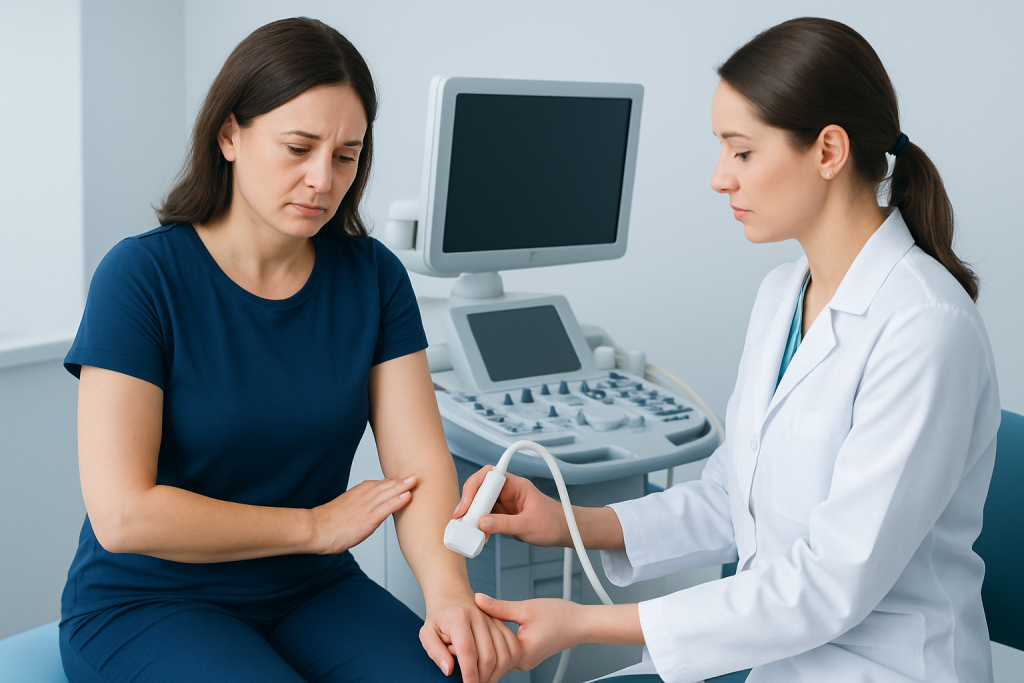
The most noticeable sign is pain around the elbow, but the pattern depends on which tendon is affected. Tennis elbow tends to cause discomfort on the outer elbow and can make it painful to grip, open jars, shake hands, or lift a suitcase. Golfer’s elbow usually causes pain on the inner side of the elbow and may be felt during wrist flexion, carrying objects, or repetitive pulling movements.
Some people also notice tenderness when pressing on the sore area, morning stiffness, weakness in the hand or forearm, or pain that spreads down the arm. Symptoms often build gradually rather than appearing all at once. This slower onset can make the problem easy to ignore until everyday tasks become unexpectedly difficult.
Although elbow tendonitis is common, not every elbow pain problem is tendon-related. Nerve irritation, joint inflammation, arthritis, or an acute injury can produce similar symptoms. That is one reason a careful clinical assessment is useful, especially when the pain is persistent, unusual, or interfering with normal function.
Causes & Risk Factors

Elbow tendonitis usually develops when the forearm muscles and their tendons are repeatedly loaded faster than they can recover. The strain may come from sport, work, home activities, or a combination of all three. Repetitive gripping, twisting, hammering, lifting, and prolonged computer use can all contribute, especially if the movements are forceful or poorly balanced.
Several factors can increase risk. These include sudden increases in activity, poor technique in racquet or throwing sports, awkward workstation setup, weak forearm muscles, and limited flexibility in the wrist or shoulder. Age can also play a role, because tendons gradually become less resilient over time.
It is worth noting that the condition is not limited to athletes. People who travel often, care for small children, work in hospitality, cooking, construction, or office environments, or spend long hours on repetitive tasks may be just as affected. In many cases, the issue is less about one single cause and more about repeated stress accumulating over time.
Diagnosis
Diagnosis usually starts with a detailed discussion of the person’s symptoms, daily activities, work demands, and any recent changes in exercise or lifting habits. A doctor will often ask which movements provoke pain, whether there was a specific injury, and how the symptoms affect grip strength and function. This history is often enough to point strongly toward elbow tendonitis.
During the physical examination, the doctor may check the tender area, test wrist and forearm movement, and assess strength. Simple maneuvers that reproduce pain can help distinguish outer-elbow from inner-elbow tendon problems. The goal is not only to name the condition, but also to rule out other causes that may need different treatment.
Imaging is not always required, but ultrasound or MRI may be considered when symptoms are stubborn, the diagnosis is uncertain, or another condition is suspected. In complex cases, especially for patients traveling from another country, a structured evaluation can be helpful because it supports both the immediate treatment plan and the follow-up plan once the person returns home.
Treatment Options
Treatment usually begins with reducing the movements that aggravate the tendon, while keeping the elbow and forearm active in a controlled way. This often includes a temporary change in sport technique, lighter lifting, modified work tasks, and physiotherapy focused on gradual strengthening. The aim is not to “push through” pain, but to rebuild capacity without repeatedly re-irritating the tendon.
Braces or straps may help some people by decreasing strain during activity, and ice can be useful after flare-ups for short-term comfort. Pain-relief medicines may sometimes be suggested by a doctor, but they do not repair the tendon on their own. When symptoms last despite conservative care, other options such as guided injections may be discussed carefully, depending on the individual situation.
Surgery is uncommon and is usually reserved for people who have ongoing symptoms after well-directed non-surgical treatment. Even then, the decision depends on the diagnosis, the person’s function, and how long the problem has been present. For most patients, a gradual rehabilitation approach remains the central part of recovery.
Prevention & Self-care
Small changes often make a meaningful difference. Adjusting the height of a desk, keyboard, or workbench can reduce strain; so can using two hands to lift heavier objects, keeping the wrist in a neutral position, and avoiding sudden bursts of repetitive activity. For sports, warm-up, technique correction, and progressive training loads can all help protect the tendon.
At home, it is sensible to pace tasks that involve gripping, squeezing, or turning lids and tools. Gentle stretching and strengthening, when advised by a physiotherapist, can support recovery and reduce recurrence. If pain appears after a change in activity, that is usually a signal to scale back early rather than wait for the problem to become entrenched.
For people recovering while traveling, planning matters. It can help to pack light, use rolling luggage, avoid carrying heavy bags on one side, and keep up the prescribed exercises during the trip. A clear home program, written follow-up advice, and realistic expectations make recovery easier to maintain across different time zones and schedules.
When to See a Doctor
Medical assessment is advisable if elbow pain lasts longer than a short period, keeps returning, or interferes with work, sleep, sport, or daily tasks. It is also important to seek evaluation if the pain followed a fall, direct blow, or sudden injury, since a sprain, fracture, or tendon tear may need different care.
People should also be checked if they notice numbness, significant weakness, swelling, redness, fever, locking of the joint, or pain that does not match the expected pattern of tendonitis. These features do not automatically mean something serious, but they do deserve proper assessment rather than self-treatment alone.
For international patients, it can be helpful to seek care in a center that can assess the condition thoroughly and coordinate rehabilitation planning before travel continues. Acibadem Health Point’s multidisciplinary specialists and JCI-accredited hospitals diagnose and treat this condition for international patients, with follow-up recommendations designed to support continuity of care after discharge.
Living With Elbow Tendonitis During Recovery
Recovery is usually easier when the elbow is treated as part of the whole arm, not as an isolated sore spot. Shoulder position, wrist mechanics, posture, and overall activity load all influence how much stress reaches the tendon. That is why rehabilitation programs often combine strengthening, mobility work, and practical changes to the person’s daily routine.
Progress is usually gradual rather than dramatic. Some days feel better than others, especially when the elbow is asked to do more than usual. That does not necessarily mean treatment is failing; it often means the tendon is still adapting. Keeping a symptom diary can help identify which activities are improving tolerance and which ones need further adjustment.
When recovery spans weeks or months, a realistic plan matters more than a perfect one. The best outcomes often come from steady, manageable changes that fit work, family, and travel demands. With proper guidance, many people return to their usual activities with better movement habits and lower risk of repeat strain.
Frequently asked questions
01What is the difference between tennis elbow and golfer’s elbow?
Tennis elbow usually affects the outer part of the elbow, while golfer’s elbow affects the inner part. Both are forms of tendon overuse and can happen in people who do not play sports at all.
02Does elbow tendonitis always need a scan?
Not usually. Many cases are diagnosed from symptoms and a physical examination, while ultrasound or MRI may be used if the diagnosis is unclear, symptoms are persistent, or another cause is suspected.
03How long does elbow tendonitis take to heal?
Recovery time varies depending on how severe the irritation is and whether the elbow is rested and rehabilitated properly. Some people improve in weeks, while others need several months of steady treatment and activity modification.
04Should the elbow be completely rested?
Complete rest is rarely the long-term answer. Short-term reduction in aggravating activities is often helpful, but gentle, guided movement and rehabilitation usually play an important role in recovery.
05Can elbow tendonitis come back?
Yes, it can recur if the same strain patterns return too quickly or if strength and technique are not addressed. Gradual return to activity, ergonomic changes, and ongoing strengthening help reduce recurrence risk.
06When should someone get medical advice?
Medical advice is appropriate if pain lasts more than a short period, keeps returning, limits work or daily activities, or is accompanied by swelling, numbness, marked weakness, or a history of injury. A doctor can confirm the cause and suggest the safest next step.
This article is for general information only and is not a substitute for professional medical advice. Please consult a qualified doctor about your individual situation.
Joint and spine care in Turkey — expert assessment & treatment
JCI-accredited · board-certified surgeons · reply within 24h
Add us as a Preferred Source to see more of our trusted health content across Google Search, AI Overviews and Discover.