Eczema on Shins: Causes of Dry, Itchy Skin
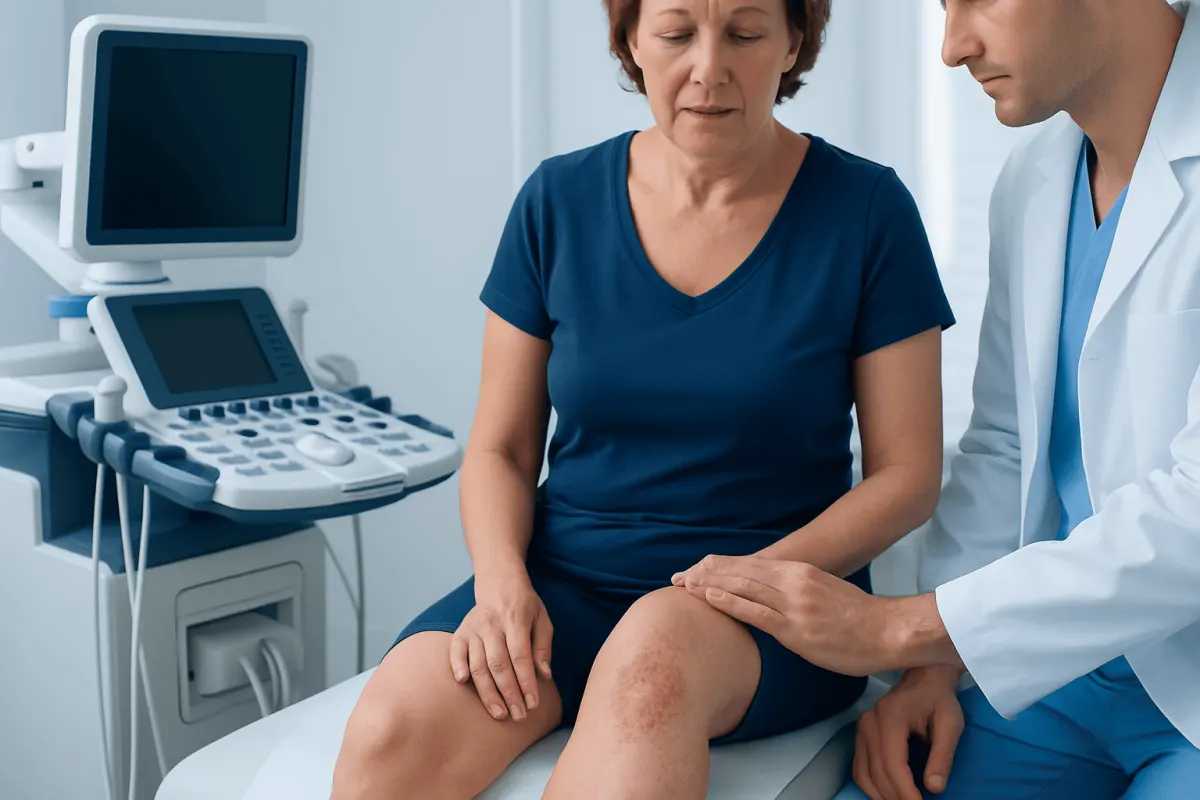
Eczema on shins is a common pattern of inflamed, itchy, dry skin that can be triggered by irritation, dryness, allergy, or, in some people, reduced circulation in the lower legs. Most cases improve with gentle skin care and clinician-guided treatment, but persistent or swollen lower-leg rashes should be assessed to confirm the cause.
Eczema on shins: the evidence-based explanation
Eczema on shins refers to an itchy, inflamed rash affecting the skin over the lower legs. It is not a single disease: “eczema” describes a group of conditions in which the skin barrier becomes less effective, allowing moisture to escape and making the skin more reactive to irritants and inflammation.
The rash may be dry and flaky, rough, cracked, thickened from repeated scratching, or discolored. On lighter skin it often appears red or pink; on deeper skin tones it may look violet, gray, brown, or darker than nearby skin. Itching can occur before obvious changes are visible and may interfere with sleep or daily comfort.
The location matters. The shins naturally have relatively few oil glands and are prone to dryness. In older adults or people with leg swelling and vein problems, eczema in this area may be related to venous insufficiency, sometimes called stasis dermatitis. Identifying the pattern helps ensure that treatment addresses both the rash and any contributing problem.
How shin eczema can feel and look
Symptoms can develop gradually or flare after an exposure such as very dry weather, frequent hot showers, a new body product, shaving, tight clothing, or repeated rubbing. The skin may feel tight, sore, burning, or sensitive in addition to itching. Scratching can create small breaks in the skin, which may make it sting when water or products touch the area.
Common signs include:
- Dryness, scaling, peeling, or fine cracks on the front or sides of the lower legs
- Itchy patches that become rough, thick, or darker with ongoing scratching
- Redness or color change, sometimes with small raised bumps
- Weeping, crusting, or fissures during a more severe flare
- Brownish discoloration around the ankles, swelling, or a heavy feeling in the legs when circulation is involved
Not every rash on the shins is eczema. Ring-shaped or sharply bordered scaling can suggest a fungal infection, while thick, well-defined scaly plaques may be psoriasis. A clinician can examine the skin and consider the full medical history before confirming the diagnosis.
Why eczema develops on the lower legs

Eczema is usually caused by a combination of an inherited tendency toward a sensitive skin barrier and environmental exposures. When the barrier is dry or damaged, soaps, fragrances, sweat, fabrics, and other everyday exposures can penetrate more easily and provoke inflammation. Eczema is not caused by poor hygiene and is not contagious.
Common contributors to eczema on shins include dry indoor air, cold weather, long hot showers, fragranced cleansers, wool or rough fabrics, and repeated scratching. Contact dermatitis can occur when the skin reacts to an ingredient in a moisturizer, topical pain product, fragrance, adhesive, clothing dye, or other substance that touches the legs.
Lower-leg eczema can also be associated with chronic venous insufficiency. Veins in the legs normally use valves to help return blood to the heart. When these valves do not work effectively, fluid may collect in the lower legs, contributing to swelling, inflammation, and skin changes. This circulation-related form of eczema deserves medical review because treating swelling and venous disease is an important part of skin care.
People with a personal or family history of atopic dermatitis, asthma, or seasonal allergies may be more likely to develop eczema. However, eczema can begin at any age, and a new persistent rash should not be assumed to be eczema without assessment.
How doctors diagnose eczema on shins
Diagnosis is usually clinical, meaning a doctor examines the rash and asks about symptoms, skin-care products, work or home exposures, medications, allergies, previous rashes, and medical conditions. They may ask whether the rash affects both legs equally, whether swelling occurs, and whether there has been fever, pain, drainage, or a recent injury.
The clinician may look for clues of dryness, contact allergy, infection, fungal disease, psoriasis, or circulation problems. Examination can include checking the feet and lower legs for edema, varicose veins, pulses, temperature differences, and changes in skin color. These findings help distinguish ordinary dry-skin eczema from stasis dermatitis and other conditions.
Most people do not need extensive tests. If the diagnosis is uncertain, a clinician may take a small skin scraping to look for fungus, arrange patch testing for suspected allergic contact dermatitis, or occasionally recommend a skin biopsy. When lower-leg swelling is significant, further vascular evaluation may be appropriate.
Treatment options: restoring the skin barrier and calming inflammation
Effective treatment is individualized but generally focuses on restoring moisture, reducing inflammation, relieving itch, and removing triggers. A plain, fragrance-free cream or ointment applied regularly, especially within a few minutes of bathing, helps repair the skin barrier. Ointments are often particularly helpful for very dry or cracked areas because they reduce water loss.
During a flare, a doctor may recommend a topical corticosteroid or another prescription anti-inflammatory treatment for a limited period. The appropriate strength, amount, and duration depend on the severity and location of the rash, so these treatments should be used as directed. Antihistamines may sometimes help sleep when itch is disruptive, but they do not treat the underlying inflammation.
If the skin is infected, treatment may include an antimicrobial medicine after assessment. Infection should not be self-diagnosed: eczema can ooze or crust even without infection. For eczema related to venous disease, clinicians may also address leg swelling and circulation. Compression therapy can be useful for selected people, but it should be recommended after a professional evaluates arterial circulation and individual risks.
People with persistent, widespread, or difficult-to-control eczema may benefit from dermatology care. Treatment plans may include prescription topical options, phototherapy, or systemic medicines in appropriate cases. Care should also consider related conditions such as varicose veins or other causes of lower-leg swelling when these are present.
Daily care and practical prevention
Consistent, gentle routines often reduce flares. Short lukewarm showers or baths are preferable to prolonged hot bathing. A mild fragrance-free cleanser can be used on areas that need cleansing, while the lower legs do not usually require strong soap every day. After patting the skin dry rather than rubbing it, moisturizer should be applied promptly and generously.
Choose simple, fragrance-free products and avoid products labeled “natural” if they contain essential oils or botanical fragrances that irritate the skin. Soft, breathable fabrics can reduce rubbing, and loose clothing may be more comfortable during flares. Keeping fingernails short and using a cool compress for itch can help limit skin damage from scratching.
Helpful habits include:
- Moisturizing at least once daily and more often when skin is very dry
- Using thick creams or ointments rather than lightly scented lotions
- Introducing one new skin product at a time
- Not applying over-the-counter antibiotic or anesthetic creams unless a clinician recommends them, as they can trigger contact allergy
- Keeping a brief record of flares, exposures, and products if a trigger is difficult to identify
For people whose symptoms are linked to leg swelling, elevating the legs when advised and staying physically active within personal ability may support circulation. A clinician should guide compression stockings or any specific vascular treatment plan.
When to seek medical care
A doctor should assess a new rash that lasts more than a few weeks, repeatedly returns, affects sleep or daily life, or does not improve with gentle moisturizing and trigger avoidance. Medical review is particularly important if eczema begins later in life, affects mainly one lower leg, or occurs with persistent ankle swelling, varicose veins, or brown skin discoloration.
Prompt care is needed if the leg becomes increasingly painful, hot, very swollen, rapidly red, or tender; if there is pus, fever, red streaking, or feeling unwell; or if open sores develop. These symptoms can indicate infection or another condition that should not be managed as eczema alone. Sudden swelling or pain in one leg also requires urgent clinical assessment.
At Acıbadem Health Point, multidisciplinary specialists in JCI-accredited hospitals can assess persistent lower-leg rashes and coordinate dermatology and vascular care for international patients. An accurate diagnosis can help people choose the safest treatment rather than relying on myths, such as assuming every scaly shin rash is simply dry skin.
Frequently asked questions
01What causes eczema on the shins?
Eczema on the shins commonly develops when dry, vulnerable skin is exposed to irritants, friction, allergens, or dry weather. In some people, especially those with swollen legs or varicose veins, impaired venous circulation contributes to a form called stasis dermatitis. A clinician can help identify the most likely cause.
02Can dry skin on the shins be eczema?
Yes. Dry skin can be an early feature of eczema, particularly when it is accompanied by itching, scaling, inflammation, or recurrent patches. However, dry shins can also occur without eczema, and a persistent rash may need evaluation for other causes.
03Is eczema on the shins contagious?
No. Eczema is not contagious and cannot be passed from one person to another through touch. If the skin becomes infected from scratching or cracks in the skin, the infection—not eczema itself—may require separate medical treatment.
04Why is my shin eczema worse in winter?
Cold outdoor air and dry heated indoor air can pull moisture from the skin and weaken the skin barrier. Hot showers and heavier clothing that rubs the legs may add irritation. Regular use of a bland, fragrance-free moisturizer can be especially helpful during winter.
05Should compression socks be used for eczema on the lower legs?
Compression may help some people with venous insufficiency and leg swelling, which can contribute to lower-leg eczema. It is not appropriate for everyone, particularly if arterial circulation is reduced or other medical conditions are present. A clinician should assess the legs before recommending compression.
06When could a shin rash be something other than eczema?
A rash may have another cause if it is sharply ring-shaped, very painful, associated with fever, limited to one swollen leg, or does not respond to appropriate eczema care. Fungal infection, psoriasis, contact allergy, bacterial infection, and circulation-related conditions can have overlapping features. Medical assessment is the best way to clarify the diagnosis.
This article is for general information only and is not a substitute for professional medical advice. Please consult a qualified doctor about your individual situation.
Explore treatments in Turkey — costs, top hospitals & a free quote
JCI-accredited · board-certified surgeons · reply within 24h
Add us as a Preferred Source to see more of our trusted health content across Google Search, AI Overviews and Discover.