Eczema Lip Treatment for Dry, Sore Lips

Eczema lip treatment usually starts with protecting the lip barrier, avoiding likely irritants or allergens, and using clinician-recommended anti-inflammatory treatment when needed. Most people improve with a tailored plan, although recurring symptoms may require assessment for allergic contact cheilitis or another lip condition.
Overview: What Eczema Lip Treatment Involves
Eczema lip treatment aims to calm inflammation, restore the damaged skin barrier and prevent repeated exposure to triggers. It commonly includes a simple, fragrance-free protective ointment, changes to lip and oral-care products, and short-term clinician-guided anti-inflammatory medicine when symptoms are more severe. The best approach depends on whether the eczema is related to atopic dermatitis, irritation, allergy or another condition affecting the lips.
Lip eczema is also called eczematous cheilitis. It may involve the lip surface, the skin immediately around the mouth, or both. Because lip skin is thin and frequently exposed to saliva, food, weather and personal-care products, it can become sore or dry easily. Effective eczema lip relief is usually gradual rather than immediate, especially when the lip barrier has been repeatedly irritated.
There is no single procedure that repairs every case. Instead, treatment is a stepwise process: identify likely causes, simplify products, protect the skin, treat active inflammation safely and review the response. If symptoms recur or do not settle, a dermatologist may investigate allergy or consider alternative diagnoses.
How Lip Eczema Can Look and Feel
Lip eczema often causes persistent dryness, roughness, flaking, scaling or peeling. The lips may feel tight, itchy, tender, burning or stinging. Small painful fissures can form, particularly in cold or dry conditions, and the skin around the lip line may become red or darker than usual depending on a person’s natural skin tone.
Some people notice a clear pattern, such as worsening after a certain lip balm, lipstick, toothpaste, mouthwash, food, musical instrument or occupational exposure. Others experience frequent licking or biting because the lips feel dry; unfortunately, saliva can further weaken the barrier and maintain the irritation cycle.
Symptoms at the corners of the mouth can have several causes. Cracking there may occur with eczema, but it can also be related to angular cheilitis, infection, denture fit or nutritional factors. Blisters that appear in clusters, especially with tingling beforehand, are more suggestive of cold sores than eczema. A correct diagnosis is important before starting eczema lip treatments.
Causes and Risk Factors
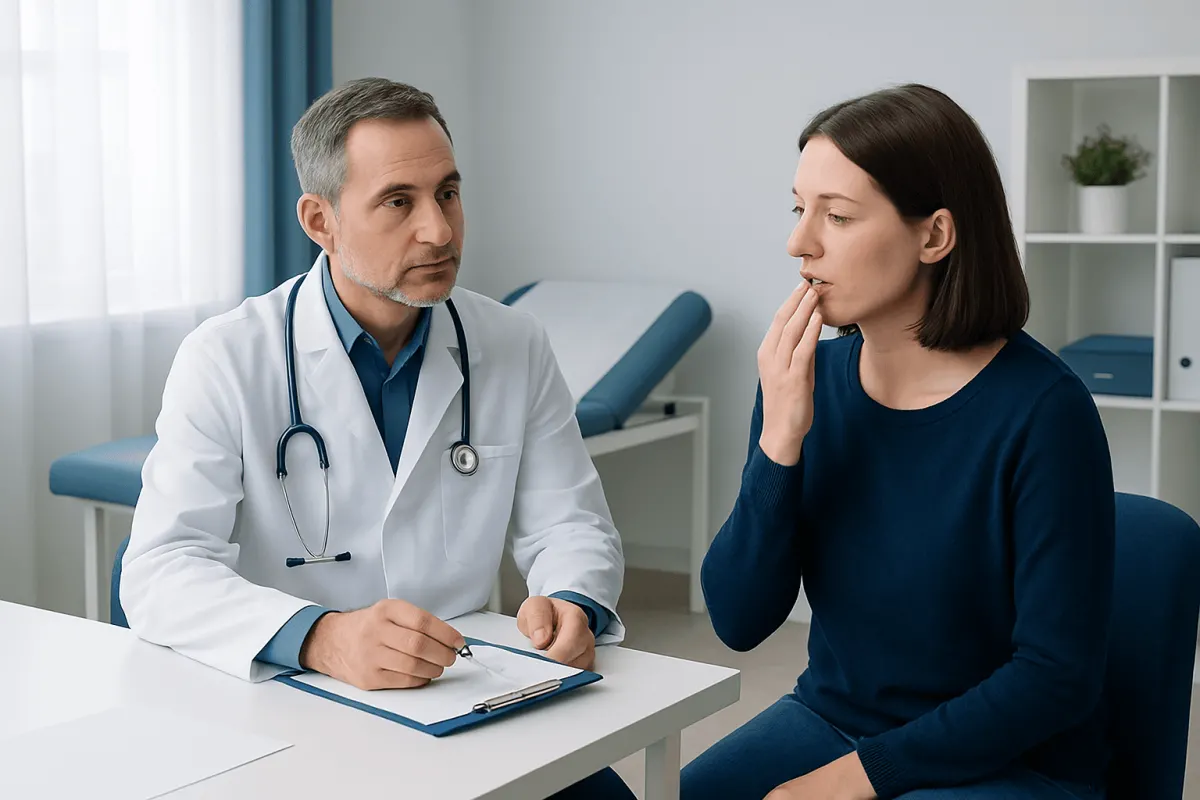
Atopic dermatitis can affect the lips, particularly in people with a personal or family history of eczema, asthma or hay fever. However, many cases are caused by contact irritation or allergy. Irritant contact cheilitis may follow frequent contact with saliva, harsh cleansing, dry weather, spicy foods or products that sting already-inflamed skin.
Allergic contact cheilitis happens when the immune system reacts to an ingredient that touches the lips or surrounding skin. Possible sources include fragrances, essential oils, flavorings such as mint or cinnamon, preservatives, lanolin, propolis, sunscreens, lipstick ingredients, nail products transferred by touch, and dental materials or oral-care products. A product described as natural or hypoallergenic can still cause a reaction in some people.
Risk may also be higher with frequent lip licking, smoking or vaping, use of multiple cosmetics, exposure to wind or cold, and work involving wet or irritant substances. Children may develop lip irritation from habitual licking, while adults can develop new sensitivities after long-term product use. Identifying the individual trigger is a key part of eczema lip therapy.
- Keep note of products used on the lips, face, teeth and hands.
- Consider recent changes in toothpaste, mouthwash, lip products, cosmetics or medication.
- Tell a clinician about a history of eczema, allergies, asthma or hay fever.
Assessment and Diagnosis
A clinician usually diagnoses lip eczema by asking about symptoms, examining the lips and surrounding skin, and reviewing product exposures and habits. They may ask when symptoms began, whether they fluctuate, what has been applied to the lips, and whether there are rashes elsewhere on the body. Photographs taken during flares can be useful if symptoms are intermittent.
It is important to rule out conditions that may need different care, including bacterial or fungal infection, herpes simplex, perioral dermatitis, actinic cheilitis and inflammatory skin diseases. Testing is not always necessary, but a swab may be considered when infection is suspected. Persistent, unusual or one-sided changes may need specialist assessment.
Patch testing can be particularly helpful when allergic contact cheilitis is possible or symptoms continue despite basic care. During this test, small amounts of common allergens are placed on the back under patches and assessed over several days. Results can help a person avoid relevant ingredients rather than unnecessarily avoiding many products.
Treatment Plan: Protection, Medicines and Follow-Up
The foundation of eczema lip treatment is a bland, fragrance-free barrier product, often an ointment rather than a flavored or medicated lip balm. It can be applied regularly, including after eating and before sleep, to reduce water loss and shield the skin from wind, saliva and friction. People should avoid exfoliating scrubs, fragranced products and products that cause tingling, cooling or burning while the lips are inflamed.
For a short flare, a doctor may recommend a low-potency topical corticosteroid suitable for the lip area. This should be used exactly as directed because the skin around the mouth is delicate and prolonged or inappropriate steroid use can cause adverse effects. In selected cases, non-steroidal prescription anti-inflammatory creams or ointments may be used, particularly for recurrent disease or areas requiring ongoing control.
If infection is diagnosed, treatment may include an appropriate antimicrobial medicine rather than anti-inflammatory treatment alone. Suspected allergy is managed by avoiding the identified allergen, usually alongside barrier care while the rash resolves. This is why eczema lip rash treatment should not rely on a single over-the-counter product when symptoms are persistent, spreading or painful.
Recovery varies with the trigger and severity. Mild irritation may improve within days after stopping the cause and protecting the lips, while chronic eczema can take several weeks to settle. Follow-up helps refine the plan if eczema lip repair is incomplete, symptoms return quickly or a medicine is not well tolerated.
Daily Self-Care for Eczema Lip Relief
A simplified routine gives damaged lips the best opportunity to recover. Choose one plain, fragrance-free emollient or petrolatum-based ointment and use it consistently rather than switching among several balms. Apply it with clean hands, and avoid sharing lip products. When outdoors, physical protection from cold and wind, such as a scarf, may also be helpful.
Try to reduce lip licking, biting and picking, even though this can be difficult during a flare. Sipping water, reapplying a bland barrier ointment and noticing situations that prompt the habit may help. Avoid testing new lipsticks, flavorings or home remedies until the skin is calm, since essential oils, beeswax-containing products and botanical ingredients can irritate or trigger allergy in susceptible people.
Oral-care products may be relevant. A clinician may suggest temporarily changing to a mild, unflavored toothpaste or avoiding mouthwash if these appear to trigger symptoms. It is sensible to introduce one product at a time after recovery so that any reaction is easier to identify. People with broader eczema symptoms may also benefit from information about atopic dermatitis management.
- Use lukewarm water and pat the area dry; do not scrub peeling skin.
- Check labels for fragrance, flavoring and known personal allergens.
- Do not use another person’s prescription cream or self-treat suspected infection.
- Seek professional guidance before using medicated products regularly on the lips.
When to Seek Medical Care
Medical assessment is appropriate when symptoms last longer than one to two weeks despite stopping suspected triggers and using gentle barrier care, or when flares repeatedly return. A doctor can assess whether the problem is eczema, allergic contact cheilitis, infection or another condition and can recommend treatment appropriate for the lip area.
Prompt care is important for marked swelling, spreading redness, pus, yellow crusting, fever, severe pain, difficulty eating or drinking, or a rapidly worsening rash. Emergency care is needed if lip or tongue swelling occurs with breathing difficulty, throat tightness, dizziness or widespread hives, as these may indicate a serious allergic reaction.
People with a persistent ulcer, bleeding area, firm lump, changing patch or a lesion that does not heal should arrange a timely medical review. Acıbadem Health Point’s multidisciplinary specialists and JCI-accredited hospitals can assess and treat skin conditions affecting international patients, with dermatology input when needed.
Frequently asked questions
01What is the fastest way to calm lip eczema?
The safest first steps are usually to stop likely irritants and apply a plain, fragrance-free barrier ointment regularly. Avoid flavored balms, scrubs and lip licking while the lips heal. If inflammation is significant or does not improve, a clinician may recommend a short course of appropriate prescription treatment.
02Can lip balm make eczema worse?
Yes. Some lip balms contain flavorings, fragrances, essential oils, lanolin, propolis or other ingredients that can irritate sensitive skin or cause contact allergy. A simple, fragrance-free ointment with few ingredients is generally less likely to trigger symptoms, but individual reactions are still possible.
03How long does eczema lip treatment take to work?
Mild irritation may start improving within several days once the trigger is removed and the lip barrier is protected. More established eczema can take weeks to settle, especially if there is ongoing exposure to an irritant or allergen. Recurring symptoms should be reviewed by a doctor or dermatologist.
04Is it safe to use steroid cream on the lips?
A clinician may prescribe a low-potency steroid for a short time when it is appropriate, but steroid treatment on and around the lips should be used carefully. The product, amount and duration should follow medical advice because this area has thin, sensitive skin. It is not advisable to use stronger or prolonged steroid treatment without supervision.
05Could toothpaste be causing my lip rash?
Toothpaste can contribute to lip irritation or allergy in some people, especially through flavorings, whitening agents or other additives. This is more likely if symptoms worsen after brushing or involve the skin around the mouth. A clinician may recommend a temporary switch to a mild alternative and consider patch testing if the problem persists.
06When is lip eczema likely to be an infection instead?
Increasing pain, warmth, pus, honey-colored crusting, spreading redness or fever can suggest an infection and need medical assessment. Clusters of painful blisters with tingling may be cold sores rather than eczema. Because treatments differ, a clinician should assess uncertain or worsening symptoms.
This article is for general information only and is not a substitute for professional medical advice. Please consult a qualified doctor about your individual situation.
Explore treatments in Turkey — costs, top hospitals & a free quote
JCI-accredited · board-certified surgeons · reply within 24h
Add us as a Preferred Source to see more of our trusted health content across Google Search, AI Overviews and Discover.