Ear Piercing Infection: Causes, Symptoms, Diagnosis and Treatment

Key Takeaways
- Ear piercing infection usually starts with redness, swelling, pain, warmth, or discharge around the piercing.
- New piercings, touching with unwashed hands, poor aftercare, and certain metals can increase the risk.
- Cartilage piercings can become more serious than earlobe piercings and should not be ignored.
- Mild infections may improve with gentle cleaning and clinician-recommended treatment, while severe cases may need medication or drainage.
- Keeping jewelry and skin clean, avoiding irritation, and following aftercare instructions can lower the chance of infection.
An ear piercing infection can develop when bacteria enter healing tissue or a piercing site is irritated repeatedly. Most cases are mild and improve with proper care, but cartilage infections and spreading symptoms need prompt medical attention.
Overview
An ear piercing infection happens when germs, most often bacteria, grow in or around a new or irritated piercing. It is common for the area to look a little red or feel tender during the early healing period, but infection is more likely when swelling increases, pain worsens, or discharge appears.
Most infections are limited to the skin around the piercing and can be managed when they are recognized early. The main exception is cartilage piercing infection, which can be more difficult to treat and may affect the shape of the ear if care is delayed.
For people seeking care after traveling or arranging treatment from another country, the good news is that an ENT or primary care evaluation is usually straightforward. A doctor can often tell whether the problem is simple irritation, allergy, or true infection by examining the site and asking about aftercare, jewelry, and timing.
Symptoms
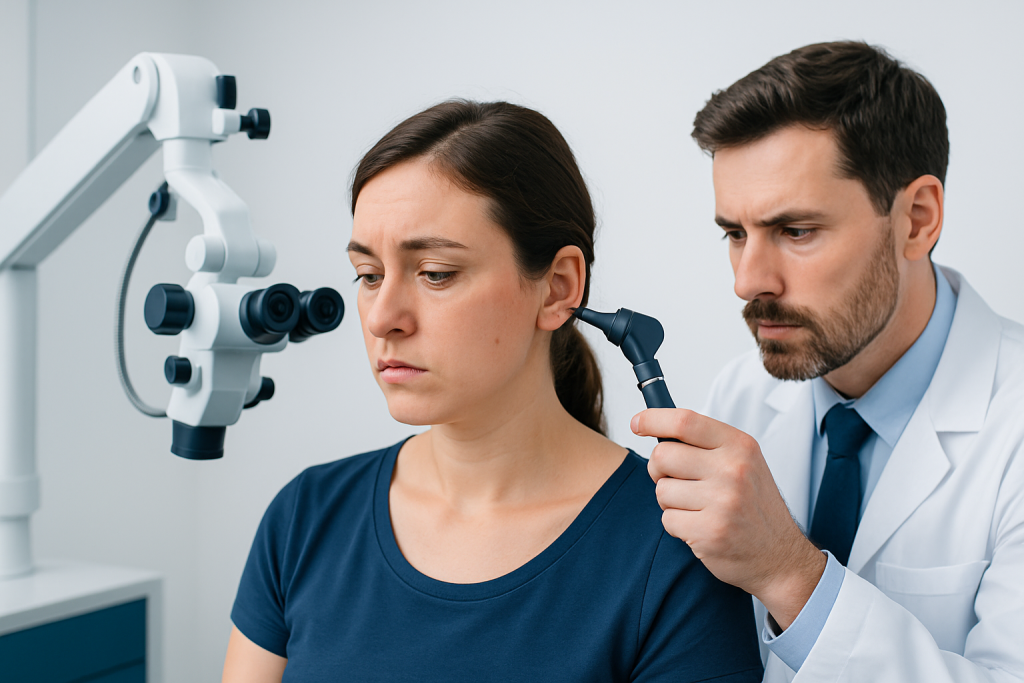
Infection usually announces itself through a pattern rather than one single sign. The area may become increasingly red, warm, swollen, and painful to the touch, and the skin around the piercing may feel tight or throbbing.
Other common signs include cloudy, yellow, green, or bloody discharge; crusting that returns after cleaning; and a foul smell from the site. If the body is reacting to a metal allergy or repeated irritation, itching and rash-like skin changes may be more noticeable than pus.
More concerning symptoms suggest the infection may be spreading or affecting deeper tissue. Fever, rapidly enlarging swelling, severe pain, a stud or hoop that feels embedded, or redness extending beyond the ear should prompt medical assessment.
- Increasing tenderness instead of gradual improvement
- Persistent drainage or pus
- Swelling that makes jewelry feel tight
- Ear deformity, especially with cartilage piercings
Causes & Risk Factors

Ear piercing infection usually begins when bacteria enter the small healing channel created by the piercing. This can happen through unwashed hands, contaminated aftercare products, dirty equipment, touching or twisting the jewelry too often, or sleeping on the piercing before it has healed.
Some piercings are simply more vulnerable than others. Cartilage piercings, piercing multiple sites at once, and piercings done in less controlled settings can all increase the chance of infection. Jewelry that is too tight, too heavy, or made from materials that irritate the skin can also worsen inflammation and slow healing.
Risk is higher in people who have diabetes, immune system problems, or a history of keloids or skin sensitivity. Even in healthy people, warm and humid conditions, swimming in non-sterile water, or changing jewelry too soon can turn a minor irritation into a true infection.
Diagnosis
Diagnosis usually starts with a careful history and a close look at the piercing. A clinician will ask when the piercing was done, how symptoms started, what cleaning routine has been used, and whether the jewelry has been removed, changed, or tightened.
In many cases, the appearance of the area is enough to guide treatment. If there is drainage, a swab may be taken for culture to help identify the bacteria and choose the most suitable treatment, especially if the infection is not improving or keeps returning.
Doctors also check for problems that can mimic infection, such as allergic contact dermatitis, embedded jewelry, hypertrophic scarring, or an abscess. If cartilage is involved, the evaluation may be more urgent because deeper infection can require closer monitoring.
Treatment Options
Treatment depends on whether the infection is mild, moderate, or more advanced. Simple cases may improve with gentle cleansing, warm compresses, and clinician-directed topical treatment, while more significant infections may require oral antibiotics or drainage if an abscess has formed.
It is important not to squeeze the area, use harsh chemicals, or repeatedly rotate the jewelry, because these actions can worsen inflammation. In some cases, jewelry may need to stay in place to keep the channel open while the infection is treated; in other cases, a doctor may advise removal if the jewelry is contributing to swelling or trapping infection.
Cartilage infections deserve special attention. They may need faster treatment and sometimes ENT review because cartilage has a limited blood supply and heals more slowly than the earlobe. If symptoms are worsening despite home care, medical evaluation should not be delayed.
- Warm compresses can help comfort and drainage when recommended
- Topical or oral antibiotics may be prescribed based on severity
- Drainage may be needed if pus collects in a pocket
- Allergy-related irritation may improve by changing to a less reactive material later, under medical advice
Prevention & Self-care
Good piercing care starts before the first irritation appears. A clean piercing performed with sterile equipment, followed by careful hand hygiene, makes a real difference in healing. After the procedure, the site should be cleaned gently according to the piercer’s or clinician’s instructions, without using strong antiseptics unless specifically advised.
During healing, it helps to avoid unnecessary touching, pressure from headphones or tight hats, and sleeping directly on the pierced ear. Swimming in pools, lakes, or hot tubs is best delayed until the piercing has settled, because water exposure can introduce germs and slow recovery.
Self-care should stay simple and consistent. If mild crusting appears, it can usually be softened with clean water or saline as instructed, then patted dry. Jewelry should not be changed early unless a clinician recommends it, and any concern about metal allergy, repeated irritation, or a worsening rash should be discussed rather than guessed at.
- Wash hands before cleaning the piercing
- Use only gentle, recommended cleansing methods
- Avoid twisting, pulling, or removing jewelry without advice
- Choose well-tolerated jewelry materials once healing is complete
When to See a Doctor
Medical review is sensible when symptoms are not improving after a few days of careful home care or when pain, redness, and swelling are clearly getting worse. A doctor can confirm whether the site is infected, irritated, or reacting to the jewelry, which matters because the treatments are not the same.
Prompt evaluation is especially important if the piercing is in the cartilage, if there is fever, if swelling is spreading, or if the jewelry seems stuck or embedded. People with diabetes, immune suppression, or poor wound healing should not wait long before seeking advice, even if the symptoms look mild.
For international patients, it can be helpful to bring the piercing history, any products already used, and photos showing how the area changed over time. Acibadem Health Point’s multidisciplinary specialists and JCI-accredited hospitals can diagnose and treat this condition for international patients, coordinating ENT assessment and follow-up when needed.
Recovery and Follow-up
Recovery is usually gradual once the right treatment is started. Redness and discomfort should begin to settle, drainage should lessen, and the skin should look less inflamed over time. If those changes do not happen, the plan may need to be adjusted.
Follow-up matters when the infection was severe, when cartilage was involved, or when the person has ongoing swelling or scarring concerns. In some cases, a second check is needed to make sure the area is healing cleanly and that no trapped infection remains.
Patients traveling for care should ask how to continue wound care at home and when to seek help after they return. A clear follow-up plan can prevent a short-term infection from becoming a long-term ear problem.
Frequently asked questions
01How can someone tell if an ear piercing is infected or just irritated?
Irritation often causes mild redness, itchiness, or tenderness that gradually improves when the area is left alone. Infection is more likely if swelling, warmth, pain, or discharge increases instead of settling down. A clinician can help distinguish infection from allergy or simple friction.
02Should jewelry be removed from an infected ear piercing?
Not always. In some cases, the jewelry is kept in place so the piercing can continue to drain while treatment works, but a doctor may advise removal if the jewelry is trapping infection or embedded in swollen tissue. It is best not to remove it on one’s own without guidance.
03Can an ear piercing infection heal without antibiotics?
Very mild irritation may improve with careful cleaning and reduced trauma, but a true infection may need medical treatment. If symptoms are worsening, there is pus, or the cartilage is involved, a doctor should assess the site rather than relying on home care alone.
04Why are cartilage piercing infections treated more seriously?
Cartilage has less blood supply than the earlobe, so infection can be harder to clear and may spread into deeper tissue. This can lead to longer recovery and, in some cases, changes in the ear’s shape if treatment is delayed.
05Is it safe to clean an infected piercing with alcohol or hydrogen peroxide?
These products can irritate healing tissue and may slow recovery. Gentle cleaning with the method recommended by a clinician is usually safer, and any harsh product should be avoided unless specifically prescribed.
06How long does an ear piercing infection take to improve?
Improvement often begins after the right care is started, but the exact timeline depends on how severe the infection is and whether cartilage is involved. If symptoms do not start to improve or continue to worsen, medical reassessment is important.
This article is for general information only and is not a substitute for professional medical advice. Please consult a qualified doctor about your individual situation.
Explore treatments in Turkey — costs, top hospitals & a free quote
JCI-accredited · board-certified surgeons · reply within 24h
Add us as a Preferred Source to see more of our trusted health content across Google Search, AI Overviews and Discover.