Ear Making Popping Noise: What You Need to Know

Key Takeaways
- Ear popping often comes from pressure differences between the middle ear and the outside environment.
- Common triggers include colds, allergies, sinus congestion, flying, and altitude changes.
- Popping with pain, hearing loss, fluid, or dizziness may point to an ear condition that needs assessment.
- Simple self-care may help, but forceful ear cleaning or repeated hard blowing can make symptoms worse.
- A clinician can check for wax, infection, fluid, or Eustachian tube dysfunction and suggest the right treatment.
An ear making popping noise is often linked to pressure changes, fluid, or how the Eustachian tube opens and closes. In many cases it is harmless, but persistent popping with pain, hearing changes, or dizziness should be evaluated.
Overview
An ear making popping noise is usually a sign that pressure inside the middle ear is equalizing with the air pressure around it. The sound may happen during swallowing, yawning, chewing, or after a change in altitude, such as during air travel or a drive through the mountains.
Most of the time, this symptom is related to the Eustachian tube, a small passage that connects the middle ear to the back of the nose. When it opens and closes normally, pressure can balance smoothly. When it is irritated or blocked, the ear may feel full, pop more often, or seem temporarily muffled.
Although the symptom is often benign, it should not be ignored if it keeps returning, affects hearing, or appears with pain, fever, drainage, ringing, or dizziness. In those situations, an ear, nose, and throat specialist can look for the cause and help decide whether treatment is needed.
Symptoms
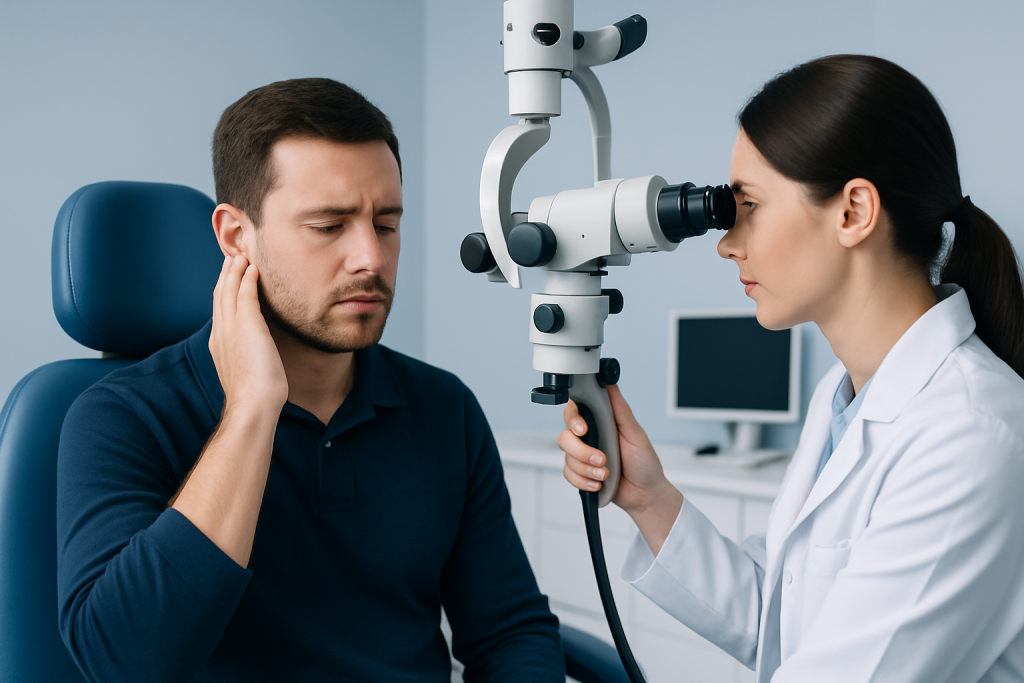
The popping sound itself may be the only symptom, but it often comes with other sensations. People may describe ear fullness, pressure, crackling, clicking, mild discomfort, or a feeling that the ear needs to “open up.” Hearing can also seem briefly reduced, especially when congestion is present.
Symptoms may be one-sided or affect both ears. They often become more noticeable during swallowing, chewing gum, changing position, or after waking up from sleep when congestion is worse.
Additional symptoms can help point to the underlying issue. These may include:
- Blocked nose or postnasal drip
- Recent cold, flu, or sinus symptoms
- Ear pain or pressure
- Ringing in the ear
- Fluid draining from the ear
- Short-lived dizziness or imbalance
If popping is paired with severe pain, a sudden change in hearing, or symptoms on only one side that do not improve, medical evaluation is important.
Causes & Risk Factors

The most common reason for ear popping is Eustachian tube dysfunction. This tube helps ventilate the middle ear, and it can become swollen or temporarily blocked by inflammation in the nose or throat. When that happens, the ear may not equalize pressure as expected.
Several everyday conditions can contribute to this problem. Colds, allergies, sinus congestion, and irritation from smoke or pollution may cause swelling around the tube’s opening. Rapid pressure changes, such as flying, diving, or mountain travel, may also trigger popping even in otherwise healthy ears.
Other possible causes include earwax buildup, middle ear fluid, infections, temporomandibular joint (TMJ) problems that create clicking near the ear, and, less commonly, issues affecting the eardrum or middle-ear bones. Risk tends to be higher in people who have frequent allergies, chronic sinus problems, repeated ear infections, or anatomical factors that make drainage and ventilation less efficient.
Diagnosis
Diagnosis usually begins with a careful history. A clinician will ask when the popping started, whether it happens with swallowing or travel, and whether there are associated symptoms such as hearing changes, pain, or nasal congestion.
An ear examination is often the next step. The eardrum may be checked with an otoscope to look for wax, fluid, infection, pressure changes, or signs of irritation. If needed, the doctor may also evaluate the nose and throat, since those areas often influence Eustachian tube function.
In some cases, additional testing is helpful. These may include hearing tests, tympanometry to measure how well the eardrum moves, or imaging when another cause is suspected. The exact workup depends on the symptom pattern and the findings on examination.
Treatment Options
Treatment depends on the cause rather than the sound itself. When popping is related to a cold, allergies, or sinus inflammation, the main goal is to reduce congestion and allow the Eustachian tube to reopen more normally. When earwax, infection, or fluid is involved, the approach is different.
Common treatment options may include observation, allergy management, nasal therapies recommended by a doctor, or treatment for an ear infection if one is present. If fluid remains behind the eardrum or symptoms are long-lasting, a specialist may discuss further procedures in selected cases.
For pressure changes during flights or altitude shifts, simple techniques such as swallowing, yawning, sipping water, or chewing can help the ears equalize. Gentle pressure-equalizing maneuvers may be suggested by a clinician, but they should be done carefully and stopped if they cause pain. It is best to avoid inserting objects into the ear or trying to forcefully “pop” the ear open.
Prevention & Self-care
Not every case can be prevented, but some habits may reduce how often the symptom appears. Managing allergies, staying well hydrated, and addressing nasal congestion early can help the Eustachian tube function more smoothly.
People who travel frequently may find it useful to plan ahead for pressure changes. Swallowing during takeoff and landing, staying awake during descent, and using clinician-approved measures before flights can sometimes reduce discomfort. For swimmers and divers, pressure changes should be approached gradually and safely.
Helpful self-care steps include:
- Use gentle swallowing or yawning to encourage pressure equalization
- Manage colds and allergies as advised by a clinician
- Avoid smoking and secondhand smoke
- Do not clean deep inside the ear canal with cotton swabs
- Seek evaluation if symptoms persist or keep returning
For international patients planning care, it can be helpful to gather previous test results, medication lists, and a timeline of symptoms before traveling, so follow-up and treatment planning can happen efficiently after arrival.
When to See a Doctor
Medical advice is recommended if ear popping lasts more than a short time, keeps coming back, or is accompanied by hearing loss, ear pain, fever, drainage, dizziness, or a feeling of pressure that does not improve. These signs may point to an infection, fluid behind the eardrum, or another condition that deserves assessment.
A doctor should also be consulted if the symptom is only on one side and persists, if it begins after an injury or loud noise exposure, or if it affects day-to-day hearing and concentration. Children, older adults, and people with a history of recurrent ear problems may need a lower threshold for evaluation.
At Acibadem Health Point, multidisciplinary specialists and JCI-accredited hospitals diagnose and treat ENT conditions for international patients, with coordinated support from the first consultation through follow-up care. That can make it easier to move from symptom uncertainty to a clear plan, even when care is being arranged from another country.
Frequently asked questions
01Why does my ear make a popping noise when I swallow?
Swallowing can open the Eustachian tube, which helps equalize pressure between the middle ear and the throat. If the tube is slightly blocked by congestion or inflammation, the opening may feel or sound like a pop. This is often temporary, but persistent symptoms deserve evaluation.
02Is ear popping always a sign of infection?
No. Ear popping is often related to pressure changes or Eustachian tube function and can happen without infection. However, if it comes with pain, fever, drainage, or worsening hearing, a doctor should check for infection or fluid.
03Can allergies cause an ear making popping noise?
Yes. Allergies can inflame the nasal passages and the area around the Eustachian tube, making it harder for the ear to equalize pressure. Treating the underlying allergy problem may reduce the symptom.
04What should someone avoid doing if the ear keeps popping?
It is best to avoid putting objects into the ear canal or trying to force the ear to pop repeatedly. Forceful pressure maneuvers can be uncomfortable and may worsen irritation. Gentle, doctor-approved methods are safer.
05When is ear popping more serious?
It becomes more concerning when it is persistent, one-sided, painful, or linked with hearing changes, dizziness, or ear drainage. Those patterns suggest that the ear or nearby structures should be examined by a clinician.
06Can flying make ear popping worse?
Yes. Air travel changes cabin pressure quickly, and that can make the ears pop more often or feel blocked. Swallowing, yawning, and other gentle equalizing methods may help during takeoff and landing.
This article is for general information only and is not a substitute for professional medical advice. Please consult a qualified doctor about your individual situation.
Explore treatments in Turkey — costs, top hospitals & a free quote
JCI-accredited · board-certified surgeons · reply within 24h
Add us as a Preferred Source to see more of our trusted health content across Google Search, AI Overviews and Discover.