Ear Blowout From Stretched Piercings: Signs and Care
An ear blowout is a complication of stretching an earlobe piercing, where tissue from the piercing channel is pushed outward and forms a raised lip or ring. It is usually not an emergency, but stopping further stretching and obtaining timely clinical advice can help limit irritation, scarring and lasting changes to the earlobe.
Overview: What Is an Ear Blowout?
An ear blowout is an injury involving a stretched earlobe piercing. It happens when the skin and soft tissue lining the piercing channel are forced outward, often creating a noticeable raised rim, flap or ring on the front or back of the earlobe. People may use the term for a mild irritation in a newly stretched piercing as well as for more established tissue displacement.
It is most commonly associated with intentional ear stretching, also called gauging, although any piercing can become irritated or damaged by pressure, trauma or unsuitable jewelry. An ear blowout is different from an infection, although both can occur at the same time. A healthcare professional can help distinguish among swelling from recent stretching, contact allergy, infection, scar tissue and a true blowout.
Early attention is useful because continued pressure and repeated stretching can make tissue changes more persistent. Many cases improve with gentle care and a pause in stretching, while more substantial changes may require assessment by an ear, nose and throat specialist, dermatologist or plastic surgeon.
How an Ear Blowout May Look and Feel
The typical feature is a ridge of tissue that extends beyond the edge of the piercing. It may appear as a circular lip around the hole or as a small flap, and it is often more visible on the back of the earlobe. The area can look red, darker than the surrounding skin, shiny, swollen or thickened, depending on skin tone and how recently the injury occurred.
Symptoms vary. Some people notice tenderness, warmth, itching, throbbing, tightness or minor bleeding after inserting a larger piece of jewelry. Others have little pain but see a new raised border around the piercing. An established blowout may feel firm because of scar tissue, and it may change the shape of the earlobe or make jewelry sit unevenly.
Signs that suggest infection rather than uncomplicated irritation include worsening pain, spreading redness, increasing heat, pus-like drainage, a foul odor or fever. Allergic contact dermatitis from metals, fragrances or skin products may cause pronounced itchiness, rash, weeping or scaling. These conditions need different care, so self-diagnosis is not always reliable.
Why Ear Blowouts Happen

The main cause is stretching faster than the tissue can adapt. Earlobes need time to heal and remodel between size increases. Forcing jewelry through a tight piercing, skipping sizes, using heavy jewelry too early or stretching again while the lobe is sore can create tiny tears and push the inner lining of the channel outward.
Friction and pressure can add to the problem. Jewelry that is too large, poorly fitted, rough or heavy can irritate the channel. Pulling on earrings, sleeping directly on the ear, snagging jewelry on clothing, and wearing jewelry during contact activities may also damage a vulnerable piercing.
Individual healing also matters. Previous scarring, skin sensitivity, eczema, metal allergy, inflammation and a history of raised scars can affect how the earlobe responds. A freshly pierced ear should not be stretched until it has healed fully, and cartilage piercings should be approached with particular caution because cartilage infections and injuries can be more serious than earlobe problems.
- Increasing the jewelry size too quickly or by large increments
- Stretching through pain, bleeding, marked resistance or swelling
- Using unsuitable materials or jewelry with uneven surfaces
- Reinserting jewelry after the channel has narrowed
- Continuing to stretch despite irritation or a developing ridge of tissue
Assessment and Diagnosis
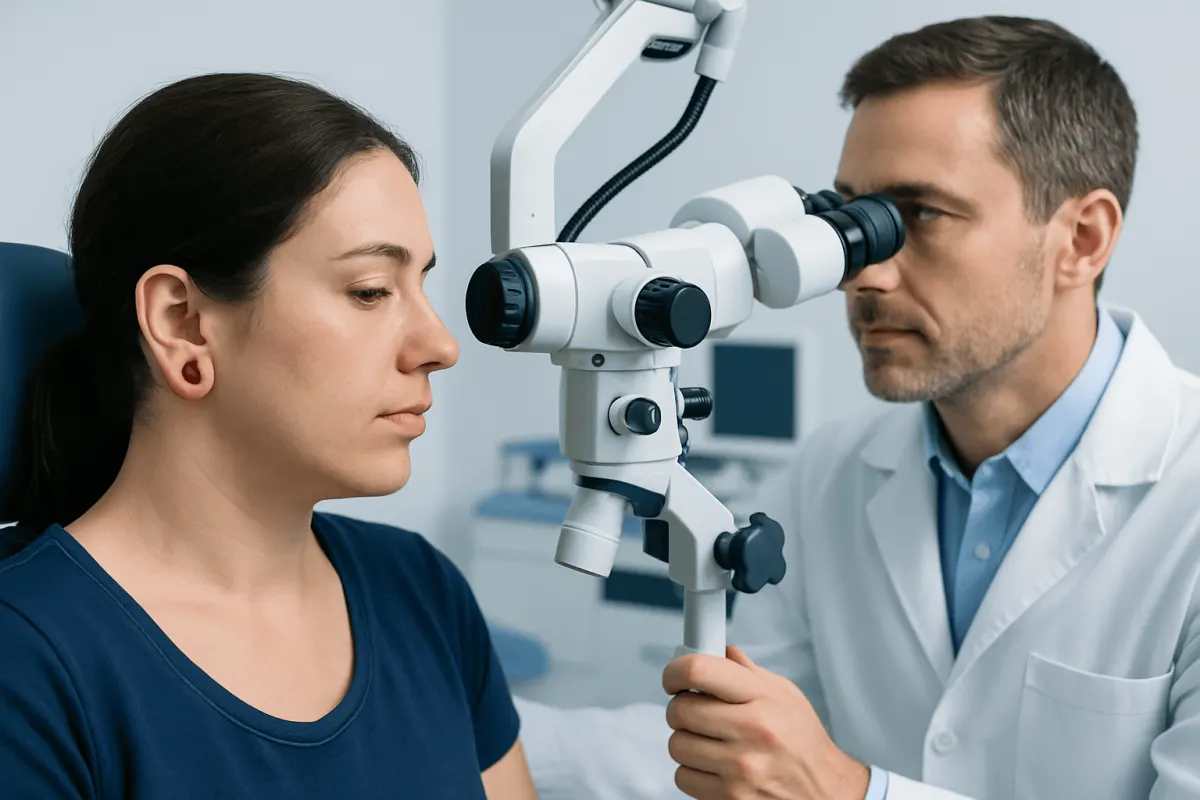
A clinician usually diagnoses an ear blowout by examining the earlobe and asking about the piercing history, recent size changes, jewelry materials, symptoms and any injury. They will look for displaced tissue, tears, scar formation, trapped jewelry, skin reactions and features of infection. Tests are not usually required for a straightforward earlobe blowout.
If there is drainage, marked swelling or recurrent inflammation, a clinician may consider whether infection, dermatitis or another skin condition is contributing. They may also assess the blood supply to the earlobe and make sure no jewelry is embedded. This is particularly important when the lobe looks pale, dark, unusually cold or increasingly painful.
Patients should avoid trying to cut, puncture or aggressively massage the raised tissue at home. Such measures can create further injury and increase the chance of infection or scarring. Bringing the jewelry used at the time symptoms began, or a clear photo of the early changes, can sometimes help the clinician understand the cause.
Treatment and Repair Options
The first aim is to remove strain from the earlobe. In many early cases, this means stopping further stretching and considering smaller, lightweight, body-safe jewelry or leaving jewelry out temporarily if a clinician advises it. The best approach depends on the condition of the tissue, the size of the piercing and whether the channel may close or trap swelling around jewelry.
Gentle hygiene is generally preferable to harsh products. The area can be kept clean with appropriate saline-based aftercare and dried carefully. Alcohol, hydrogen peroxide, strong antiseptics, essential oils and unverified creams can irritate healing tissue. A clinician may recommend treatment for infection, eczema or an allergic reaction if one is present; antibiotics should not be used unless they are clinically indicated.
Once acute irritation has settled, mild tissue changes may become less noticeable over time, especially when further stretching is avoided. However, a significant blowout, persistent scar tissue, a stretched opening or a split earlobe may not fully reverse on its own. Earlobe repair is a minor surgical option that can remove damaged tissue and restore a more typical earlobe contour when appropriate.
Repair decisions are individual. A specialist can discuss timing, healing expectations and whether future piercing is advisable. Acıbadem Health Point’s multidisciplinary specialists and JCI-accredited hospitals assess and treat earlobe concerns for international patients when specialist care is needed.
Prevention and Safer Ear Stretching Practices
The most effective prevention is gradual stretching that does not cause pain, bleeding or a feeling that jewelry must be forced through the piercing. The earlobe should be given enough time to settle fully between increases in size. Because healing times differ from person to person, symptoms and tissue condition are more useful guides than a fixed schedule.
Jewelry should be smooth, clean, appropriately sized and made from materials that are less likely to cause sensitivity. High-quality implant-grade titanium, certain grades of surgical steel, niobium, glass and gold of suitable purity may be considered, but individual allergies can still occur. A reputable professional piercer can advise on jewelry choices and safe fitting.
It is sensible to stop and return to a smaller size if there is persistent tightness, swelling, redness, tenderness or a new ridge around the piercing. Avoid sleeping on irritated ears, heavy dangling jewelry and activities likely to pull or snag the lobe. Good hand hygiene before touching jewelry reduces the chance of introducing bacteria.
People with a history of keloids, significant eczema, poor wound healing or repeated piercing infections may benefit from medical advice before attempting stretching. Any new or changing lump should be examined rather than assumed to be a blowout, particularly if it develops away from the piercing channel.
When to Seek Medical Care
Medical assessment is recommended when an earlobe is painful, persistently swollen, bleeding, visibly torn, producing discharge or developing a raised tissue ring that does not improve after pressure is removed. An appointment with a qualified clinician can clarify whether the issue is a blowout, infection, allergy or scar-related change and help prevent further damage.
Prompt or urgent care is appropriate if redness is spreading, the ear feels increasingly hot, there is pus-like drainage, fever, severe pain, rapid swelling, darkening of the skin, numbness or jewelry that is embedded or cannot be removed safely. These features may indicate infection or compromised tissue that needs timely treatment.
People should also seek advice if they are unsure whether to remove jewelry. Removing it in some situations may allow a piercing channel to close around swelling or drainage, while leaving it in can be unsafe if it is tight or embedded. A clinician can provide guidance based on the examination.
Frequently asked questions
01Can an ear blowout heal on its own?
A mild, early ear blowout may improve when further stretching and pressure are stopped, and the tissue is allowed to settle. However, established scar tissue or a larger displaced ring of tissue may remain. A clinician can assess whether conservative care is reasonable or whether repair should be considered.
02Should jewelry be removed from an ear blowout?
The answer depends on the severity of swelling, the fit of the jewelry and whether infection is suspected. Tight, embedded or painful jewelry needs prompt professional assessment. It is best not to force jewelry in or out, as this can cause more tearing.
03Is an ear blowout an infection?
No. An ear blowout refers to tissue that has been damaged or pushed outward during stretching, whereas an infection is caused by germs. A blowout can become irritated or infected, so symptoms such as pus, spreading redness, fever or increasing pain should be evaluated.
04How long does an ear blowout take to heal?
Healing time varies with the extent of tissue injury, ongoing pressure, individual skin healing and whether infection or allergy is present. Minor inflammation may settle over weeks, while scar-related changes can last much longer. A medical professional can provide a more individualized estimate after examining the ear.
05Can a blowout be prevented when stretching ears?
Risk can be reduced by stretching gradually, never forcing jewelry through resistance and waiting until the earlobe is fully comfortable before changing sizes. Using smooth, well-fitted jewelry and stopping when there is pain, bleeding or swelling are also important. A trained piercer can offer practical guidance.
06Can an earlobe be pierced again after blowout repair?
In some cases, re-piercing may be possible after complete healing, but the timing and suitability depend on the amount of repair, scar formation and the person’s healing history. The clinician who performs or oversees the repair can advise on this. Re-piercing too soon may increase the chance of recurrent scarring or tearing.
This article is for general information only and is not a substitute for professional medical advice. Please consult a qualified doctor about your individual situation.
Explore treatments in Turkey — costs, top hospitals & a free quote
JCI-accredited · board-certified surgeons · reply within 24h
Add us as a Preferred Source to see more of our trusted health content across Google Search, AI Overviews and Discover.