Does Any Type of Collagen Cause Breast Cancer?
No type of collagen, including collagen in supplements, foods, skin products, or breast tissue, has been shown to cause breast cancer. Collagen is a normal structural protein; research is exploring how changes in collagen around an existing tumor may influence its growth or spread, which is different from causing cancer.
The short answer: collagen does not cause breast cancer
No type of collagen is known to cause breast cancer. This includes the common collagen types found in the body, such as type I, II, III, and IV, as well as collagen taken in powders, drinks, capsules, foods, or used in skin-care products. Collagen is a naturally occurring protein that helps provide structure and strength to skin, tendons, bones, blood vessels, and breast tissue.
The question can arise because scientific studies often discuss collagen in the “tumor microenvironment,” meaning the tissue surrounding a cancer. In breast cancer, changes in the amount, organization, stiffness, and breakdown of collagen may affect how an existing tumor interacts with nearby tissue. These findings do not mean collagen started the cancer or that consuming collagen causes it.
Most breast discomfort, lumpiness, and texture changes have noncancerous explanations, including hormonal changes, cysts, fibroadenomas, infection, or normal variation in breast tissue. Still, a new or persistent breast change deserves medical review so that the cause can be identified appropriately.
What collagen does in healthy breast tissue
Collagen is part of the extracellular matrix, a supportive network outside cells. In healthy breasts, this network helps hold ducts, lobules, fat, blood vessels, and connective tissue in place. Different collagen types have different roles: type I and type III contribute to tensile strength, while type IV is an important component of basement membranes, thin layers that help separate and support tissues.
Breast tissue normally changes throughout life. Menstrual cycles, pregnancy, breastfeeding, aging, weight changes, and menopause can all alter the balance of glandular, fatty, and connective tissue. These normal changes can affect how the breasts feel, sometimes causing tenderness or generalized nodularity, without indicating cancer.
Collagen is also continually produced, reorganized, and broken down as part of normal healing and tissue maintenance. Scarring after surgery, injury, or inflammation may contain more collagen, but scar tissue itself is not breast cancer. A clinician can help distinguish scar-related changes from a finding that needs imaging or other assessment.
Why collagen is discussed in breast cancer research
Researchers study collagen because cancers do not develop in isolation. A growing tumor can influence nearby immune cells, blood vessels, fibroblasts, and connective tissue. In some breast cancers, the surrounding collagen becomes denser, stiffer, or more aligned. These features may make it easier for cancer cells that already exist to move through surrounding tissue.
Scientists are investigating whether collagen patterns could help estimate prognosis, improve imaging interpretation, or guide future treatments. However, association is not the same as causation. A collagen pattern found around a tumor may be a response to the tumor, may develop alongside it, or may contribute to its local environment; it does not show that a particular collagen type caused the cancer to begin.
Breast density is another related but separate concept. Dense breasts have more fibrous and glandular tissue relative to fat, and high breast density is associated with a higher risk of breast cancer and can make mammograms harder to interpret. Density is not caused by taking collagen, and it does not mean a person has breast cancer. Screening recommendations should be individualized with a healthcare professional.
Collagen supplements, foods, and breast cancer risk
There is no reliable evidence that oral collagen supplements cause breast cancer. After digestion, collagen proteins are broken into amino acids and small peptides, which the body uses in many ways; they do not travel intact to the breast and turn into breast cancer tissue. Likewise, collagen in foods such as meat, fish, gelatin, or bone broth has not been established as a cause of breast cancer.
Collagen-containing creams and topical products mainly act on the surface of the skin and are not known to affect breast cancer risk. It is still sensible to choose products from reputable manufacturers and to avoid applying irritating products to broken skin, surgical sites, or an area receiving radiation unless a clinician has advised it.
People with a current Prostate Cancer Diagnosis: Tests and Next Steps" class="ahp-ilk">cancer diagnosis, a history of cancer, liver or kidney disease, pregnancy, or those taking medicines should review any new supplement with their clinician or pharmacist. The main concerns are often product quality, undisclosed ingredients, allergies, and possible interactions rather than collagen itself. Supplements should not replace recommended screening, diagnostic testing, or cancer treatment.
For balanced health support, most people benefit more from an overall dietary pattern that includes a variety of protein sources, fiber-rich plant foods, and adequate fluids than from relying on a single supplement. Individual nutrition advice may be useful during or after cancer treatment.
Breast changes that should be checked
Although many breast symptoms are benign, it is important not to assume that a change is related to collagen, dense tissue, exercise, or supplements without an assessment. A clinician should evaluate a new lump that persists after a menstrual cycle, a thickened area that feels different from surrounding tissue, or a change that is becoming more noticeable over time.
Other changes that warrant prompt medical review include skin dimpling or puckering, persistent redness or swelling, a newly inverted nipple, scaling around the nipple, unexplained change in breast shape, or bloody or clear discharge from one nipple. Swollen lymph nodes near the underarm or collarbone should also be assessed. Pain alone is less often due to cancer, but focal pain that persists or is associated with another change should be discussed with a doctor.
People should seek urgent care for a breast that becomes rapidly red, hot, swollen, and painful, particularly when fever or feeling unwell is present. These symptoms can occur with infection and may need timely treatment. They can also occur in less common breast conditions, so medical evaluation is important.
- New lump or firm area that does not go away
- Skin dimpling, thickening, redness, or an orange-peel texture
- New nipple inversion, rash, or one-sided spontaneous discharge
- Breast or underarm swelling that persists or progresses
How doctors assess a concerning breast finding
A clinician usually begins by asking about the timing of symptoms, menstrual status, family history, previous breast conditions, medicines, pregnancy or breastfeeding, and any prior imaging. They will perform a breast and lymph node examination. The examination can guide next steps, but it cannot by itself determine whether a lump is benign or cancerous.
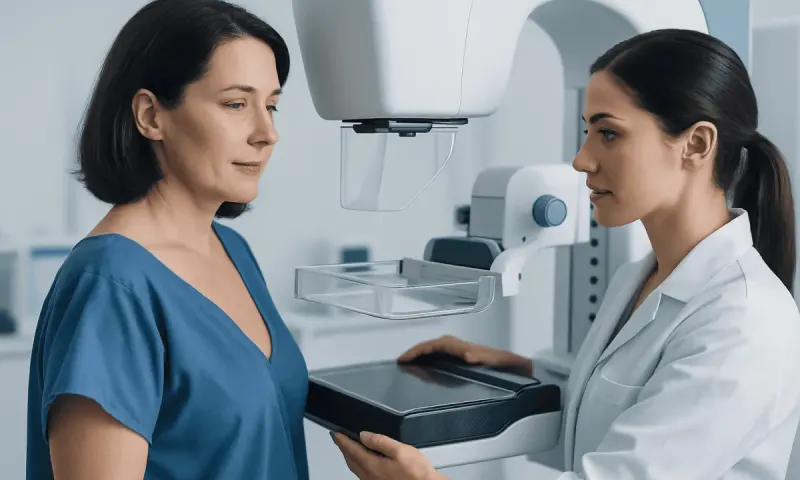
Depending on age, symptoms, and personal risk factors, diagnostic testing may include a diagnostic mammogram, breast ultrasound, and sometimes magnetic resonance imaging (MRI). Imaging can help show whether a finding is more likely to be a cyst, solid benign growth, area of inflammation, scar tissue, or a lesion that needs closer evaluation.
If imaging identifies a suspicious area, a needle biopsy may be recommended. A biopsy removes a small tissue sample for laboratory examination and is the only way to confirm or rule out many breast cancers. If breast cancer is diagnosed, the pathology report helps the team determine its type and plan care. More information about breast cancer can help patients understand the condition and its evaluation.
Waiting for tests can feel stressful, but most people who have breast symptoms do not receive a cancer diagnosis. Asking what each test is intended to clarify, when results are expected, and what follow-up is needed can make the process easier to navigate.
Reducing risk and supporting breast health
There is no guaranteed way to prevent breast cancer, and collagen avoidance is not a recommended prevention strategy. Risk is influenced by a combination of age, inherited genetic changes, family history, breast density, hormonal and reproductive factors, alcohol use, body weight after menopause, physical activity, and prior radiation exposure to the chest in some circumstances.
Practical steps that may support overall health and lower breast cancer risk include staying physically active, limiting or avoiding alcohol, not smoking, maintaining a weight that is appropriate for the individual, and discussing hormone therapy carefully with a clinician. Regularly participating in recommended breast screening is also important, even when there are no symptoms. Screening schedules vary by country, age, risk level, and personal history.
People with a strong family history of breast or ovarian cancer, relatives with known inherited cancer-related gene changes, or a previous high-risk breast lesion may benefit from personalized risk assessment. Genetic counseling and enhanced screening may be considered in some cases. For people who need specialist assessment, Acıbadem Health Point’s multidisciplinary specialists and JCI-accredited hospitals diagnose and treat breast conditions for international patients.
Anyone with a breast concern should arrange a medical review rather than self-diagnosing based on collagen information online. Timely assessment provides clarity and ensures that benign conditions receive appropriate reassurance and that significant findings are addressed without unnecessary delay.
Frequently asked questions
01What type of collagen causes breast cancer?
No type of collagen has been proven to cause breast cancer. Collagen types found in the body and collagen used in supplements or skin products are not established causes of breast cancer. Research on collagen in tumors concerns the environment around an existing cancer, not a cause of cancer onset.
02Can collagen supplements increase breast cancer risk?
Current evidence does not show that collagen supplements increase breast cancer risk. However, supplement quality and other ingredients can vary between products. Anyone with cancer, a history of cancer, or ongoing treatment should discuss supplements with their healthcare team.
03Why do studies link collagen with breast cancer?
Some studies find that collagen surrounding a breast tumor can be unusually dense, stiff, or aligned. These tissue changes may influence how an existing cancer behaves or spreads locally. They do not establish that collagen caused the cancer in the first place.
04Does dense breast tissue mean there is too much collagen?
Dense breasts contain relatively more fibrous and glandular tissue than fatty tissue, and collagen is one part of fibrous connective tissue. Dense breast tissue is common and is not cancer. It is associated with increased breast cancer risk and may affect mammogram interpretation, so screening should be discussed with a clinician.
05Can a collagen supplement cause a breast lump?
A collagen supplement is not known to cause a breast lump. Lumps can result from many common noncancerous conditions, including cysts, fibroadenomas, hormonal changes, and scar tissue. A new or persistent lump should be examined by a healthcare professional.
06When should a person see a doctor for a breast change?
A person should arrange medical evaluation for a new persistent lump, a localized thickened area, nipple changes, skin dimpling, or unexplained nipple discharge. Urgent assessment is appropriate for rapid redness, warmth, swelling, severe pain, or fever. Most changes are not cancer, but testing is needed to identify the cause reliably.
This article is for general information only and is not a substitute for professional medical advice. Please consult a qualified doctor about your individual situation.
Joint and spine care in Turkey — expert assessment & treatment
JCI-accredited · board-certified surgeons · reply within 24h
Add us as a Preferred Source to see more of our trusted health content across Google Search, AI Overviews and Discover.