Disc Prolapse in the Neck: Pain and Treatment
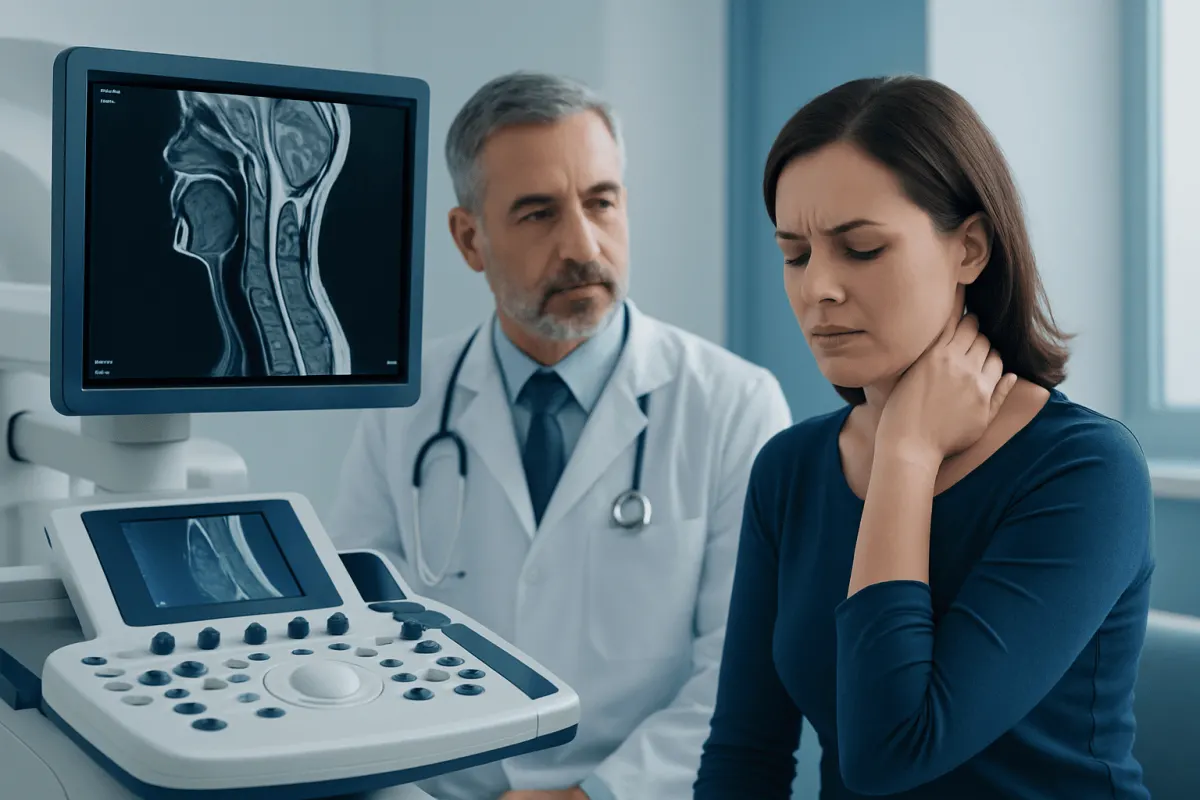
A disc prolapse in the neck, also called a cervical disc herniation, occurs when part of a spinal disc pushes outward and irritates a nearby nerve. It can be painful, but many people improve with non-surgical treatment, guided activity and time.
Overview: What Is a Disc Prolapse in the Neck?
A disc prolapse in the neck is a problem affecting one of the cushioning discs between the bones of the cervical spine. The cervical spine is the upper part of the backbone, made up of seven vertebrae that support the head and allow the neck to move. Each disc has a tougher outer layer and a softer, gel-like center that helps absorb everyday forces.
With a disc prolapse, also called a herniated, slipped or bulging disc, part of the disc extends beyond its usual boundary. If this material presses on or inflames a nearby spinal nerve, it can cause symptoms in the neck and arm. This is often called cervical radiculopathy. A disc change seen on a scan does not always cause symptoms, so clinicians consider imaging results alongside the person’s symptoms and examination.
Disc-related neck pain can feel disruptive, but it is usually manageable. Many acute cases settle gradually with non-surgical care. The best approach depends on symptom severity, nerve function, daily activities, overall health and whether there are signs of pressure on the spinal cord.
Symptoms of Cervical Disc Herniation
Symptoms vary according to the disc level involved and whether a nerve root or the spinal cord is affected. Neck pain may develop suddenly after a strain or gradually without a clear trigger. It may worsen with certain neck movements, coughing, sneezing or prolonged positions.
When a nerve root is irritated, pain may travel from the neck into the shoulder blade, shoulder, arm or hand. This radiating pain can be sharp, burning, aching or electric-shock-like. Some people also notice pins and needles, reduced sensation or numbness in part of the arm or fingers.
Weakness may occur in particular arm or hand muscles, making tasks such as lifting, gripping, opening jars or using a keyboard more difficult. Symptoms can fluctuate and may improve as inflammation around the nerve settles.
- Neck stiffness or reduced range of motion
- Pain spreading into one arm, shoulder or hand
- Tingling, numbness or altered sensation
- Muscle weakness or reduced hand coordination
- Headache or shoulder-blade discomfort in some people
Not every episode of neck and arm pain is caused by a disc prolapse. Muscle strain, arthritis-related changes, shoulder conditions and other nerve problems can produce similar symptoms. A qualified clinician can help identify the likely cause.
Causes and Risk Factors
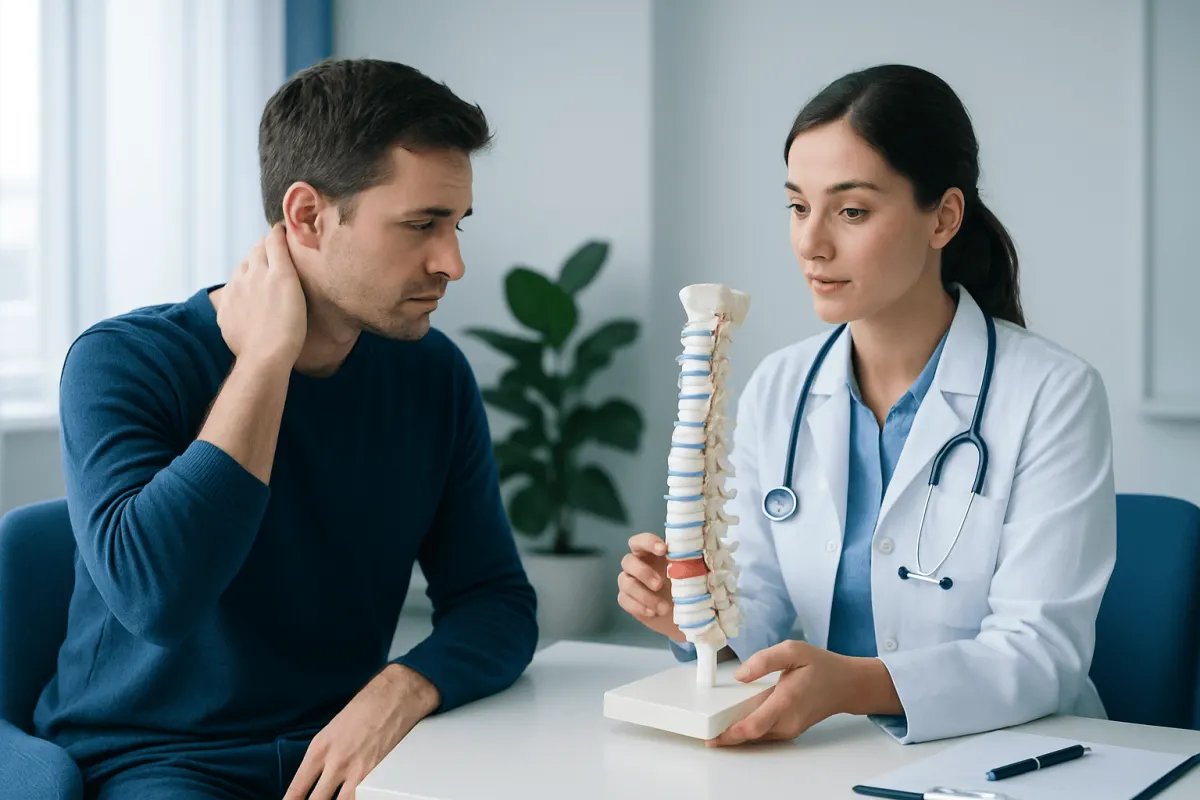
Discs naturally lose some water content and flexibility with age. This gradual wear, often described as degenerative disc change, can make the outer layer more likely to develop small tears. Disc material may then bulge or protrude outward. A prolapse can also follow a sudden movement, heavy lift, fall or accident, although a single event is not always identifiable.
Risk may be influenced by repeated strain, physically demanding work, long periods in awkward neck positions, smoking and a history of spinal problems. Genetic factors and normal ageing also play a role. However, having a risk factor does not mean a person will develop a symptomatic disc prolapse.
Good overall conditioning may support neck and back health, but it cannot prevent every disc problem. It is helpful to avoid blaming a single posture or activity, as cervical disc conditions commonly result from a combination of normal age-related changes, individual anatomy and physical stresses over time.
How Is It Diagnosed?
Diagnosis starts with a medical history and physical examination. A clinician will ask about the location and pattern of pain, any injury, symptoms in the arms or hands, and how the condition affects sleep, work and daily activities. They will also check neck movement, muscle strength, reflexes, sensation and coordination.
Imaging is not always needed immediately, particularly when symptoms are mild and there are no warning signs. If symptoms are severe, persistent, unusual or associated with weakness, magnetic resonance imaging (MRI) may be used to show discs, nerves and the spinal cord in detail. X-rays can show bone alignment and age-related changes but do not show disc and nerve tissue as clearly as MRI.
In selected cases, clinicians may use computed tomography (CT), CT myelography or nerve tests such as electromyography and nerve conduction studies. These tests can help when the diagnosis is uncertain or when symptoms may arise from a peripheral nerve condition rather than the neck.
Imaging findings are interpreted carefully. Many adults have disc bulges or degenerative changes without pain, so treatment decisions should be based on the full clinical picture rather than a scan alone.
Treatment Options
For most people, initial treatment is non-surgical. The goals are to control pain, maintain safe movement and allow irritated tissues time to recover. A clinician may advise a short period of relative rest from activities that clearly worsen symptoms, followed by gradual return to normal movement. Prolonged bed rest is generally not helpful.
Simple pain-relieving medicines or anti-inflammatory medicines may be appropriate for some people, depending on medical history and other medicines they take. A doctor or pharmacist can advise on safe options, especially for people with stomach, kidney, heart, bleeding or pregnancy-related considerations. In some situations, prescription treatments may be considered for severe nerve pain or muscle spasm.
Physiotherapy can help restore comfortable neck and shoulder movement, improve posture and build strength in the neck, upper back and shoulder-blade muscles. A tailored programme is preferable to forceful self-treatment. Neck manipulation or traction should only be considered after professional assessment, particularly when nerve symptoms are present.
If persistent nerve pain does not respond to appropriate conservative care, a specialist may discuss an image-guided spinal injection. Surgery may be considered when there is worsening or significant weakness, spinal cord compression, or continuing disabling pain despite non-surgical treatment. Procedures may remove the disc material causing compression and, depending on the situation, may include fusion or disc replacement. The benefits, limitations and risks should be discussed individually with a spine surgeon.
Prevention and Self-Care
Although not every cervical disc prolapse can be prevented, regular activity and sensible movement habits can support spinal health. Walking, swimming, cycling and strengthening exercises can help maintain general fitness. A physiotherapist can recommend exercises that match a person’s symptoms and physical abilities.
During computer work, reading or driving, it may help to take regular movement breaks rather than holding one position for long periods. Positioning screens at a comfortable height, supporting the arms when appropriate and avoiding sustained bending or twisting of the neck may reduce strain. When lifting, keeping loads close to the body and avoiding sudden twisting movements can also be useful.
People should remain as active as symptoms allow and increase activity gradually. Gentle range-of-motion exercises may be helpful when recommended by a clinician, but exercises that sharply increase arm pain, tingling or weakness should be stopped and reviewed. Smoking cessation, good sleep habits and maintaining a healthy body weight can also support recovery and long-term musculoskeletal health.
Heat or cold packs may provide short-term comfort for some people. They should be wrapped to protect the skin and used for limited periods. Self-care should not replace assessment when symptoms are severe, worsening or associated with neurological changes.
When to See a Doctor
A medical appointment is appropriate for neck pain that spreads to an arm, persistent numbness or tingling, new weakness, or symptoms that interfere with work, sleep or usual activities. Assessment is also sensible after a significant injury, particularly if pain is intense or neck movement is very limited.
Urgent medical evaluation is needed for progressive arm or hand weakness, increasing clumsiness, difficulty walking, poor balance, weakness or altered sensation in both arms or legs, or new changes in bladder or bowel control. These symptoms can rarely suggest pressure on the spinal cord and should not be managed with home care alone.
Emergency care is appropriate after serious trauma or if neck symptoms occur with severe headache, fever, unexplained weight loss, a history of cancer, or other concerning systemic illness. A clinician can assess for causes of neck pain that are not related to a disc prolapse.
Acıbadem Health Point’s multidisciplinary specialists and JCI-accredited hospitals assess and treat spinal conditions, including cervical disc problems, for international patients. A personalized evaluation can help clarify whether conservative care, rehabilitation, injections or surgery is appropriate.
Frequently asked questions
01Can a disc prolapse in the neck heal on its own?
Many people improve without surgery as inflammation around the nerve reduces and the body adapts over time. Symptoms may settle over several weeks or longer, although recovery varies. A clinician can monitor nerve function and recommend treatment suited to the individual.
02How long does a cervical disc prolapse take to recover?
There is no single <a href="https://www.acibademhealthpoint.com/blog/knee-replacement-recovery-timeline-what-to-expect/" title="Knee Replacement Recovery Timeline: What to Expect" class="ahp-ilk">recovery timeline. Some people notice improvement within a few weeks, while others have symptoms for several months. Persistent pain, numbness or weakness should be reviewed, particularly if symptoms are not gradually improving.
03Is surgery always needed for a slipped disc in the neck?
No. Most cervical disc prolapses are initially treated without surgery using pain management, guided activity and physiotherapy. Surgery is generally reserved for certain cases, such as progressive neurological weakness, spinal cord compression or ongoing disabling symptoms despite appropriate conservative treatment.
04Can a cervical disc prolapse cause headaches?
Neck pain and muscle tension can sometimes be associated with headache, especially pain felt near the back of the head. However, headaches have many possible causes, and a disc prolapse is not always responsible. A new severe headache or one with neurological symptoms requires prompt medical assessment.
05What sleeping position is best for a disc prolapse in the neck?
A comfortable position that keeps the neck relatively neutral is often helpful. Many people prefer sleeping on their back or side with a pillow that supports the head without bending the neck too far. The best choice varies, so comfort and symptom response are important.
06Should a person exercise with a prolapsed neck disc?
Gentle activity is usually preferable to complete inactivity, provided it does not worsen arm pain, numbness or weakness. A clinician or physiotherapist can recommend suitable movements and help people return gradually to exercise. High-impact activity, heavy lifting and forceful neck movements may need to be limited during painful periods.
This article is for general information only and is not a substitute for professional medical advice. Please consult a qualified doctor about your individual situation.
Joint and spine care in Turkey — expert assessment & treatment
JCI-accredited · board-certified surgeons · reply within 24h
Add us as a Preferred Source to see more of our trusted health content across Google Search, AI Overviews and Discover.