Dental Robotics in Modern Dentistry: How It Improves Precision
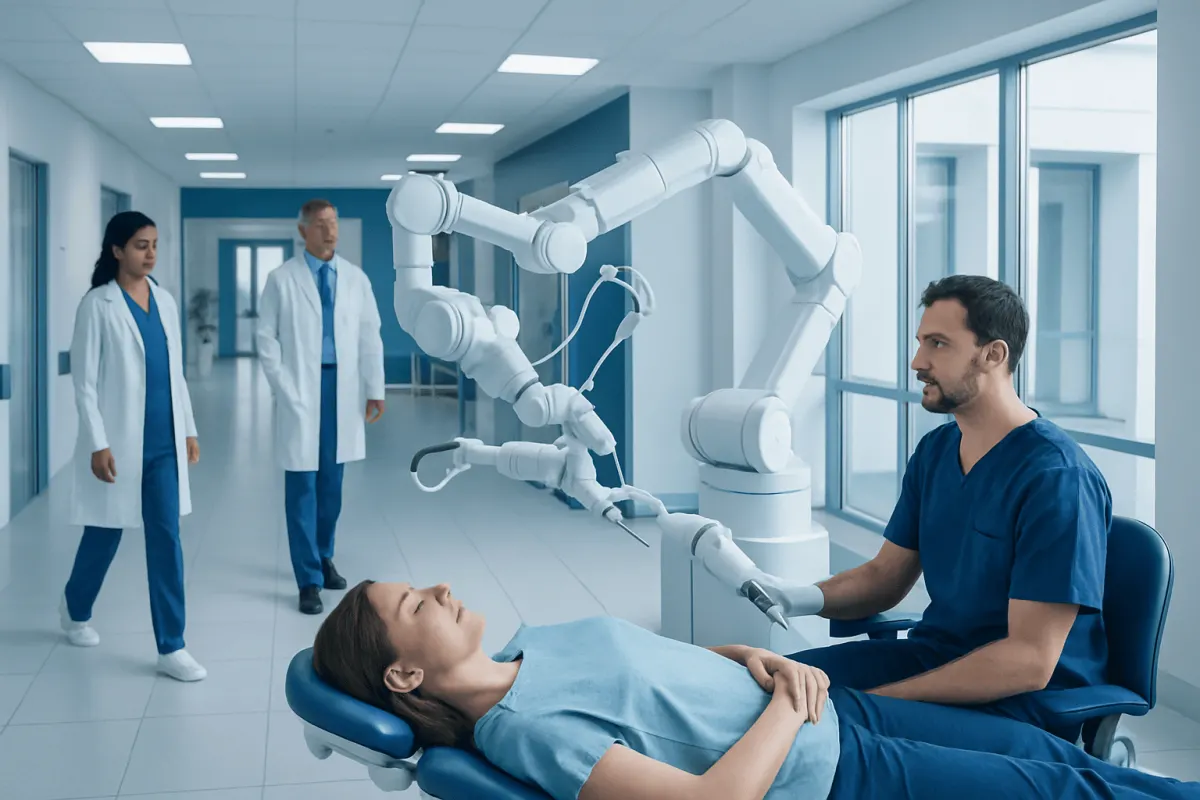
Dental robotics in modern dentistry combines digital imaging, computer-guided planning, and robotic assistance to help dentists perform selected procedures with greater precision. It does not replace the dentist; instead, it supports careful planning, real-time guidance, and more consistent treatment execution.
Overview
Dental robotics in modern dentistry refers to the use of advanced digital tools, planning software, navigation systems, and robotic guidance to support dental treatment. In most cases, these technologies are designed to help dentists carry out highly precise tasks, especially in procedures where positioning and angulation matter greatly. The goal is not to automate dentistry completely, but to improve accuracy, consistency, and planning.
Robotic assistance is most often discussed in relation to dental implant procedures. Before treatment begins, the dental team may use detailed 3D scans to study the jawbone, nearby nerves, sinuses, and tooth alignment. The robotic system can then help translate the treatment plan into real-time guidance during the procedure, allowing the dentist to work within carefully mapped boundaries.
Modern robotic dentistry is closely connected to digital dentistry. In practice, it is one part of a wider technology-based approach that can also include intraoral scanning, cone beam CT imaging, computer-aided design, and guided surgical planning. For patients, this often means a treatment process that is more visual, more individualized, and easier to understand.
How Dental Robotics Works
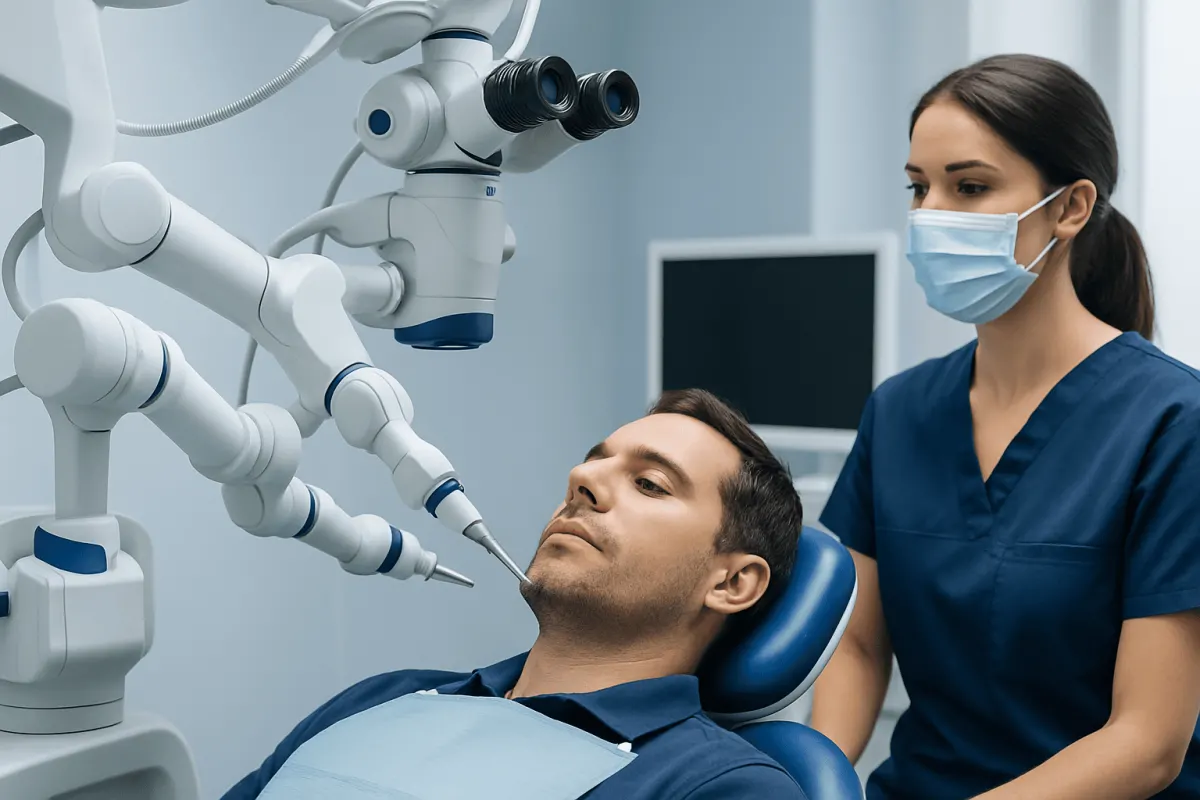
Dental robotic systems usually begin with digital data collection. This may include 3D imaging, digital impressions, photographs, and bite analysis. These tools create a detailed picture of the patient’s mouth and jaw, helping the dentist decide where treatment should be performed and how to avoid important anatomical structures.
Once the information is collected, planning software is used to simulate the procedure in advance. For example, in implant treatment, the dentist can determine the best implant size, angle, and position before the procedure starts. During treatment, the robotic or navigation system provides guidance so the clinician can follow the plan with a high level of control while still making professional judgments in real time.
Different systems work in different ways. Some use robotic arms with haptic guidance, meaning they help limit movement outside the planned area. Others provide dynamic navigation on a screen, similar to a GPS-style guide for the dentist’s instruments. In all cases, the dentist remains in control and can adjust the procedure if the clinical situation requires it.
These technologies are not limited to surgery alone. Digital workflows can also support restorative planning for dental crowns, cosmetic treatment design, and coordination of care after implant placement. As technology continues to develop, robotics may become more integrated with broader treatment planning across several dental specialties.
How It Improves Precision
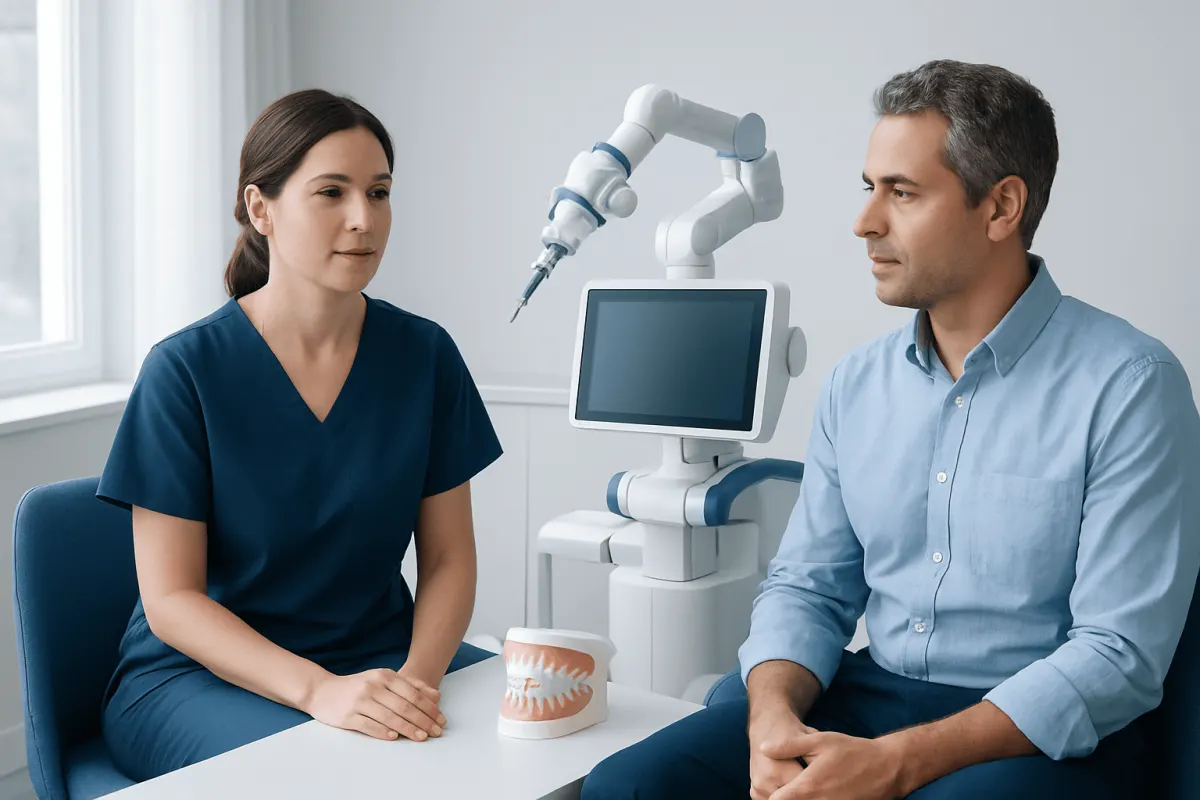
Precision in dentistry matters because the mouth contains small structures in a limited space. Teeth, bone, gums, nerves, and sinuses all need to be considered when planning treatment. Robotic support can help the dental team work with greater accuracy by combining detailed images with real-time guidance, reducing reliance on estimation alone.
In implant dentistry, even small differences in angle or depth can affect the final outcome. A precisely placed implant may support better function, aesthetics, and long-term maintenance. Robotic systems help the clinician align the procedure with the preoperative plan, which can be especially useful in cases with limited bone, complex anatomy, or the need for a highly specific restorative result, such as Bone Graft for Dental Implants: What to Expect" class="ahp-ilk">dental implants.
Improved precision may also support a more conservative approach in some cases. When the treatment area is mapped carefully, the dentist may be better able to preserve healthy tissues and work efficiently within the planned site. This does not guarantee a simpler recovery, but it can contribute to a more controlled procedure.
It is important to understand that precision depends on more than technology alone. Good results still rely on proper diagnosis, high-quality imaging, careful planning, clinician experience, and appropriate follow-up care. Robotics is best seen as a tool that enhances these steps rather than replacing them.
Common Uses in Dentistry
The most established use of dental robotics is in implant surgery. Implant placement requires accurate positioning in the jaw to support the final tooth replacement and to protect nearby structures. Robotic guidance can be particularly helpful when multiple implants are planned, when space is limited, or when a restoration such as All-on-4 treatment is being considered.
Robotic and digitally guided systems may also support endodontic and restorative workflows in selected settings. For example, advanced imaging and navigation can improve understanding of tooth anatomy before procedures related to endodontic care. In restorative dentistry, digital planning can help coordinate implant placement with future crowns, bridges, or cosmetic work.
Some patients exploring smile design or implant-supported restorations may encounter robotics as part of a broader technology-driven treatment pathway. This may be relevant in people with missing teeth, damaged teeth, or complex bite patterns. It can also be useful when planning treatment for issues related to aging oral structures, previous dental work, or jawbone changes.
However, not all routine dentistry requires robotic support. Many fillings, cleanings, gum treatments, and standard restorative procedures can be performed very effectively without robotic systems. The decision to use these tools depends on the complexity of the case, the available technology, and the goals of treatment.
Benefits, Limitations, and Safety
Potential benefits of dental robotics include more accurate transfer of the treatment plan to the actual procedure, better integration of imaging data, and improved consistency in technically demanding cases. Patients may also appreciate the visual nature of digital planning, which can make the proposed treatment easier to understand. In some situations, this can support more confident decision-making and clearer communication.
That said, robotics has limitations. These systems require high-quality scans, careful calibration, and a dental team trained to use the technology properly. If the underlying diagnosis is incomplete or if oral health problems such as infection, severe bone loss, or uncontrolled gum disease are present, robotics alone cannot solve those issues. Foundational care still matters, including attention to dental hygiene and management of underlying dental disease.
Safety depends on the same principles that guide all dental care: correct case selection, good infection control, proper imaging, and clinician expertise. Robotic systems are designed to assist, but they must be used thoughtfully and checked throughout the procedure. Patients should feel comfortable asking how the technology works, what benefits are expected, and what alternative approaches are available.
Cost and availability can also affect access. Not every dental center uses robotics, and not every patient will gain a meaningful benefit from it. In many cases, conventional guided dentistry or other digital methods may offer excellent results. A balanced discussion with the dentist can help determine the most appropriate approach.
Who May Be a Good Candidate
Patients who may benefit most from dental robotics are often those planning implant treatment, especially when precision is especially important. This can include people with one or more missing teeth, those needing full-arch rehabilitation, or those with anatomy that requires very careful planning. Patients who want a highly digital treatment process may also find this approach appealing.
A good candidate still needs an overall oral health assessment. The dentist will look at bone quantity and quality, gum health, bite alignment, medical history, and the condition of nearby teeth. If there is active decay, gum inflammation, or inadequate bone support, those problems may need to be addressed first, sometimes with supportive procedures such as bone grafting or periodontal treatment.
Robotic assistance is not automatically better for every person. Some patients are well served by conventional techniques, while others benefit from surgical guides or standard digital workflows without robotics. The best choice depends on the complexity of the case and the experience of the clinical team.
Patients with conditions such as severe gum disease, poorly controlled diabetes, smoking-related oral problems, or jawbone loss may need additional evaluation before implant-related procedures. A dentist may also assess related issues such as gum recession or chronic teeth grinding if they could affect treatment planning and long-term outcomes.
What to Expect Before and After Treatment
Before a robotic-assisted dental procedure, the first step is usually consultation and imaging. The dentist will review symptoms, examine the mouth, and take appropriate scans or digital impressions. A personalized treatment plan is then created, often using 3D software to show the ideal position and pathway for the procedure.
On the day of treatment, the robotic system is set up to match the patient’s anatomy and the approved plan. The dentist performs the procedure while using the system’s guidance or boundaries. Patients may notice that the process feels highly organized and technology-driven, but the core experience is still similar to other dental procedures in terms of anesthesia, communication, and aftercare instructions.
After treatment, recovery depends more on the procedure itself than on the presence of robotics. For example, implant placement, tooth restoration, or endodontic therapy each has its own healing timeline. Patients are usually advised to follow oral hygiene instructions carefully, attend follow-up visits, and contact the dental team if they develop increasing pain, swelling, bleeding, fever, or problems with healing.
For international patients seeking advanced dental care, a center with multidisciplinary planning can be helpful. Acıbadem Health Point’s multidisciplinary specialists and JCI-accredited hospitals diagnose and treat complex dental conditions for international patients, including cases where advanced digital tools are part of the treatment plan.
When to Speak With a Dentist
It may be helpful to speak with a dentist about dental robotics when a patient is considering implants, full-mouth rehabilitation, or another treatment where exact positioning is important. Questions are especially reasonable if the case has been described as complex, if there is reduced bone volume, or if previous dental work has made planning more challenging.
Patients do not need to request robotics specifically to receive good care, but they may want to ask whether digital planning or robotic guidance could improve their treatment. A useful discussion often includes the expected benefits, possible limitations, alternative methods, and what the clinician recommends based on the individual case.
People should also seek dental evaluation if they have missing teeth, loose restorations, ongoing gum problems, jaw discomfort, or difficulty chewing. These concerns may not always require robotic treatment, but they do deserve professional assessment so the underlying cause can be identified and treated appropriately.
Frequently asked questions
01Does dental robotics replace the dentist?
No. Dental robotics is an assistive technology that helps the dentist plan and perform certain procedures with greater precision. The dentist remains responsible for diagnosis, decision-making, and the actual treatment.
02Is robotic dentistry only used for dental implants?
Implant placement is the most common use, but robotic and digital guidance can support other parts of dental care as well. Depending on the system, it may also help with treatment planning, restorative coordination, and selected specialized procedures.
03Is robotic dental treatment safer?
Robotic assistance can support accuracy and control, which may be helpful in complex cases. However, safety still depends on proper case selection, clinician training, high-quality imaging, and good overall dental care.
04Will robotic dentistry reduce pain or recovery time?
Not necessarily. Recovery depends mostly on the type of procedure, the patient’s oral health, and how well aftercare instructions are followed. In some cases, a more precise and conservative approach may support a smoother procedure, but this is not guaranteed.
05Who is a good candidate for robotic dentistry?
People considering implants or complex restorative care may be good candidates, especially when detailed planning is important. A dentist will assess bone support, gum health, bite, and medical history before recommending whether robotic assistance is appropriate.
06Is robotic dentistry available for routine fillings and cleanings?
Usually, no. Most routine dental care does not require robotic systems and can be managed very effectively with standard techniques. Robotics is generally reserved for procedures where advanced imaging and precise guidance provide a clear advantage.
This article is for general information only and is not a substitute for professional medical advice. Please consult a qualified doctor about your individual situation.
Explore treatments in Turkey — costs, top hospitals & a free quote
JCI-accredited · board-certified surgeons · reply within 24h
Add us as a Preferred Source to see more of our trusted health content across Google Search, AI Overviews and Discover.