Delayed Walking: When a Neuropediatric Review Helps
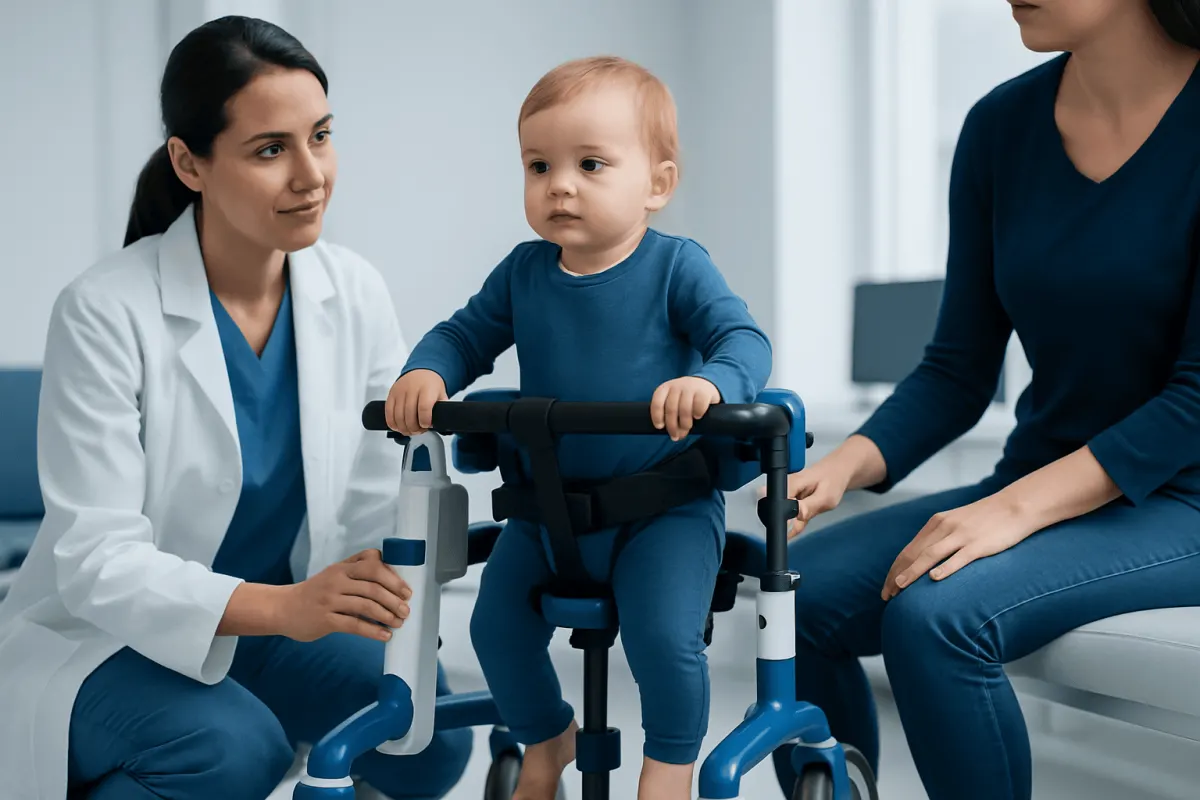
Children develop walking skills at different rates, and many late walkers are healthy. However, delayed walking, especially with other developmental concerns or loss of skills, should be assessed by a qualified pediatric clinician or neuropediatric specialist.
Overview: What Is Delayed Walking?
Delayed walking means that a child has not started walking independently within the expected developmental timeframe. Children progress through motor milestones at individual rates. Many begin pulling to stand and cruising along furniture during the first year, then take independent steps sometime between 9 and 18 months.
Walking later than another child in the family or peer group does not automatically mean there is a medical problem. Some healthy children are cautious, prefer crawling, have a larger body build, or focus their energy on other developmental areas such as language and social interaction. Still, a child who is not walking independently by 18 months, or who has other concerns, should be assessed.
Neuropediatrics is the area of medicine focused on neurological development and conditions affecting the brain, spinal cord, nerves, and muscles in children. A neuropediatric evaluation can help clarify whether delayed walking is an isolated variation or part of a broader developmental, neuromuscular, or neurological concern.
Typical Motor Milestones and Signs That Need Review
Motor development follows a broad sequence: gaining head control, rolling, sitting, crawling or other forms of movement, pulling to stand, cruising, and walking. Not every child crawls, and some children use bottom shuffling or move in other ways before walking. Skipping crawling alone is usually not considered a reliable sign of a neurological disorder.
Healthcare professionals look at the whole pattern rather than a single milestone. It is helpful to note when the child first sat without support, bore weight through the legs, pulled to stand, cruised, and began taking steps. They also consider whether both sides of the body are used similarly and whether skills are steadily improving.
- Not bearing weight through the legs by around 12 months
- Not pulling to stand or cruising by around 15 months
- Not walking independently by 18 months
- Persistent toe walking, marked stiffness, floppiness, frequent falls, or an unusual walking pattern
- Using one hand or one side of the body much more than the other early in life
- Loss of previously acquired movement, language, or social skills
These signs do not diagnose a specific condition. They indicate that a child would benefit from timely medical assessment, especially if parents or caregivers feel that development has slowed or changed.
Possible Causes and Risk Factors

Delayed walking has many possible explanations. In some children, it is an isolated developmental variation or occurs in families where relatives also walked later. Children born prematurely may reach milestones later when development is considered using their corrected age, particularly during the first two years.
Low muscle tone, also called hypotonia, may make standing and balancing more difficult. Joint hypermobility, foot or hip concerns, nutritional problems, vision difficulties, and periods of illness or reduced opportunity for active floor play can also affect the timing of walking. A pediatric clinician can help distinguish these possibilities.
Less commonly, delayed walking may be associated with a neurological, genetic, metabolic, or neuromuscular condition. Examples include cerebral palsy, spinal muscular atrophy, muscular dystrophies, peripheral nerve disorders, or conditions that affect global development. The child’s examination and developmental history guide whether testing for these causes is appropriate.
Risk factors that may prompt closer monitoring include a history of prematurity or complications around birth, known genetic conditions, significant feeding difficulties, developmental concerns in multiple areas, or a family history of neuromuscular disease. Even without these factors, parents’ observations remain important and deserve attention.
How a Neuropediatric Evaluation Is Performed
Assessment usually begins with a detailed conversation about pregnancy, birth, early health, family history, and developmental progress. The clinician may ask about sitting, crawling, standing, speech, hand use, play, feeding, sleep, and social engagement. Videos of the child moving at home can sometimes provide useful information, particularly if the child is shy or tired during the appointment.
A physical and neurological examination assesses posture, muscle tone, strength, reflexes, coordination, balance, joint movement, foot position, and symmetry. The clinician will observe how the child sits, rises, crawls, cruises, stands, and walks if able. Growth, head size, vision, hearing history, and general health may also be reviewed.
Many children do not require extensive testing. When there are specific findings, the care team may recommend blood tests, genetic testing, developmental screening, hearing or vision assessment, or imaging of the brain or spine. In selected cases, nerve and muscle testing may be considered. Tests are chosen to answer a particular clinical question rather than used routinely for every late walker.
Assessment may involve a multidisciplinary team, including a pediatrician, neuropediatrician, physical therapist, occupational therapist, orthopedic specialist, geneticist, or developmental specialist. This approach supports both diagnosis and practical planning for the child and family.
Treatment and Developmental Support
Treatment depends on the reason for delayed walking. When no underlying disorder is found and the child is making steady progress, reassurance, developmental monitoring, and guidance on active play may be all that is needed. Follow-up appointments can confirm that new skills continue to emerge.
Physical therapy may help children improve strength, balance, coordination, confidence, and movement skills. Therapy is individualized and often includes play-based activities that practice transitions, standing, cruising, and safe walking. Occupational therapy may be useful when fine motor skills, sensory processing, feeding, or daily activities are also affected.
If an underlying neurological, orthopedic, nutritional, or genetic condition is identified, care focuses on that condition while supporting mobility and participation. This may include rehabilitation, braces or other mobility supports, management of muscle tone, treatment of nutritional deficiencies, or specialist-directed therapies. For children with a diagnosis such as cerebral palsy, early rehabilitation planning is an important part of long-term care.
Families should avoid unproven supplements, restrictive treatments, or devices promoted as ways to make a child walk sooner. A qualified clinician can recommend safe supports based on the child’s needs and can explain what progress may reasonably look like over time.
Supporting Motor Development at Home
Everyday play offers valuable opportunities for motor development. Supervised floor time allows children to explore movement, shift their weight, reach for toys, practice getting into standing, and build confidence. Placing interesting toys slightly out of reach can encourage movement without forcing a child into positions they cannot yet manage.
Caregivers can provide stable furniture for cruising when the child is ready and allow barefoot play on safe indoor surfaces where practical. Being barefoot can help children feel the floor and use the small muscles of the feet. Shoes are mainly needed for outdoor protection and should fit comfortably without restricting movement.
Baby walkers with wheels are not recommended because they can cause injuries and do not teach independent balance. Excessive time in seats, swings, or other containers may reduce time available for active movement. Parents should follow the child’s therapist or clinician’s advice if the child has a specific diagnosis, hip concern, or need for mobility equipment.
Supportive encouragement is more helpful than pressure. Children benefit when adults celebrate effort, offer safe chances to practice, and avoid comparing their progress with that of siblings or peers.
When to See a Doctor Urgently or Arrange an Appointment
Parents and caregivers should arrange a pediatric assessment if a child is not walking independently by 18 months, has not made steady progress toward standing and walking, or has any concerns about motor development. It is also appropriate to seek advice earlier when a child seems unusually floppy or stiff, avoids using a leg, has pain, or consistently moves asymmetrically.
Prompt medical review is particularly important if a child loses skills that were already gained. For example, a child who previously stood, cruised, or walked but then becomes weaker or less able to move should be assessed without delay. New difficulty swallowing, breathing, or staying awake requires urgent medical attention.
Parents do not need to wait for certainty before discussing concerns. Early evaluation can provide reassurance when development is within a broad normal range and can connect families with helpful services when support is needed. Keeping a brief record of milestones and questions can make the appointment more productive.
Acıbadem Health Point’s multidisciplinary specialists and JCI-accredited hospitals support international patients requiring evaluation and care for childhood neurological and developmental concerns.
Frequently asked questions
01At what age is walking considered delayed?
Many children walk independently between 9 and 18 months. A child who is not walking independently by 18 months should generally be assessed by a pediatric healthcare professional. Earlier assessment is appropriate if there are other developmental concerns or a child is losing skills.
02Is it normal for a child to walk late but talk early?
Yes, children may develop different skills at different rates, and a child who is advanced in language may be later in motor skills. However, language progress does not rule out a motor concern. A clinician can assess the child’s overall development and movement pattern.
03Does not crawling mean a child will have developmental problems?
No. Some healthy children do not crawl in the typical hands-and-knees pattern and may bottom shuffle, roll, or move directly toward standing and walking. What matters more is whether the child is gaining skills, using both sides of the body, and making ongoing developmental progress.
04What tests may be needed for delayed walking?
Not every child needs tests. The clinician first reviews the child’s history and performs a physical and neurological examination. Depending on the findings, tests may include blood tests, genetic testing, imaging, or evaluations of hearing, vision, muscles, or nerves.
05Can physical therapy help a child walk?
Physical therapy can help many children build strength, balance, coordination, and confidence through individualized, play-based activities. It is especially useful when delayed walking relates to low muscle tone, motor coordination difficulties, neurological conditions, or recovery from illness. The therapist sets goals based on the child’s abilities and diagnosis.
06Should parents use a baby walker to encourage walking?
Walkers with wheels are not recommended because they can lead to injuries and do not help children learn independent balance in the usual way. Supervised floor play, safe opportunities to pull up and cruise, and guidance from a pediatric clinician or therapist are safer ways to encourage movement.
This article is for general information only and is not a substitute for professional medical advice. Please consult a qualified doctor about your individual situation.
Joint and spine care in Turkey — expert assessment & treatment
JCI-accredited · board-certified surgeons · reply within 24h
Add us as a Preferred Source to see more of our trusted health content across Google Search, AI Overviews and Discover.