CT Scan With or Without Contrast: Which Is Used?
CT scan without contrast vs contrast depends on the clinical question. A non-contrast scan may be best for problems such as certain head injuries, kidney stones or bleeding, while contrast can make blood vessels, organs, tumors and inflammation easier to assess.
CT Scan Without Contrast vs Contrast: A Side-by-Side Comparison
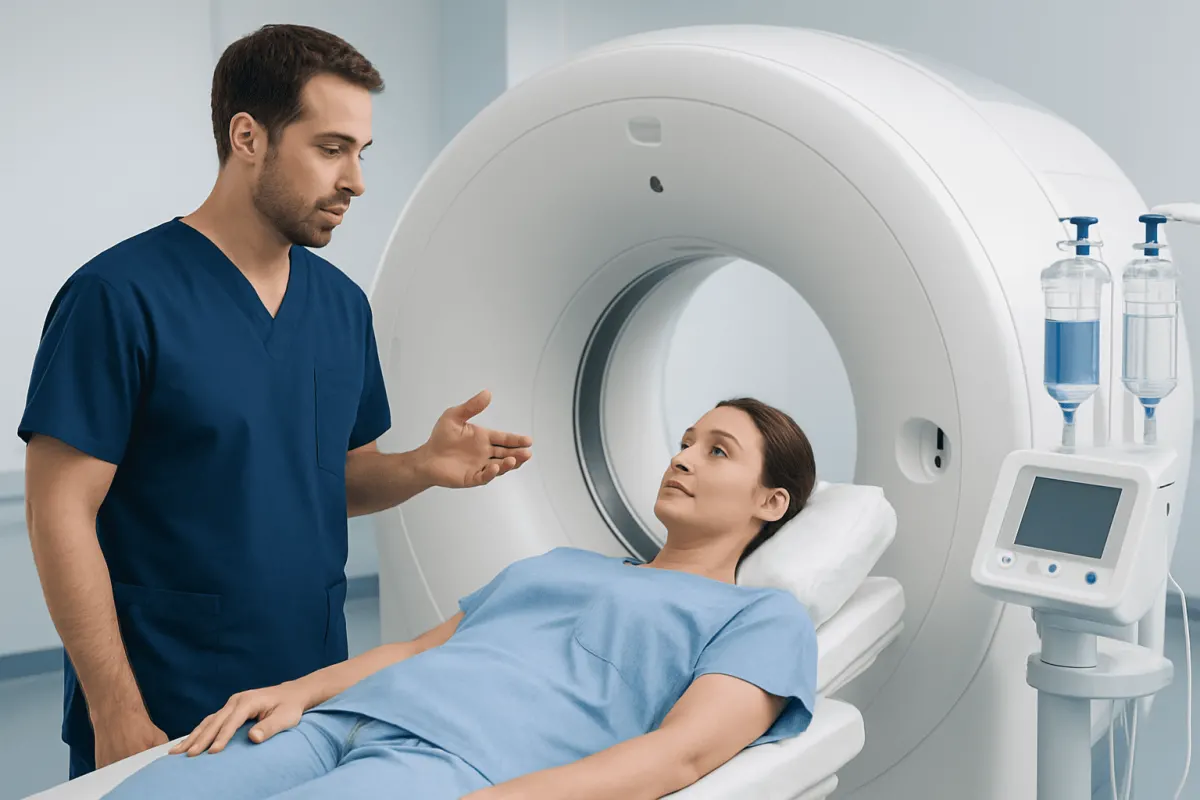
A CT (computed tomography) scan combines multiple X-ray images to create detailed pictures of structures inside the body. In a CT scan without contrast, images are taken without an added highlighting substance. In a CT scan with contrast, a contrast agent—most often an iodine-based liquid injected into a vein—is used to make certain tissues and blood vessels stand out more clearly.
Neither option is universally preferable. The radiologist and referring clinician select the protocol that is most likely to answer the medical question safely. In some situations, both non-contrast and contrast-enhanced image phases are needed.
- Without contrast: Often useful for detecting acute bleeding in the brain, many bone injuries, lung detail, some kidney stones, and certain bowel assessments.
- With contrast: Often useful for evaluating blood vessels, organ injuries, infections, inflammation, masses, tumors, and the spread of some cancers.
- Preparation: Non-contrast CT usually requires little preparation. Contrast CT may involve screening for allergies, kidney concerns and pregnancy, and may require temporary fasting depending on the examination.
- During the scan: IV contrast may cause a brief warm sensation, a metallic taste, or the feeling of needing to urinate; these sensations usually pass quickly.
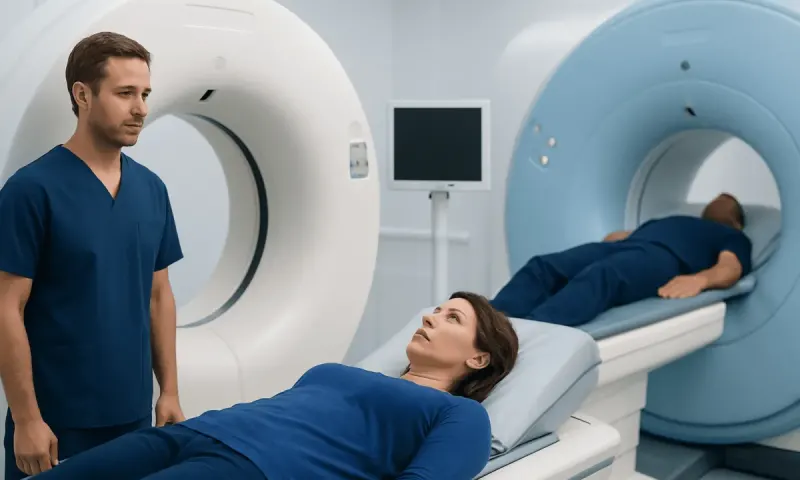
The scan itself is generally quick. A patient lies still on a table that moves through the CT scanner while radiographers obtain the images. A radiologist interprets the scan and sends a report to the clinician managing the patient’s care.
How Clinicians Tell Which CT Study Is Needed
Clinicians do not choose contrast simply because it produces a different-looking scan. They begin with the person’s symptoms, examination findings, medical history and the exact diagnostic question. The location and timing of symptoms, recent injury, suspected infection, prior surgery, cancer history and laboratory results can all influence the choice.
For example, an emergency non-contrast head CT is commonly used to look rapidly for acute bleeding after a significant head injury or sudden neurological symptoms. By contrast, a CT angiography study uses intravenous contrast to assess blood vessels when a clot, aneurysm, dissection or active bleeding is suspected. Abdominal CT with contrast can better show inflammation around organs, abscesses, solid-organ injuries and many tumors.
The imaging team also considers safety. Important information includes previous reactions to contrast, asthma or severe allergies, kidney disease, dehydration, diabetes, use of certain medicines, and possible pregnancy. These factors do not always rule out contrast, but they may lead to precautions, a modified examination, an alternative test or a discussion about whether the expected diagnostic benefit justifies using it.
In urgent care, the need to identify a serious condition promptly may outweigh potential disadvantages. In less urgent situations, a clinician may first use ultrasound, MRI, laboratory testing or a non-contrast CT if these can answer the question adequately.
How to Decide CT With or Without Contrast?
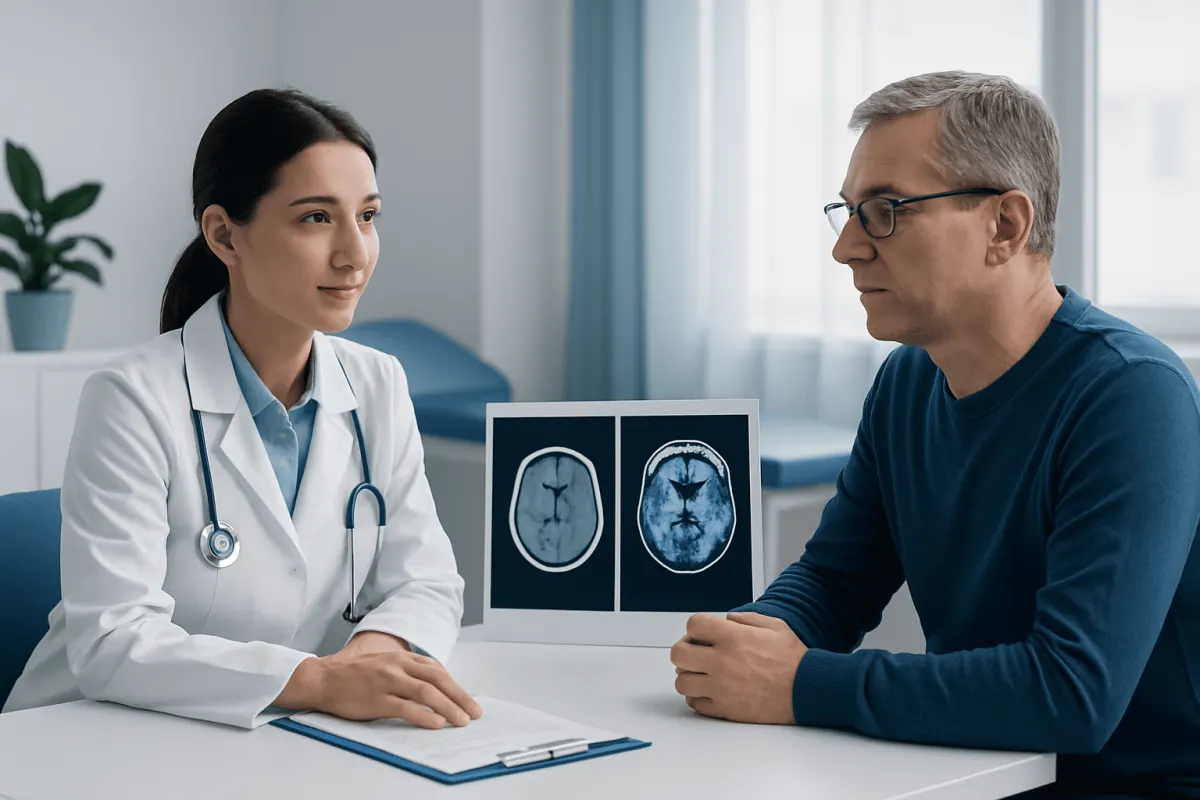
Patients should not need to decide alone whether a CT should include contrast. The referring clinician requests the examination based on the suspected diagnosis, and the radiologist may refine the protocol to ensure the scan is appropriate. It is helpful for patients to ask what the scan is intended to investigate and whether contrast is expected to change the information obtained.
Before the appointment, patients should tell the care team about any prior contrast reaction, kidney problems, dialysis, diabetes, thyroid disease, pregnancy or possibility of pregnancy, and all medicines and supplements. The team may request a blood test to assess kidney function for certain contrast examinations, particularly when risk factors are present.
If contrast is planned, it is usually administered through a small intravenous cannula. Most people tolerate it well. Mild effects such as warmth, flushing, a metallic taste or brief nausea can occur and typically resolve within minutes. Serious allergic-like reactions are uncommon, and imaging departments are prepared to recognize and treat them promptly.
Following the scan, the care team may advise normal fluid intake unless there is a medical reason to limit fluids. Patients should seek prompt advice after leaving the department if they develop symptoms such as hives, wheezing, swelling of the face or throat, severe vomiting, or difficulty breathing.
Is a CT Scan With Contrast More Accurate Than Without Contrast?
A CT scan with contrast is not always more accurate than a CT scan without contrast. It can be more informative for specific questions because it helps distinguish blood vessels from nearby tissues and can reveal differences in how organs, inflammation and abnormal growths take up contrast. However, adding contrast may be unnecessary or may even make some findings harder to assess in particular situations.
Non-contrast CT is highly valuable for many conditions. It is often the first imaging test for suspected acute bleeding in the brain because fresh blood is usually visible without IV contrast. It can also identify many fractures, evaluate the lungs, and detect most urinary tract stones. For suspected kidney stones, contrast may obscure the stone in some phases, so a low-dose non-contrast CT is often used.
Contrast-enhanced CT is frequently selected for suspected appendicitis, complications of inflammatory bowel disease, abdominal infection, injury to organs after trauma, and evaluation of many cancers. It may also be essential for dedicated vascular studies. In these settings, the contrast pattern can provide information that a non-contrast scan alone cannot.
The most accurate examination is therefore the correctly tailored one. A radiologist may recommend a different imaging method, such as ultrasound or MRI, when it is better suited to the clinical issue or avoids radiation or iodine-based contrast.
Will a CT Scan Without Contrast Show a Bowel Blockage?
Yes, a CT scan without contrast can often show a bowel blockage, especially when the bowel is enlarged above the point of obstruction and collapsed below it. It may identify the location of the blockage and possible causes such as a hernia, adhesions from previous surgery, a mass, or twisting of the bowel in some cases.
However, intravenous contrast may provide additional information in many patients with suspected bowel obstruction. It can help assess the bowel wall, blood supply and signs of complications such as reduced blood flow, inflammation, perforation or an abscess. The decision depends on the person’s symptoms, kidney function, allergy history and how urgently the scan is needed.
CT findings are interpreted alongside the patient’s symptoms, examination and blood tests. A person with severe or worsening abdominal pain, repeated vomiting, marked abdominal swelling, inability to pass stool or gas, fever, fainting, or blood in vomit or stool should seek urgent medical assessment. Bowel obstruction can require prompt treatment, particularly if blood flow to the bowel may be affected.
For ongoing digestive symptoms, imaging is only one part of assessment. A clinician may also consider conditions such as irritable bowel syndrome or other digestive disorders, depending on the symptom pattern and examination.
Why Don't Doctors Like to Do CT Scans?
Doctors do use CT scans when they can provide important information quickly, but they avoid unnecessary CT imaging because CT involves ionizing radiation. The amount of radiation varies by the body area and type of scan. Although the individual risk from a medically necessary scan is generally small, exposure can add up over time, so clinicians follow the principle of using the lowest appropriate dose.
CT may also involve contrast-related considerations. Iodine-based contrast can rarely trigger allergic-like reactions and may need special planning in people with significantly reduced kidney function or other risk factors. These concerns are balanced against the possible harm of missing or delaying diagnosis of a serious condition.
Another reason to use CT selectively is that it can reveal incidental findings—unexpected changes that may be harmless but can lead to further tests and anxiety. A careful referral question helps the radiologist focus the examination and reduces unnecessary follow-up.
For some concerns, ultrasound or MRI can be excellent alternatives. Ultrasound does not use radiation and is often useful for gallbladder, pelvic and pregnancy-related assessment. MRI also avoids ionizing radiation and may provide detailed soft-tissue information, though it is not the best or fastest test for every emergency. If CT is recommended, it usually means its speed and diagnostic value are important for the situation.
What to Do Before and After Each Type of CT
For a CT without contrast, patients can usually continue their usual routine unless the imaging center provides different instructions. They should bring relevant medical information and tell staff if they are pregnant or might be pregnant. Metal objects near the body area being scanned may need to be removed.
For a contrast-enhanced CT, patients should follow any fasting or medication instructions given by the imaging department. They should report a previous reaction to contrast rather than assuming all imaging contrast is the same; the care team can assess the details and discuss precautionary measures or alternatives. Patients with kidney disease should not stop prescribed medicines without advice from their treating clinician.
After either scan, most people can return to normal activities immediately. When contrast has been given, staff may observe a patient briefly if there is a history of reaction or if symptoms occur. Drinking fluids may be encouraged when medically appropriate. The ordering clinician will explain what the results mean and whether further testing, monitoring or treatment is needed.
At Acıbadem Health Point, multidisciplinary specialists and JCI-accredited hospitals support international patients who need diagnostic imaging and follow-up care, with imaging choices tailored to the clinical question and individual safety considerations.
When to Seek Medical Care
Emergency medical assessment is important for sudden severe headache, new weakness or trouble speaking, loss of consciousness, severe chest pain, major trauma, coughing up blood, or sudden severe abdominal pain. These symptoms may require urgent testing, which can include CT depending on the clinical assessment.
Prompt medical advice is also appropriate for persistent unexplained abdominal pain, recurrent vomiting, blood in the stool or urine, unexplained weight loss, ongoing fever, worsening shortness of breath, or new neurological symptoms. A clinician can determine whether CT, ultrasound, MRI or another test is most appropriate.
Patients who have had contrast and then develop hives, swelling, wheezing, breathing difficulty, severe dizziness or persistent vomiting should seek urgent care. Delayed skin rashes can also occur; patients should inform a healthcare professional and mention the prior contrast exposure before future imaging.
A CT result should always be discussed in context. Imaging may identify an explanation for symptoms, but normal or uncertain results do not replace follow-up if symptoms persist, change or worsen.
Frequently asked questions
01What is the main difference between CT with and without contrast?
A non-contrast CT uses X-rays without an added highlighting agent. A contrast-enhanced CT usually uses iodine-based contrast through a vein to make blood vessels, organs and some abnormalities easier to distinguish. The best option depends on what the clinician needs to investigate.
02Does CT contrast make people feel unwell?
Many people feel a short-lived warmth, flushing sensation, metallic taste or sensation of needing to urinate when IV contrast is injected. These effects usually resolve quickly. Tell the imaging staff immediately about any itching, rash, breathing difficulty, swelling or significant nausea.
03Can someone have a CT scan with contrast if they have kidney disease?
It may still be possible, but the care team will assess the degree of kidney impairment, the urgency of the scan and whether an alternative test can answer the clinical question. In some cases, kidney function testing or other precautions may be used. Patients should discuss their individual situation with the ordering clinician and radiology team.
04Do people need to fast before a CT scan with contrast?
Instructions vary according to the type of CT and the imaging center’s protocol. Some contrast CT examinations require a period without food, while others do not. Patients should follow the specific instructions provided and ask the imaging department if they are unsure.
05Can a CT scan detect cancer without contrast?
A non-contrast CT can show some masses or abnormalities, particularly in the lungs and bones, but it may not fully characterize them. Contrast often improves assessment of many tumors, organs and lymph nodes, as well as the relationship between an abnormality and nearby blood vessels. Further imaging or biopsy may still be needed for diagnosis.
06Is CT contrast the same as MRI contrast?
No. CT contrast is commonly iodine-based, while MRI contrast agents are commonly gadolinium-based. They have different properties, uses and safety considerations. A prior reaction to one type should be reported before any future imaging, but it does not automatically mean a person will react to the other.
This article is for general information only and is not a substitute for professional medical advice. Please consult a qualified doctor about your individual situation.
Persistent digestive symptoms? Get evaluated in Turkey
JCI-accredited · board-certified surgeons · reply within 24h
Add us as a Preferred Source to see more of our trusted health content across Google Search, AI Overviews and Discover.