CT MRI Difference Between: Key Differences Explained

Key Takeaways
- CT uses X-rays and is usually faster; MRI uses strong magnets and radio waves and often takes longer.
- CT is commonly chosen for emergencies, trauma, chest or abdominal concerns, and bone injury; MRI is often preferred for soft tissue detail.
- MRI does not use ionizing radiation, while CT does.
- The best scan depends on the symptom, body area, urgency, and the information the doctor needs.
- Both scans are non-surgical, but they may require contrast material, preparation, or screening for safety.
- A qualified doctor should decide which test is most appropriate for each patient.
The ct mri difference between comes down to how each scan creates images, what it shows best, and how quickly it can be done. CT is often used for fast, detailed views of bone, bleeding, and urgent injuries, while MRI provides more detail for soft tissues such as the brain, spine, joints, and organs.
Overview
When people ask about the ct mri difference between, the simplest answer is this: CT and MRI are both imaging tests, but they are designed to answer different clinical questions. A CT scan uses X-rays to create quick cross-sectional pictures of the body, while an MRI uses magnets and radio waves to produce highly detailed images, especially of soft tissues.
Doctors do not choose one scan because it is universally “better.” They choose the test that best fits the symptom, the body part being examined, and how quickly results are needed. In an emergency department, CT may be the first choice because it is fast. For a lingering knee injury, a brain problem, or a spinal issue, MRI may provide the clearer picture.
For international patients planning care, this distinction matters early in the journey. It helps set realistic expectations about timing, preparation, comfort, and follow-up. Knowing why one scan is recommended can make the process feel more manageable and less uncertain.
How Each Scan Works
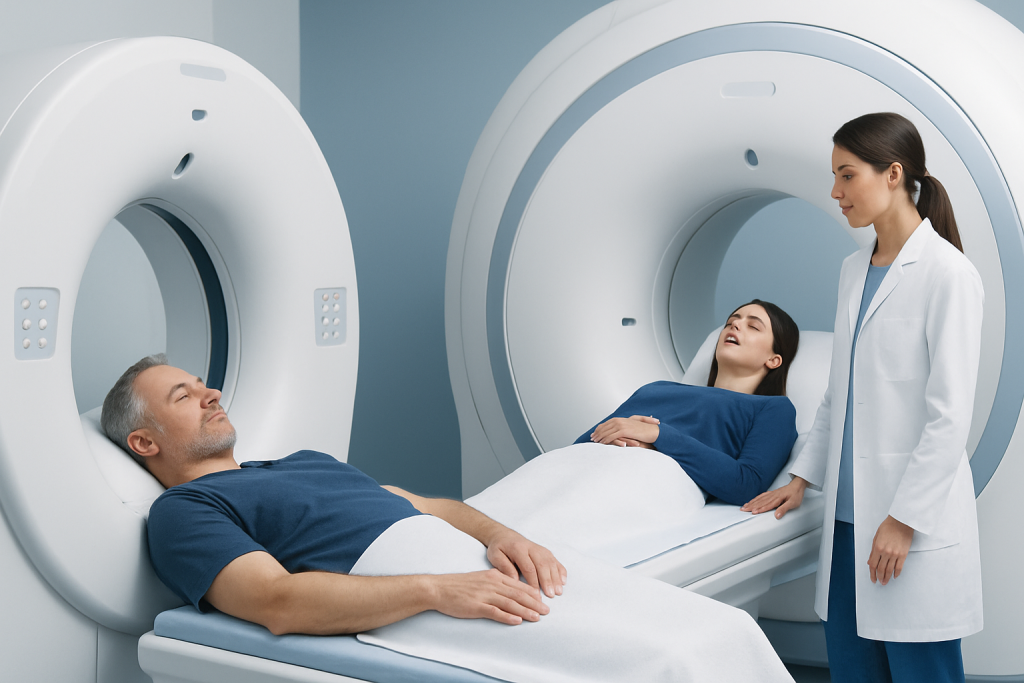
CT stands for computed tomography. During the scan, an X-ray beam rotates around the body and a computer assembles the data into detailed images. Because it gathers information rapidly, CT is particularly useful when speed is important or when doctors need to see bones, blood, lungs, or internal bleeding clearly.
MRI stands for magnetic resonance imaging. Instead of X-rays, it uses a strong magnetic field and radiofrequency pulses to build images. This technique excels at showing differences in soft tissues, which is why it is often used for the brain, spinal cord, ligaments, muscles, organs, and certain tumors or inflammatory conditions.
Both scans can be performed with or without contrast material, depending on the question being asked. Contrast helps certain structures or abnormalities stand out more clearly, but it is not needed in every case. The radiology team will screen for relevant medical history before deciding whether contrast is appropriate.
Symptoms and Conditions Each Test May Help Evaluate

The scan chosen often depends on the symptom pattern. CT is commonly used for head injury, sudden severe headaches when bleeding is a concern, chest pain in selected situations, lung problems, kidney stones, and fractures. It is also helpful when doctors need a broad overview of the chest, abdomen, or pelvis in a short time.
MRI is often preferred when the concern involves soft-tissue detail. It may be ordered for persistent back pain with suspected nerve involvement, knee or shoulder injuries, brain and spinal cord disorders, pelvic conditions, liver or bile duct questions, and some joint problems. In many cases, the doctor already has a likely diagnosis and is using MRI to confirm it or define its extent.
Sometimes both tests are useful, but for different reasons. For example, a CT may show the initial problem quickly, while an MRI may later provide more detail for treatment planning. The order of testing depends on urgency, availability, and what information will change care most effectively.
Causes & Risk Factors for Needing CT or MRI
People do not need CT or MRI because of a single cause; rather, they are ordered when a symptom or exam finding suggests a structural problem. Common reasons include trauma, unexplained pain, neurologic symptoms, suspected infection, abnormal lab findings, or a mass that needs clearer definition. Age, prior surgery, and known medical conditions can also influence the choice of imaging.
Some practical factors affect the decision as well. CT may be favored when the answer is needed quickly, when MRI is not available, or when a patient cannot easily remain still for a longer scan. MRI may be chosen when avoiding radiation is important, when soft tissue detail is essential, or when prior CT images did not give enough information.
There are also safety considerations. Certain implanted devices, metal fragments, kidney function concerns, allergies to contrast material, or pregnancy may change the plan. These are not reasons for alarm; they are reasons for the medical team to tailor the scan responsibly.
Diagnosis: What the Imaging Process Is Like
Before either scan, a doctor or radiology team reviews the reason for the test and checks for anything that could affect safety or image quality. Patients may be asked about allergies, kidney disease, metal implants, pacemakers, pregnancy, prior reactions to contrast, and recent procedures. This screening helps ensure the chosen scan is appropriate.
A CT scan is usually brief. The patient lies on a table that passes through the scanner, and the test itself often takes only a few minutes. An MRI usually takes longer and can feel noisier, because the machine makes repeated tapping sounds while images are collected. In both cases, remaining still helps the pictures come out clearly.
If contrast is used, it may be given by vein or, in some cases, by mouth. Patients are typically told in advance what to expect and whether any preparation is needed, such as fasting for a period of time. After the scan, most people can return to normal activities unless their doctor gives different instructions.
Treatment Options: How Scan Results Guide Care
CT and MRI do not treat a condition; they guide the next step in care. Their real value lies in helping doctors confirm a diagnosis, rule out dangerous causes, or plan the most appropriate treatment. That plan might include medication, physical therapy, monitoring, a procedure, or surgery depending on the findings.
For example, a CT might reveal a fracture that needs immobilization or surgical review, while an MRI might show a ligament tear that is better managed with rehabilitation. In neurological care, imaging can help distinguish between several possible explanations for numbness, weakness, or headaches and direct the patient toward the right specialist.
For patients traveling from another country, scan results are often part of a broader treatment pathway. The imaging report, the images themselves, and the clinical examination all matter. Good care uses the scan as one part of a full picture, not as a stand-alone answer.
Prevention & Self-care
Patients cannot usually prevent the need for imaging altogether, but they can prepare well and make the experience smoother. Bringing previous scan reports, a list of medications, details of implants, and any relevant medical history can help the radiology team choose the safest and most useful exam. Clear communication is especially important when care is being coordinated across borders.
During a CT or MRI appointment, following the preparation instructions matters. If the team asks the patient to fast, remove metal objects, or arrive early for screening, these steps help avoid delays. Patients who feel anxious about MRI may ask in advance about noise, ear protection, or whether a companion can be present before or after the scan.
After the test, self-care is usually simple. Staying hydrated, following any instructions about contrast, and watching for unusual symptoms after contrast use are sensible steps. If the patient is waiting for results, it helps to remember that the scan is one piece of the evaluation, and the radiologist’s interpretation should be discussed with the treating doctor.
When to See a Doctor
Medical advice should be sought when a symptom is new, persistent, or concerning, especially if it involves pain, weakness, numbness, injury, unexplained weight loss, fever, or changes in speech, vision, or balance. A doctor can decide whether imaging is needed and which test is more suitable. CT and MRI should not be self-selected based only on online comparisons.
Urgent care is important for sudden severe symptoms such as chest pain, difficulty breathing, stroke-like signs, major trauma, or severe head injury. In these situations, the fastest and most informative scan is often chosen in the context of emergency care. The priority is not choosing the “best” scan in theory, but getting the right information at the right time.
For patients considering evaluation abroad, it can be helpful to ask how the imaging will fit into the overall care plan, how soon results will be reviewed, and whether follow-up can continue after returning home. Acibadem Health Point’s multidisciplinary specialists and JCI-accredited hospitals diagnose and treat conditions like these for international patients, with imaging integrated into the full clinical pathway.
Frequently asked questions
01Which is better, CT or MRI?
Neither scan is universally better. CT is often better for speed, bone detail, and urgent situations, while MRI is often better for soft tissue detail and problems involving the brain, spine, joints, or organs. The doctor chooses the test that best matches the clinical question.
02Does CT use radiation and does MRI use radiation?
CT uses ionizing radiation because it relies on X-rays. MRI does not use ionizing radiation; it uses a magnetic field and radio waves instead. That difference is one reason MRI is preferred in some situations, especially when repeated imaging may be needed.
03Why would a doctor order CT instead of MRI?
A doctor may order CT when the scan needs to be done quickly or when the concern involves bleeding, fractures, lungs, or abdominal emergencies. CT is also widely available and often easier to perform in patients who cannot stay still for long. The choice depends on the situation, not on one test being generally superior.
04Why would a doctor order MRI instead of CT?
MRI is often chosen when more detail is needed for soft tissues. It can show subtle changes in the brain, spinal cord, muscles, ligaments, and certain organs better than CT. It is also useful when the doctor wants to avoid radiation if MRI is otherwise safe and appropriate.
05Do CT and MRI scans hurt?
The scans themselves are not painful. Some people find CT or MRI uncomfortable because they must lie still, and MRI can be noisy or feel enclosed. The team can often suggest practical ways to improve comfort, such as ear protection or guidance on breathing and positioning.
06Can a patient eat or drink before a CT or MRI?
It depends on the type of scan and whether contrast material will be used. Some exams require fasting for a few hours, while others do not. The imaging center should provide specific instructions before the appointment.
This article is for general information only and is not a substitute for professional medical advice. Please consult a qualified doctor about your individual situation.
Joint and spine care in Turkey — expert assessment & treatment
JCI-accredited · board-certified surgeons · reply within 24h
Add us as a Preferred Source to see more of our trusted health content across Google Search, AI Overviews and Discover.