CT Cardiac Angiogram Coronary Scan: How It Works
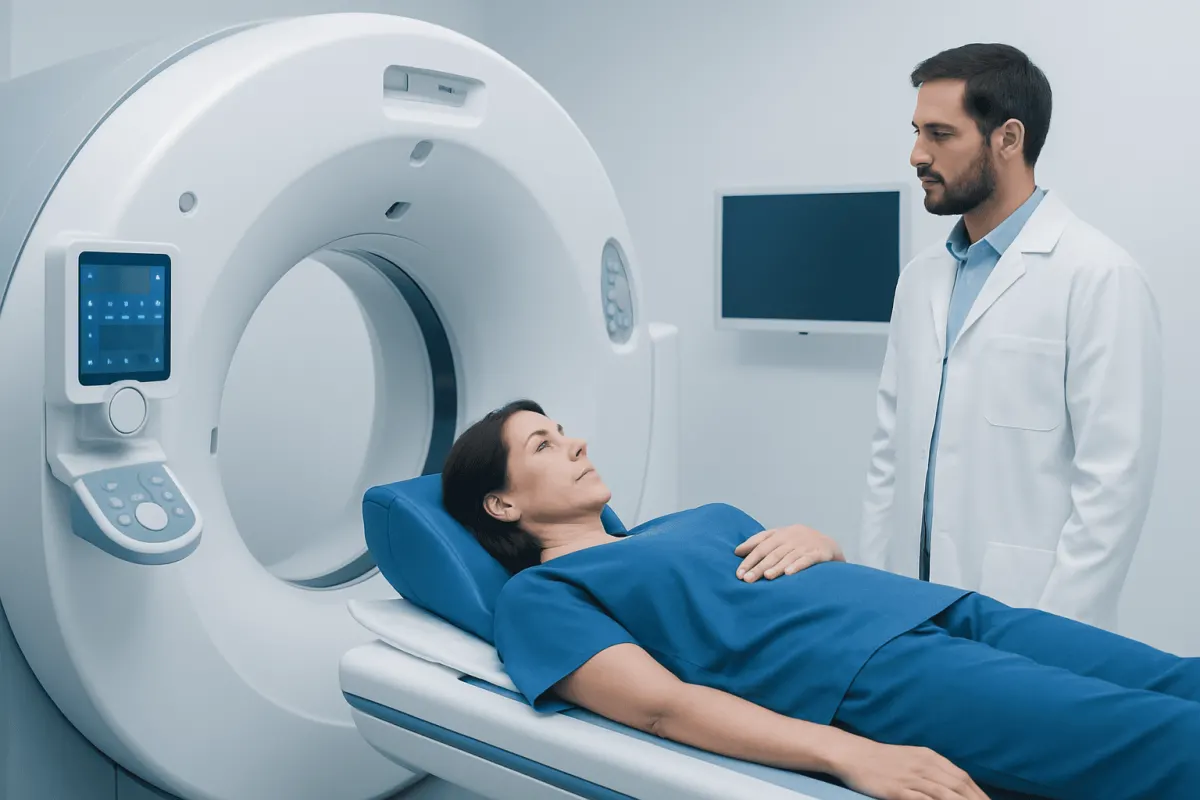
A CT cardiac angiogram coronary scan is a non-invasive imaging test that uses contrast dye and computed tomography to create detailed pictures of the heart’s coronary arteries. It can help a doctor assess whether plaque or narrowing may be affecting blood flow to the heart muscle.
What Is a CT Cardiac Angiogram Coronary Scan?
A CT cardiac angiogram coronary scan, also called coronary CT angiography or CT coronary angiography, is a detailed imaging test of the blood vessels that supply the heart. It combines a CT scanner with contrast dye injected into a vein, allowing clinicians to view the coronary arteries and look for plaque, narrowing or blockage.
The test is non-invasive because it does not require a tube to be passed through an artery to the heart. A scanner takes many rapid X-ray images while the heart is beating, and specialised software reconstructs these images into detailed views of the coronary arteries, heart chambers and nearby structures.
A request may be written in different ways, including “CT cardiac angio with coronary evaluation,” “CT cardiac coronary arteries with contrast,” or “CT cardiac complete.” These descriptions can vary between imaging centres, so the ordering clinician and radiology department confirm exactly which scan and clinical question are required.
Why Might a Doctor Recommend This Scan?
A clinician may recommend a CT coronary angiogram when symptoms or a person’s overall cardiovascular risk suggest possible coronary artery disease. It is often considered for unexplained chest discomfort, exertional breathlessness, or an inconclusive result from another heart test. It may also be used to clarify coronary artery anatomy in selected patients.
The scan can show calcified and non-calcified plaque, narrowing inside coronary arteries, and in some cases abnormalities present from birth. It helps doctors decide whether symptoms may be related to reduced blood supply to the heart and whether further tests or treatment are appropriate.
It is not the right test for every situation. People with severe kidney impairment, a significant previous reaction to iodinated contrast, uncontrolled rapid heart rhythm, or some other medical circumstances may need a different approach. The clinician balances the likely benefit of imaging against radiation exposure, contrast-related considerations and the person’s individual health needs.
When coronary artery disease is suspected or confirmed, the findings may be considered alongside assessment and care for coronary artery disease.
CT Coronary Angiogram vs Cardiac CT: What Is the Difference?

The term cardiac CT is broad. It describes CT imaging focused on the heart or nearby blood vessels, but the exact purpose can differ. For example, a coronary calcium score evaluates calcified plaque and usually does not use contrast, while a CT coronary angiogram uses contrast to show the inside of the coronary arteries.
In a CT coronary angiogram versus cardiac CT comparison, the key question is what information is needed. Coronary CT angiography is designed to assess the coronary artery lumen and vessel wall in detail. Other cardiac CT examinations may assess heart structure, the aorta, pulmonary veins, cardiac valves, or planning for a procedure.
A coronary calcium score and CT angiography may both contribute to cardiovascular risk assessment, but they are not interchangeable. A calcium score cannot directly show all non-calcified plaque or confirm whether a coronary artery is narrowed. The referring clinician can explain which test best addresses the person’s symptoms and medical history.
What Happens During a CT Coronary Angiogram?
Before the scan, staff review medical history, current medicines, allergies, kidney function where relevant, and the possibility of pregnancy. Small sticky electrodes may be placed on the chest to monitor the heart rhythm. Because image quality is best when the heart rate is steady and relatively slow, some people are given medicine before the scan if medically suitable.
An intravenous cannula is placed, usually in an arm vein. The person lies on a scanning table, which moves through the CT scanner. Contrast dye is injected through the cannula, and the person may briefly notice a warm sensation or a metallic taste. Staff give simple breathing instructions, often including a short breath-hold.
The image-taking portion is usually brief, although preparation and checks take longer. Afterward, the cannula is removed and many people can return home the same day. Drinking fluids may be encouraged unless a clinician has advised fluid restriction for another health reason.
The radiologist interprets the images and sends a report to the referring clinician. The report may describe normal arteries, plaque without important narrowing, possible significant narrowing, or technical limits such as motion from a fast or irregular heartbeat.
What Not to Do Before a CT Angiogram?
Preparation instructions differ slightly by centre and by a person’s health conditions, so the imaging department’s instructions should always take priority. In general, people are often asked not to eat for several hours before a CT coronary angiogram, particularly when contrast and heart-rate medication may be used. Water may be allowed, but this should be confirmed in advance.
It is commonly important to avoid caffeine before the scan, including coffee, tea, energy drinks, cola and some supplements. Caffeine can raise the heart rate and make the images less clear. Nicotine and strenuous exercise may also be discouraged shortly before the appointment for the same reason.
People should not stop prescribed medicines unless their clinician specifically tells them to do so. They should inform the team about diabetes medicines, blood pressure medicines, erectile dysfunction medicines, inhalers, kidney disease, asthma, thyroid disease, previous contrast reactions and any chance of pregnancy. Bringing an up-to-date medicine list can help prevent confusion.
- Do not consume caffeine if instructed to avoid it.
- Do not eat or drink outside the fasting instructions provided.
- Do not conceal an allergy, previous contrast reaction or kidney problem.
- Do not drive afterward if sedating medicine has been given or if staff advise against it.
Is a CT Coronary Angiogram Worth It?
A CT coronary angiogram can be worthwhile when it is likely to answer an important clinical question, such as whether coronary artery narrowing may explain chest symptoms. For appropriately selected people, a reassuring result can reduce the need for further invasive testing, while an abnormal result can guide preventive treatment, additional evaluation or referral to a heart specialist.
However, its value depends on the individual. A person with very low likelihood of coronary disease may not benefit from testing, while someone with symptoms suggesting an acute heart problem may require urgent assessment rather than an outpatient scan. Heavy coronary calcium, certain heart rhythms and difficulty holding still can sometimes reduce image clarity.
The scan involves a small amount of ionising radiation and iodinated contrast. Serious contrast reactions are uncommon, but they can occur, and contrast may require special planning for people with reduced kidney function. A doctor can explain whether the expected information is likely to outweigh these considerations.
If a scan identifies a problem requiring more direct assessment or treatment, a specialist may discuss options such as coronary angiography or other evidence-based heart care.
Is a Coronary Angiogram a Serious Procedure?
The phrase “coronary angiogram” can describe two different tests, and it is helpful to distinguish them. A CT coronary angiogram is non-invasive: contrast is injected into a vein and images are taken with a CT scanner. It is generally completed as an outpatient examination.
A conventional or invasive coronary angiogram is more involved. A cardiologist inserts a thin catheter through an artery, commonly in the wrist or groin, and guides it to the heart’s coronary arteries before injecting contrast. This procedure provides very detailed real-time images and can sometimes be followed immediately by treatment such as balloon angioplasty or stent placement when appropriate.
Both examinations are performed by trained teams with safety checks, but invasive coronary angiography has procedural risks that differ from CT imaging, including bleeding or blood vessel complications at the access site. The care team recommends the test that is most suitable for the clinical situation. If narrowing needs treatment, coronary artery bypass grafting may be considered in selected cases alongside other treatment options.
Are You Put to Sleep for a CT Angiogram?
Most people are not put to sleep for a CT angiogram. They remain awake, can communicate with staff and follow breathing instructions during the scan. The procedure itself is usually quick and does not require general anaesthesia.
A medicine such as a beta blocker may be used to slow the heart rate if appropriate, and nitroglycerin may sometimes be used to widen the coronary arteries for clearer images. These medicines are not sedatives, although they can cause temporary effects such as light-headedness, headache or a lower blood pressure in some people.
Rarely, a person with severe anxiety or particular medical needs may require additional support, but this is planned individually. Anyone concerned about claustrophobia, anxiety, mobility limitations or previous difficulties during scans should mention this before the appointment.
When to Seek Medical Care
New, severe or persistent chest pressure, chest pain, shortness of breath, fainting, sweating, nausea, or pain spreading to the arm, jaw, back or shoulder can be signs of a medical emergency. The person should seek emergency medical help immediately rather than wait for a scheduled CT scan or attempt to self-diagnose symptoms.
A non-emergency medical appointment is appropriate for recurring exertional chest discomfort, unexplained breathlessness, palpitations, reduced exercise tolerance, or concern about cardiovascular risk factors such as high blood pressure, diabetes, high cholesterol, smoking or a strong family history of early heart disease.
After a CT angiogram, urgent advice is needed for symptoms of a severe allergic reaction, such as breathing difficulty, facial or throat swelling, widespread hives or collapse. Acıbadem Health Point’s multidisciplinary specialists and JCI-accredited hospitals can assess heart symptoms and coordinate diagnostic and treatment planning for international patients.
Frequently asked questions
01How long does a CT cardiac angiogram coronary scan take?
The actual image acquisition is often completed within seconds to minutes. The full appointment may take longer because it includes registration, preparation, placement of an intravenous line, heart-rate checks and post-scan observation. The imaging centre can provide the most accurate timing for the planned examination.
02Does a CT coronary angiogram hurt?
The scan itself should not be painful. There may be a brief pinprick when the intravenous cannula is inserted, and contrast can cause a short-lived warm sensation or metallic taste. Staff monitor the person throughout the test and can respond if any discomfort occurs.
03Can a CT coronary angiogram show a heart attack?
A CT coronary angiogram is mainly used to assess coronary artery plaque and narrowing. It may provide information relevant to the risk of reduced blood flow, but it is not the primary test for diagnosing an acute heart attack. People with possible heart attack symptoms need urgent clinical assessment, typically including an ECG and blood tests.
04What does an abnormal CT coronary angiogram mean?
An abnormal result may show plaque, coronary artery narrowing, or another structural finding. The meaning depends on the location and extent of the finding, symptoms and overall cardiovascular risk. A clinician may recommend medicines, lifestyle measures, additional functional testing, invasive angiography or specialist follow-up.
05What is a CT cardiac angiogram CPT code?
A CT cardiac angiogram CPT code is a billing and administrative code used to describe the imaging service. The correct code can vary depending on the exact scan performed, whether contrast is used, and local billing rules. The imaging provider or insurer can clarify coding questions for a specific appointment.
06Can I drive home after a CT coronary angiogram?
Many people can drive home after an uncomplicated scan, but local policies vary. Driving may not be advisable if medicine affecting alertness was used, if a person feels unwell, or if the care team gives different instructions. It is sensible to confirm transport arrangements before the appointment.
This article is for general information only and is not a substitute for professional medical advice. Please consult a qualified doctor about your individual situation.
Heart care in Turkey — expert evaluation and treatment
JCI-accredited · board-certified surgeons · reply within 24h
Add us as a Preferred Source to see more of our trusted health content across Google Search, AI Overviews and Discover.