Corns and Calluses on Feet: Symptoms, Causes and Treatment

Key Takeaways
- Corns are usually smaller and deeper, while calluses are broader areas of thickened skin.
- Repeated friction, poorly fitting shoes, and foot shape differences often trigger both conditions.
- Safe self-care focuses on reducing pressure, protecting the skin, and improving footwear.
- People with diabetes, poor circulation, or numbness should be especially careful with home treatment.
- A doctor may trim thick skin, check for pressure-related foot problems, or suggest better offloading strategies.
Corns and calluses are common areas of thickened skin that develop when the feet face repeated pressure or rubbing. They are usually manageable with simple care, but persistent pain or skin changes deserve medical attention.
Overview
Corns and calluses are the skin’s way of responding to pressure. When a spot on the foot is repeatedly rubbed or compressed, the outer layer of skin thickens to protect the area. That protective response can become uncomfortable, especially when the thickened skin sits on the toes, soles, or bony parts of the foot.
Although people often use the terms interchangeably, they are not exactly the same. A corn is usually a smaller, more defined area of thick skin that can feel sharp or tender when pressed. A callus is usually broader, flatter, and less likely to hurt unless it becomes very thick.
For many people, these are everyday foot problems rather than signs of something serious. Still, they can affect walking, exercise, and travel comfort. For international patients planning a trip, even a small foot issue can become more bothersome during long flights, extensive walking, or recovery stays, so early care can be useful.
Understanding why corns and calluses form helps people manage them more safely. The goal is not to “scrub them away” aggressively, but to reduce the pressure that caused them and keep the skin healthy.
Symptoms

The main sign is a patch of thickened skin. A callus often appears as a rough, hardened area on the sole or heel, while a corn usually develops on the top or side of a toe, or between toes, where shoes and bone create focused pressure.
Corns may feel like a small, hard bump with a central core. They can be painful when walking or when direct pressure is applied. Calluses are more likely to feel dry, rough, or slightly tender, especially if they become very thick or crack.
Common symptoms can include:
- Thickened, hardened skin
- Yellowish or grayish skin changes
- Pain or tenderness when walking
- Dryness, flaking, or cracking
- A feeling of pressure inside a shoe
Some people also notice that the problem keeps returning in the same place. That pattern often points to ongoing friction from footwear, foot alignment, or the way weight is distributed while standing and walking.
Causes & Risk Factors
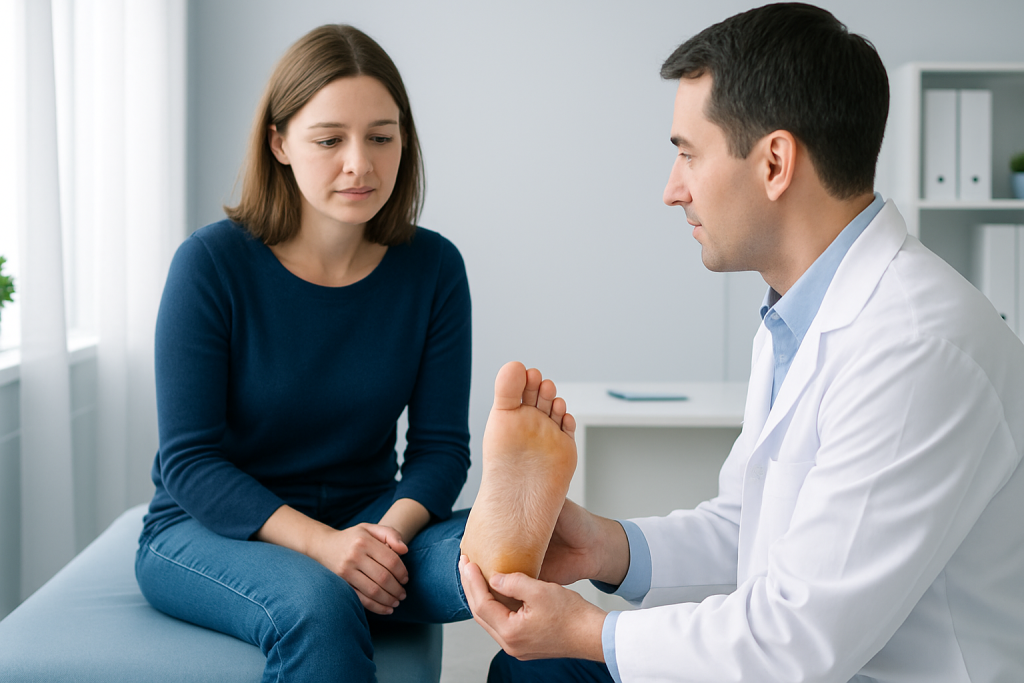
Corns and calluses form because the skin is trying to protect itself. Repeated friction and pressure encourage the outer layer of skin to thicken, much like a shield. Over time, that shield can become uncomfortable if the source of irritation remains in place.
Footwear is one of the most common contributors. Tight shoes, high heels, narrow toe boxes, worn-out soles, or shoes that rub in one exact spot can all increase skin stress. Socks that bunch up or seams that press against the toes can add to the problem.
Foot structure and movement patterns also matter. Bunions, hammertoes, flat feet, high arches, and certain walking habits can shift pressure to areas that are not built to absorb it. Runners, dancers, and people who spend long hours on their feet may also be more likely to develop thickened skin.
Some conditions make foot skin more vulnerable or make treatment more delicate. These include:
- Diabetes
- Poor circulation
- Nerve problems or reduced foot sensation
- Arthritis or joint deformities
- Older age and naturally thinner skin
In these situations, even a small corn or callus may need more careful attention because skin breakdown can progress without much warning.
Diagnosis
In most cases, diagnosis is straightforward. A clinician examines the skin, asks about pain, and looks at shoes, foot shape, and walking patterns. The appearance of the thickened area usually makes the diagnosis clear.
The important part of assessment is identifying what is causing the pressure. A corn is not just “extra skin”; it is often a clue that a toe is rubbing, a shoe is too narrow, or a foot deformity is creating a repeated pinch point. Treating the skin without addressing the pressure often leads to recurrence.
Sometimes a clinician may need to rule out other skin problems. Warts, for example, can resemble corns but are caused by a virus and may have tiny dark dots or pain with side-to-side squeezing. A doctor can usually tell the difference during an exam, and additional tests are rarely needed unless the diagnosis is unclear.
For patients traveling for treatment, evaluation may also include a practical review of footwear, activity level, and recovery needs. This helps the care team suggest changes that fit daily routines, hotel stays, business travel, or return flights home.
Treatment Options
Treatment focuses on relieving pressure and softening the thick skin safely. Many people improve with a combination of home care and better footwear, but persistent or painful corns and calluses may need professional treatment.
Simple self-care measures often include soaking the feet in warm water, gently using a pumice stone or foot file after bathing, and applying moisturizer to reduce dryness. The goal is gradual smoothing, not aggressive removal. Cutting the skin with blades or using harsh chemical products can cause injury, especially if sensation is reduced.
A clinician may trim thickened skin in the office using sterile techniques. This can reduce discomfort and help the person walk more comfortably. If a corn or callus keeps returning, the deeper issue may need correction, such as better shoe selection, cushioned inserts, orthotics, padding, or treatment of a bunion, hammertoe, or other structural problem.
In some cases, a doctor may recommend:
- Toe separators or padding to reduce rubbing
- Custom or over-the-counter orthotic supports
- Wider shoes with a softer upper
- Protective dressing for tender spots
- Management of underlying foot deformities
People with diabetes or circulation problems should be cautious with any home treatment and seek professional guidance before using medicated pads, strong acids, or sharp tools.
Prevention & Self-care
Prevention usually starts with the shoes. Footwear should fit the shape of the foot, not force the foot into a narrow or pressure-heavy position. A roomy toe box, stable heel support, and enough depth for the toes can make a meaningful difference.
Daily foot care also helps. Washing and drying the feet thoroughly, moisturizing dry skin, and checking for new hot spots can reduce the chance that a small area turns into a painful thickening. Toenails should be kept neatly trimmed, since long nails can change how toes press against shoes.
Useful habits include:
- Choosing socks that fit smoothly and do not bunch
- Replacing worn-out shoes before the inner lining breaks down
- Using padding over bony areas that rub
- Rotating footwear when possible
- Taking breaks if standing for long periods
If travel is planned, bringing comfortable backup shoes, extra socks, and any recommended padding can help prevent flare-ups during long walking days. This is especially helpful for patients who will be moving between appointments, airports, and recovery settings.
The safest approach is consistency. Small changes made early are often enough to prevent thickened skin from returning.
When to See a Doctor
Medical review is a good idea if the area is painful, keeps coming back, or makes walking difficult. It is also wise to seek care if the skin cracks deeply, bleeds, becomes swollen, or shows signs of infection such as redness, warmth, or drainage.
Anyone with diabetes, poor circulation, or numbness in the feet should contact a doctor early, even if the corn or callus seems minor. In these situations, a simple pressure spot can become a more serious skin problem if it is not managed carefully.
Prompt assessment is also helpful when the thickened skin is not clearly a corn or callus. A clinician can confirm the diagnosis and suggest the most suitable treatment plan, which may include foot support, orthotic advice, or referral to a foot specialist. Acibadem Health Point’s multidisciplinary specialists and JCI-accredited hospitals can diagnose and treat corn and callus problems for international patients who need coordinated care.
Seeking help does not mean the problem is severe. It simply means the feet are being looked at in the same practical way as any other part of the body: by identifying the cause, easing symptoms, and preventing the issue from returning.
Frequently asked questions
01What is the difference between a corn and a callus?
A corn is usually smaller, deeper, and more painful when pressed, often appearing on or between the toes. A callus is broader, flatter, and typically forms on areas that bear repeated pressure, such as the sole or heel.
02Are corns and calluses dangerous?
They are usually not dangerous, but they can become painful or crack if the pressure continues. People with diabetes, poor circulation, or numbness should treat them more cautiously because skin problems can progress without much warning.
03Can I remove a corn or callus at home?
Gentle care is usually safer than cutting or scraping. Soaking, light use of a pumice stone, moisturizing, and better-fitting shoes can help, but sharp tools and strong medicated pads should be avoided unless a doctor advises them.
04Why do my corns keep coming back?
They often return when the same pressure point is still present. The cause may be narrow shoes, a toe deformity, a foot alignment issue, or a walking pattern that keeps rubbing the same area.
05Do I need special shoes for calluses?
In many cases, shoes with a wider toe box, softer materials, and supportive soles can reduce friction. If the problem persists, a clinician may suggest orthotics, padding, or a more detailed foot assessment.
06When should a foot specialist be involved?
A foot specialist is helpful when the problem is painful, recurrent, or linked to a bunion, hammertoe, or other structural issue. They can also guide care more carefully for people with diabetes or reduced sensation.
This article is for general information only and is not a substitute for professional medical advice. Please consult a qualified doctor about your individual situation.
Explore treatments in Turkey — costs, top hospitals & a free quote
JCI-accredited · board-certified surgeons · reply within 24h
Add us as a Preferred Source to see more of our trusted health content across Google Search, AI Overviews and Discover.