Corn vs Wart on Foot: Key Differences Explained

Key Takeaways
- Corns usually form from repeated pressure or friction, while warts come from a viral infection.
- Corns often hurt when pressed directly; warts may hurt more when squeezed from the sides.
- Tiny black dots, a rough surface, and interrupted skin lines can point toward a wart.
- Avoid cutting or picking at either lesion, especially if there is diabetes, poor circulation, or numbness.
- A clinician can confirm the diagnosis and recommend safe treatment for persistent or painful lesions.
A corn and a wart on the foot can look similar at first glance, but they are different conditions with different causes and treatments. The main clues are usually pain pattern, skin texture, and whether the lesion shows tiny dark dots or a hard central core.
Overview
When someone notices a sore spot on the foot, the question is often not just whether it is uncomfortable, but what it actually is. In a corn versus wart on foot comparison, the simplest distinction is that a corn is a thickened patch of skin caused by pressure or rubbing, while a wart is caused by a skin infection with the human papillomavirus (HPV).
That difference matters because the treatments are not the same. A corn usually improves when the source of friction is reduced, while a wart often needs targeted treatment to clear the viral growth. Many people first notice these changes on the toes, sole, or heel, especially after spending long hours on their feet, wearing tight shoes, or walking with uneven pressure.
It is also common for patients traveling for care to arrive after trying home remedies for weeks without much change. A careful exam can usually clarify the diagnosis quickly and help avoid treatments that may irritate the skin or delay healing.
Symptoms

Corns and warts can both feel like a small, hard spot under the skin, but they tend to behave differently. A corn is often round, well-defined, and centered over an area of repeated pressure. It may look yellowish or thickened and usually hurts most when pressed straight down.
A wart often has a rougher, more irregular surface. On the sole of the foot, it can be flattened by body weight and may appear as a callused patch with tiny black dots inside, which are small clotted blood vessels. Warts may disrupt the normal skin lines and can be tender when squeezed from the sides.
- More suggestive of a corn: a hard central core, discomfort from direct pressure, location over a bony prominence.
- More suggestive of a wart: rough or grainy surface, black dots, pain with side-to-side squeezing, spread to nearby skin.
Both can make walking uncomfortable, especially if the lesion is on a weight-bearing area. Because appearance can overlap, a foot lesion that does not improve as expected deserves medical review rather than guesswork.
Causes & Risk Factors
Corns develop when the skin protects itself against constant rubbing or pressure. Tight shoes, high heels, seams inside footwear, toe deformities, or abnormal walking patterns can create the repeated stress that leads to thickened skin. People with bunions, hammertoes, or prominent bones on the feet may be more prone to them.
Warts, by contrast, are caused by HPV entering the skin through tiny breaks or areas of friction. They are not caused by poor hygiene. The virus is more likely to take hold in warm, damp environments such as locker rooms, communal showers, or around pools, especially when the skin barrier is already stressed.
Some factors make either condition more likely or harder to manage. These include frequent walking or standing, footwear that does not fit well, sweaty feet, skin dryness, and certain health conditions that affect circulation or sensation. People with diabetes or reduced feeling in the feet should be especially cautious with any foot lesion.
Diagnosis
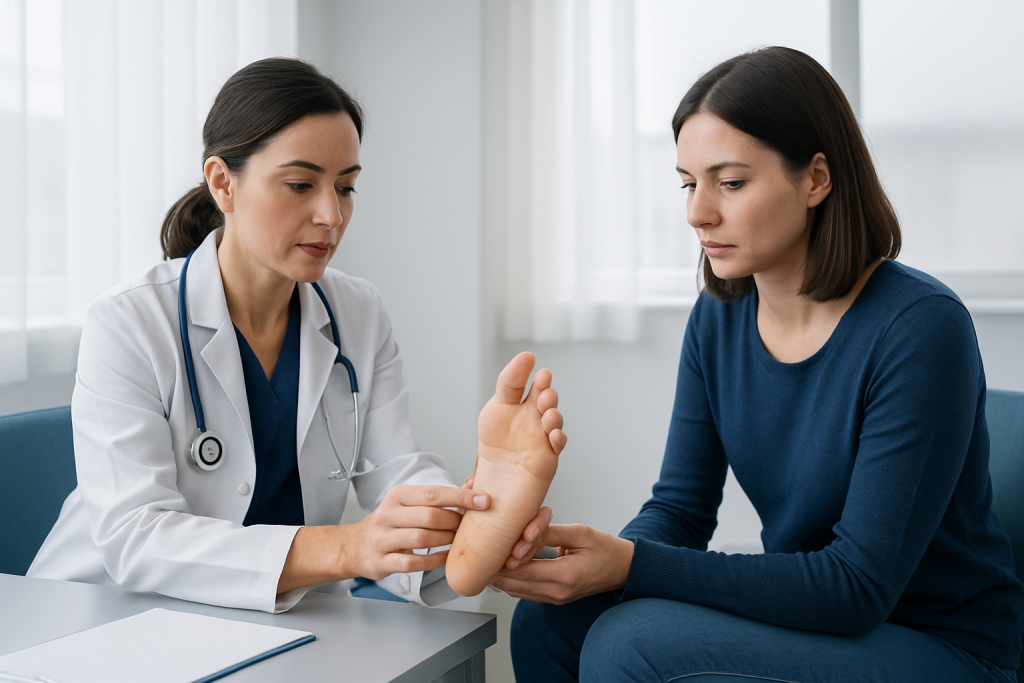
In many cases, a clinician can tell the difference between a corn and a wart by examining the lesion and asking a few focused questions about pain and footwear. The location, shape, surface, and whether skin lines continue across the spot are all useful clues. Gentle paring of the outer layer may also reveal a central core in a corn or pinpoint bleeding in a wart.
If the diagnosis is unclear, or if the lesion looks unusual, other conditions may need to be considered. These can include calluses, cysts, foreign bodies, or, less commonly, other skin growths that should not be treated at home. This is one reason persistent foot lesions should not simply be filed down repeatedly without guidance.
Patients preparing for care abroad often appreciate that diagnosis is usually straightforward and does not always require extensive testing. A podiatrist, dermatologist, or orthopedic foot specialist can often make the distinction during a clinic visit and advise the safest next step.
Treatment Options
Treatment depends on the cause. For a corn, the main goal is to remove the pressure that triggered it. This may involve wider shoes, padding, toe spacers, orthotic support, or adjustments to walking mechanics. A clinician may carefully trim the thickened skin if it is painful, but self-cutting is not recommended.
For a wart, the approach is different because the aim is to remove or destroy infected tissue and help the immune system clear the virus. Common medical treatments include topical salicylic acid preparations, cryotherapy, or other office-based procedures chosen according to the size, location, and number of warts. Some warts need more than one treatment session.
Home care can help in both cases, but it should remain gentle. Soaking, careful drying, and using a pumice stone lightly on intact skin may be appropriate for some corns, but it should not be used on painful, bleeding, or infected areas. Wart treatments sold without prescription may irritate healthy skin if used incorrectly, so it is best to confirm the diagnosis before starting them.
If the lesion keeps returning, treatment should also address the underlying cause. That may mean changing shoes, correcting pressure points, or evaluating the foot structure and gait. For some international patients, combining diagnosis, treatment, and follow-up in one coordinated plan can make care more practical after returning home.
Prevention & Self-care
Prevention starts with reducing friction and protecting the skin barrier. Shoes with enough toe room, moisture-wicking socks, and regular foot checks can lower the chance of both corns and warts. Keeping feet clean and dry is especially helpful in shared exercise or bathing spaces.
For corns, the most effective self-care is usually mechanical: remove the pressure that causes them. That may mean changing footwear, using cushioning pads, or addressing toe alignment issues. For warts, prevention focuses on reducing viral spread, such as not sharing towels, keeping lesions covered when appropriate, and wearing protective footwear in communal wet areas.
- Choose shoes that do not rub or crowd the toes.
- Change socks if feet become damp.
- Inspect the soles and toes regularly for new thickened spots.
- Do not pick, shave, or burn foot lesions at home.
Good self-care also includes patience. Skin that has thickened over time often improves gradually rather than overnight. If a lesion becomes more painful, changes color, bleeds, or shows signs of infection, it should be assessed promptly.
When to See a Doctor
Medical advice is recommended when the spot is painful, keeps coming back, spreads, or does not improve after simple shoe and pressure changes. A visit is also wise if the lesion is not clearly a corn or wart, since some skin changes on the foot need a different kind of treatment.
People with diabetes, poor circulation, neuropathy, immune suppression, or a history of slow wound healing should seek professional care early rather than attempting home removal. In these situations, even a small lesion can become complicated if it is cut, irritated, or left untreated.
Sudden enlargement, bleeding without cause, drainage, redness, warmth, or fever are reasons to be seen more quickly. Acibadem Health Point’s multidisciplinary specialists and JCI-accredited hospitals can diagnose and treat foot skin conditions for international patients with coordinated care and follow-up planning.
Related Questions Patients Often Ask
Many people want a quick answer to whether they can tell the difference at home. Some clues are helpful, but foot lesions can overlap in appearance, especially after a callus forms over a wart. A clinician’s exam is the safest way to avoid treating the wrong condition.
Another common question is whether warts are contagious. Warts can spread by direct contact or through shared damp surfaces, while corns do not spread from person to person. That is one of the most important distinctions in the corn versus wart on foot discussion.
It is also worth remembering that pain patterns can be misleading. A wart can be sore even if it looks small, and a corn can be painful even when it seems minor. The best approach is to look at the whole picture: cause, appearance, location, and response to pressure.
Frequently asked questions
01What is the main difference between a corn and a wart on the foot?
A corn is a thickened area of skin caused by pressure or friction, while a wart is caused by HPV infection. They may look similar, but the cause and treatment are different. A clinician can usually tell them apart by examining the lesion and asking about symptoms.
02How can someone tell a corn from a wart at home?
A corn often has a smooth, hard center and hurts most with direct pressure. A wart is more likely to have a rough surface, tiny black dots, and pain when squeezed from the sides. Home clues can help, but they are not always definitive.
03Are plantar warts contagious?
Yes, plantar warts can spread through direct contact or shared damp surfaces. Corns are not contagious because they are caused by pressure, not infection. Preventive footwear in communal areas can help reduce wart exposure.
04Should a person cut or file a corn or wart off at home?
It is best not to cut, shave, or burn either lesion at home. Doing so can injure healthy skin, cause infection, or make the problem worse. Safe treatment depends on confirming whether the lesion is a corn or a wart first.
05When should someone with a foot lesion see a doctor?
A doctor should be seen if the lesion is painful, keeps returning, grows, bleeds, or does not improve with basic self-care. Early medical advice is especially important for people with diabetes, poor circulation, numbness, or weak immunity. These factors can make foot problems more difficult to heal.
06Can a wart turn into a corn?
No, a wart does not turn into a corn. However, a wart can develop a thick callus over it, which can make it look more like a corn. That overlap is one reason an exam is helpful when the diagnosis is uncertain.
This article is for general information only and is not a substitute for professional medical advice. Please consult a qualified doctor about your individual situation.
Explore treatments in Turkey — costs, top hospitals & a free quote
JCI-accredited · board-certified surgeons · reply within 24h
Add us as a Preferred Source to see more of our trusted health content across Google Search, AI Overviews and Discover.