

Clubbed Fingers: Causes and Treatment

Key Takeaways
- Clubbed fingers usually develop gradually and may affect one or both hands.
- They can be associated with lung, heart, digestive, liver, or other systemic conditions.
- Diagnosis focuses on identifying the underlying cause rather than treating the finger shape alone.
- Early medical review is important, especially if clubbing appears with breathlessness, cough, chest pain, weight loss, or fatigue.
- Treatment depends on the cause, and in some cases the fingertip changes may improve when the underlying condition is managed.
Clubbed fingers are a visible change in the shape of the fingertips and nails that can sometimes point to an underlying health condition. They are not a disease on their own, but a sign that deserves medical evaluation.
Overview
Clubbed fingers, also called digital clubbing, describe a noticeable change in the shape of the fingertips and nails. The tips may look rounder, broader, and more curved than usual, and the nail beds can appear softer or more prominent. This is a physical sign, not a diagnosis by itself.
In many people, clubbing develops slowly enough that it is first noticed by a family member, a nail technician, or during a routine medical exam. Because it can be linked to conditions affecting the lungs, heart, digestive system, or other organs, it is a sign that clinicians take seriously even when the person feels well otherwise.
Some cases are harmless or run in families, but new clubbing should always be reviewed. A careful assessment can help separate a benign variation from a symptom that points to a condition needing treatment.
Symptoms
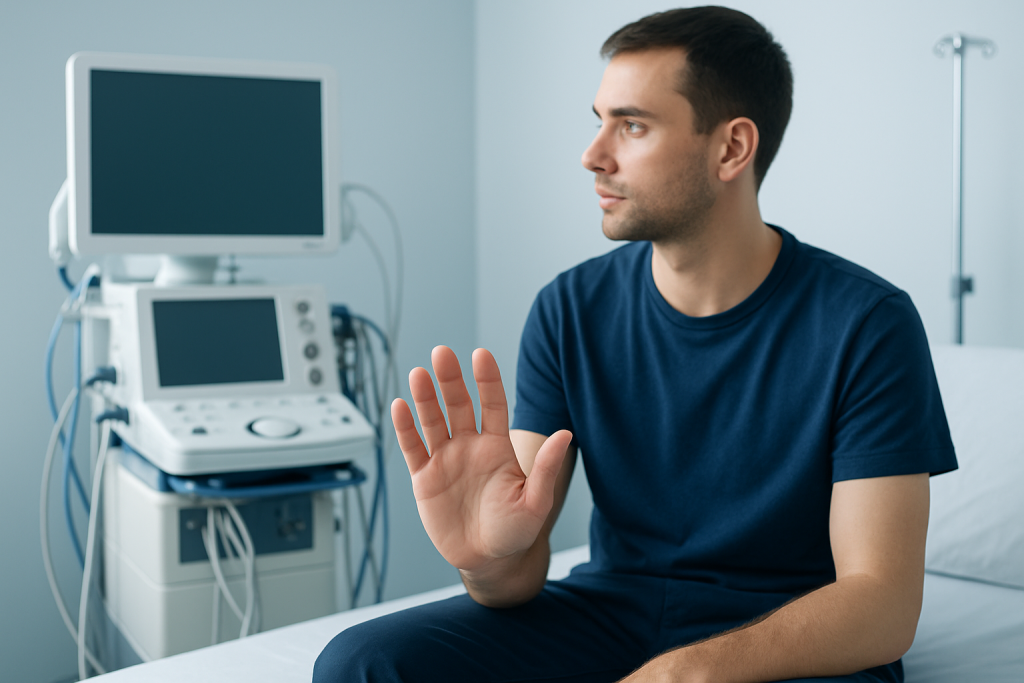
Clubbing usually changes the contour of the nails and fingertips rather than causing pain. The nail may seem to angle downward more sharply, the fingertip may look enlarged, and the area around the nail can feel spongy. In more established clubbing, the fingers may appear wider at the end and the nails more curved from side to side and front to back.
People sometimes notice a change in the “Lovibond angle,” a term clinicians use to describe the angle between the nail and the skin beneath it. Others may observe a loss of the normal small gap and crease between the nail and the nail fold. These details are part of the physical examination and are not usually something a person measures at home.
Clubbing can affect one hand, both hands, or all fingers and toes. When it appears along with symptoms such as cough, shortness of breath, chest discomfort, bloating, diarrhea, jaundice, fever, or unexplained weight loss, the chance of an underlying condition becomes more important to evaluate.
Causes & Risk Factors

Digital clubbing is most often associated with chronic conditions that affect oxygen delivery, blood flow, inflammation, or absorption. Lung disorders are among the most recognized causes, including chronic infections, interstitial lung disease, bronchiectasis, and lung cancer. Some heart conditions, especially those that lower oxygen levels in the blood, can also be involved.
Digestive and liver conditions may be linked as well. These can include inflammatory bowel disease, liver cirrhosis, and some malabsorption disorders. Less commonly, clubbing may be related to thyroid disease or other systemic illnesses. In some people, it is hereditary and not connected to a disease.
Risk is not defined by age alone, but clubbing is more concerning when it is new, progressive, or accompanied by other symptoms. A history of smoking, recurrent respiratory infections, chronic cough, known heart disease, inflammatory bowel disease, or unexplained fatigue may increase the likelihood that an underlying cause will be found.
Diagnosis
Diagnosis begins with a physical examination. Clinicians look at the nails, fingertips, and toes and may compare both hands for symmetry. They also ask when the change was first noticed and whether it has progressed over time.
Because clubbing is a sign, not a standalone illness, the next step is usually to identify what is driving it. The evaluation may include blood tests, chest imaging, oxygen level checks, and tests directed by the person’s symptoms and medical history. Depending on the situation, this can involve heart studies such as an echocardiogram, lung function testing, abdominal imaging, or referral to a specialist.
For international patients, the diagnostic path is often most efficient when it is coordinated from the start. A well-planned workup can reduce repeat appointments, shorten the time between tests, and make follow-up easier once the person returns home.
Treatment Options
There is no treatment aimed only at reshaping clubbed fingers. Care focuses on the underlying cause, because the nail changes may stabilize or improve when the main condition is treated. The appropriate plan depends entirely on what is found during evaluation.
If clubbing is related to a lung condition, treatment may involve medication, inhaled therapy, airway clearance, infection management, or specialist care for chronic lung disease. If the cause is heart-related, the approach may include cardiac medications, procedures, or correction of structural problems. Digestive or liver causes are managed according to the specific disorder, which may involve anti-inflammatory treatment, liver care, or nutritional support.
When clubbing is inherited or has no clear cause after thorough assessment, no specific therapy may be needed beyond observation. Even then, follow-up can be helpful if the shape changes over time or new symptoms appear. For patients traveling internationally, the treatment plan should include a clear summary of findings, medication instructions, and a follow-up schedule that can be shared with local physicians at home.
Prevention & Self-care
Clubbed fingers cannot always be prevented, because they are often tied to conditions that develop for reasons beyond a person’s control. The most useful form of prevention is timely care for chronic illness, especially lung, heart, liver, and digestive disorders.
Self-care is mainly about noticing change early and supporting overall health. People who already have a known condition should attend scheduled checkups, take prescribed treatment as directed, and report any worsening breathlessness, cough, swelling, fever, or digestive symptoms. If clubbing is suspected, photographs taken over time can sometimes help a clinician understand whether the change is progressing.
For those recovering after care abroad, a practical handoff matters. Keeping test reports, discharge notes, imaging summaries, and medication lists organized makes it easier for the home doctor to continue care without interruption.
When to See a Doctor
A medical review is advisable whenever clubbing is new, unexplained, or becoming more noticeable. It is especially important if the change appears together with symptoms affecting the lungs, heart, digestion, or general wellbeing.
Prompt evaluation is sensible if a person has clubbed fingers with shortness of breath, persistent cough, coughing up blood, chest pain, blue lips, fever, ongoing diarrhea, abdominal swelling, yellowing of the skin or eyes, or unintentional weight loss. These symptoms do not mean a serious condition is certain, but they do justify medical attention.
People who are unsure whether the change is true clubbing or simply a naturally curved nail shape should still ask for an examination. A qualified clinician can usually tell the difference and decide whether further tests are needed. For patients seeking coordinated second opinions or cross-border care, Acibadem Health Point’s multidisciplinary specialists and JCI-accredited hospitals can diagnose and treat this condition for international patients.
Living with the Finding
Hearing that fingertips look abnormal can be unsettling, particularly when there is no immediate explanation. It helps to remember that clubbing is a clue, not a verdict. Many underlying causes are treatable, and some people ultimately learn that the change is benign or inherited.
The most constructive next step is a structured assessment rather than guessing based on appearance alone. Once the cause is known, the care team can explain what to watch for, how often follow-up is needed, and whether the fingertip changes are likely to remain stable.
People planning treatment in another country may feel more at ease when they know the diagnosis, workup, and aftercare have been organized clearly. Good communication between specialists and the patient’s home physician can make the whole process smoother and safer.
Frequently asked questions
01Are clubbed fingers always a sign of serious disease?
Not always. Some people have clubbing without an identifiable disease, and a small number have it as a normal inherited trait. Even so, new clubbing should be checked by a clinician so that possible underlying causes are not missed.
02Can clubbed fingers go back to normal?
Sometimes the nail changes may improve if the underlying condition is treated early. In long-standing cases, the shape may not fully return to normal even when the cause is managed. The response depends on how long the clubbing has been present and what is causing it.
03How do doctors tell clubbing from just having curved nails?
Doctors examine the angle, softness, and fullness of the fingertips and nail beds. They also look at whether the change is new, symmetrical, and associated with other symptoms. A simple visual impression at home is not always enough to tell the difference.
04What tests are commonly done for clubbed fingers?
The exact tests depend on the person’s history and exam findings. Common evaluations may include blood tests, oxygen checks, chest X-rays or CT scans, and sometimes heart or digestive system studies. The goal is to find the cause, not just confirm the finger shape.
05Can clubbing happen in the toes too?
Yes, the same process can affect the toes as well as the fingers. Some people notice changes in both areas, while others see them only in the hands. Doctors usually examine both because that can help with diagnosis.
06Should someone wait if there are no other symptoms?
It is still worth arranging a medical assessment if the change is new or unexplained. Some important conditions can begin with few symptoms at first. Early evaluation makes it easier to identify any underlying issue and plan the right follow-up.
This article is for general information only and is not a substitute for professional medical advice. Please consult a qualified doctor about your individual situation.
Medical weight-loss options in Turkey — costs & eligibility
JCI-accredited · board-certified surgeons · reply within 24h
Add us as a Preferred Source to see more of our trusted health content across Google Search, AI Overviews and Discover.


