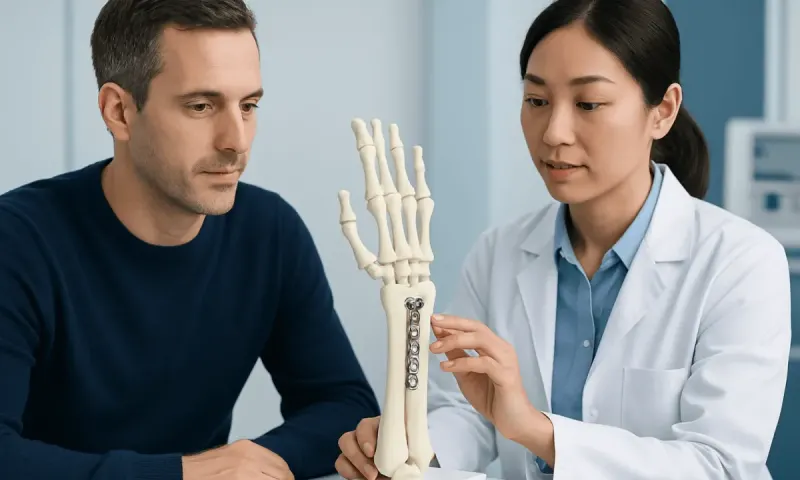
How a Cast Holds a Broken Bone While It Heals

You fall awkwardly, and a few hours later you’re sitting in a clinic with your arm in a hard shell. What is that thing actually doing? A cast holds a broken bone in a stable position while your body repairs it.
It may be applied after the bone is put back into alignment, or used alongside other treatment. Safe healing depends on three things: keeping your follow-up appointments, looking after the cast properly, and speaking up quickly if warning symptoms appear.
Overview: How Casting of Fractures Supports Healing
Casting of fractures is a nonsurgical method of immobilizing a broken bone so that the bone ends can remain in an appropriate position during healing. The cast surrounds part of the body with a firm protective shell, limiting movement that could cause pain, disrupt alignment, or delay healing. It is commonly used for fractures of the wrist, forearm, hand, ankle, foot, and lower leg, although its role varies according to the injury.
Not every break needs a cast — and a break treated with a cast isn’t necessarily a small one. The clinician considers the location of the break, whether bone pieces have shifted, the condition of the skin and nearby nerves and blood vessels, and the person’s age and overall health. Some fractures can heal with a cast alone, while others need realignment before casting or surgery followed by a period of immobilization.
Bone healing is gradual. In the early phase, the body forms a blood clot and begins an inflammatory repair response around the break. New supportive tissue then develops and slowly becomes stronger bone. A cast doesn’t heal the fracture. It holds things steady so your body can get on with the repair.
From Injury Assessment to Cast Application
Before applying a cast, a healthcare professional assesses the injury. This usually includes asking how it occurred, examining the painful area, checking skin integrity, and testing circulation, sensation, and movement below the injury. X-rays are commonly used to confirm the fracture, identify its pattern, and determine whether the bone is aligned. Additional imaging is occasionally needed when a fracture is difficult to see or involves a joint.
If the broken bone is out of position, a clinician may perform a reduction, meaning a careful maneuver to improve alignment. Knee Pain Relief: Causes and Treatment" class="ahp-ilk">Pain relief, local anesthesia, sedation, or other measures may be used when appropriate. Follow-up X-rays may be taken after reduction and after the cast is applied to confirm that the position remains satisfactory.
Because swelling is common immediately after an injury, a splint is often applied first. A splint is a supportive rigid material that does not fully encircle the limb, leaving room for swelling. Once swelling settles, often after several days, it may be replaced by a complete cast. In some stable fractures, a removable brace or boot is a suitable alternative.
The clinician applies padding over the skin, then layers of casting material. The cast is molded to support the injured body part in a functional and safe position. Tell the team straight away — during or after — if you feel pressure, burning, tingling, or pain that seems unusually intense. These can mean the cast needs adjusting.
Types of Casts and How Long They Are Worn

Plaster and fiberglass are the two main materials used in fracture casts. Plaster is easy to mold precisely and may be selected when close contouring is important. Fiberglass is lighter, more durable, and often more resistant to moisture, although it is not automatically waterproof. Whether bathing or swimming is safe depends on the specific cast material, lining, and instructions from the treating team.
Casts are described by the part of the body they support. A short arm cast generally extends from below the elbow to the hand, while a long arm cast also includes the elbow. Similarly, a short leg cast usually extends from below the knee to the foot, while a long leg cast includes the knee. Special forms, such as thumb spica casts, may be used to support particular bones or joints.
The time a cast remains in place varies widely. Children often heal faster than adults, but the expected duration still depends on the specific bone and fracture pattern. Fractures near a joint, injuries with slower healing potential, and fractures that required reduction may need closer monitoring or longer protection. Cast removal should be based on clinical assessment and, when needed, imaging rather than on a fixed timetable alone.
At review visits, the clinician checks symptoms, skin condition, alignment, and progress of healing. The cast may need replacement if it becomes loose as swelling decreases, damaged, wet, or uncomfortable. A cast that is too loose may no longer stabilize the injury effectively, while one that is too tight can create pressure-related problems.
Living Safely With a Fracture Cast
Good cast care helps avoid skin injury, odor, weakening of the cast, and delayed recognition of complications. Unless the treating team has specifically confirmed that the cast is waterproof, it should be kept dry during bathing. A protective cover may help, but it should not be assumed to make an ordinary cast suitable for soaking. If a cast becomes wet, soft, cracked, or unusually loose, the clinic should be contacted.
Nothing should be pushed inside a cast, including pencils, rulers, powders, oils, or lotions. Itching is common, especially as the skin becomes dry. Blowing cool air from a hair dryer on a cool setting near the cast opening may provide relief if approved by the clinician. Inserting an object can break the skin and lead to infection, even when it seems to provide short-term relief.
For the first few days, elevation of the affected limb above heart level when resting may help reduce swelling, if medically appropriate. The person should move the fingers or toes that remain free, as instructed, to support circulation and reduce stiffness. They should avoid putting weight through a leg cast, driving with a cast, or returning to sport or manual work until the treating team says it is safe.
- Keep follow-up appointments and imaging visits.
- Check visible fingers or toes daily for normal warmth, color, and sensation.
- Protect cast edges and avoid trimming or modifying the cast at home.
- Follow individual instructions about pain medicines, activity, school, work, and weight-bearing.
Symptoms That May Occur and Possible Complications
Some discomfort, stiffness, mild swelling, and itching can occur after a fracture and during casting. As swelling improves, the limb may feel less snug inside the cast. Muscles that are not used can weaken, and nearby joints may become stiff. These changes are often temporary and can improve with gradual return to movement, prescribed exercises, or rehabilitation after the cast is removed.
But a cast is never a reason to put up with symptoms that are getting worse. Severe or increasing pain that does not improve with the recommended measures, intense pressure, numbness, tingling, burning, or inability to move the fingers or toes may indicate a problem. Fingers or toes that become pale, blue, very swollen, cold, or markedly different from the other side require urgent assessment.
Skin irritation or pressure sores can occur, particularly if the cast is damaged, wet, poorly fitted, or has an object inside it. A strong unpleasant odor, drainage, fever, or new wetness from inside the cast may suggest a skin problem or infection and should be reported promptly. Very rarely, severe swelling within a closed muscle compartment can threaten blood supply and nerve function; this is an emergency and should be assessed without delay.
Another concern is loss of fracture alignment. New pain after a fall, a cast that breaks, or a feeling that the injured part has shifted should be reviewed. Regular follow-up allows the team to identify these concerns early and decide whether the cast, splint, or wider treatment plan needs to change.
Cast Removal, Rehabilitation and Return to Activity
When the fracture is sufficiently healed, the cast is removed using a specialized oscillating saw. The blade vibrates rather than rotating like a household saw, and trained staff use it carefully to avoid injury to the skin. The sound and vibration can be unsettling, particularly for children, but the procedure is usually brief. The skin may look dry, flaky, pale, or hairy afterward, which is expected after being covered for several weeks.
The affected joint and muscles may feel stiff, weak, or unfamiliar at first. Gentle daily activity and simple exercises recommended by the clinical team are often enough for many people. Some fractures, prolonged immobilization, joint injuries, or more complex recoveries may benefit from physiotherapy or occupational therapy to restore movement, strength, balance, and confidence with daily tasks.
Returning to normal activity should be gradual. The absence of a cast does not always mean the bone has regained full strength. Contact sports, heavy lifting, running, or high-impact activities may need to wait until a clinician confirms that healing and function are adequate. Reinjury is more likely if activity resumes too quickly, especially when strength and coordination have not returned.
If you’re looking for orthopedic care in one place, Acıbadem Health Point’s specialist teams and JCI-accredited hospitals assess fractures, provide immobilization or surgery when it’s needed, and help international patients plan their rehabilitation.
When to Seek Medical Care
Medical assessment is needed after a suspected fracture, especially when there is deformity, severe pain, inability to use or bear weight on the limb, significant swelling, an open wound, or injury after a high-energy event. A person should not try to straighten a visibly deformed limb. Keeping the area still and seeking urgent medical help is safer.
While wearing a cast, urgent care is needed for worsening or severe pain, tightness that does not improve with elevation as instructed, numbness, persistent tingling, weakness, or fingers or toes that are cold, pale, blue, or increasingly swollen. Urgent review is also appropriate if the cast breaks, becomes wet or soft, slips significantly, causes a sore area, or develops drainage or a strong odor.
Emergency care is particularly important for an open fracture, uncontrolled bleeding, loss of feeling, a limb that appears poorly supplied with blood, or severe pain that seems out of proportion to the injury. If you’re not sure whether something you’re feeling is normal, call your team and ask. Getting checked early protects your healing and heads off problems you didn’t need to have.
Frequently asked questions
01What is casting of fractures?
Casting of fractures is the use of a rigid protective support to keep a broken bone and nearby joints from moving while healing occurs. The cast helps maintain alignment, reduce pain from movement, and protect the injury during daily activities. It is used when the fracture pattern and the person’s overall condition make immobilization appropriate.
02Is a splint the same as a cast?
A splint and a cast both support an injured area, but they are not the same. A splint does not fully wrap around the limb, so it can better accommodate early swelling. A cast forms a more complete rigid shell and may be applied once swelling has decreased or when firmer immobilization is needed.
03How long does a fracture cast stay on?
The duration depends on the bone involved, the type of break, how well the bone is aligned, and the person’s age and health. Some people wear a cast for a few weeks, while others need longer immobilization and follow-up. The treating clinician determines removal based on healing progress, examination findings, and sometimes X-rays.
04Can a person walk on a leg cast?
A person should only put weight on a leg cast if their clinician has specifically said it is safe. Some fractures require strict non-weight-bearing, while others may allow partial or full weight-bearing with a protective cast or boot. Walking too soon can shift the fracture or damage the cast.
05What should be done if a cast feels too tight?
The affected limb may be elevated as instructed, and the person should move exposed fingers or toes if this has been advised. If tightness persists or is accompanied by increasing pain, numbness, tingling, coldness, color change, or inability to move the fingers or toes, urgent medical evaluation is needed. A cast should not be cut, loosened, or altered at home.
06Why does the skin itch under a cast?
Itching commonly develops because skin is covered, dry, and unable to be washed normally. Objects, creams, powders, and sprays should not be inserted into the cast because they may cause skin damage or infection. A clinician can advise safe methods to manage persistent itching.
This article is for general information only and is not a substitute for professional medical advice. Please consult a qualified doctor about your individual situation.
Joint and spine care in Turkey — expert assessment & treatment
JCI-accredited · board-certified surgeons · reply within 24h
Add us as a Preferred Source to see more of our trusted health content across Google Search, AI Overviews and Discover.