Radius Bone: Anatomy and Function

Key Takeaways
- The radius is the thumb-side forearm bone and works closely with the ulna to support motion and strength.
- Radius injuries often affect the wrist, forearm, or elbow, especially after a fall or direct impact.
- Symptoms can include pain, swelling, tenderness, limited rotation, and difficulty using the hand or arm.
- Diagnosis usually relies on a physical exam and imaging such as X-rays; CT or MRI may be used in selected cases.
- Treatment ranges from rest and immobilization to surgery, depending on the location and severity of the injury.
- Early medical evaluation supports better healing and helps reduce stiffness, weakness, and long-term complications.
The radius is one of the two long bones in the forearm and plays an essential role in wrist motion, forearm rotation, and arm function. Understanding its anatomy, common injuries, and treatment options can help patients recognize problems early and seek the right care.
Overview
The radius is one of the two long bones in the forearm, sitting on the thumb side of the arm. Together with the ulna, it helps the forearm bend, rotate, and transfer force from the hand to the elbow and back again.
Although people often think about the wrist when the radius is mentioned, the bone stretches from the elbow to the wrist and influences movement at both ends. That is why a problem in one part of the radius can affect daily tasks such as turning a key, lifting a cup, opening a door, or pushing up from a chair.
For patients planning care from another country, it is helpful to know that radius injuries are usually straightforward to evaluate when the right imaging and orthopedic expertise are available. The practical goal is not only to confirm the diagnosis but also to protect movement and function during recovery.
Symptoms
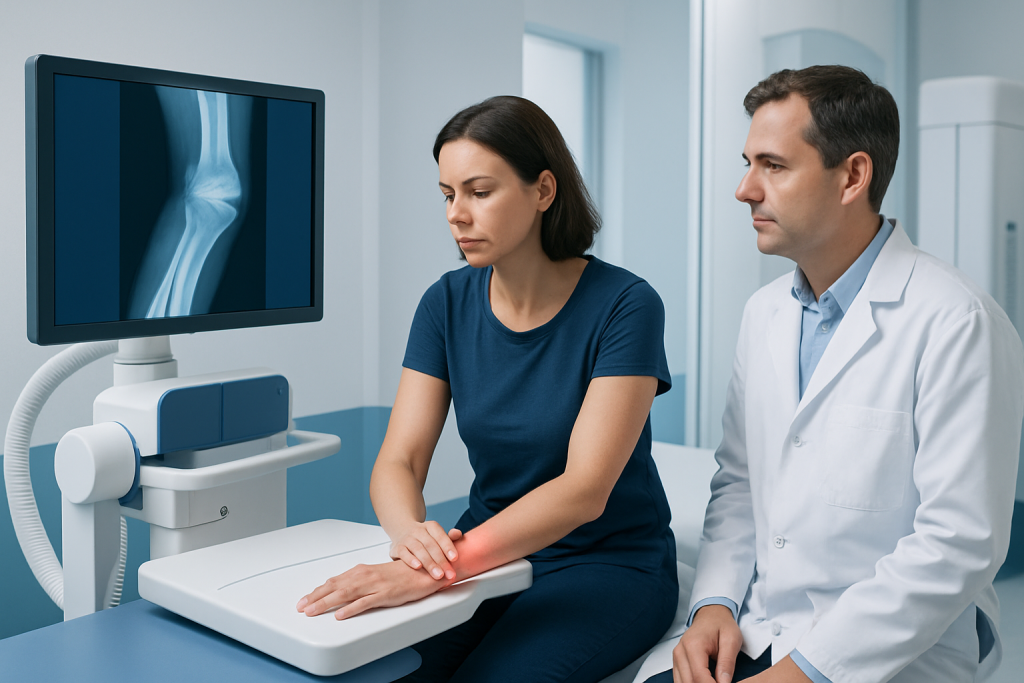
Symptoms depend on whether the issue is a fracture, sprain around the joint, overuse injury, or another bone problem. Pain is usually the first sign, often made worse by twisting the forearm, gripping, or bearing weight through the hand.
Many people also notice swelling, bruising, tenderness over the bone, and reduced range of motion. If the wrist or elbow is involved, the arm may feel weak, unstable, or too painful to use normally.
- Pain along the forearm, wrist, or near the elbow
- Swelling or bruising after injury
- Difficulty rotating the palm up or down
- Limited grip strength or trouble lifting objects
- Visible deformity in more serious fractures
Some radius injuries develop gradually rather than after one clear accident. In those situations, discomfort may begin as a dull ache that becomes more noticeable with activity and improves only partially with rest.
Causes & Risk Factors
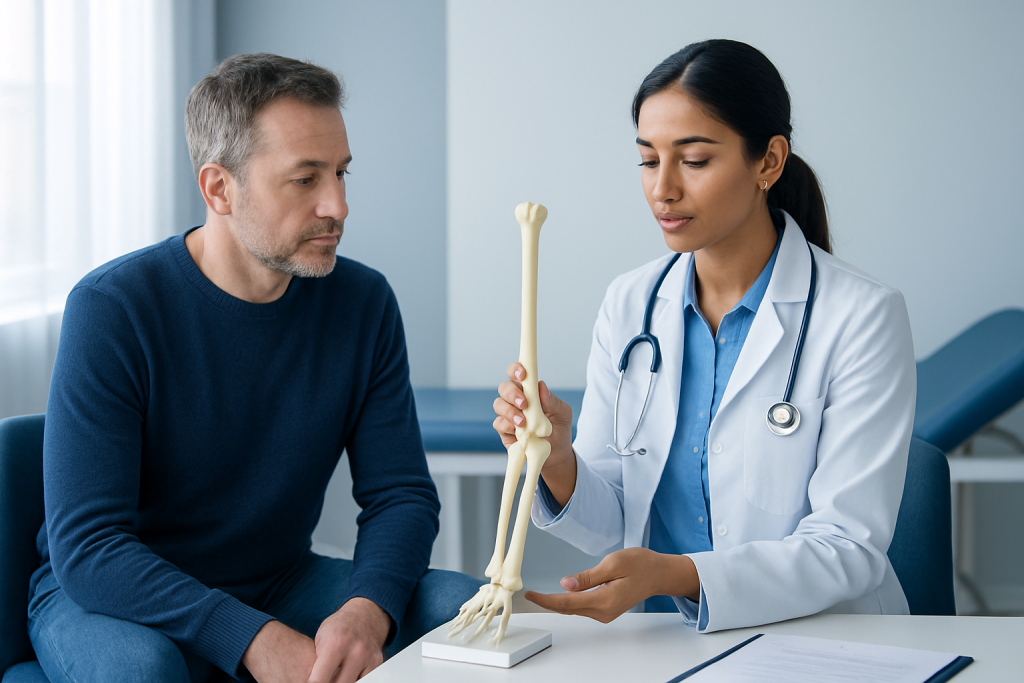
The most common cause of a radius fracture is a fall onto an outstretched hand. When the hand hits the ground, force travels up the forearm and may crack or break the bone, particularly near the wrist.
Direct trauma, sports collisions, traffic accidents, and falls in older adults can also injure the radius. Repetitive strain is less likely to break the bone, but overuse can contribute to pain around the forearm and nearby tendons or joints.
Certain factors can increase the chance of injury or slow healing. These include weaker bones, previous fractures, contact sports, balance problems, and activities that involve repeated loading through the hands. In older adults, low bone density is an important consideration because bones may break more easily even after a relatively simple fall.
Diagnosis
A diagnosis begins with a careful history and physical examination. The clinician will ask how the injury happened, where the pain is located, whether the hand can move, and whether numbness or tingling is present.
X-rays are the most common first test because they show the shape of the bone and reveal fractures, displacement, or alignment problems. When the injury is complex, close to a joint, or not fully visible on X-ray, a CT scan may provide a more detailed picture of the fracture pattern.
MRI is sometimes used when a soft-tissue injury, hidden fracture, or persistent pain needs further assessment. In international-patient settings, it is often helpful to bring prior imaging, medical reports, and a clear timeline of symptoms so the orthopedic team can compare findings efficiently and plan treatment without delay.
Treatment Options
Treatment depends on the exact part of the radius involved, whether the bone is displaced, and whether the nearby wrist or elbow joints are stable. Stable fractures may heal with immobilization in a splint or cast, along with Knee Pain Relief: Causes and Treatment" class="ahp-ilk">pain relief and follow-up imaging.
When the bone is out of place, unstable, or broken in several pieces, surgery may be recommended. Surgical treatment can involve plates, screws, rods, or other fixation methods designed to hold the bone in the correct position while it heals.
After the initial treatment, rehabilitation is often an important part of recovery. Gentle motion, guided exercises, and gradual return to activity help reduce stiffness and restore strength and coordination in the forearm, wrist, and hand.
Not every radius problem is a fracture. Tendon irritation, joint inflammation, and some chronic conditions may be managed with activity modification, supportive devices, therapy, and other individualized orthopedic care.
Prevention & Self-care
Not every radius injury can be prevented, but several practical habits can lower risk. Good footwear, safe home environments, and attention to balance are especially important for older adults and anyone prone to falls.
In sports or physical work, protective gear and proper technique can reduce the chance of direct impact to the forearm or a hard landing on the hand. People with known bone-weakening conditions should discuss bone health, nutrition, and fall prevention with a doctor.
- Keep walkways free of clutter and loose rugs
- Use handrails on stairs and in bathrooms when needed
- Warm up before sports or strenuous activity
- Do not return to heavy lifting too soon after injury
- Follow all splint, cast, or therapy instructions carefully
At home, self-care usually means protecting the injured arm, elevating it when advised, and watching for changes in pain, swelling, finger movement, or skin color. Patients traveling for treatment should also plan for follow-up appointments before leaving and clarify how imaging or rehabilitation will continue after they return home.
When to See a Doctor
Medical evaluation is important after a fall or injury if pain is significant, the arm looks deformed, or the wrist or elbow cannot move normally. A doctor should also assess any injury that causes numbness, weakness, or trouble using the hand.
Even when the pain seems manageable, persistent swelling, ongoing tenderness, or pain that does not improve over a few days can signal a fracture or another structural problem. Early assessment is especially useful because it can prevent improper healing and reduce the risk of stiffness or long-term loss of motion.
If symptoms begin after travel, sports, or an accident abroad, prompt orthopedic review can help decide whether the injury needs a cast, repeat imaging, or surgical repair. Acibadem Health Point’s multidisciplinary specialists and JCI-accredited hospitals diagnose and treat radius injuries for international patients with coordinated orthopedic care.
Recovery and Outlook
Recovery time varies widely because the radius supports several different joints and movement patterns. A simple, stable fracture may heal with conservative treatment, while a more complex break can require surgery and a longer rehabilitation period.
As healing progresses, patients are often guided through staged recovery: protecting the bone early, restoring motion next, and rebuilding strength later. Skipping these steps or returning to demanding activity too soon can lead to stiffness, pain, or re-injury.
With timely diagnosis and appropriate care, many people regain good arm function. The most reliable results usually come from following the treatment plan closely, attending review visits, and asking for help when pain, swelling, or movement problems do not follow the expected course.
Frequently asked questions
01What is the radius bone responsible for?
The radius helps the forearm rotate and supports movement at the wrist and elbow. It works with the ulna to let the hand turn palm up and palm down and to transfer force during lifting and pushing.
02How can someone tell if the radius is fractured?
A fracture often causes pain, swelling, bruising, and trouble rotating the forearm or using the hand. A doctor usually confirms it with an examination and X-rays, since symptoms alone cannot show the exact bone injury.
03Do all radius fractures need surgery?
No. Many stable fractures can heal well with a splint or cast and careful follow-up. Surgery is considered when the bone is displaced, unstable, or involves the joint in a way that may affect alignment or function.
04How long does recovery usually take?
Recovery depends on the type and location of the injury, as well as a person's overall health. Some injuries heal in weeks, while more complex fractures may take longer and require rehabilitation to restore strength and motion.
05Can a radius injury affect the wrist even if the bone break is higher up?
Yes. Because the radius is connected to both the wrist and elbow, an injury in one area can change how the nearby joints move. That is why doctors check the whole forearm, not only the painful spot.
06What should a patient do before traveling for treatment?
If care is being arranged abroad, it helps to gather prior X-rays, scans, medication lists, and a summary of symptoms. Patients should also discuss whether follow-up imaging or physical therapy will be needed after they return home.
This article is for general information only and is not a substitute for professional medical advice. Please consult a qualified doctor about your individual situation.
Joint and spine care in Turkey — expert assessment & treatment
JCI-accredited · board-certified surgeons · reply within 24h
Add us as a Preferred Source to see more of our trusted health content across Google Search, AI Overviews and Discover.