Cartilage Damage in Knee: What You Need to Know

Key Takeaways
- Cartilage damage in the knee can develop after injury, repeated strain, or gradual wear over time.
- Symptoms often include pain, swelling, stiffness, and sometimes locking or catching in the joint.
- Diagnosis usually involves a physical exam and imaging, with MRI often useful for soft-tissue assessment.
- Treatment may include activity changes, physiotherapy, medication, injections, or surgery depending on severity.
- Early evaluation helps protect the joint and may reduce the chance of ongoing damage.
Cartilage damage in the knee happens when the smooth tissue that cushions the joint is worn, injured, or torn. It can cause pain, swelling, stiffness, and catching sensations, but many cases can be managed well with the right diagnosis and treatment plan.
Overview
Cartilage damage in the knee refers to injury or wear affecting the smooth covering that helps the thighbone, shinbone, and kneecap move with less friction. When this layer is disrupted, the knee may start to feel painful, swollen, stiff, or unreliable during everyday movement.
Not every case begins with a dramatic injury. Some people notice symptoms after a twist, a sports collision, or a fall, while others develop problems gradually from repetitive loading, alignment issues, or early joint degeneration. Because knee cartilage has limited natural healing ability, a careful diagnosis matters more than waiting for symptoms to settle on their own.
For international patients deciding whether to travel for assessment, the practical questions are usually the same: how much cartilage is affected, whether other knee structures are involved, and whether treatment should focus on rehabilitation, injection-based care, or a procedure to restore or protect the joint surface. A clear answer starts with a specialist evaluation rather than guesswork.
Symptoms
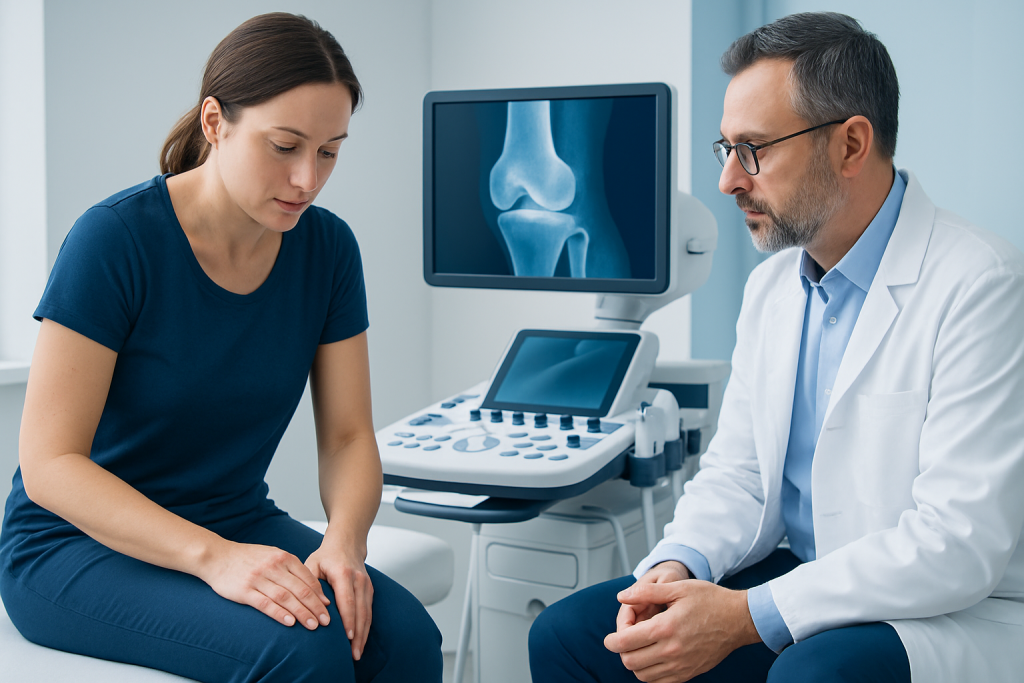
Symptoms can vary depending on the size and location of the cartilage injury. Some people mainly feel pain when walking downstairs, squatting, kneeling, or rising from a chair. Others notice swelling after activity, a sense of stiffness after sitting, or discomfort that flares when the knee is loaded repeatedly.
Mechanical symptoms are especially important. The knee may catch, click, give way, or feel as though it briefly locks. These sensations do not always mean severe damage, but they do suggest that the joint surface or a nearby structure may be affected enough to deserve evaluation.
- Pain during movement or weight-bearing
- Swelling that may come and go
- Stiffness, especially after rest
- Catching, locking, or clicking
- Reduced confidence when climbing stairs or changing direction
Symptoms can overlap with meniscus tears, ligament injuries, tendon irritation, and arthritis. That is one reason a clinical assessment is useful: the same complaint, such as knee pain, can come from different tissues that need different treatment.
Causes & Risk Factors
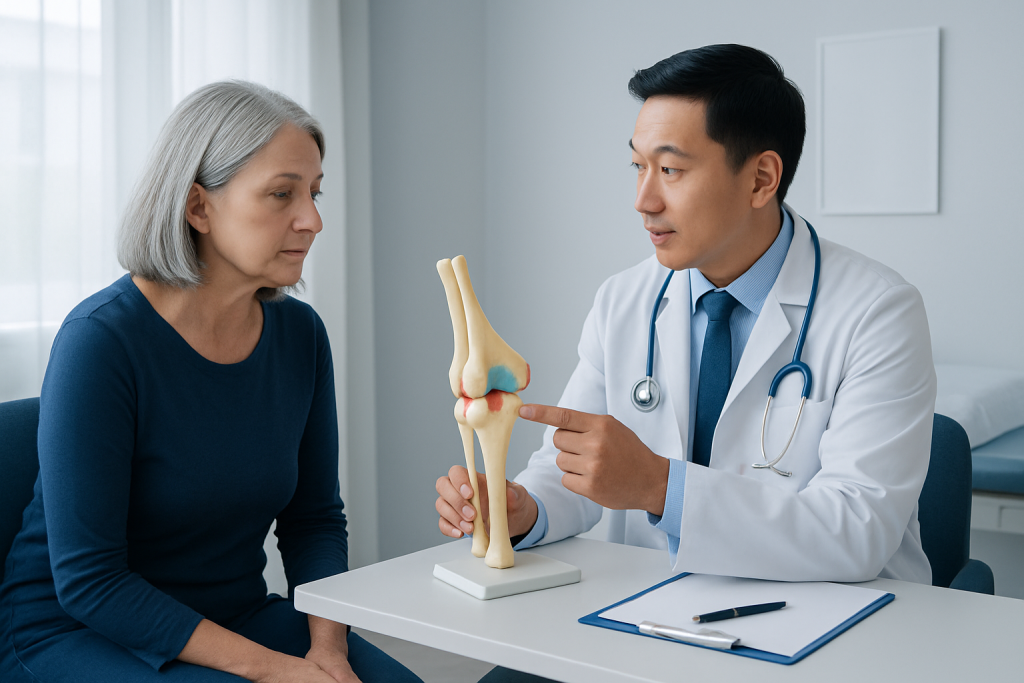
Cartilage damage may follow a single injury or develop over time. A twisting sports injury, direct blow, or kneecap dislocation can damage the cartilage in one area. Repeated high-impact activity, especially when combined with poor mechanics or previous injury, may also contribute to gradual wear.
Several factors can increase the likelihood of knee cartilage problems. These include prior knee trauma, muscle weakness around the hip and thigh, excess body weight, joint misalignment, and occupations or sports that place frequent load on the knees. Age is also relevant, since cartilage becomes less resilient over time.
In some people, cartilage damage appears alongside other joint conditions. Meniscal tears, ligament instability, or early osteoarthritis can change how force passes through the knee, which may accelerate surface damage. This is why treatment plans often address the entire knee environment, not just the visible lesion.
Diagnosis
Diagnosis begins with a detailed conversation about how the pain started, what movements trigger it, and whether there was a specific injury. A clinician will also examine the knee for swelling, tenderness, range of motion, instability, and signs of mechanical catching. This helps narrow the cause before any scan is ordered.
Imaging is often part of the workup. X-rays can show joint alignment, bone changes, or arthritis, while MRI is commonly used to evaluate cartilage, menisci, ligaments, and surrounding soft tissues. In some cases, a specialist may recommend additional studies or, less commonly, arthroscopy when the diagnosis remains uncertain or treatment is being planned.
For patients traveling from abroad, it helps to bring any prior imaging, operative reports, and a short timeline of symptoms. A good orthopedic team can use that information to avoid repeating tests unnecessarily and to focus the visit on decisions that change care.
Treatment Options
Treatment depends on the size, depth, location, and cause of the damage, as well as the patient’s age, activity level, and overall knee stability. Some smaller or less symptomatic injuries can improve with conservative care, while deeper or more persistent lesions may need a procedure to repair or restore the cartilage surface.
Non-surgical management usually starts with activity modification, physiotherapy, and strategies to reduce stress on the joint. This may include improving thigh and hip strength, correcting movement patterns, and using short-term pain relief advised by a doctor. In selected cases, injections may be discussed as part of a broader plan, although they do not replace structural treatment when the cartilage defect is significant.
When symptoms continue or the defect is substantial, surgical options may be considered. These can include cartilage debridement, microfracture in selected cases, cartilage restoration procedures, or techniques that address alignment and instability at the same time. The most appropriate option is highly individualized, and the goal is usually to reduce pain, improve function, and protect the joint for the long term.
Recovery is often a phased process rather than a quick return to full activity. Rehabilitation, weight-bearing guidance, and follow-up imaging or visits may be needed, especially after surgery. For patients who return home after treatment, planning follow-up care in advance is important so that healing and exercise progression remain on track.
Prevention & Self-care
Not every case of cartilage damage can be prevented, especially after an accident, but the knee may be better protected when load is managed well. Strong quadriceps, hamstrings, and hip muscles help absorb force, while good movement habits reduce unnecessary stress on the joint surface.
Practical self-care often includes pacing activities that provoke pain, using supportive footwear, and maintaining a healthy body weight to reduce pressure on the knee. Warm-ups before sport, cross-training instead of repetitive high-impact routines, and timely attention to minor knee injuries can also help limit cumulative strain.
- Build strength in the thighs, hips, and core
- Increase training loads gradually
- Use rest and recovery when symptoms flare
- Address abnormal gait, foot mechanics, or alignment concerns
- Seek assessment after a significant twist, fall, or dislocation
Self-care is supportive, not a substitute for diagnosis. Persistent swelling, repeated giving-way, or pain that limits daily life should not be managed indefinitely as a “simple strain,” because cartilage problems can worsen if the underlying cause remains unaddressed.
When to See a Doctor
Medical review is advisable when knee pain lasts more than a short period, keeps returning, or begins to limit walking, climbing stairs, sport, or work. Swelling that keeps coming back, a sense of locking, or pain after an injury are all reasons to be examined by an orthopedic specialist.
Prompt care is especially important if the knee cannot bear weight, if movement becomes suddenly restricted, or if the injury followed a pop, fall, or dislocation. These symptoms may indicate more than a minor cartilage issue and may need faster assessment to avoid further joint damage.
For patients considering care abroad, an experienced orthopedic team can help determine whether the problem is likely to respond to rehabilitation alone or whether a procedure should be planned. Acibadem Health Point’s multidisciplinary specialists and JCI-accredited hospitals diagnose and treat cartilage damage in the knee for international patients, with evaluation and follow-up arranged in a way that supports cross-border care.
Frequently asked questions
01What does cartilage damage in the knee feel like?
It often feels like pain during movement, swelling after activity, or stiffness after rest. Some people also notice catching, clicking, or a brief locking sensation. The exact pattern depends on where the cartilage is damaged and whether other structures are involved.
02Can knee cartilage damage heal on its own?
Small or superficial injuries may improve with rest, rehabilitation, and reduced stress on the joint, but cartilage has limited natural healing capacity. Deeper defects or injuries in high-load areas often need specialist treatment to avoid ongoing symptoms. A doctor can help determine what level of healing is realistic.
03Is MRI always needed for diagnosis?
Not always, but MRI is commonly used when cartilage injury is suspected because it shows soft tissues more clearly than X-rays. A clinician may start with a physical exam and X-rays first, then order MRI if more detail is needed. The choice depends on the symptoms and the suspected cause.
04What treatments are used for cartilage damage in the knee?
Treatment may include physiotherapy, activity changes, pain relief, and sometimes injections or surgery. The best option depends on the size and depth of the defect, the person’s symptoms, and whether there is instability or arthritis in the joint. There is no single approach that fits everyone.
05Can I keep exercising with knee cartilage damage?
Often yes, but the type and intensity of exercise may need to change. Low-impact activities and guided strengthening are usually preferred over movements that repeatedly trigger pain or swelling. A physiotherapist or orthopedic specialist can suggest safer options.
06When should an international patient consider traveling for treatment?
Travel may be worth considering when the diagnosis is unclear, symptoms are persistent, or specialist procedures are being discussed. It is helpful to gather prior scans and reports before the trip so the consultation can focus on decisions, not duplicate testing. Planning follow-up care after returning home is also important.
This article is for general information only and is not a substitute for professional medical advice. Please consult a qualified doctor about your individual situation.
Joint and spine care in Turkey — expert assessment & treatment
JCI-accredited · board-certified surgeons · reply within 24h
Add us as a Preferred Source to see more of our trusted health content across Google Search, AI Overviews and Discover.