Hairline Fracture in Foot: What You Need to Know

Key Takeaways
- A hairline fracture in foot is a small crack that may worsen if the person keeps walking or exercising on it.
- Pain that increases with weight-bearing, swelling, and tenderness are common early signs.
- Diagnosis may require an examination and imaging, sometimes with repeat X-rays or an MRI if the first scan is normal.
- Treatment usually focuses on rest, reducing pressure on the foot, and gradual return to activity.
- Medical review is important if pain is severe, walking becomes difficult, or symptoms do not improve as expected.
A hairline fracture in foot is a small crack in one of the foot bones, often caused by repetitive stress or a sudden increase in activity. It can be painful, but with the right diagnosis, protection, and rest, most people heal well.
Overview
A hairline fracture in foot is a tiny crack in one of the bones of the foot. It is often called a stress fracture when it develops from repeated loading over time, although a small crack can also follow a twist, fall, or direct impact. The injury may look minor from the outside, but it can still cause significant pain and limit normal walking.
People often notice the problem after increasing exercise, changing footwear, starting a new job that requires long hours on their feet, or returning to sport too quickly. Because the symptoms can resemble a sprain or simple overuse pain, the fracture is sometimes missed at first. Early attention helps prevent the crack from widening and supports a smoother recovery.
The most commonly affected bones are the metatarsals, especially in people who run, jump, dance, or spend long periods standing. Other foot bones can also be involved, and the exact location matters because it affects treatment and healing time. A careful diagnosis is useful before someone tries to “walk it off.”
Symptoms
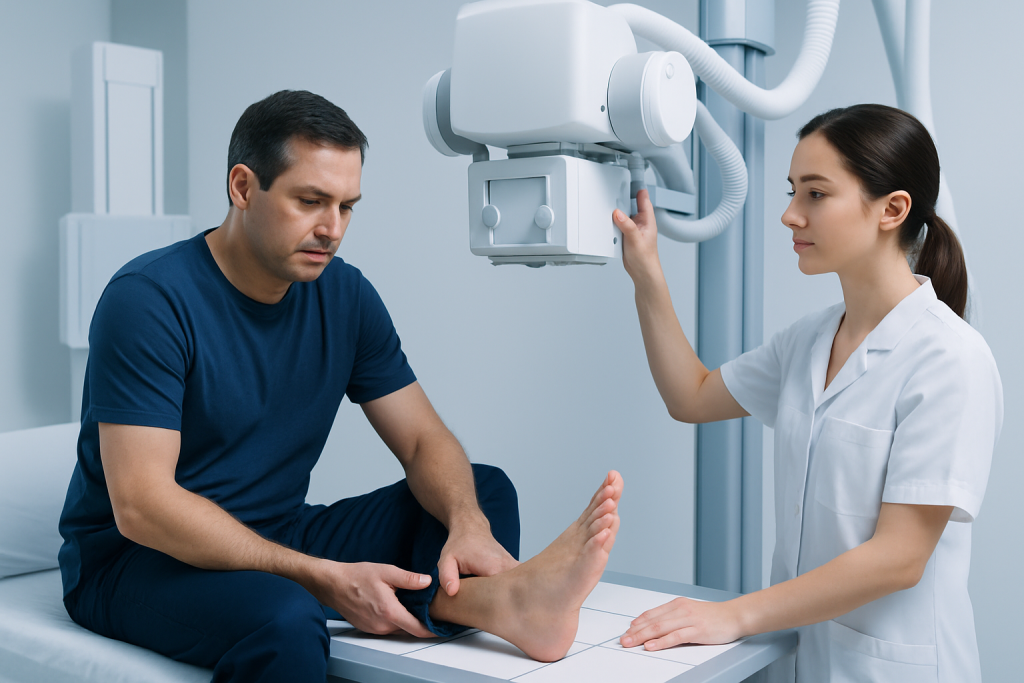
The first clue is usually pain in a specific part of the foot that becomes worse when weight is placed on it. The discomfort may be mild at the beginning and then become more noticeable during walking, running, or climbing stairs. Some people can still walk, but they do so with a limp or by shifting weight away from the painful area.
Swelling, tenderness to touch, and pain when pressing on one bone are common. In some cases, the foot may also feel stiff or achy after activity and better with rest, which can make the injury seem like a muscle strain. A hairline fracture often does not cause major bruising, but bruising can still occur, especially after an injury.
- Pain that is localized to one area of the foot
- Discomfort that worsens with standing, walking, or exercise
- Swelling or mild redness
- Tenderness over a bone
- Difficulty hopping or pushing off with the foot
If pain continues even at rest, becomes sharp with each step, or leads to an inability to bear weight, the injury deserves prompt medical evaluation. Persistent pain should not be ignored simply because the foot still “looks normal.”
Causes & Risk Factors

Hairline fractures in the foot usually develop when the bone is asked to handle more force than it can comfortably absorb. Repeated pounding from running, court sports, marching, or dancing can create tiny structural damage that builds over time. A sudden jump in training intensity, distance, or frequency is a common trigger.
Certain factors can make the bones more vulnerable. These include poor footwear, hard training surfaces, foot alignment issues, low bone density, and nutritional deficiencies that affect bone strength. A history of previous stress fracture can also raise the chance of another one, especially if the original cause was not corrected.
Common risk factors include:
- Starting a new exercise routine too quickly
- Running or jumping on hard surfaces
- Inadequate rest between workouts
- Poorly fitting or worn-out shoes
- Foot shape or gait differences
- Low vitamin D, low calcium intake, or other bone-health concerns
- Conditions that affect bone strength, including osteoporosis
International patients sometimes arrive after continuing travel, sightseeing, or long transfers despite early foot pain. When the schedule keeps demanding activity, what started as a minor ache can become a more definite fracture. That is why early assessment matters, especially when a person needs to move around a great deal during a trip.
Diagnosis
Diagnosis begins with a detailed history and physical examination. A doctor will usually ask when the pain started, what activities make it worse, and whether there was a recent increase in walking, sports, or standing. Pressing on the painful area helps identify the bone involved and distinguish it from tendon or soft-tissue problems.
X-rays are often the first imaging test, but a hairline fracture may not appear immediately. If symptoms strongly suggest a fracture and the first X-ray is normal, the doctor may recommend repeat imaging after a short interval or order a more sensitive test such as MRI. In some situations, a bone scan or CT scan may help confirm the diagnosis.
The goal is not only to name the injury, but also to find out whether the crack is in a low-risk area that can heal with protection or in a location that needs closer monitoring. This is especially important for athletes, people with diabetes or circulation issues, and anyone whose work or travel plans make recovery difficult.
Treatment Options
Treatment depends on the bone involved, the size of the crack, and how much pain is present. Many hairline fractures heal with conservative care, which usually means reducing or stopping activities that stress the foot. In some cases, a walking boot, stiff-soled shoe, or crutches may be used to limit pressure while the bone repairs itself.
Pain control is often part of the plan, along with rest and gradual return to loading. A doctor may recommend keeping weight off the foot for a period of time, then increasing activity in a stepwise way as symptoms improve. Returning too quickly can delay healing or turn a small crack into a more serious injury.
When the fracture is in a higher-risk bone, when pain is severe, or when healing is not progressing as expected, more specialized treatment may be needed. Surgery is uncommon for many hairline fractures in the foot, but it may be considered for unstable fractures, some displaced injuries, or specific bones that are prone to delayed healing.
Because recovery plans vary, patients should not rely on self-diagnosis. A doctor can explain how much walking is safe, whether support devices are needed, and when repeat imaging or follow-up should be scheduled.
Prevention & Self-care
Once pain has been assessed, the main self-care principle is to protect the foot while it heals. That usually means avoiding impact activities such as running, jumping, and long brisk walks until a clinician says it is safe to resume. Even everyday movement may need to be adjusted for a short period.
Helpful habits include wearing supportive shoes, replacing worn-out footwear, increasing training volume gradually, and allowing rest days between higher-impact sessions. People who have had a previous stress fracture may benefit from a review of biomechanics, training technique, and bone health so the same pattern does not repeat.
Bone support matters as well. A clinician may suggest checking nutrition, vitamin D status, or other factors if the fracture occurred without a clear injury. Adequate sleep, balanced meals, and sensible pacing during recovery all help the body rebuild.
- Do not “test” the injury with high-impact exercise
- Follow the prescribed boot, shoe, or crutch plan if one is given
- Use ice and elevation if swelling is present and advised by the clinician
- Resume activity only in stages
- Ask about footwear, training load, and bone-health checks if fractures recur
For someone traveling abroad for treatment, planning is part of self-care. It helps to arrange follow-up before departure, keep imaging reports and notes accessible, and ask how to manage the foot during flights, transfers, or long days of walking while recovering.
When to See a Doctor
Medical evaluation is recommended if foot pain persists for more than a few days, especially when it is centered on one spot and worsens with walking. A doctor should also be seen if swelling is increasing, if the person is limping, or if the pain started after a change in exercise or a minor injury that did not seem serious at first.
Urgent assessment is important if there is a visible deformity, marked bruising, numbness, inability to bear weight, or concern about a more serious fracture. People with diabetes, poor circulation, nerve problems, or osteoporosis should seek care early, because foot injuries in these groups deserve extra attention.
Anyone whose symptoms are not improving with rest, or whose pain keeps returning when activity restarts, should be reviewed by an orthopedic specialist. Acibadem Health Point’s multidisciplinary specialists and JCI-accredited hospitals diagnose and treat foot fractures for international patients, with coordinated support for imaging, follow-up, and recovery planning.
Recovery and Return to Activity
Healing time varies, but the important idea is that symptoms should guide the pace. Walking may need to be limited first, then gradually increased as pain settles and the bone strengthens. A doctor may advise a return-to-activity plan that starts with low-impact exercise before resuming running, jumping, or sport-specific drills.
It is common for patients to feel impatient once the foot starts feeling better. Still, bone healing often lags behind symptom relief, so a cautious approach reduces the risk of re-injury. Follow-up visits can help confirm that the fracture is improving and that the foot is ready for more load.
After recovery, attention to footwear, training progression, and bone health can lower the chance of another fracture. The best long-term plan is usually the one that combines good protection now with smarter loading later.
Frequently asked questions
01Is a hairline fracture in foot the same as a stress fracture?
They are closely related terms. A hairline fracture describes the small crack, while a stress fracture refers to the way it develops, usually from repeated pressure rather than one major injury.
02Can someone still walk with a hairline fracture in the foot?
Yes, many people can still walk, but it often hurts and may cause limping. Being able to walk does not rule out a fracture, so ongoing pain should be checked.
03Why do X-rays sometimes miss a hairline fracture?
Very small fractures may not show on the first X-ray because early changes in bone can be subtle. If symptoms strongly suggest a fracture, the doctor may repeat imaging or use MRI.
04How is a hairline fracture in foot usually treated?
Treatment usually involves rest, limiting impact, and sometimes wearing a boot or stiff shoe. The exact plan depends on which bone is affected and how severe the pain is.
05How long does recovery take?
Recovery varies by fracture location, general health, and how well the foot is protected during healing. A doctor can give a more accurate estimate after examining the injury and reviewing imaging.
06When should sports or exercise start again?
Exercise should restart only when pain has settled and a clinician says the bone is ready for more load. Returning in stages is safer than jumping straight back into the previous routine.
This article is for general information only and is not a substitute for professional medical advice. Please consult a qualified doctor about your individual situation.
Hair transplant in Turkey — costs, graft counts & a free assessment
JCI-accredited · board-certified surgeons · reply within 24h
Add us as a Preferred Source to see more of our trusted health content across Google Search, AI Overviews and Discover.