Cancer Pimple on Neck: When a Bump Needs Checking
A cancer pimple on the neck is not usually a pimple at all, but a persistent skin growth that should be assessed if it does not heal, repeatedly bleeds, grows, or changes. Most neck bumps are benign, including acne, cysts, and irritated hair follicles, but a dermatologist can determine the cause with an examination and, when needed, a biopsy.
Can a pimple on the neck be cancer?
A cancer pimple on the neck describes a bump that resembles acne but does not behave like a typical pimple. It may remain for weeks, enlarge slowly, crust, bleed, ulcerate, or return after seeming to heal. Most neck pimples and small bumps are caused by acne, ingrown hairs, cysts, insect bites, or skin irritation rather than cancer.
Still, skin cancers can be subtle. Basal cell carcinoma, squamous cell carcinoma, and melanoma may develop on the neck because it is often exposed to ultraviolet (UV) radiation from sunlight. A clinician should examine a spot that persists beyond several weeks or has an unusual appearance, especially in a person with a history of substantial sun exposure, previous skin cancer, or a weakened immune system.
It is not possible to diagnose skin cancer accurately from a photograph or by squeezing a bump. A dermatologist or other qualified clinician can assess the lesion and may remove a small sample for laboratory testing. Early assessment is reassuring because many suspicious lesions prove benign, while cancers identified early can usually be treated effectively.
What do cancerous bumps on the neck look like?
Cancerous bumps on the neck do not have one single appearance. Basal cell carcinoma may look like a pearly, shiny, flesh-coloured, pink, or translucent bump. Small visible blood vessels, a rolled edge, a central dip, or a sore that repeatedly crusts or bleeds can be present. It may be mistaken for a pimple, scar, or irritated patch of skin.
Squamous cell carcinoma may appear as a firm, scaly, red, crusted, or tender bump. It can also look like a rough patch that does not settle, a wart-like growth, or a non-healing sore. Melanoma may be brown, black, pink, red, purple, or skin-coloured. Although many people associate melanoma with a dark mole, some melanomas have little or no pigment.
Useful warning signs include a spot that is new and growing, one that differs from other spots on the skin, or one that changes in size, shape, colour, texture, or sensation. Persistent itching, pain, bleeding, or failure to heal also warrant review. These features do not prove cancer, but they are important reasons not to self-treat a lesion indefinitely.
- Basal cell carcinoma: shiny or pearly bump, pink patch, or recurring sore.
- Squamous cell carcinoma: rough, scaly, crusted, or firm red bump.
- Melanoma: a changing mole or an unusual new dark, multicoloured, pink, or skin-coloured lesion.
Why a persistent neck bump should be assessed

Many non-cancerous conditions can produce a pimple-like neck bump. Acne lesions often improve over days to a few weeks. Ingrown hairs commonly occur in shaving areas and may be tender or contain a visible hair. Epidermoid cysts are usually slow-growing, rounded lumps beneath the skin and can become inflamed. Swollen lymph nodes may also be felt in the neck during or after an infection, although these are usually deeper than a skin pimple.
A lesion becomes more concerning when it remains despite normal healing time, continues to enlarge, bleeds with minimal contact, develops a persistent crust, or does not respond as expected to acne care. A new changing lesion in an older adult or on sun-exposed skin should also be checked. People who have had organ transplantation, take medicines that suppress immunity, or have previously had skin cancer should have a lower threshold for seeking care.
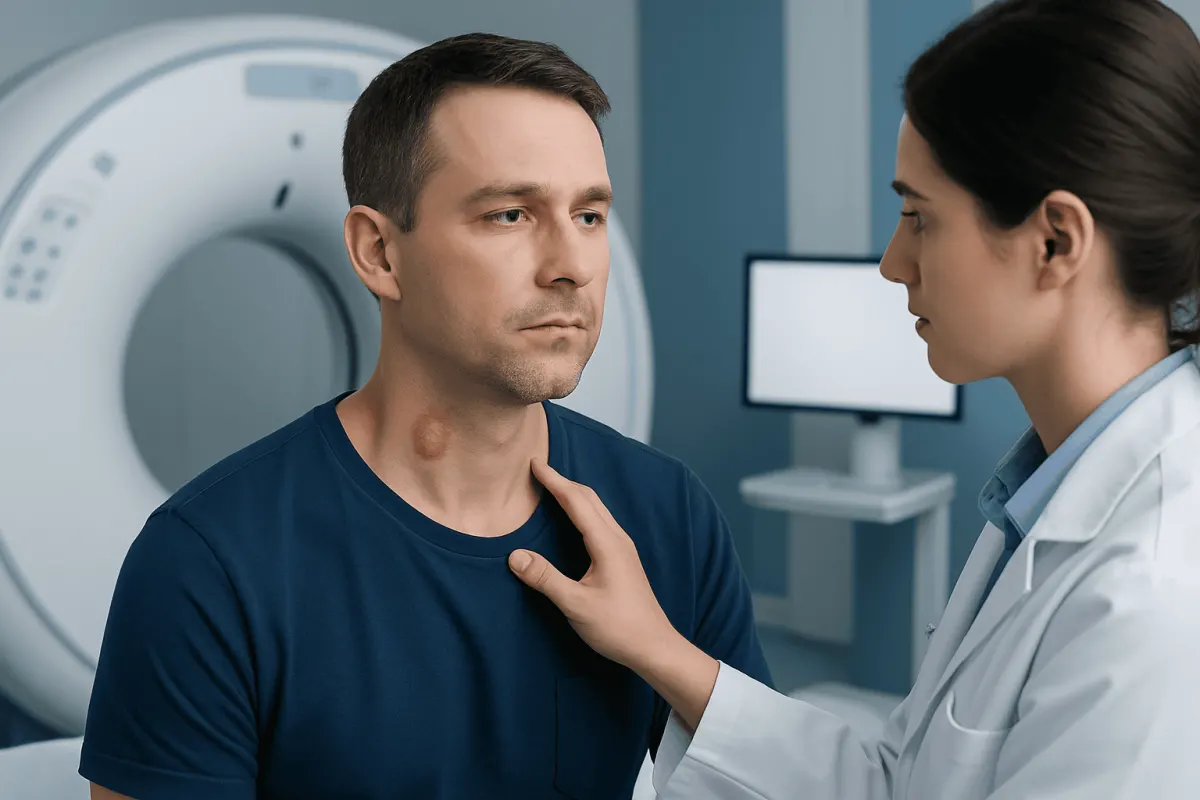
Repeatedly picking, squeezing, or using harsh spot treatments may irritate the skin and make the lesion harder to evaluate. It is generally better to leave the area alone, take a clear photograph to monitor visible change, and arrange a clinical assessment if it does not resolve. A doctor may also examine nearby lymph nodes and the rest of the skin for other suspicious areas.
How is a suspected skin cancer on the neck diagnosed?
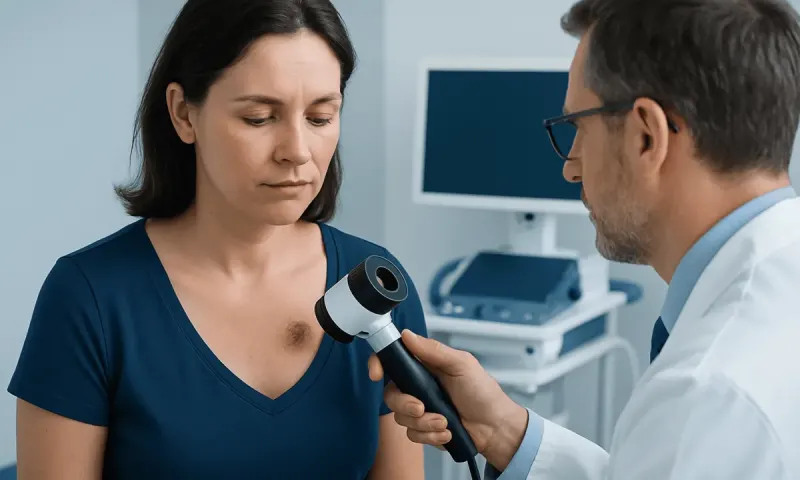
Diagnosis begins with a medical history and close examination of the skin. The clinician will ask how long the lesion has been present, whether it has changed or bled, and about sun exposure, tanning bed use, family history, immune health, and previous skin cancers. A handheld magnifying device called a dermatoscope may help reveal patterns not visible to the unaided eye.
If cancer cannot be excluded, a skin biopsy is usually recommended. This involves numbing the area and removing all or part of the lesion for examination by a pathologist. Depending on its size and location, the clinician may use a shave biopsy, punch biopsy, or excisional biopsy. The pathology report identifies whether cancer is present and, if so, its type and key features.
Further tests are not needed for most small, early skin cancers. Imaging or lymph node assessment may be considered when a lesion is large, deeply invasive, recurrent, high risk, or thought to have spread. Confirming the diagnosis before treatment helps the care team choose an approach that balances complete cancer removal with function and cosmetic considerations in the neck area.
How deep does basal cell carcinoma grow?
Basal cell carcinoma begins in the basal cells of the epidermis, the outer layer of the skin. It usually grows slowly and tends to invade nearby tissue rather than spread to distant organs. However, it can extend deeper into the dermis and, when left untreated for a long time, may involve underlying fat, cartilage, muscle, nerves, or bone in some locations.
There is no single depth for basal cell carcinoma. Its depth depends on the subtype, size, location, duration, and whether it has recurred after prior treatment. Some superficial basal cell carcinomas remain close to the surface, while infiltrative or morpheaform types can grow in thin strands that are less obvious at the skin surface. This is one reason a lesion’s visible size does not always show its full extent.
Biopsy results and clinical examination guide treatment planning. Surgery is often used because it allows removal of the cancer and assessment of the margins. In selected cases, especially on cosmetically or functionally important areas, specialised techniques may be considered to preserve as much healthy tissue as possible. Prompt assessment reduces the chance that a lesion will grow deeper and require more extensive treatment.
What is the prognosis for cancer pimples on the neck?
The prognosis for a cancer pimple on the neck depends on the specific diagnosis, whether it has spread, the lesion’s size and depth, and the person’s general health. A pimple-like lesion is not a medical diagnosis; outcomes are determined by the underlying condition. For common skin cancers that are found while confined to the skin, treatment is often successful.
Basal cell carcinoma rarely spreads to distant parts of the body, but it can cause local tissue damage if neglected. Squamous cell carcinoma is also commonly curable when treated early, although certain features, including greater depth, nerve involvement, immune suppression, and some locations, can raise the risk of recurrence or spread. Melanoma requires particularly prompt assessment because its outlook is strongly related to how deeply it has grown at diagnosis.
After treatment, follow-up skin examinations are important. People who have developed one skin cancer have a higher chance of developing another, and regular checks can identify new lesions early. A care plan may include self-examination, clinician visits at intervals tailored to the diagnosis, and daily sun protection.
Is skin cancer serious if caught early?
Skin cancer should always be evaluated and treated, but catching it early is highly important and generally improves the outlook. When cancer is limited to the skin, treatment can often remove it completely with a relatively straightforward procedure. Early care also commonly means a smaller treatment area and may reduce the risk of local tissue damage, recurrence, or spread.
Treatment depends on the cancer type, location, size, depth, and pathology findings. Options can include surgical excision, specialised margin-controlled surgery, curettage and cautery for selected lesions, cryotherapy for some precancerous changes, topical medicines for certain superficial cancers, radiation therapy, and systemic treatments for advanced disease. The right option should be decided with a dermatologist, surgeon, or Liver Cancer Specialist: An Evidence-Based Patient Guide" class="ahp-ilk">cancer specialist.
For people with confirmed or suspected skin cancer, coordinated dermatology and oncology care can be helpful when lesions are complex or recurrent. Acıbadem Health Point’s multidisciplinary specialists and JCI-accredited hospitals diagnose and treat skin cancers for international patients, with treatment planning based on the individual diagnosis and pathology results.
When to seek medical care
A person should arrange a non-urgent medical appointment for a pimple-like bump on the neck that lasts longer than several weeks, grows, repeatedly scabs or bleeds, changes colour, becomes persistently painful, or fails to heal. Medical review is also appropriate for any new or changing mole, especially one that looks different from other marks on the skin.
More prompt assessment is sensible if a lesion is rapidly enlarging, has an open ulcer, is associated with unexplained swelling in nearby lymph nodes, or appears in someone with a past history of melanoma or other skin cancer. People taking immune-suppressing medication should seek advice early for persistent or changing lesions.
Until the appointment, avoid picking or cutting the bump. Protect the neck from further sun exposure with shade, protective clothing, and broad-spectrum sunscreen when outdoors. A clinician may advise a biopsy or referral after examination; this is the reliable way to distinguish a harmless pimple or cyst from skin cancer.
Frequently asked questions
01How long can a pimple-like bump stay on the neck before it should be checked?
Ordinary acne often improves within days to a few weeks, although deeper acne nodules can take longer. A bump that persists beyond several weeks, grows, repeatedly bleeds or crusts, or does not heal should be assessed by a qualified clinician.
02Can basal cell carcinoma look like a pimple?
Yes. Basal cell carcinoma can appear as a small shiny, pink, pearly, or flesh-coloured bump that may be mistaken for a pimple. Unlike typical acne, it may persist, bleed easily, crust over, or recur in the same location.
03Are cancerous neck bumps painful?
Some cancerous skin lesions are painless, while others may itch, feel tender, burn, or become painful. Pain alone does not identify cancer, since acne, cysts, infections, and irritated ingrown hairs can also be painful.
04Can a dermatologist tell if a neck bump is cancer just by looking at it?
A dermatologist can often estimate whether a lesion is suspicious through examination and dermoscopy. However, a biopsy is generally needed to confirm cancer type and guide the most appropriate treatment.
05Does skin cancer on the neck always need surgery?
Surgery is a common treatment because it can remove the cancer and assess the edges of the removed tissue. However, some lesions may be managed with other approaches, such as topical treatment, radiation therapy, or other procedures, depending on the cancer type and individual circumstances.
06Can sunscreen prevent a cancer pimple on the neck?
Sunscreen cannot prevent every skin cancer, but regular broad-spectrum sun protection helps reduce UV-related skin damage and lowers skin cancer risk. It should be combined with shade, protective clothing, and avoiding tanning beds.
This article is for general information only and is not a substitute for professional medical advice. Please consult a qualified doctor about your individual situation.
Hair transplant in Turkey — costs, graft counts & a free assessment
JCI-accredited · board-certified surgeons · reply within 24h
Add us as a Preferred Source to see more of our trusted health content across Google Search, AI Overviews and Discover.