

Can You Become Pregnant After Menopause?
- 8 min read
- Published November 26, 2026
Key Takeaways
- After menopause, the ovaries no longer release eggs, so natural pregnancy is not possible.
- Perimenopause is different from menopause; pregnancy can still occur until menopause is confirmed.
- Bleeding after menopause should always be medically evaluated, even if it seems light or occasional.
- Some women may still build a family through donor eggs, IVF, or surrogacy depending on health and local laws.
- A doctor can confirm whether symptoms are due to menopause or another condition that needs treatment.
Can you become pregnant after menopause? In most cases, no—natural pregnancy is not possible once menopause has fully occurred because ovulation has stopped. This article explains how menopause is confirmed, why bleeding after menopause deserves medical attention, and what fertility options may still exist for some women.
Overview
Can you become pregnant after menopause? In the usual medical sense, no. Once menopause is complete, the ovaries have stopped releasing eggs, so there is no egg available for fertilization and natural conception cannot happen.
The point can feel confusing because the transition into menopause does not happen all at once. A woman may go through perimenopause, a stage when periods become irregular and ovulation becomes unpredictable. During that time, pregnancy is still possible, which is why contraception remains important until menopause is confirmed.
For women living across countries or traveling for care, the distinction matters even more. A missed period may reflect hormonal change, stress, travel, or pregnancy, and it is worth confirming the cause rather than assuming menopause has already begun. A clinician can help interpret symptoms in context and advise on safe next steps.
What Menopause Means for Fertility
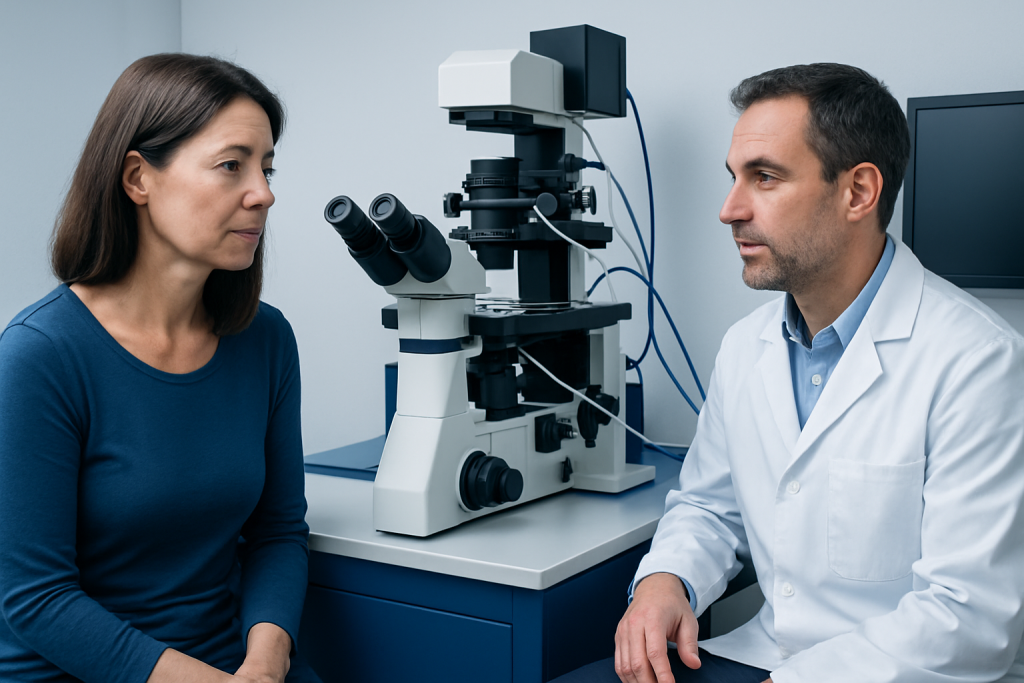
Menopause is diagnosed after 12 consecutive months without a menstrual period, when no other medical reason explains the change. At that stage, ovarian function has declined to the point that ovulation has ended. Without ovulation, pregnancy cannot occur naturally.
Before that final 12-month mark, hormone levels may still fluctuate. Some months may bring no bleeding, while other months may still include an ovulatory cycle. That is why a woman in her 40s or early 50s may still become pregnant, even if periods have become irregular or have almost stopped.
It is also helpful to separate menstrual bleeding from fertility. A period does not guarantee ovulation, and ovulation can sometimes happen without a typical period pattern. When a woman is unsure where she is in the transition, medical testing and history can clarify whether she is premenopausal, perimenopausal, or postmenopausal.
Symptoms and Signs That Need Clarification

Many menopausal symptoms overlap with other health concerns, so it is wise not to self-diagnose. Hot flashes, night sweats, vaginal dryness, sleep changes, mood shifts, and lighter or less frequent periods are common during the menopausal transition. These symptoms support the possibility of menopause, but they do not replace a medical evaluation.
Bleeding after menopause is the most important symptom that should be reviewed. Even a small amount of spotting after 12 months without a period should be reported to a doctor. While the cause is often benign, postmenopausal bleeding can also be linked to conditions that need prompt attention.
Possible signs that deserve discussion include:
- Any vaginal bleeding after menopause has been established
- Periods that stop and then return after a long gap
- Pelvic pain or pressure
- Unexplained bloating or abdominal swelling
- Symptoms that seem new, severe, or different from prior menopausal changes
Causes and Risk Factors
The main reason pregnancy is not possible after menopause is simple biology: the ovaries no longer release eggs. Menopause is a natural stage of life, usually related to age-related reduction in ovarian reserve. Once that reserve is depleted and ovulation ends, natural fertility also ends.
Several factors can influence when menopause arrives and how clearly it is recognized. Smoking, some medical treatments, surgeries involving the ovaries, and certain health conditions may lead to earlier menopause. In these situations, a woman may have reduced fertility sooner than expected.
It is also important to know that a missed period is not always caused by menopause. Thyroid disorders, stress, weight changes, excessive exercise, some medications, and pregnancy can all change the menstrual cycle. A careful evaluation helps avoid assumptions that could delay the correct diagnosis.
How Doctors Confirm Menopause
Menopause is usually diagnosed through a combination of menstrual history, symptoms, age, and sometimes laboratory testing. For many women, a detailed discussion is enough to identify the stage of transition. If the pattern is unclear, a doctor may order tests to look at hormone levels or to rule out other causes of absent periods.
Testing may be especially helpful for women who are younger than expected for menopause, have health conditions affecting the ovaries, or have symptoms that do not fit the usual pattern. Doctors may also evaluate for pregnancy when there is any possibility of conception during perimenopause.
When bleeding occurs after menopause, the evaluation is more focused. A clinician may recommend pelvic examination, ultrasound, and other tests based on age, symptoms, and medical history. The goal is to identify the cause clearly and early, not to cause alarm.
Treatment Options and Family-Building Possibilities
There is no treatment that restores natural fertility after true menopause. However, women who wish to become parents still have options, depending on overall health, ovarian function, and local legal and ethical frameworks. These options are usually discussed with a fertility specialist.
Common approaches may include donor egg IVF, embryo donation, or gestational surrogacy where legally available. The best choice depends on medical factors such as uterine health, cardiovascular status, and any chronic conditions. Because pregnancy later in life can carry higher medical risks, a thorough preconception assessment is essential.
For women who are not seeking pregnancy, treatment may instead focus on menopausal symptoms and long-term health. That can include support for sleep, vaginal symptoms, bone health, and cardiovascular risk reduction. A doctor can help tailor care to the individual’s goals rather than assuming every patient needs the same plan.
Prevention and Self-care
Menopause itself cannot be prevented, but its transition can be managed more comfortably and safely. Women in perimenopause who do not want to conceive should continue using contraception until a doctor confirms that menopause has occurred. This is especially important when cycles are irregular, because ovulation can still happen unexpectedly.
Self-care during the transition can make daily life easier. Regular movement, balanced nutrition, adequate sleep, limiting smoking, and managing stress all support general health. Vaginal moisturizers or lubricants may help with dryness, and weight-bearing exercise can support bone strength.
Keeping a simple symptom and bleeding diary can also be useful, particularly for women traveling internationally or coordinating care across different health systems. A record of dates, symptoms, and any bleeding episodes helps a doctor see patterns more clearly and recommend the right tests.
When to See a Doctor
Medical advice should be sought if there is any bleeding after menopause, if periods stop earlier than expected, or if symptoms are severe enough to disrupt sleep, mood, or daily functioning. A doctor can distinguish normal menopausal changes from conditions that need treatment.
It is also sensible to ask for review if pregnancy is still a concern during perimenopause, because contraception may still be needed. Women planning to build a family after menopause should speak with a fertility specialist before making travel or treatment plans, since screening and coordination are especially important.
For Myomectomy Recovery for International Patients: The Usual Travel Timeline" class="ahp-ilk">international patients, a multidisciplinary team can make this process easier by organizing gynecologic, fertility, and general medical assessments in one place. Acibadem Health Point’s specialists and JCI-accredited hospitals diagnose and treat menopause-related concerns for international patients with coordinated, patient-centered care.
A Practical Bottom Line
Natural pregnancy after menopause does not occur because ovulation has ended. The more nuanced question is whether a woman is truly postmenopausal or still in the perimenopausal transition, when pregnancy can still happen.
That distinction matters for contraception, symptom evaluation, and any decisions about future family building. If there is uncertainty, a clinician can help confirm the stage of menopause and discuss safe, realistic options based on individual health.
For anyone noticing postmenopausal bleeding, persistent pelvic symptoms, or uncertainty about fertility, a timely medical review is the safest and most reassuring next step.
Frequently asked questions
01Can you become pregnant after menopause?
No, not naturally. After menopause, the ovaries stop releasing eggs, so fertilization cannot occur. If pregnancy seems possible, it usually means the person is still in perimenopause rather than fully postmenopausal.
02Can pregnancy happen during perimenopause?
Yes. Perimenopause is the transition leading up to menopause, and ovulation can still happen unpredictably. Because of that, contraception is still important until menopause is confirmed.
03How is menopause confirmed?
Menopause is usually confirmed after 12 straight months without a menstrual period, as long as no other cause explains the change. In some cases, doctors also use symptoms, age, and laboratory tests to clarify the diagnosis.
04Is bleeding after menopause normal?
No, it should always be checked by a doctor. It is often caused by a benign issue, but postmenopausal bleeding can also signal a condition that needs evaluation and treatment.
05Are there any fertility options after menopause?
Natural conception is not possible, but some women may consider donor egg IVF, embryo donation, or gestational surrogacy, depending on medical suitability and local laws. A fertility specialist can explain which options are realistic and safe.
06Should contraception be stopped when periods become irregular?
Not necessarily. Irregular periods do not mean ovulation has stopped, so pregnancy can still occur during the menopausal transition. A doctor can advise when contraception is no longer needed.
This article is for general information only and is not a substitute for professional medical advice. Please consult a qualified doctor about your individual situation.
IVF & fertility treatment in Turkey — success rates and costs
JCI-accredited · board-certified surgeons · reply within 24h
Add us as a Preferred Source to see more of our trusted health content across Google Search, AI Overviews and Discover.


How can we help you today?
Meet an Acibadem specialist by secure video, before you travel.
Book a video visit