Can a Home PSA Test Reliably Check Your Prostate?
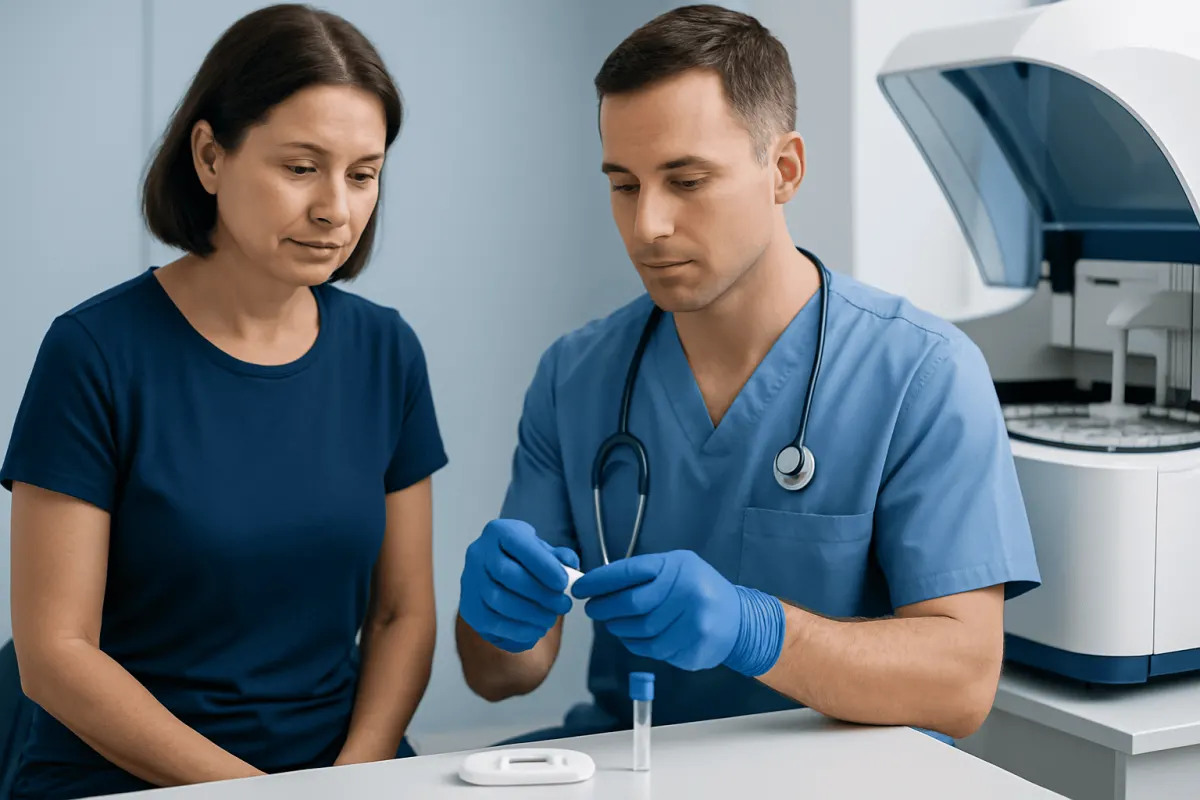
A home test PSA is a finger-prick blood test that estimates the level of prostate-specific antigen (PSA) in blood. It can be a convenient screening tool, but it cannot diagnose prostate cancer and any unexpected result needs clinical follow-up, usually with a laboratory blood test and medical assessment.
Home Test PSA: What It Is and How It Works
A home test PSA measures prostate-specific antigen (PSA), a protein made mainly by prostate cells. Most kits use a small finger-prick blood sample, which is placed onto a test device or sent to a laboratory. Depending on the product, the result may be reported as a numerical PSA level or as an indication of whether the level is above a set threshold.
PSA testing can contribute to a discussion about prostate health, particularly for people considering screening or monitoring a previously discussed concern. However, PSA is not a cancer test on its own. Levels may increase with non-cancerous prostate enlargement, inflammation, urinary infection, recent ejaculation, cycling, catheter use and some medical procedures.
For this reason, a home test is best viewed as a starting point for informed follow-up, not a diagnosis or a substitute for medical review. A clinician can interpret the result alongside age, symptoms, medicines, family history, examination findings and, if needed, a repeat laboratory test.
Home PSA Test Procedure and Preparation
Instructions vary by kit, so the manufacturer’s directions should always be followed carefully. In general, the person washes and dries their hands, uses the supplied lancet to prick the side of a fingertip, and collects the required drops of blood. Some tests are read at home after a short waiting period, while others are mailed or delivered to a laboratory.
Good preparation can reduce the chance of a misleadingly high result. It is commonly advised to avoid ejaculation for 48 hours before a PSA test. Avoiding vigorous cycling or other activities that place sustained pressure on the prostate for around 48 hours is also sensible. A person should tell their doctor about recent urinary infection, prostate procedures, catheterisation or a digital rectal examination, as timing may need to be adjusted.
Medicines can affect PSA interpretation. In particular, medicines used for an enlarged prostate such as finasteride or dutasteride can lower PSA levels. A person should not stop prescribed medicine before testing, but should ensure the clinician reviewing the result knows what they take.
There is no physical recovery period after a finger-prick PSA test. Applying gentle pressure to the puncture site until bleeding stops and keeping it clean is usually all that is needed. Brief soreness or a small bruise can occur, but significant pain, redness or swelling should be assessed by a healthcare professional.
How Long to Rest Before a PSA Test?
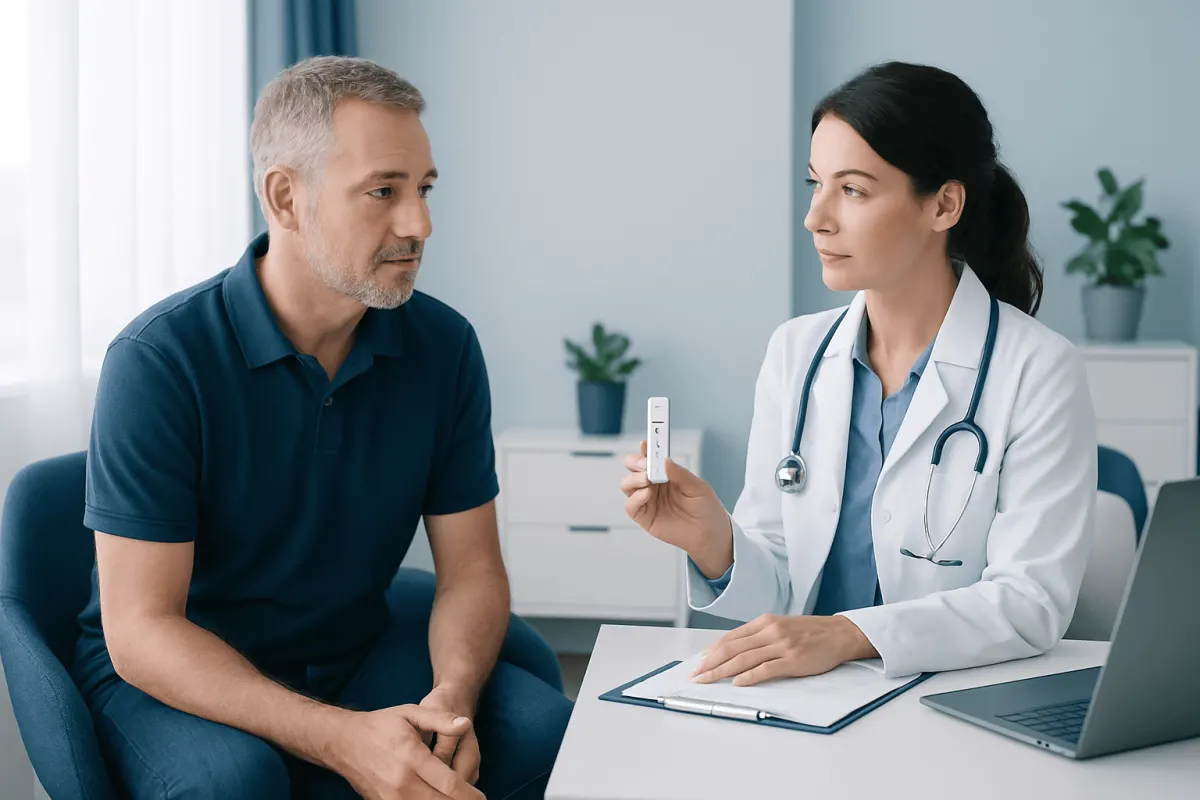
“Rest” before a PSA test usually means avoiding factors that can temporarily raise PSA rather than staying in bed or avoiding normal daily activity. Many clinicians advise avoiding ejaculation and vigorous cycling for 48 hours before the blood sample. Routine walking, work and ordinary activity are generally fine.
If there has been a urinary tract infection, prostatitis, acute urinary retention, catheter placement, cystoscopy or another procedure involving the urinary tract, PSA may remain elevated for longer. In these situations, a doctor may recommend waiting until the condition has been treated and enough time has passed before measuring PSA.
A person should not use a home test to settle uncertainty about when testing is appropriate after a procedure or infection. Contacting the clinician who is managing the prostate or urinary concern can help ensure the result will be meaningful.
Understanding Home PSA Test Results
PSA is usually reported in nanograms per millilitre (ng/mL). A higher result can indicate that more PSA is circulating in the blood, but it does not identify the cause. Benign prostatic hyperplasia (an enlarged prostate), inflammation and infection are common explanations, especially as people get older. Prostate cancer is one possible cause, but further assessment is required before any conclusion can be made.
A single result is less informative than the overall clinical picture and change over time. A clinician may repeat the PSA through an accredited laboratory, assess for infection, discuss risk factors, perform an examination when appropriate, or consider further tests such as prostate imaging. Related information about prostate cancer may be helpful for people who are undergoing evaluation.
A low PSA result can be reassuring, but it cannot rule out every prostate problem or every prostate cancer. Anyone with persistent urinary symptoms, a strong family history of prostate cancer, or a known inherited cancer-risk gene should discuss an appropriate screening plan with a doctor even if a home result is not elevated.
What Is an Average PSA Score for a 70 Year Old?
There is no single average or universally “normal” PSA score for a 70-year-old. PSA tends to rise gradually with age because the prostate often becomes larger, and laboratories or clinical guidelines may use different age-adjusted reference ranges. A result must therefore be interpreted in context rather than compared with one number found online.
Historically, some clinicians have used an approximate age-specific upper reference limit around 6.5 ng/mL for people aged 70 to 79, but this is not a diagnosis threshold and is not appropriate for everyone. Some people with a PSA below that level may still need assessment, while others with a higher level may have a benign explanation.
For a 70-year-old, useful questions include whether the PSA has changed compared with earlier tests, whether urinary symptoms are present, whether there is a family history of prostate or breast cancer, and whether medicines affecting PSA are being used. Shared decision-making with a clinician is the safest way to interpret the result.
How Reliable Is a Home PSA Test?
A home PSA test may provide useful screening information when it is performed correctly and uses a validated method, but its reliability varies by product, sample collection and result type. Finger-prick samples can be more prone to collection errors than professionally collected venous blood, and some rapid tests only indicate whether PSA is above a particular cutoff rather than providing a precise value.
Even a highly accurate measurement cannot determine whether cancer is present. PSA lacks perfect specificity because many non-cancerous conditions raise it, and it lacks perfect sensitivity because some prostate cancers do not produce a high PSA. For these reasons, abnormal results should be confirmed with a clinician-ordered test, while a normal result should not be used to ignore concerning symptoms.
Home testing may be less suitable for someone already being monitored after a previous abnormal PSA, prostate cancer treatment or prostate surgery, because consistent laboratory methods and specialist interpretation are particularly important. In these circumstances, the treating team should advise on the right test and timing.
What Does Pee Look Like With Prostate Cancer?
Urine usually looks normal in people with prostate cancer. Prostate cancer often causes no symptoms in its earlier stages, and urine appearance cannot be used to detect or exclude it. Changes such as a weak stream, difficulty starting urination, waking at night to urinate or increased frequency are more commonly caused by benign prostate enlargement or other urinary conditions.
Blood in the urine may make urine appear pink, red or cola-coloured. Although this can have many causes, including infection, stones or medication effects, it should always be assessed by a healthcare professional. Visible blood, especially if it recurs or is painless, should not be attributed to a home PSA result.
Cloudy or foul-smelling urine, burning on passing urine, fever or pelvic pain may point to infection or inflammation rather than cancer. These symptoms require timely medical advice, since an infection can need treatment and can also affect PSA testing.
When to Seek Medical Care
A person should arrange a routine medical appointment after an elevated, unclear or unexpected home PSA result. The same applies to persistent urinary changes, new pelvic discomfort, unexplained bone pain, unintentional weight loss, or concerns about family history. A doctor can decide whether repeating PSA, checking urine, examining the prostate or arranging specialist assessment is appropriate.
Urgent medical care is needed for inability to pass urine, fever with urinary symptoms, severe lower abdominal or pelvic pain, or visible blood in urine, particularly with clots or difficulty urinating. These symptoms may be caused by conditions other than prostate cancer, but prompt evaluation is important.
Acıbadem Health Point’s multidisciplinary specialists and JCI-accredited hospitals support international patients who need assessment of PSA results and prostate-related symptoms. Further evaluation may include prostate cancer treatment planning when a diagnosis is confirmed, but testing alone does not determine the need for treatment.
Frequently asked questions
01Can a home test PSA diagnose prostate cancer?
No. A home PSA test measures a blood marker that can be raised for several reasons, including benign prostate enlargement, inflammation and infection. A clinician must confirm an abnormal result and assess whether any further tests are needed.
02Should a home PSA result be repeated?
An elevated or unexpected result should usually be discussed with a doctor and often confirmed with a laboratory blood test. Repeat testing may also be recommended if temporary factors, such as ejaculation, cycling, infection or a recent urinary procedure, could have influenced the result.
03Do I need to fast before a home PSA test?
Fasting is not usually required for a PSA test. It is more important to follow the kit instructions and avoid factors that may temporarily raise PSA, such as ejaculation and vigorous cycling in the previous 48 hours.
04Can an enlarged prostate raise PSA?
Yes. Benign prostatic hyperplasia, often called an enlarged prostate, can raise PSA because there is more prostate tissue producing the protein. It is a common non-cancerous cause of an elevated PSA, especially with increasing age.
05Can a urinary infection affect a home PSA test?
Yes. A urinary infection or prostate inflammation can increase PSA and make the result difficult to interpret. A person with burning urination, fever, pelvic pain or other possible infection symptoms should seek medical advice rather than relying on a home test.
06Who should discuss PSA screening with a doctor?
People with urinary symptoms, a family history of prostate cancer, or a known inherited risk may benefit from an individual discussion. Screening decisions also depend on age, general health, personal preferences and the potential benefits and limitations of PSA testing.
This article is for general information only and is not a substitute for professional medical advice. Please consult a qualified doctor about your individual situation.
Oncology care in Turkey — second opinion and treatment plan
JCI-accredited · board-certified surgeons · reply within 24h
Add us as a Preferred Source to see more of our trusted health content across Google Search, AI Overviews and Discover.