Buttock Implants: Recovery After Surgery
Buttock implants are solid silicone implants placed through surgery to increase the projection, volume, or symmetry of the buttocks. They may suit selected people who have limited body fat for transfer, but the procedure requires an experienced plastic surgeon, careful recovery, and informed discussion of risks.
Overview: what are buttock implants?
Buttock implants are a surgical form of buttock augmentation. A plastic surgeon places firm, solid silicone implants in or beneath the gluteal muscle to create more fullness, projection, or balance between the buttocks and the rest of the body. Unlike breast implants, gluteal implants are generally made of solid silicone rather than a gel-filled shell.
The procedure is usually considered by people who want a more defined buttock contour but do not have enough donor fat for fat transfer, or who prefer an implant-based approach. The best technique depends on anatomy, skin quality, existing muscle and fat, medical history, and the person’s goals. A consultation should cover non-surgical options, fat transfer, implants, scars, recovery requirements, and the possibility that additional surgery may be needed in the future.
Buttock implants are cosmetic surgery and are not medically necessary. A safe decision begins with an assessment by a qualified plastic surgeon who can explain whether buttock aesthetics surgery is appropriate for the individual.
How buttock augmentation works and who may be a candidate
In implant-based augmentation, the surgeon makes an incision, commonly in the crease between the buttocks, and creates a carefully planned pocket for each implant. Implants may be placed within the gluteus maximus muscle or in a deeper plane, depending on the surgical plan. Placement is important for contour, stability, tissue coverage, and safety.
A potential candidate is usually an adult in stable general health who does not smoke or is prepared to stop nicotine use before and after surgery. They should have a stable weight, realistic expectations, and enough time and support for recovery. The surgeon will also consider prior operations, skin or soft-tissue quality, healing history, medicines, allergies, and conditions such as diabetes or bleeding disorders.
People with an active infection, uncontrolled health condition, poor wound-healing risk, or expectations that surgery cannot reasonably meet may be advised to postpone surgery or choose another option. An assessment of emotional wellbeing is also part of responsible cosmetic-surgery planning; the goal should be personal body-contour improvement rather than pressure from others.
- Implants can provide lasting volume without relying on available body fat.
- Fat transfer may create a softer, more natural transition in selected candidates, but it has its own safety considerations.
- Some people may benefit from contouring procedures rather than, or in addition to, volume enhancement.
Buttock implant procedure: step by step
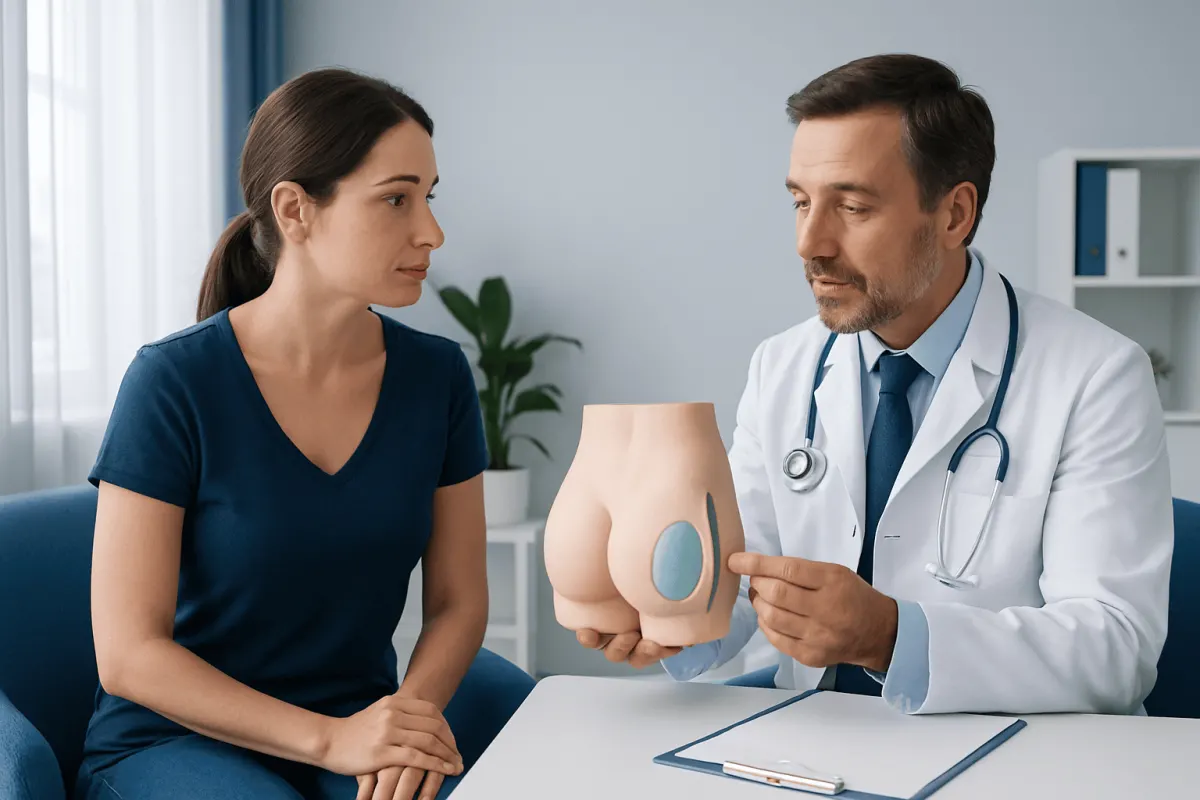
Before surgery, the care team reviews medical history, performs an examination, and discusses implant size, shape, placement, incision location, and expected scars. Preoperative instructions may include stopping nicotine, avoiding certain medicines or supplements that increase bleeding risk when advised by the clinician, arranging transport home, and preparing help for the first days after surgery.
Buttock implant surgery is generally performed under general anesthesia in an accredited surgical facility. After the person is asleep, the surgeon marks the planned areas, makes the incision, creates the implant pocket, and positions the implants. The surgeon checks symmetry and contour before closing the incisions. Drains may sometimes be used temporarily to reduce fluid accumulation, based on the surgeon’s approach and the individual case.
The operation length varies with the technique and whether other procedures are performed at the same time. Most patients go home after monitoring, although the appropriate setting depends on the extent of surgery, anesthesia recovery, medical needs, and available support. Written instructions should explain wound care, pain management, movement restrictions, follow-up visits, and symptoms that require urgent contact with the surgical team.
Recovery timeline and expected results
Recovery is gradual. In the first days, swelling, bruising, tightness, soreness, and reduced mobility are expected. Patients are commonly asked to avoid sitting or lying directly on the buttocks for a period specified by their surgeon. They may need to sleep on the stomach or side and use modified positions for sitting, getting up, and traveling.
Walking short distances as advised can support circulation, but strenuous exercise, heavy lifting, deep bending, and activities that place pressure on the surgical area are restricted during early healing. Many people need help with daily tasks at first. Return to desk work and normal routines varies, while more demanding activity may require several weeks or longer. Only the operating surgeon can confirm when it is safe to resume exercise, driving, sexual activity, or prolonged sitting.
Initial swelling can make the buttocks look higher, firmer, or less settled than the eventual result. As swelling resolves and tissues adapt, contour becomes clearer over the following weeks and months. Scars also mature gradually and may remain visible, although they are usually positioned to be less noticeable. Implants are intended to be durable, but no implant should be considered lifetime maintenance-free; changes in body weight, aging, complications, or aesthetic preferences can lead to revision or removal.
Benefits, limits and risks of buttock augmentation
The potential benefits of buttock implants include increased projection, improved symmetry in selected cases, and volume that does not depend on fat survival after transfer. An implant can be particularly useful for a person with low body fat who wants a noticeable increase in buttock fullness. Outcomes are individual, and a surgeon cannot guarantee a particular shape, size, or degree of symmetry.
All surgery carries risks. With buttock implants, these include bleeding, infection, anesthesia-related complications, delayed wound healing, fluid collection, persistent pain or altered sensation, unfavorable scarring, asymmetry, visible or palpable implant edges, implant displacement, and the need for another procedure. Wound separation in the central buttock crease can be a particular concern because the area is exposed to moisture, movement, and pressure.
A BBL, or gluteal fat transfer, has different risks. Its most serious risk is fat embolism, which can occur if fat is injected into or below the gluteal muscles. Safety standards emphasize careful technique, appropriate training, and avoiding dangerous injection planes. A consultation should compare options based on safety, anatomy, desired result, and the surgeon’s expertise rather than on trends or photographs alone.
Acıbadem Health Point’s multidisciplinary specialists at JCI-accredited hospitals assess suitable candidates and provide individualized planning for international patients considering cosmetic procedures.
How to poop after getting a BBL?
Constipation can occur after a BBL or buttock implant surgery because anesthesia, reduced movement, dehydration, dietary changes, and some pain medicines can slow the bowel. The safest approach is to follow the operating team’s instructions, drink fluids if permitted, eat fibre-containing foods as tolerated, and take prescribed or recommended bowel-supporting medicines only as directed.
After a BBL, patients are usually asked to avoid direct pressure on the buttocks. For bowel movements, the surgical team may recommend a modified position, such as leaning forward while keeping pressure off the treated area, or using a support arrangement appropriate to the procedure. Instructions differ between BBL and implant surgery, so the surgeon’s aftercare guidance takes priority.
Straining should be avoided where possible because it can be painful and may stress healing tissues. A patient should contact the surgical team if constipation is persistent, pain is severe, there is vomiting or abdominal swelling, or they are unsure how to position themselves safely.
Can you feel buttock implants?
During early recovery, it is common to feel tightness, swelling, firmness, numbness, tingling, or awareness of the implants. These sensations often improve as swelling decreases and tissues heal. Nerves can take time to recover after surgery, and sensation may change temporarily around the incision or buttocks.
Once healing is complete, many people do not constantly notice their implants in everyday activities. However, buttock implants may feel firmer than natural fatty tissue, especially in people with thinner soft-tissue coverage. In some cases, an implant edge may be felt or seen, and this can be more likely with displacement, thin tissue coverage, or certain body positions.
New or worsening pain, increasing firmness on one side, warmth, redness, drainage, fever, or a sudden change in shape should be assessed promptly. These symptoms do not always mean a serious complication, but they require professional evaluation.
What do butt implants look like? How risky is buttock augmentation?
Buttock implants are intended to make the buttocks look fuller and more projected, with the exact appearance influenced by implant size, placement, pelvic shape, muscle structure, skin quality, and body proportions. In a well-planned result, the aim is proportion and balance rather than a standardized look. Swelling can temporarily make the area appear larger or higher than the final outcome.
Buttock augmentation has meaningful surgical risks, but risk varies by method, patient health, facility standards, and the experience and technique of the surgical team. Implant surgery can involve wound and implant-related complications, while fat-transfer procedures have distinct, potentially severe risks if performed unsafely. Choosing a properly qualified plastic surgeon, accredited facility, appropriate technique, and careful postoperative follow-up helps reduce avoidable risk, though it cannot eliminate it.
A person considering surgery should ask about the surgeon’s training, the planned implant plane or fat-injection approach, anesthesia arrangements, complication management, follow-up care, and the expected need for future revision. They should also avoid providers who pressure them to decide quickly or promise a risk-free result.
Frequently asked questions
01Are buttock implants permanent?
Buttock implants are designed to be long-lasting, but they are not guaranteed to last for a lifetime. Changes in the body, complications, implant displacement, or changing preferences may lead a person to consider revision, removal, or replacement surgery.
02What is the difference between buttock implants and a BBL?
Buttock implants use solid silicone devices to create volume and projection. A BBL uses fat removed by liposuction from another part of the body and transferred to the buttocks. The procedures have different eligibility requirements, recovery plans, and risk profiles.
03How long should someone avoid sitting after buttock implants?
The restriction period varies by surgical technique and the surgeon’s instructions. Patients are often advised to minimize direct pressure during early healing and to use modified sitting positions if sitting is unavoidable. The operating surgeon should provide the specific timeline.
04Will buttock implants affect walking or exercise?
Walking may be uncomfortable at first because of swelling and muscle soreness, but gentle movement is often encouraged when the surgeon approves it. Running, strength training, cycling, and other high-impact activities are usually delayed until healing is sufficiently advanced. Returning too soon can affect wound healing and implant position.
05Can buttock implants be removed?
Yes, implants can generally be removed surgically if medically necessary or desired. Removal may leave changes in contour, skin laxity, or scarring, and some people consider a revision procedure to address these changes. A plastic surgeon can discuss realistic options based on the individual’s tissue condition.
06When should someone seek medical care after buttock augmentation?
Urgent medical care is needed for trouble breathing, chest pain, fainting, sudden severe swelling, or other signs of a medical emergency. The surgical team should also be contacted promptly for fever, worsening redness, foul-smelling drainage, wound opening, uncontrolled pain, one-sided swelling, or a sudden change in buttock shape. Attending scheduled follow-up visits is important even when recovery seems to be progressing normally.
This article is for general information only and is not a substitute for professional medical advice. Please consult a qualified doctor about your individual situation.
Medical weight-loss options in Turkey — costs & eligibility
JCI-accredited · board-certified surgeons · reply within 24h
Add us as a Preferred Source to see more of our trusted health content across Google Search, AI Overviews and Discover.