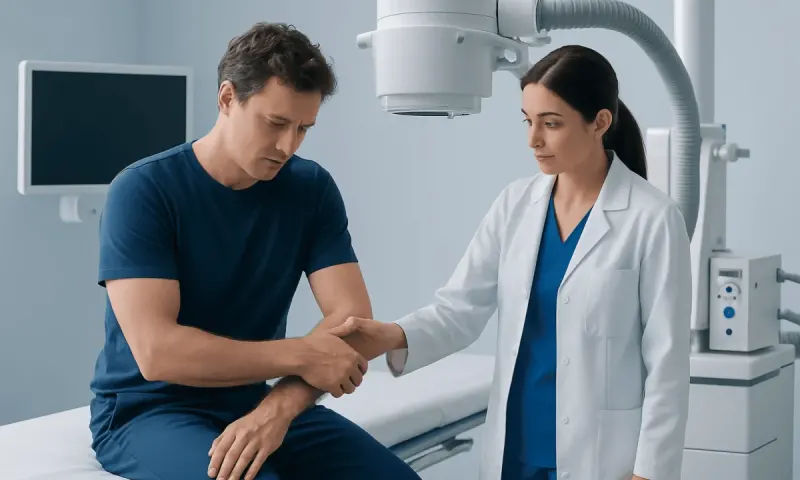
Bruise vs Fracture: Recognizing the Differences
A bruise and a fracture can both cause pain, swelling, and discoloration after an injury, but they affect different tissues. A bruise usually involves bleeding under the skin or within muscle, while a fracture is a break or crack in a bone and requires medical assessment when suspected.
Bruise vs Fracture: A Side-by-Side Comparison
A bruise and a fracture may happen after the same fall, collision, sports injury, or direct blow. The key difference is the tissue involved: a bruise is bleeding and inflammation in soft tissue, whereas a fracture is a crack or break in a bone. Because symptoms can overlap, it is not always possible to tell the difference reliably without a clinical examination.
| Feature | Bruise | Fracture |
|---|---|---|
| What is injured? | Small blood vessels in the skin, fat, muscle, or other soft tissues. | A bone is cracked, partially broken, or fully broken. |
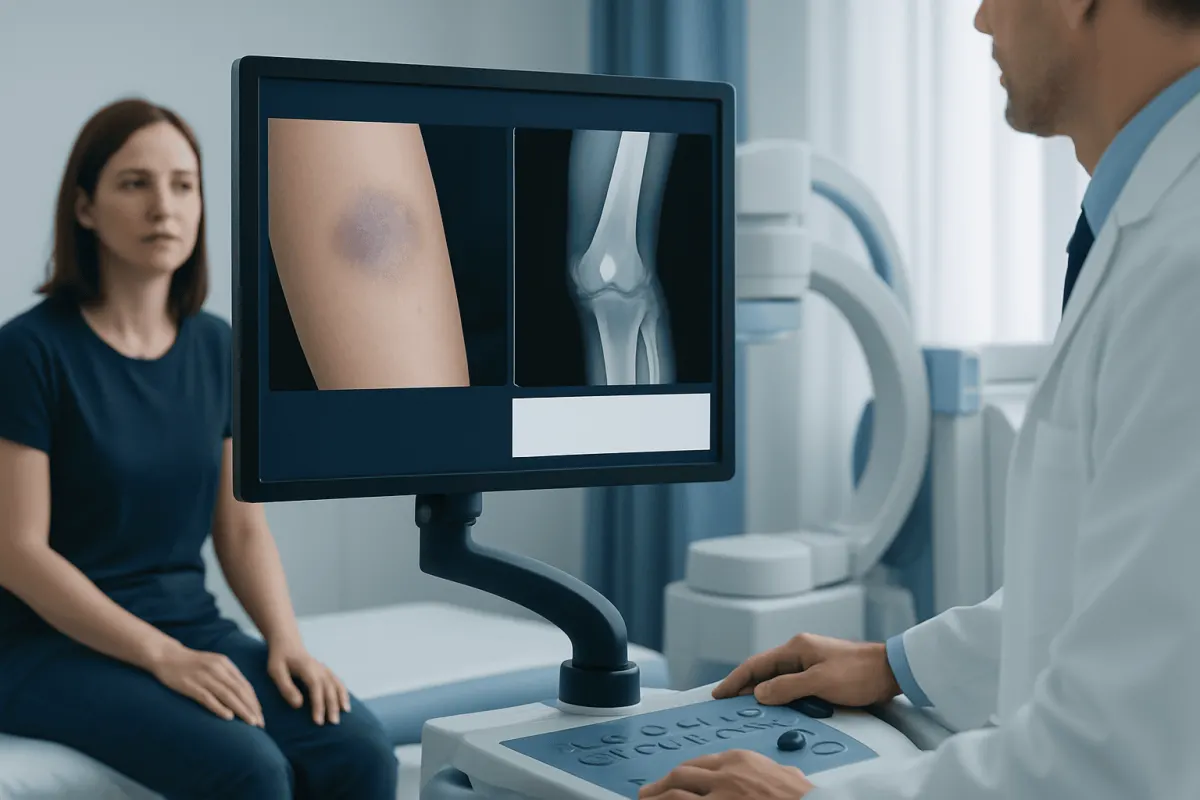
| Appearance | Often blue, purple, red, green, or yellow discoloration that changes as it heals. | May cause bruising and swelling, but sometimes there is little or no skin discoloration. |
| Pain pattern | Usually tender over a broad area and gradually improves over days. | Often sharp, deep, or focused over one point of bone; movement or weight-bearing may be very painful. |
| Function | Movement is uncomfortable but often still possible. | Use of the affected part may be difficult or impossible, although some minor fractures still allow movement. |
| Shape and alignment | Usually no change in limb shape. | May cause deformity, abnormal angle, shortening, or an unusual bump in displaced fractures. |
| Best way to confirm | Often diagnosed clinically. | Usually confirmed with imaging, most often an X-ray. |
Importantly, the amount of bruising does not indicate how serious an injury is. A deep bruise can look dramatic but heal without lasting problems, while certain fractures—especially stress fractures, wrist fractures, or fractures near joints—can have subtle external signs. When there is doubt, it is safer to treat the injury as a possible fracture until a clinician evaluates it.
What a Bruise Is and How It Usually Feels
A bruise, also called a contusion, develops when an impact damages small blood vessels under the skin. Blood leaks into nearby tissues, producing tenderness, swelling, and color changes. Bruises commonly affect the skin and muscle, although deeper bruising may not become visible immediately.
In the first day or two, the area may be sore, swollen, and dark red, blue, or purple. As the body reabsorbs the blood, the color may shift to greenish or yellow-brown. This color change is a normal part of healing and may take one to several weeks, depending on the size and depth of the bruise.
A bruise generally becomes less painful over time. Gentle movement may be possible, though the affected muscle or area can remain tender when pressed. A very large, rapidly spreading, or unexplained bruise deserves medical advice, particularly in people who use blood-thinning medication or have a bleeding disorder.
What a Fracture Is and Signs That Raise Suspicion

A fracture is a break in the continuity of a bone. It can range from a small crack that remains aligned to a complete break in which bone pieces shift position. Fractures may result from a single injury, such as a fall or traffic accident, or from repeated loading over time, as can occur with a stress fracture.
Signs that make a fracture more likely include pain precisely over a bone, substantial swelling, inability to bear weight or use the injured area normally, pain that increases with movement, and tenderness when the bone is gently pressed. A visible deformity, a limb that looks shortened or rotated, or a grating sensation are more concerning signs.
Not every fracture is obvious. Some people can still walk on a fractured foot or ankle, and some wrist, rib, or stress fractures may initially seem like a sprain or bruise. For this reason, ongoing localized pain after an injury should not be ignored. Fractures are part of the wider group of bone fractures that may need immobilization and follow-up to heal in the correct position.
How a Clinician Tells Them Apart
Clinicians begin by asking how the injury happened, when symptoms began, whether there was a popping sensation, and whether the person can use the affected body part. The mechanism matters: a high-impact injury, twisting force, fall onto an outstretched hand, or inability to take four steps after an ankle injury can increase concern for a fracture.
During the examination, the clinician checks for point tenderness over bone, swelling, bruising, range of motion, strength, joint stability, circulation, and nerve function. They may compare the injured side with the uninjured side. The skin is also examined for cuts or wounds, since an open fracture needs urgent treatment.
An X-ray is the usual first imaging test when a fracture is suspected. It can show many breaks and whether the bone is aligned. However, very early stress fractures, small cracks, and certain injuries around complex joints may not show clearly on an initial X-ray. In selected situations, repeat X-rays, CT scans, or MRI can provide more detail.
It is not advisable to repeatedly press, twist, or “test” a painful limb at home to decide whether it is broken. This can worsen pain or move an unstable fracture. Until assessment is available, protecting the area and avoiding unnecessary weight-bearing are sensible precautions.
What to Do for a Bruise and for a Suspected Fracture
For a minor bruise, early care often focuses on protecting the area and reducing discomfort. Rest from activities that aggravate pain, apply a wrapped cold pack for short intervals, use light compression if comfortable and appropriate, and elevate the area when possible. Cold packs should not be placed directly on bare skin. Normal, gentle movement can be resumed as pain allows.
Over-the-counter pain relief may be appropriate for some people, but the most suitable option depends on age, medical conditions, allergies, and other medicines. A pharmacist or clinician can provide individualized guidance. Massaging a fresh bruise or returning to contact sport before pain and function improve may delay recovery.
For a suspected fracture, keep the injured area as still as possible. If available, a simple splint may help support the limb, but it should not be tightened around swelling and should not be used to force a limb into a straighter position. Avoid eating or drinking if urgent surgery may be possible, unless a healthcare professional advises otherwise.
Fracture treatment depends on the bone involved, the type of break, alignment, and the person’s overall health. Options may include a splint, cast, brace, guided rehabilitation, or surgery to restore stable alignment. Orthopedic surgery may be considered for unstable, displaced, open, or joint-related fractures, while rehabilitation supports a safe return of strength and movement.
When to Seek Medical Care
Urgent medical care is appropriate after a significant injury when there is an obvious deformity, bone visible through the skin, uncontrolled bleeding, severe or rapidly worsening pain, inability to move fingers or toes, numbness, weakness, or a limb that becomes pale, blue, or cold. Emergency assessment is also important after major trauma, especially if there may be head, neck, chest, abdominal, or pelvic injury.
A prompt non-emergency medical assessment is recommended when pain is focused over a bone, swelling is marked, weight-bearing is difficult, pain does not improve as expected, or a person is unsure whether an injury is a bruise, sprain, or fracture. Children, older adults, and people with osteoporosis may need a lower threshold for assessment because fractures can occur after relatively minor falls.
Medical advice is also helpful for bruises that appear without a clear injury, recur frequently, are unusually large, or occur with nosebleeds, bleeding gums, fever, or other bleeding symptoms. These features may require evaluation for medication effects or an underlying medical condition rather than an injury alone.
Recovery, Prevention, and Follow-Up
Most uncomplicated bruises fade steadily and do not need imaging or specialist treatment. A bruise that remains very painful, forms a firm enlarging lump, limits movement, or fails to improve should be reviewed. This may indicate a deeper soft-tissue injury, a collection of blood called a hematoma, or an injury that was initially difficult to identify.
After a fracture, follow-up is important even when pain improves. The clinician may check healing, alignment, joint movement, and the condition of a cast or brace. New pain, increasing tightness under a cast, numbness, skin color changes, fever, or a damaged cast should be reported promptly.
Reducing fracture risk includes using appropriate protective equipment for sports, improving balance and muscle strength, removing trip hazards at home, and maintaining bone health through adequate nutrition, weight-bearing activity when suitable, and medical assessment of osteoporosis risk. Acıbadem Health Point’s multidisciplinary specialists and JCI-accredited hospitals diagnose and treat injuries including suspected fractures for international patients.
Frequently asked questions
01Can a fracture look like a bruise?
Yes. A fracture can cause bruising, swelling, and tenderness, particularly around the wrist, ankle, foot, or ribs. Some fractures have no obvious deformity, so appearance alone cannot confirm or exclude a broken bone.
02Can a bruise hurt as much as a fracture?
A deep muscle bruise can be quite painful, especially soon after the injury. However, intense pain focused directly over a bone, pain with weight-bearing, or pain that does not begin to improve should be medically assessed.
03How long does it take for a bruise to heal?
Many bruises improve within about two weeks, although larger or deeper bruises may take longer. The color often changes as the body clears the trapped blood. Worsening pain, expanding swelling, or lack of improvement should be discussed with a clinician.
04Can an X-ray miss a fracture?
Yes. Some small, non-displaced, or stress fractures may not be visible on an early X-ray. If symptoms and examination still suggest a fracture, a clinician may arrange repeat imaging or use MRI or CT in selected cases.
05Should a person put ice on a suspected fracture?
A wrapped cold pack may help reduce pain and swelling while awaiting assessment, as long as it is not applied directly to the skin. The injured body part should also be supported and kept as still as possible. Ice should not delay urgent medical care.
06Is it safe to walk on an injury if it may be fractured?
It is best to avoid weight-bearing when walking causes significant pain or a fracture is suspected. Continuing to walk on some fractures can worsen displacement or delay healing. A clinician can advise when it is safe to resume activity.
This article is for general information only and is not a substitute for professional medical advice. Please consult a qualified doctor about your individual situation.
Joint and spine care in Turkey — expert assessment & treatment
JCI-accredited · board-certified surgeons · reply within 24h
Add us as a Preferred Source to see more of our trusted health content across Google Search, AI Overviews and Discover.