The Brachial Artery and Signs of Poor Arm Circulation

Every time someone wraps a blood pressure cuff around your upper arm, they’re listening for one particular vessel: the brachial artery.
It’s the main artery of the upper arm. It carries oxygen-rich blood from the shoulder region toward the elbow, forearm, and hand. Beyond that everyday job, it’s also an important site for checking pulse, blood pressure, and arm circulation.
Overview: what the brachial artery does
The brachial artery is the main artery of the upper arm. It continues from the axillary artery near the shoulder and travels down the arm until it divides near the elbow into the radial and ulnar arteries, which supply the forearm and hand. In simple terms, it is a key route that delivers oxygen-rich blood to tissues that need a constant and reliable blood supply.
Why does it matter to you? Two reasons. It keeps circulation going, which is what allows normal movement, sensation, and healthy tissue in your arm and hand. And it’s used constantly in everyday medical care — healthcare professionals listen over this artery when measuring blood pressure, and feel its pulse in the inner elbow area when checking circulation.
The brachial artery usually works without causing any awareness or symptoms. However, if it becomes injured, narrowed, blocked, or unusually widened, blood flow to the lower arm and hand can be affected. That can lead to symptoms ranging from mild discomfort to urgent circulation problems, depending on the cause and how quickly it develops.
Where it is located and why doctors pay attention to it
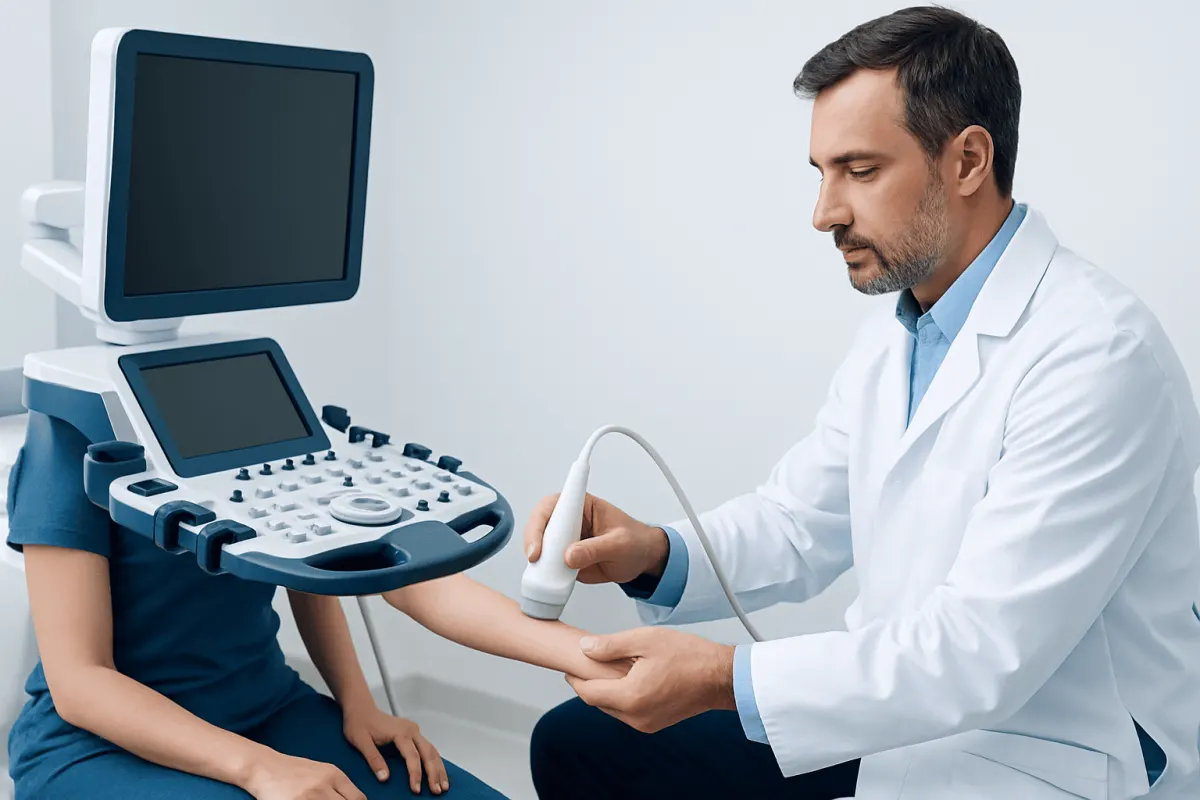
The brachial artery runs along the upper arm, generally on the inner side, close to important muscles, nerves, and veins. Because of this location, it can be involved in injuries such as fractures, dislocations, deep cuts, or crush trauma. The artery is especially important around the elbow, where its branching pattern helps supply blood to the forearm and hand.
Doctors pay close attention to the brachial artery during physical examination because it offers useful information about circulation. A normal pulse at this site suggests that blood is reaching the lower arm. If the pulse is weak or absent, or if one arm differs from the other, further testing may be needed to look for vascular injury or poor blood flow.
The brachial artery is also relevant in conditions that affect arteries more broadly, including peripheral artery disease. Although this condition more often affects the legs, arm arteries can also be involved. In addition, specialists may assess the brachial artery before certain vascular procedures or after trauma to guide the safest treatment plan.
Symptoms of brachial artery problems

A healthy brachial artery usually causes no symptoms. When there is a problem, the signs depend on whether blood flow is reduced, the artery wall is damaged, or there is pressure on nearby structures. Symptoms may appear suddenly after an injury or develop more gradually if there is narrowing or vascular disease.
Possible symptoms can include pain in the upper or lower arm, coldness of the forearm or hand, numbness, tingling, weakness, swelling, or skin color changes such as unusual paleness or bluish discoloration. Some people may notice a weaker pulse or delayed capillary refill in the fingers, while others may feel pain when using the arm.
If a bulge forms in the artery wall, known as an aneurysm, there may be a pulsating lump, tenderness, or pressure-related symptoms. Rarely, clot formation can reduce blood flow farther down the arm. Patients should not try to diagnose the cause on their own, because symptoms can overlap with nerve, muscle, tendon, or joint problems.
- Sudden severe pain after trauma
- A hand that becomes cold, pale, or numb
- Rapid swelling or ongoing bleeding
- A weak or absent pulse in the affected arm
- Difficulty moving the hand or fingers
Common causes and risk factors
Brachial artery problems may happen after trauma or from diseases that affect blood vessels. Injuries are a common cause, especially with elbow dislocation, arm fractures, penetrating wounds, sports injuries, or accidents. Because the artery lies near the humerus and the elbow joint, damage can occur when bones or surrounding tissues are displaced.
Other causes include atherosclerosis, blood clots, inflammatory blood vessel conditions, repetitive strain, or complications related to medical procedures involving the arm. In some cases, the artery may become compressed by nearby tissues, although nerve-related compression is more common than true arterial compression. Aneurysm of the brachial artery is less common but can occur, particularly after trauma or repeated vessel stress.
Risk factors depend on the underlying problem. For narrowing or blockage, risks may include smoking, diabetes, high blood pressure, high cholesterol, older age, and known vascular disease. For injury-related problems, risks may include contact sports, falls, heavy machinery accidents, or previous arm surgery. Patients with known circulation problems may also have related conditions such as deep vein thrombosis, although veins and arteries are different parts of the vascular system and require separate evaluation.
How brachial artery problems are diagnosed
Diagnosis starts with a careful history and physical examination. The doctor will ask when symptoms began, whether there was an injury, and whether the hand feels cold, weak, painful, or numb. Examination often includes comparing both arms, checking pulses, skin temperature, color, sensation, movement, and signs of swelling or active bleeding.
Noninvasive imaging is often used to confirm the diagnosis and show how well blood is flowing. Duplex ultrasound can assess the artery, identify narrowing or clots, and help detect abnormal blood flow. Depending on the situation, the care team may also use CT angiography or MR angiography to provide more detailed images, especially if surgery or another intervention is being considered.
In urgent trauma cases, doctors may act quickly if there are strong signs of arterial injury rather than waiting for many tests. Blood pressure measurements in both arms, pulse assessment, and imaging all help guide care. If the problem is part of a broader vascular condition, patients may be referred to specialists in vascular surgery or interventional care for further evaluation.
Treatment options and recovery
Treatment depends on the cause, severity, and urgency of the problem. Minor issues may be monitored or treated with medicines and follow-up, while significant blockage, bleeding, or vessel injury may require prompt intervention. The main goal is to restore or protect blood flow to the arm and hand and prevent long-term damage.
For some patients, treatment may include medication to reduce clotting risk or manage underlying vascular disease, along with control of blood pressure, cholesterol, and diabetes when relevant. If trauma has caused the artery to tear, become blocked, or lose blood flow, specialists may recommend a procedure to repair or reconstruct the vessel. In selected cases, minimally invasive endovascular treatment may help reopen or support the artery, while other cases are best managed with open repair.
Recovery varies. After treatment, doctors monitor pulse, hand warmth, color, sensation, and movement to make sure circulation remains adequate. Rehabilitation may be needed if there has also been bone, tendon, or nerve injury. When arm symptoms are linked to complex vascular disorders, care may involve imaging, surgery, rehabilitation, and follow-up with cardiovascular specialists in a coordinated plan.
If your doctors suspect wider vessel disease or related complications, they may suggest a further circulation-focused assessment such as angiography. At Acıbadem Health Point, multidisciplinary specialists in JCI-accredited hospitals diagnose and treat vascular conditions for international patients when that kind of advanced evaluation is needed.
Prevention and self-care for arm circulation
You can’t prevent every brachial artery problem — an accident is an accident. But lowering your vascular risk factors does support artery health overall. This includes not smoking, staying physically active, managing blood pressure, controlling diabetes, and following medical advice for cholesterol and heart health.
For injury prevention, using protective equipment during sports or work, taking fall precautions, and seeking prompt assessment after significant arm trauma are sensible steps. Patients recovering from fractures, dislocations, or arm procedures should report any change in hand warmth, color, pulse, or sensation, since early recognition of circulation problems can make treatment more effective.
Self-care should not replace medical assessment when circulation is in question. Patients should avoid tightly wrapping an injured arm unless instructed by a clinician, and they should not ignore persistent pain, severe swelling, or a suddenly cold hand. Rest, elevation, and general wound care may be appropriate in some situations, but vascular symptoms need proper evaluation.
When to seek medical care
Medical care should be sought promptly if there is sudden arm or hand pain, coldness, numbness, weakness, major swelling, unusual paleness, or a pulse that seems absent after an injury. Emergency assessment is especially important when symptoms start after a fracture, dislocation, deep cut, or crush injury, because the brachial artery can be damaged even when skin changes seem limited at first.
Patients should also arrange medical review for ongoing arm pain with use, a new pulsating lump, repeated hand color changes, or symptoms that do not improve. A doctor can decide whether the problem is vascular, nerve-related, or due to another cause. Early evaluation can help protect blood flow and preserve normal hand and arm function.
Frequently asked questions
01What is the brachial artery?
The brachial artery is the main artery of the upper arm. It carries oxygen-rich blood from the shoulder region toward the elbow, where it divides to help supply the forearm and hand.
02Where can the brachial artery pulse be felt?
The brachial pulse is usually felt on the inside of the arm near the elbow crease. Healthcare professionals often check it there, especially in infants or when assessing circulation in the arm.
03Why is the brachial artery important for blood pressure measurement?
When blood pressure is measured with a cuff on the upper arm, clinicians often listen over the brachial artery. This helps them detect blood flow sounds and calculate systolic and diastolic pressure.
04Can the brachial artery be injured?
Yes. The brachial artery can be injured by fractures, elbow dislocations, deep cuts, crush injuries, or other trauma to the upper arm and elbow area. Because it is a major artery, reduced blood flow after injury should be assessed quickly.
05What symptoms can suggest a brachial artery problem?
Possible symptoms include arm pain, a cold or pale hand, numbness, tingling, weakness, swelling, or a weak pulse. These symptoms do not always mean there is an artery problem, but they should be evaluated if they are sudden, severe, or follow an injury.
06How are brachial artery problems treated?
Treatment depends on the cause. It may involve observation, medicines, imaging follow-up, minimally invasive procedures, or surgery to restore blood flow or repair the artery.
This article is for general information only and is not a substitute for professional medical advice. Please consult a qualified doctor about your individual situation.
Joint and spine care in Turkey — expert assessment & treatment
JCI-accredited · board-certified surgeons · reply within 24h
Add us as a Preferred Source to see more of our trusted health content across Google Search, AI Overviews and Discover.