Body Rash While Teething: Causes Beyond Teething
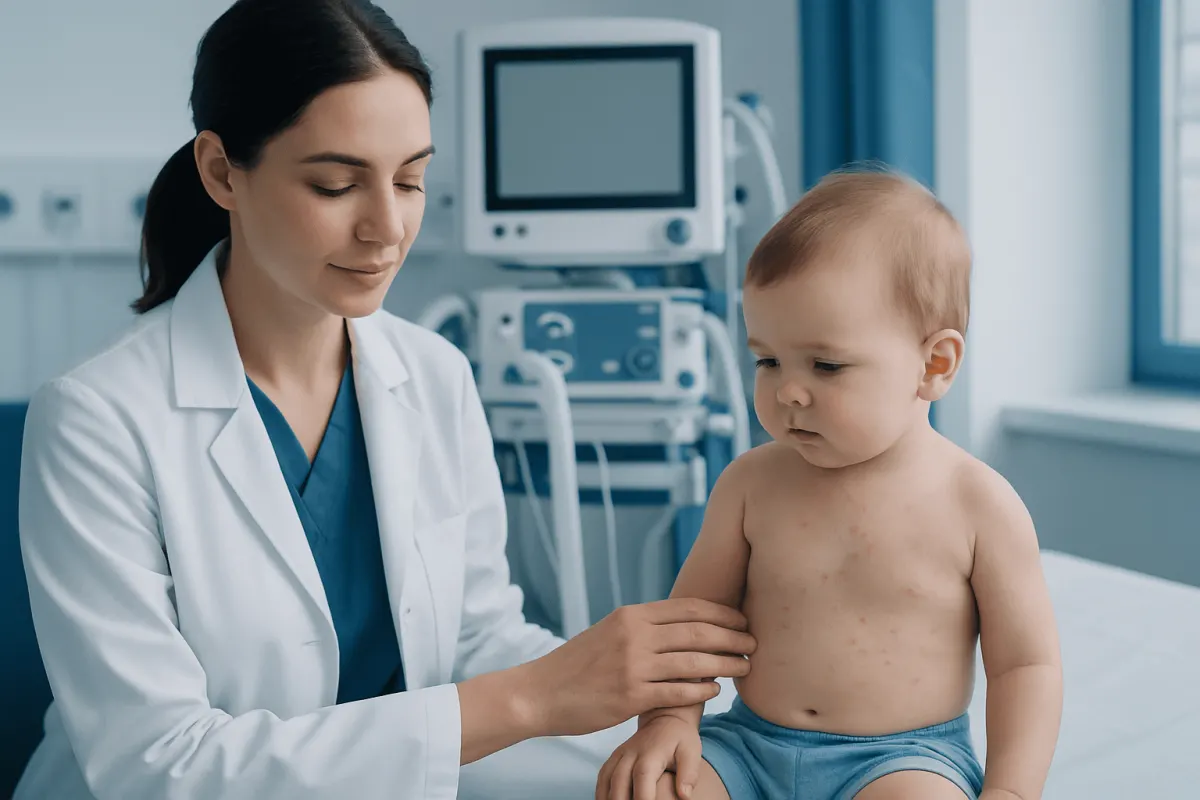
A body rash while teething is not usually a direct effect of erupting teeth. Teething can increase drooling and irritability, but a widespread rash often has another explanation, such as a viral infection, heat, skin irritation, or a reaction to a product or food.
Body Rash While Teething: The Short Answer
A body rash while teething is usually not caused by teething itself. Although babies may drool more and develop mild redness on the chin, cheeks, neck, or chest from moisture and friction, a rash that spreads across the trunk, arms, legs, or whole body more often has another cause.
Common explanations include a viral illness, heat and sweating, eczema, contact irritation, or an allergic reaction. Looking at the rash together with the child’s age, fever, behavior, feeding, recent illnesses, and exposure to new foods or products can help a clinician identify the likely cause.
Most childhood rashes are not dangerous, but some need timely care. A baby or child with a rash who is having trouble breathing, appears very unwell, is difficult to wake, has a stiff neck, or develops purple or red spots that do not fade when pressed should receive urgent medical attention.
What Teething Can and Cannot Cause
Teething commonly begins in infancy and may cause gum tenderness, increased chewing, mild fussiness, sleep disruption, and extra saliva. Constant dampness from saliva can irritate sensitive skin. This is often called a drool rash and tends to affect areas where saliva sits on the skin, especially around the mouth, chin, cheeks, neck folds, and upper chest.
Drool rash may look like small red bumps, dry patches, or chafed skin. It can worsen when food residue, friction from clothing, or frequent wiping further irritates the skin. It is generally mild and improves with gentle cleaning, careful drying, and protection of the skin barrier.
Teething does not reliably explain a fever, diarrhea, or a rash over the whole body. These symptoms sometimes appear at the same age as teething because babies are also encountering common viruses, new foods, and changing environments. It is important not to overlook another illness by attributing every new symptom to teeth coming through.
Common Reasons for a Rash During Teething Age
Viral infections are among the most frequent causes of a body rash in infants and young children. Some viral rashes occur with cold-like symptoms, sore throat, cough, loose stools, or fever. In some illnesses, fever comes first and a rash appears as the fever improves. The rash may be flat, raised, pink, red, or blotchy, and many viral rashes clear without specific treatment.
Heat rash can occur when sweat becomes trapped in the skin, particularly in warm weather or under heavy clothing. It often causes tiny red or clear bumps in skin folds, on the neck, upper chest, back, or diaper area. Keeping the child cool and using loose, breathable clothing is often helpful.
Contact irritation or allergy can develop after exposure to a new soap, detergent, lotion, sunscreen, wet wipe, fabric, or food. Irritant rashes may occur where the product touched the skin, while hives are raised, itchy welts that can move or change shape over hours. Food allergy may also involve vomiting, facial swelling, wheezing, or breathing difficulty and should be assessed promptly.
Other common skin conditions include eczema, which can cause dry, itchy, inflamed patches, and diaper rash, which affects the skin covered by a diaper. A clinician can distinguish these conditions from infections and provide guidance for persistent or uncomfortable symptoms.
How to Observe the Rash Safely
Parents and caregivers can help the medical assessment by noting when the rash began, where it first appeared, whether it is spreading, and whether it seems itchy, painful, blistered, scaly, or crusted. A clear photograph taken in good light can be useful, especially if the rash changes before the appointment.
It is also helpful to record other symptoms. These include temperature, cough, runny nose, vomiting, diarrhea, reduced appetite, fewer wet diapers, sleepiness, or unusual crying. Recent contact with someone who was ill, new medicines, vaccinations, foods, skin products, laundry products, or travel may also be relevant.
A simple pressure check can be informative, but it should never delay urgent care. Press a clear drinking glass gently against a red or purple spot. Many common rashes fade temporarily under pressure, while non-blanching spots may not. A rash that does not fade, especially with fever or an unwell-looking child, needs urgent medical evaluation.
Avoid trying to diagnose a rash from online images alone. Different conditions can look similar, and skin tone can affect how redness or discoloration appears. A healthcare professional can assess the full pattern of symptoms and the child’s overall condition.
Comfort Measures and Skin Care at Home
If the child is otherwise well and the rash appears mild, gentle skin care may reduce discomfort. Bathe the child in lukewarm water, use fragrance-free products when needed, and pat rather than rub the skin dry. Keep nails short to reduce skin injury from scratching.
For drool-related irritation, softly blot saliva and food from the skin rather than wiping repeatedly. A plain protective barrier ointment may help shield the affected area from moisture; parents should ask a pharmacist or clinician which option is suitable for the child’s age and skin condition. Change damp bibs and clothing promptly.
For possible heat rash, dress the child in light layers, avoid overheating, and keep the room comfortably cool. Do not use perfumed creams, powders, or multiple new products on an unexplained rash, as these may worsen irritation or make the cause harder to identify.
Parents should not give antihistamines, antibiotic creams, steroid creams, or other medicines for a baby’s unexplained rash unless a qualified clinician advises this. The appropriate treatment depends on the cause, the child’s age, the skin area involved, and whether infection or allergy is suspected.
When to Seek Medical Care
Medical advice should be sought the same day for a young baby with a new rash, for a rash accompanied by fever, or when the child appears unwell. Assessment is also advisable if the rash is rapidly spreading, very itchy or painful, blistering, oozing, associated with swollen skin, or not improving after a few days of gentle care.
Emergency care is needed if the child has breathing difficulty, wheezing, swelling of the lips, tongue, or face, repeated vomiting after a possible allergen, marked weakness, confusion, a seizure, a stiff neck, or signs of dehydration such as very few wet diapers, no tears when crying, or a dry mouth. These symptoms may indicate a serious allergic reaction, infection, or dehydration.
Urgent assessment is particularly important for a purple, dark red, or bruise-like rash that does not fade when pressed, especially if there is fever or the child is difficult to console or wake. Parents should trust their instincts: if a child seems significantly different from usual, prompt professional advice is appropriate.
For children with recurring dry or itchy patches, a clinician may assess for eczema or another skin condition. Acıbadem Health Point’s multidisciplinary specialists and JCI-accredited hospitals can assess childhood skin symptoms and related concerns for international patients.
What a Clinician May Check
A clinician will usually diagnose many childhood rashes through a careful history and skin examination. They may ask about the sequence of fever and rash, recent illnesses, medicines, vaccinations, foods, products used on the skin, daycare exposure, and family history of allergies or eczema.
The examination considers the rash’s location, color, texture, whether it blanches with pressure, and whether there are sores in the mouth, eye redness, swollen glands, or signs of dehydration. The child’s breathing, temperature, alertness, and hydration are also important parts of the assessment.
Testing is not necessary for every rash. However, a clinician may recommend a throat swab, blood test, allergy evaluation, or other tests when symptoms suggest a specific infection, medication reaction, or allergy. Treatment may range from reassurance and skin care to targeted treatment for the underlying cause.
If a rash follows a new food and hives or other allergy symptoms are suspected, clinicians may advise an appropriate allergy assessment. Prompt review is especially important when a reaction has involved breathing symptoms, swelling, faintness, or repeated vomiting.
Frequently asked questions
01Can teething cause a rash all over the body?
Teething is not considered a usual cause of a widespread body rash. It can contribute to drool-related irritation around the mouth, chin, neck, and upper chest. A rash on other parts of the body should be considered separately and assessed in the context of other symptoms.
02What does a teething drool rash look like?
A drool rash often appears as redness, small bumps, dryness, or chafed skin around areas repeatedly exposed to saliva. It is most common on the cheeks, chin, around the lips, neck folds, and upper chest. It may be more noticeable after feeding or when bibs and clothing remain damp.
03Should a child with a rash and fever be seen by a doctor?
A child with a rash and fever should generally receive medical advice, especially if they are a young infant, look unwell, are not feeding normally, or have a rapidly changing rash. Urgent care is needed for a non-fading purple or red rash, breathing difficulty, unusual drowsiness, stiff neck, or signs of dehydration.
04How can parents tell if a baby rash is from heat?
Heat rash often consists of tiny bumps in areas that become warm or sweaty, such as the neck, upper chest, back, or skin folds. It may occur after hot weather, heavy clothing, or prolonged warmth. Cooling the environment and using light, loose clothing may help, but a clinician should assess a rash with fever or other concerning symptoms.
05Can a new food cause a rash while a baby is teething?
Yes. The timing may overlap with teething because many babies begin trying new foods during the same stage of development. Hives, facial swelling, vomiting, coughing, wheezing, or breathing difficulty after a food may indicate an allergic reaction and require prompt medical attention.
06What should not be put on an unexplained baby rash?
It is best to avoid fragranced lotions, essential oils, powders, harsh soaps, and multiple new creams until the cause is clearer. Parents should not use medicated creams or give medicines unless a clinician or pharmacist confirms they are appropriate for the child. Gentle, fragrance-free skin care is usually the safest starting point.
This article is for general information only and is not a substitute for professional medical advice. Please consult a qualified doctor about your individual situation.
Persistent digestive symptoms? Get evaluated in Turkey
JCI-accredited · board-certified surgeons · reply within 24h
Add us as a Preferred Source to see more of our trusted health content across Google Search, AI Overviews and Discover.