Blackheads on Lips: Causes, Look-Alikes, and Care

Blackheads on lips are usually open clogged pores on the skin around the mouth rather than on the pink part of the lip itself. Many dark or raised spots near the lips have other harmless causes, so persistent, changing, painful, or bleeding spots should be assessed by a clinician.
Overview: can blackheads form on lips?
Blackheads on lips usually refer to tiny dark plugs seen at the edge of the lips or on the surrounding facial skin. A true blackhead, also called an open comedone, develops when oil, dead skin cells, and other material collect in a hair follicle opening. The material darkens after exposure to air; it is not simply trapped dirt.
The pink-red lip surface, called the vermilion, has very few of the hair follicles and oil glands involved in acne. For this reason, a true blackhead directly on the lip surface is uncommon. A spot that looks like a blackhead may instead be an enlarged pore, a visible oil gland, a small pigment mark, irritation, or another skin change.
Most small, stable spots around the mouth are not dangerous. However, because several conditions can look similar at first, it is sensible not to assume that every dark spot is acne. Looking at its location, duration, symptoms, and changes over time can help determine whether home care or medical assessment is appropriate.
What blackheads and common look-alikes can look like
A blackhead is usually a small, flat or slightly raised dark dot located in a pore. It may occur with other signs of acne, such as whiteheads, pimples, oily skin, or clogged pores on the chin, nose, cheeks, or jawline. Blackheads are generally not painful unless the surrounding area becomes inflamed.
Fordyce spots are a common look-alike. These are visible oil glands that often appear as tiny pale yellow, white, or skin-colored bumps along the lip border or inside the lips. They are harmless, not contagious, and not caused by poor hygiene. Unlike blackheads, they do not have a dark open pore and should not be squeezed.
Other possibilities include an irritated hair follicle after shaving or waxing, a small ingrown hair, contact irritation from cosmetics or lip products, and post-inflammatory darkening after a pimple heals. A flat brown, blue, or black spot may be a benign pigmented mark, such as a labial melanotic macule, rather than a blocked pore.
Cold sores can also be confused with acne early on, but they commonly cause tingling, burning, or clusters of fluid-filled blisters before crusting. A clinician can usually distinguish these conditions by examining the area and asking about symptoms and timing.
Why blackheads develop around the mouth

Blackheads form when a follicle becomes blocked by sebum, dead skin cells, makeup, sunscreen, or skin-care products. The area around the mouth may be prone to congestion because it is frequently touched, exposed to saliva and food residue, or covered by cosmetics. Thick or oily lip balms can sometimes migrate onto nearby skin and contribute to clogged pores in people who are acne-prone.
Hormonal shifts can increase oil production and make acne more likely. This may occur during puberty, menstrual cycles, pregnancy, or with certain hormonal conditions or medicines. Stress does not directly create blackheads, but it may worsen acne in some people through its effects on sleep, routines, and inflammation.
Friction and occlusion may also play a part. Face masks, sports equipment, musical instruments, shaving, and frequent rubbing can irritate skin around the mouth. Some people develop acne-like bumps after using topical steroid creams around the face; these medicines should only be used in that area when recommended by a healthcare professional.
Blackheads are not caused by being unclean, and excessive washing can make matters worse by damaging the skin barrier. A balanced routine that cleanses gently and avoids repeated picking is more helpful than aggressive scrubbing.
Safe care for a suspected blackhead near the lip
For a small, uncomplicated blackhead on the skin near the lips, gentle care is usually the best first step. Wash the face once or twice daily with a mild cleanser and lukewarm water. Use clean hands, avoid rough washcloths or exfoliating scrubs, and choose non-comedogenic makeup, sunscreen, and moisturizers where possible.
Do not squeeze or dig at a blackhead, particularly near the lip border. Pressing can injure delicate skin, push material deeper into the follicle, lead to inflammation, and leave a mark or scar. It may also spread bacteria if the area is not clean. If removal is needed, a dermatologist can perform extraction using appropriate sterile techniques.
Over-the-counter acne ingredients may help blackheads on the surrounding skin, but they should not be applied to the moist inner mouth or directly onto the pink lip surface. Products containing salicylic acid or a topical retinoid such as adapalene may be suitable for some adults when used carefully on acne-prone facial skin. They can cause dryness and irritation, so starting slowly and keeping the product away from the lips is important.
People who are pregnant, trying to become pregnant, breastfeeding, have eczema, or have very sensitive skin should ask a doctor or pharmacist before using acne treatments. If an acne product causes burning, marked redness, swelling, or cracking, it should be stopped and the skin should be allowed to recover with bland moisturizer and lip protection.
Medical assessment and treatment options
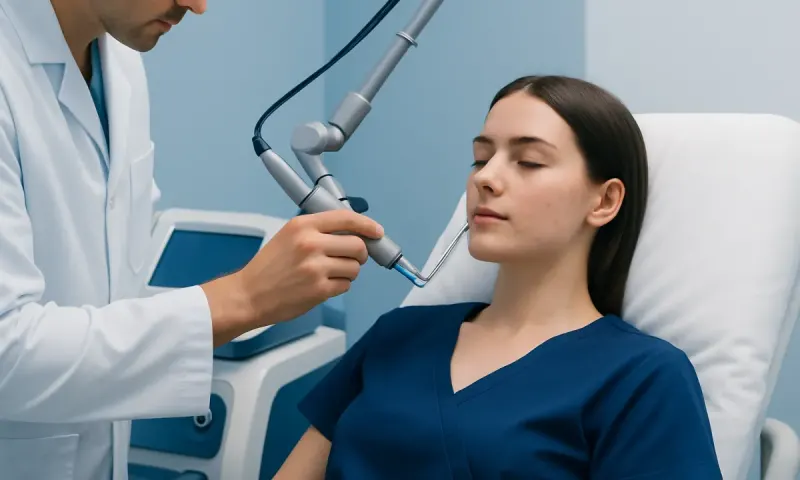
A doctor or dermatologist often diagnoses a blackhead by examining the skin. They may ask when the spot appeared, whether it changes, which cosmetics or medicines are used, and whether there are other acne lesions. If a dark spot does not clearly look like a comedone, the clinician may use a dermatoscope, a handheld lighted magnifier, to examine pigment patterns more closely.
When acne is confirmed, treatment is tailored to the type and extent of acne, skin sensitivity, and personal circumstances. A clinician may recommend a topical retinoid, benzoyl peroxide for acne-prone skin away from the lip, azelaic acid, or other prescription medicines. Treatment generally takes several weeks to show meaningful improvement, and consistent use matters more than using strong products frequently.
Professional comedone extraction or other dermatologic procedures may be considered for persistent clogged pores. These approaches should be performed by trained professionals rather than attempted with needles, metal tools, or home extraction devices. If the finding is Fordyce spots or a benign pigment mark, treatment may not be needed.
A spot with atypical color, an irregular border, ongoing ulceration, or unexplained bleeding may require further investigation. In some situations, a dermatologist may recommend a small biopsy to establish an accurate diagnosis. This is a precautionary diagnostic step and does not mean that a serious condition is expected.
Prevention and everyday lip-area skin care
Keeping the lip area comfortable and protected can reduce irritation that may worsen acne-like bumps. Use a fragrance-free lip balm when lips are dry, and apply it directly to the lips rather than broadly onto the surrounding skin. If a particular balm, lipstick, sunscreen, toothpaste, or cosmetic seems to trigger bumps, stopping it for several weeks may help identify a possible irritant.
Remove makeup gently before bed and clean items that contact the mouth area, such as makeup applicators, phone screens, reusable face coverings, and sports gear. Avoid sharing lip products. Shaving in the direction of hair growth with a clean razor and suitable shaving product may reduce follicle irritation around the upper lip and chin.
It can also be useful to avoid touching or resting the face in the hands throughout the day. While food does not directly cause blackheads on the lips, an overall routine that supports sleep, stress management, and regular skin care may help people who are prone to acne. A dermatologist can offer individualized prevention advice when breakouts recur.
When to seek medical care
Medical advice is appropriate if a spot on or near the lip lasts longer than a few weeks despite gentle care, repeatedly returns, becomes painful, or is associated with widespread acne. A clinician can identify whether it is truly a blackhead and recommend treatment that is safe for the sensitive skin around the mouth.
Prompt assessment is especially important for a new dark spot that grows, changes color or shape, has an uneven border, bleeds, crusts, forms a sore, or does not heal. Care should also be sought for significant swelling, pus, fever, rapidly spreading redness, or trouble eating, drinking, or breathing. These symptoms are not typical of a simple blackhead.
For international patients, Acıbadem Health Point’s multidisciplinary specialists and JCI-accredited hospitals can assess skin concerns and provide dermatologic care when needed. An in-person evaluation is the most reliable way to clarify a persistent or unusual change on the lips.
Frequently asked questions
01Are blackheads on the actual lips normal?
True blackheads are uncommon on the pink part of the lips because this surface has few hair follicles and oil glands. They are more likely to appear on the skin just outside the lip border. A spot directly on the lip may be a visible oil gland, pigment mark, or another condition.
02Why does a blackhead near my lip look black?
The dark color is caused by oxidation of material within an open clogged pore after it reaches the air. It does not mean that the pore contains dirt. Blackheads can occur even with good hygiene.
03Can I pop a blackhead on my lip?
It is best not to pop or squeeze a spot near the lips. The skin in this area can become irritated, infected, or scarred, and the spot may not be a blackhead in the first place. A dermatologist can safely assess and remove stubborn comedones when appropriate.
04Can lip balm cause blackheads?
Some thick, oily, or fragranced lip products may contribute to clogged pores when they spread onto the skin around the mouth, especially in people with acne-prone skin. This does not happen to everyone. Choosing a simple non-comedogenic product and stopping a suspected trigger can be useful.
05Are Fordyce spots blackheads?
No. Fordyce spots are visible, harmless oil glands that commonly occur on or near the lips. They are usually pale yellow or skin-colored rather than dark, and they do not need to be removed.
06When should a dark spot on the lip be checked?
A clinician should examine a new spot that persists, grows, changes in color or shape, bleeds, crusts, or does not heal. Assessment is also important if the spot is painful or if its cause is uncertain. Most findings are benign, but an examination provides the clearest diagnosis.
This article is for general information only and is not a substitute for professional medical advice. Please consult a qualified doctor about your individual situation.
Hair transplant in Turkey — costs, graft counts & a free assessment
JCI-accredited · board-certified surgeons · reply within 24h
Add us as a Preferred Source to see more of our trusted health content across Google Search, AI Overviews and Discover.