Binocular Vision Dysfunction: Symptoms and Treatment

Key Takeaways
- Binocular vision dysfunction affects how the eyes align and coordinate, not just how clearly each eye sees on its own.
- Symptoms can include headaches, dizziness, motion sensitivity, blurred or double vision, and difficulty concentrating on close work.
- Diagnosis usually involves a detailed eye examination that looks at alignment, focusing, and how the brain combines the two images.
- Treatment may include prism lenses, vision therapy, updated glasses, and management of any related eye or neurologic conditions.
- Practical adjustments such as better lighting, screen breaks, and guided follow-up can make daily tasks more comfortable.
Binocular vision dysfunction occurs when the eyes do not work together smoothly as a team, making it harder for the brain to build a stable, comfortable visual image. People may notice headaches, dizziness, eye strain, or trouble focusing, especially during reading, driving, or screen use.
Overview
Binocular vision dysfunction is a condition in which the two eyes do not coordinate as smoothly as they should. Even when each eye can see reasonably well on its own, the combined visual system may struggle to merge both images into one stable, comfortable picture.
That mismatch can be subtle. Some people notice it only during long reading sessions, while others feel it during driving, walking in busy spaces, or working on a computer. Because the symptoms are often general—such as eye strain, headaches, or dizziness—the condition can be overlooked or mistaken for a different problem.
For international patients, the challenge is often not only finding a diagnosis, but understanding which symptoms belong to the eyes and which may need a broader medical review. A careful evaluation helps separate binocular vision dysfunction from migraine, inner ear issues, dry eye, or other causes of visual discomfort.
Symptoms
The experience of binocular vision dysfunction can vary from person to person. Some describe a sense that the page moves, tilts, or loses focus. Others feel mentally tired after tasks that used to be easy, especially when the eyes are required to hold steady focus for a long time.
Common symptoms may include:
- Headaches or pressure around the eyes, especially after reading or screen use
- Blurred vision or occasional double vision
- Dizziness, nausea, or motion sensitivity
- Difficulty concentrating on close work
- Eye strain, pulling, or fatigue
- Problems judging depth or distance
- Light sensitivity or discomfort in visually busy environments
Symptoms may become more noticeable when a person is tired, stressed, dehydrated, or spending more time on digital devices. Some people also report trouble in crowded stores, on escalators, or in fast-moving traffic, where the eyes must constantly adjust to changing visual input.
Causes & Risk Factors

Binocular vision dysfunction can arise when the eyes are slightly misaligned or when the muscles and nerve pathways that control eye movement do not work in perfect balance. The brain then has to work harder to fuse two separate images into one, which can create strain and a sense of visual instability.
Several factors may contribute. These include latent eye alignment issues, a history of concussion or head injury, certain neurologic conditions, uncorrected refractive errors, and eye muscle imbalance. Some people have symptoms without a clearly identifiable trigger, which is why a detailed evaluation is important.
Risk may be higher in people who already experience frequent headaches, motion sensitivity, reading difficulties, or symptoms after trauma. Children and adults can both be affected, though the way symptoms show up may differ. In adults, it often becomes more obvious during demanding visual tasks or after a change in glasses, workload, or general health.
Diagnosis
Diagnosis begins with a conversation about symptoms, timing, triggers, and previous eye or neurologic history. Because binocular vision dysfunction can resemble other disorders, clinicians usually look beyond a basic vision check and assess how the eyes work together in real-world visual tasks.
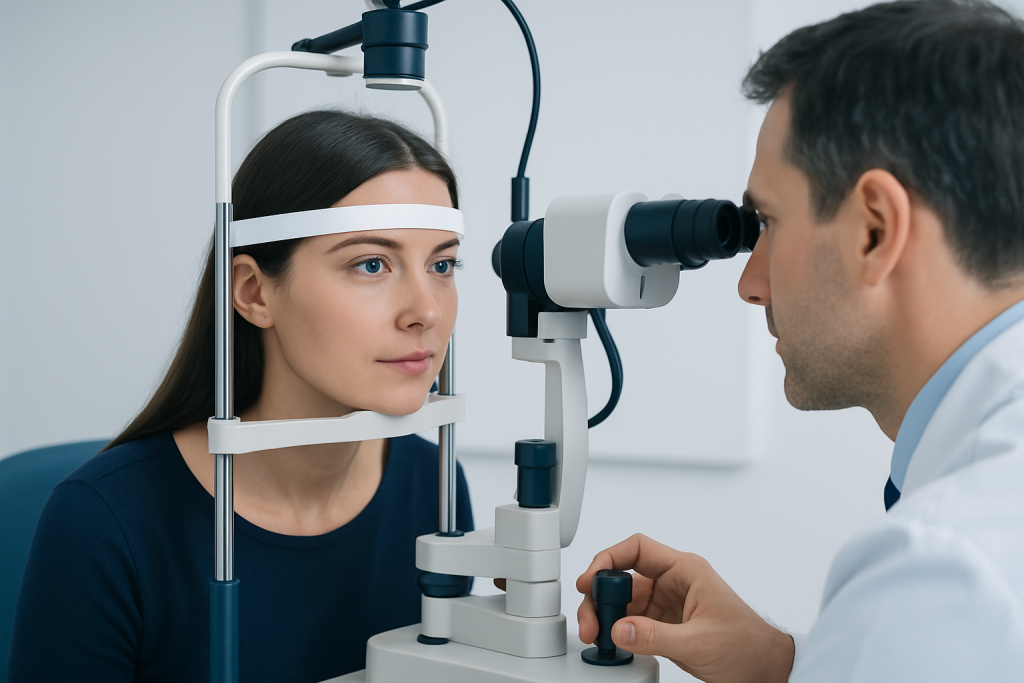
A thorough eye examination may include measurements of eye alignment, focus, eye movement, depth perception, and how well the eyes converge or diverge at near and distance. Depending on the history, the doctor may also examine for dry eye, refractive error, or signs that another condition is contributing to the symptoms.
In some situations, additional testing or referral may be needed to rule out migraine, vestibular disorders, or neurologic problems. For patients traveling from abroad, it helps to bring prior glasses prescriptions, previous scan reports, and a list of symptoms written with examples of when they appear. That can make the evaluation more efficient and accurate.
Treatment Options
Treatment is tailored to the cause and the pattern of symptoms. Some people benefit from updated glasses, while others need prism lenses that help the eyes and brain work together with less effort. When eye alignment problems are present, prism can be a helpful way to reduce strain during reading, driving, or daily activities.
Vision therapy is another commonly used approach. It involves structured exercises guided by an eye care professional to improve coordination, focusing, and the ability to maintain comfortable binocular vision. The exact plan depends on the person’s findings, goals, and ability to attend follow-up visits, which is especially relevant for international patients arranging care around travel.
If binocular vision dysfunction is linked to another condition, treatment may also address that underlying issue. For example, concussion-related symptoms may improve with a broader rehabilitation plan, while dry eye or uncorrected refractive error may need separate management. The most effective care plans are usually stepwise and individualized rather than one-size-fits-all.
In some cases, a multidisciplinary team is useful. Acibadem Health Point’s multidisciplinary specialists and JCI-accredited hospitals can diagnose and treat this condition for international patients, coordinating eye care with related specialties when needed.
Prevention & Self-care
Not every case can be prevented, but everyday habits can reduce strain and make symptoms easier to manage. Visual comfort often improves when the eyes are given regular breaks from prolonged near work and when lighting is adjusted to avoid glare or shadows.
Helpful self-care strategies may include:
- Using the 20-20-20 rule during screen work
- Keeping reading material at a comfortable distance
- Adjusting screen brightness and font size
- Making sure glasses or contact lenses are up to date
- Taking breaks in visually crowded environments
- Staying hydrated and resting when symptoms flare
It can also help to keep a simple symptom diary. Note when discomfort starts, what tasks are involved, and whether it improves with rest. This information can guide the clinician toward a more precise diagnosis and a treatment plan that fits the person’s routine, whether they are at home or recovering after treatment abroad.
When to See a Doctor
Medical assessment is a good idea when visual discomfort starts interfering with work, reading, driving, or daily life. Symptoms that persist despite new glasses, rest, or screen changes deserve attention, especially if they are becoming more frequent.
Prompt evaluation is also important if double vision appears suddenly, if dizziness is severe, if there has been a recent head injury, or if symptoms are accompanied by weakness, speech changes, or severe headache. Those signs can point to a condition that needs urgent medical review rather than routine eye care.
For people planning treatment in another country, early consultation is especially useful. It allows enough time for diagnostic testing, discussion of options, and follow-up planning before travel. A qualified eye specialist can help determine whether binocular vision dysfunction is the right explanation and which treatment path is safest and most practical.
Living With Binocular Vision Dysfunction
Many people feel relieved once they understand that their symptoms have a recognizable cause. The condition can be frustrating, but it is also often manageable when the underlying visual problem is identified and treated appropriately.
Recovery and adaptation usually depend on consistency. Using prescribed lenses, attending therapy sessions, and following practical advice at home can make a noticeable difference in comfort and function. Progress may be gradual, particularly if symptoms have been present for a long time.
Clear communication with the care team matters, especially for international patients who may need coordinated follow-up after returning home. The most useful plan is one that fits the person’s daily visual demands and leaves room for adjustment if symptoms change over time.
Frequently asked questions
01Is binocular vision dysfunction the same as being nearsighted or farsighted?
No. Nearsightedness and farsightedness affect how clearly each eye focuses, while binocular vision dysfunction affects how the two eyes work together. A person can have both at the same time, which is one reason a full eye examination is useful.
02Can binocular vision dysfunction cause dizziness?
Yes, it can. When the eyes do not align or coordinate well, the brain may receive inconsistent visual input, which can contribute to dizziness or motion sensitivity. Because dizziness has many causes, a medical assessment is important.
03Does binocular vision dysfunction always cause double vision?
Not always. Some people notice obvious double vision, but others mainly experience headaches, eye strain, or trouble concentrating. The symptoms can be subtle, especially at first.
04Can children have binocular vision dysfunction?
Yes, children can develop binocular vision problems as well. They may not describe symptoms clearly, so signs such as reading difficulty, avoidance of close work, squinting, or headaches deserve attention.
05Is vision therapy the only treatment?
No. Treatment may include prism lenses, updated glasses, dry eye care, or management of an underlying condition, depending on the findings. Vision therapy is helpful in some cases, but the best plan is based on the individual diagnosis.
06When should sudden double vision be checked urgently?
Sudden double vision should be assessed promptly, especially if it comes with severe headache, weakness, numbness, speech changes, or recent injury. Those symptoms can signal a more serious problem that needs urgent medical attention.
This article is for general information only and is not a substitute for professional medical advice. Please consult a qualified doctor about your individual situation.
Persistent digestive symptoms? Get evaluated in Turkey
JCI-accredited · board-certified surgeons · reply within 24h
Add us as a Preferred Source to see more of our trusted health content across Google Search, AI Overviews and Discover.