Best Places for Dentures: How to Choose Safely
The best places for dentures are dental clinics with experienced dentists or prosthodontists, a careful oral examination, transparent treatment planning, and reliable follow-up for adjustments. A safe choice is based on clinical quality and ongoing care rather than convenience or advertised price alone.
How to Choose the Best Place for Dentures
The best places for dentures provide more than a set of artificial teeth. They offer a full assessment, explain realistic options, take precise records, and arrange follow-up visits to refine comfort and function. A well-fitting denture should support everyday activities such as speaking, smiling, and eating, although adaptation takes time.
When comparing the best places for dentures near me, patients can look for a licensed dentist with experience in removable prosthetics, clear communication, clean clinical facilities, and a documented plan for reviews and adjustments. A clinic should explain who will make the denture, what materials and design are proposed, how long the process may take, and what aftercare is included.
For patients searching for the best place for dentures in my area, the most appropriate choice may be a general dental practice or a prosthodontist, a dentist with advanced training in restoring and replacing teeth. Prosthodontist input can be particularly helpful when there are few remaining teeth, significant jawbone changes, a difficult bite, persistent denture problems, or a need to consider implant-supported options.
Understanding Dentures and How They Work
Dentures are removable appliances designed to replace missing teeth and surrounding gum tissue. A complete denture replaces all teeth in the upper jaw, lower jaw, or both. A partial denture fills spaces left by some missing teeth and may attach to remaining natural teeth with clasps or other supportive components.
Traditional dentures rest on the gums and are held in place by their close fit, facial muscles, saliva, and, in the upper jaw, suction. Lower dentures are often less stable because they have less surface area for support and must accommodate tongue movement. Denture adhesive may help some people, but it should not substitute for a professional assessment of a loose or painful denture.
Some patients are candidates for dentures attached to dental implants. These can be removable implant-retained dentures or, in selected cases, more fixed restorations. Implants may improve retention and chewing stability, but they involve surgery, healing time, careful oral hygiene, and an assessment of jawbone and general health.
Candidacy and Choosing a Dentist for Dentures
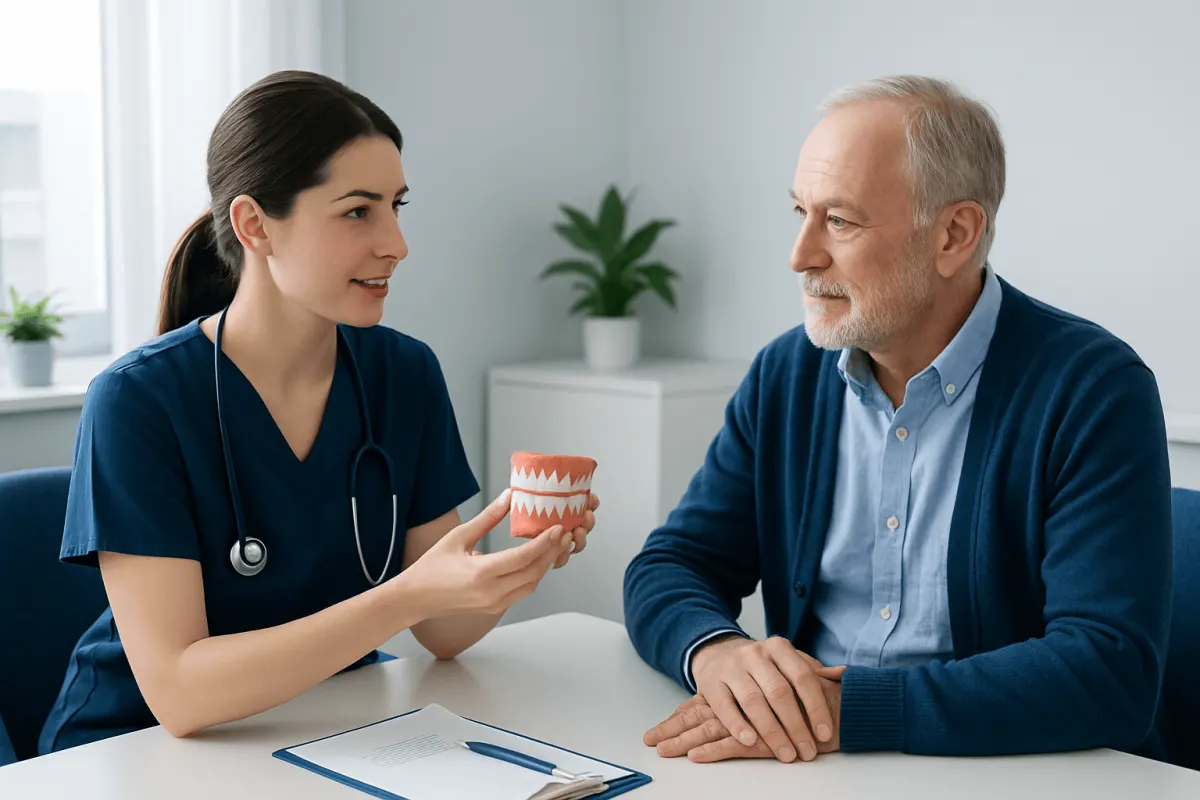
Most adults with multiple missing teeth can be considered for dentures, but the right design differs from person to person. The dentist will assess gum health, existing teeth, the shape and condition of the jawbone, bite relationship, saliva flow, jaw-joint symptoms, medical conditions, and medicines that may affect oral tissues or healing.
Knowing how to choose a dentist for dentures starts with asking practical clinical questions. Patients may ask how many denture cases the clinician manages, whether complex cases are referred to a prosthodontist, how impressions and bite records are taken, how adjustments are handled, and what options exist if a denture becomes unstable. A clinician should listen to concerns about appearance, speech, eating, gagging, or previous denture difficulties.
Good candidates should also be willing to attend adjustment visits and follow cleaning instructions. Smoking, poorly controlled diabetes, dry mouth, gum disease, and certain medications do not always prevent treatment, but they may affect comfort, infection risk, or long-term denture stability and should be discussed before planning begins.
The Denture Process: Step by Step
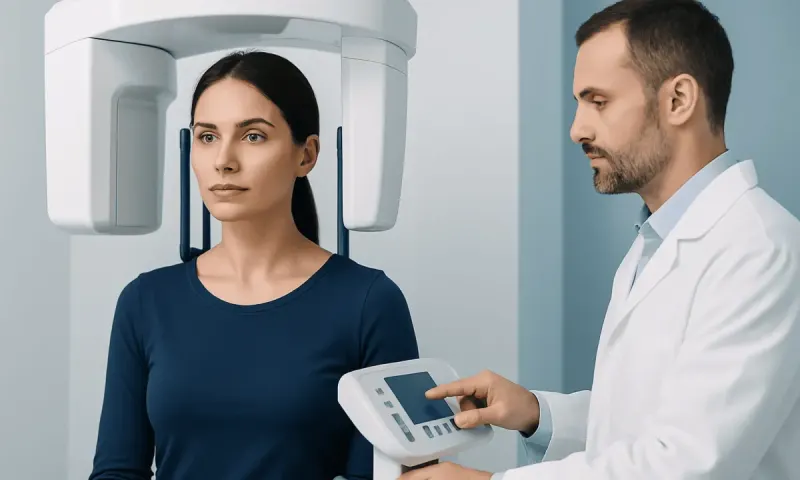
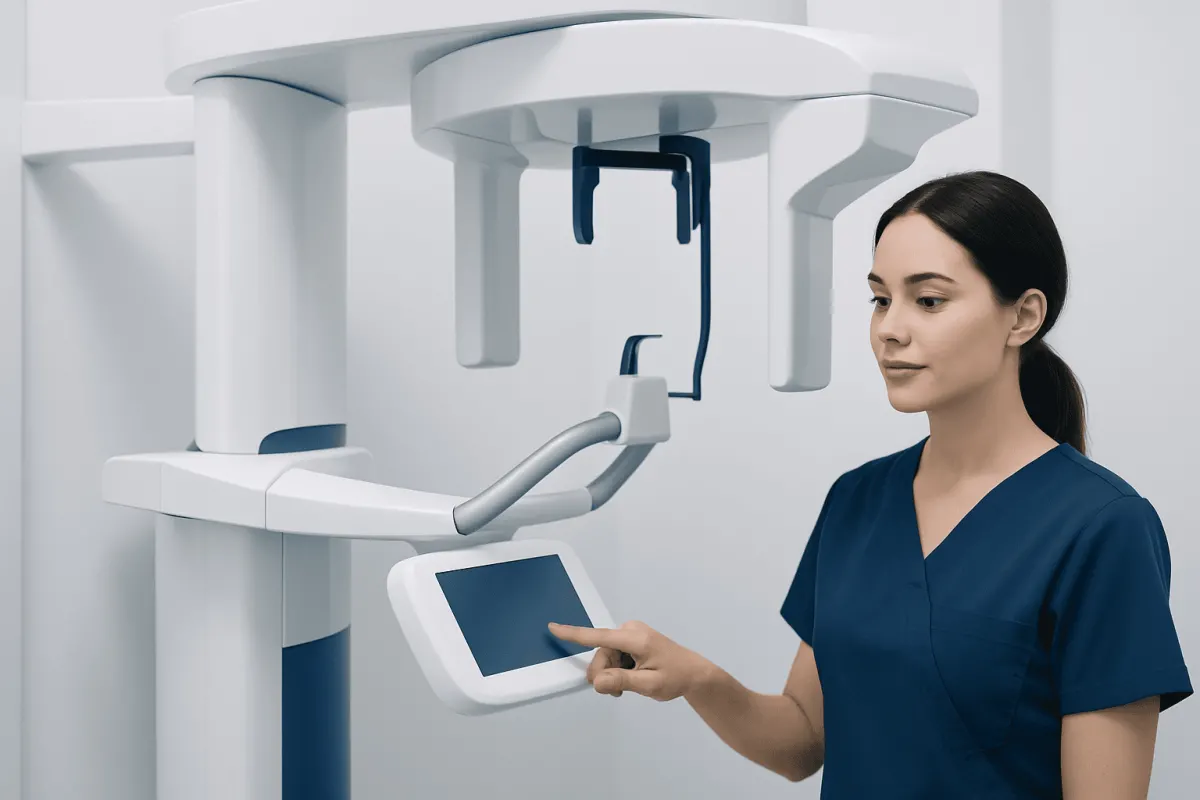
The process usually begins with a consultation and oral examination. The dentist may take X-rays or other images when needed, especially if teeth need removal, remaining teeth require treatment, or implants are being considered. The team then discusses the type of denture, expected limitations, appearance preferences, and the sequence of treatment.
For conventional dentures after tooth removal, the gums are generally allowed to heal and reshape before the final denture is made. This can take several months. Immediate dentures can sometimes be placed on the day teeth are removed, helping avoid a period without teeth, but they commonly need relining or replacement as the gums heal.
Next, the dentist takes impressions or digital scans and records the bite, tooth shade, tooth shape, and facial support needed. A wax or digital trial may be used to check appearance, speech, and bite before the final appliance is processed. At the fitting visit, the dentist checks pressure areas and stability, then schedules reviews because small adjustments are common during the early adaptation period.
For eligible patients, dental implants may be discussed as a way to retain a removable denture more securely. This treatment has its own planning, surgical, and healing stages, and it is not necessary or suitable for everyone.
What Type of Dentures Are the Most Comfortable to Wear?
The most comfortable denture is usually the one designed accurately for the individual mouth, bite, and daily needs. There is no single type that is most comfortable for everyone. A carefully fitted conventional denture can work well, while some people with lower-denture looseness find implant-retained dentures more stable and comfortable.
Comfort is influenced by the fit against the gums, the bite, the thickness and shape of the base, the position of the teeth, saliva flow, and the condition of the oral tissues. Partial dentures may feel comfortable when they are designed to distribute pressure properly and avoid overloading supporting teeth. Flexible materials can be appropriate in selected partial-denture cases, but they are not automatically better for every patient.
A new denture often feels unfamiliar at first. Minor sore spots, increased saliva, temporary speech changes, and difficulty eating certain foods can occur while the mouth adapts. Persistent pain, ulcers, clicking, looseness, or inability to chew should be assessed rather than accepted as normal.
Do More Expensive Dentures Fit Better?
Higher cost alone does not guarantee a better fit. Fit is primarily determined by careful examination, accurate impressions or scans, precise bite records, thoughtful design, skilled laboratory work, and access to follow-up adjustments. A lower-priced denture may be suitable in some circumstances, while a more complex treatment plan may be appropriate for others.
Price differences can reflect the materials used, laboratory processes, appointment time, custom characterization of teeth and gums, complexity of the case, number of adjustments, and whether extra procedures are needed. Implant-supported dentures, for example, involve surgical planning and components as well as the denture itself.
Patients benefit from a written treatment plan that explains what is included and what may be needed later, such as relining, repairs, replacement, or treatment for remaining teeth. The most useful question is not whether a denture is the most expensive, but whether the plan meets clinical needs, is clearly explained, and includes appropriate aftercare.
Where Is the Best Place to Have Dentures Made?
The best place to have dentures made is a dental clinic that can assess the whole mouth and provide continuing care after delivery. Dentures should be prescribed and fitted by a qualified dental professional, not selected only from a catalogue or produced without an examination. Oral conditions can change over time, and adjustment is an important part of successful treatment.
A suitable clinic will explain alternatives, including preserving healthy teeth where possible, partial dentures, complete dentures, and implant-supported designs. It should also identify problems that need treatment first, such as active gum disease, oral infection, poorly fitting old dentures, or suspicious mouth lesions. People who have lost teeth because of gum disease may also benefit from information about periodontal disease and protecting their remaining teeth.
For international patients, Acıbadem Health Point’s multidisciplinary specialists and JCI-accredited hospitals can assess and treat dental rehabilitation needs, including denture planning, with coordinated care. Patients should still ensure they understand the follow-up plan, especially if they will travel home soon after treatment.
How Much Should I Expect to Pay for a Full Set of Dentures?
The cost of a full set of dentures varies considerably by country, clinic, denture type, materials, laboratory work, oral health needs, and the number of visits required. It may also vary depending on whether tooth removal, gum treatment, temporary dentures, relines, repairs, sedation, imaging, or implant treatment are part of the overall plan.
Rather than relying on a single advertised figure, patients can request an individualized written estimate after examination. It should distinguish the cost of the dentures from related care and explain whether follow-up fittings and early adjustments are included. Insurance coverage, public dental benefits, and payment arrangements differ by location and policy.
Choosing solely on price can lead to missed follow-up care or a design that does not address individual oral needs. A transparent clinical plan and the ability to return for adjustment are important parts of value and safety.
Recovery, Daily Care, Benefits and Risks
After a fitting, many people need several days to weeks to become accustomed to dentures. They may start with softer foods cut into small pieces, chew on both sides, and gradually introduce a wider range of foods. Reading aloud can help with speech adaptation. The dentist may recommend specific wearing instructions, particularly immediately after extractions or when an immediate denture has been placed.
Potential benefits include improved appearance, clearer speech for some people, support for facial tissues, and better ability to manage food compared with having multiple missing teeth. However, dentures do not function exactly like natural teeth. They may move slightly, and hard, sticky, or very chewy foods can remain challenging.
Possible problems include pressure sores, looseness, gagging, breakage, fungal infection beneath a denture, and irritation of gums or remaining teeth. Dentures should be cleaned daily with a soft brush and appropriate cleanser, rinsed after meals, and stored safely when out of the mouth. Unless the dentist advises otherwise, removing them at night gives oral tissues time to rest. Regular dental reviews remain important even for people without natural teeth.
When to Seek Medical Care
A dentist should assess persistent pain, ulcers lasting longer than two weeks, bleeding gums, swelling, pus, fever, severe difficulty eating, a broken denture, or a denture that suddenly no longer fits. These symptoms may result from pressure, infection, injury, changing gum and bone contours, or another oral health concern that needs examination.
Urgent medical or dental care is appropriate for rapidly spreading facial swelling, trouble breathing or swallowing, uncontrolled bleeding, or severe pain with signs of infection. These symptoms should not be managed by adjusting a denture at home.
Routine checkups are also valuable when dentures seem gradually looser, crack repeatedly, or cause recurring sore areas. Relining, repair, or replacement may be needed as the mouth changes, and a clinician can check the health of the gums, tongue, palate, and any remaining teeth.
Frequently asked questions
01What type of dentures are the most comfortable to wear?
The most comfortable option is the denture that is accurately fitted to the individual's gums, jaw shape, bite, and functional needs. Conventional dentures can be comfortable when well designed, while implant-retained dentures may provide additional stability for selected patients, especially in the lower jaw. Follow-up adjustments are often essential to comfort.
02Do more expensive dentures fit better?
Not necessarily. A good fit depends mainly on careful clinical assessment, precise records, denture design, laboratory quality, and follow-up adjustments. Costs can differ for many reasons, so patients should ask what the proposed plan includes rather than assuming a higher price guarantees a better result.
03Where is the best place to have dentures made?
The best place is a licensed dental clinic that examines the mouth, explains suitable options, takes accurate impressions or scans, and provides follow-up care. A general dentist can provide many dentures, while a prosthodontist may be helpful for complex cases. Clinics that offer only a product without an oral assessment may not be able to address important health or fit concerns.
04How much should I expect to pay for a full set of dentures?
Costs vary by location, denture design, materials, laboratory work, required dental treatment, and the number of appointments. A personalized written estimate after an examination is more reliable than a general advertised price. Patients should ask whether adjustments, relines, temporary dentures, extractions, or repairs are included.
05How long does it take to get dentures?
The timeline depends on whether teeth need to be removed, gums need to heal, and whether a conventional, immediate, partial, or implant-supported denture is planned. Final conventional dentures may take several months after extractions because the gums and jawbone change during healing. Once impressions are taken, several appointments are commonly needed for records, a trial fitting, delivery, and adjustments.
06Should dentures be worn while sleeping?
Many people are advised to remove dentures at night to rest the gums and reduce the risk of irritation or fungal infection. There can be exceptions, such as shortly after extractions with an immediate denture, when a dentist may give different instructions. The patient should follow the plan provided by their dental team.
This article is for general information only and is not a substitute for professional medical advice. Please consult a qualified doctor about your individual situation.
Explore treatments in Turkey — costs, top hospitals & a free quote
JCI-accredited · board-certified surgeons · reply within 24h
Add us as a Preferred Source to see more of our trusted health content across Google Search, AI Overviews and Discover.