Basal Cell Skin Cancer Early Stages: Signs and Care
Basal cell skin cancer early stages may be subtle, often presenting as a skin change that does not heal, repeatedly bleeds, or slowly enlarges. Although basal cell carcinoma rarely spreads to distant organs, prompt diagnosis and appropriate treatment can usually remove it effectively while limiting local tissue damage.
Overview: recognizing basal cell skin cancer early stages
Basal cell skin cancer early stages are often curable because the cancer typically grows slowly and remains confined to the skin for a long time. It begins in basal cells, which are cells in the lower part of the epidermis, the outer layer of skin. Basal cell carcinoma (BCC) rarely spreads to distant areas of the body, but it can gradually invade nearby skin, cartilage, bone, or nerves if it is left untreated.
Early BCC does not always look dramatic or feel painful. It may be mistaken for a pimple, eczema, a dry patch, or a minor injury. The most useful clue is persistence: a spot that does not heal, changes over time, or bleeds and returns deserves assessment by a dermatologist or other qualified clinician.
BCC is different from melanoma and squamous cell carcinoma, which can have different patterns of behavior and treatment needs. A professional examination is the only reliable way to identify a suspicious lesion and determine whether it is cancerous.
Early signs and symptoms to look for
Basal cell carcinoma can develop anywhere, but it is most common on areas that receive regular ultraviolet (UV) exposure, including the face, ears, scalp, neck, shoulders, chest, and back. In people with darker skin tones, it may also occur in less sun-exposed locations. Its appearance varies with the subtype and the person’s skin tone.
Possible early signs include:
- a shiny, pearly, pink, red, brown, or skin-colored bump, sometimes with visible small blood vessels;
- a sore that crusts, bleeds, heals partly, then returns;
- a persistent scaly, dry, or irritated patch;
- a smooth, waxy, scar-like white or yellowish area with poorly defined edges;
- a small lesion with a raised border and a central dip, ulcer, or crust.
Many noncancerous conditions can cause similar changes. However, itching, tenderness, bleeding, or repeated crusting should not be used to judge whether a lesion is serious; BCC may have none of these symptoms. Comparing the area with photographs over time can help a clinician understand whether it has changed, but photographs do not replace an examination.
What causes basal cell carcinoma?
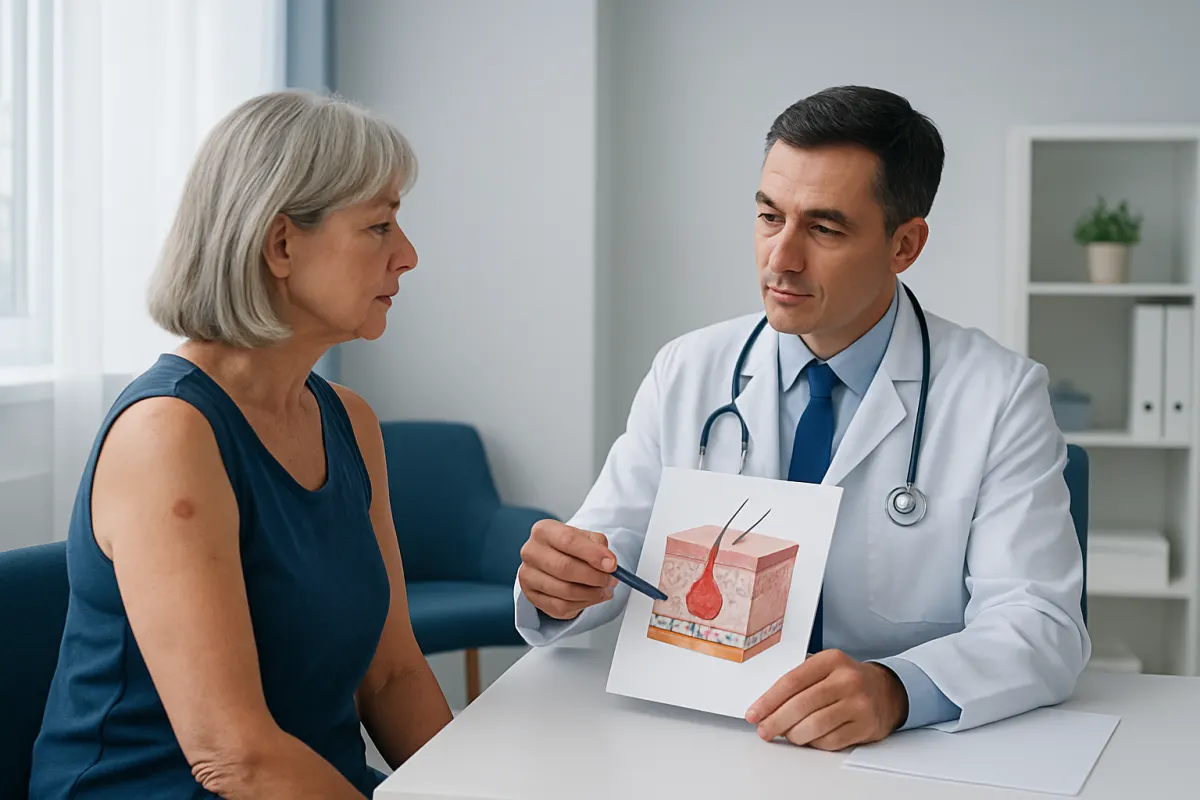
Basal cell carcinoma develops when DNA changes cause basal cells to grow in an uncontrolled way. The main preventable contributor is exposure to ultraviolet radiation from sunlight and indoor tanning devices. UV damage can accumulate over years, although intense intermittent sun exposure and sunburns may also contribute.
Risk is higher in people who have had frequent sun exposure, a history of blistering sunburns, fair skin that burns easily, light eyes or hair, or previous skin cancer. BCC can still occur in people of every skin tone and at younger ages. Having a family history of skin cancer, a weakened immune system, prior Cancer Radiation Treatment: Options and Outlook" class="ahp-ilk">radiation treatment, or certain inherited conditions can also increase risk.
Skin cancer is not caused by poor hygiene, and it is not contagious. In many cases, there is no single event that explains why a particular lesion developed. A history of UV exposure helps explain risk, while a biopsy provides the diagnosis.
Diagnosis and outlook for early-stage disease
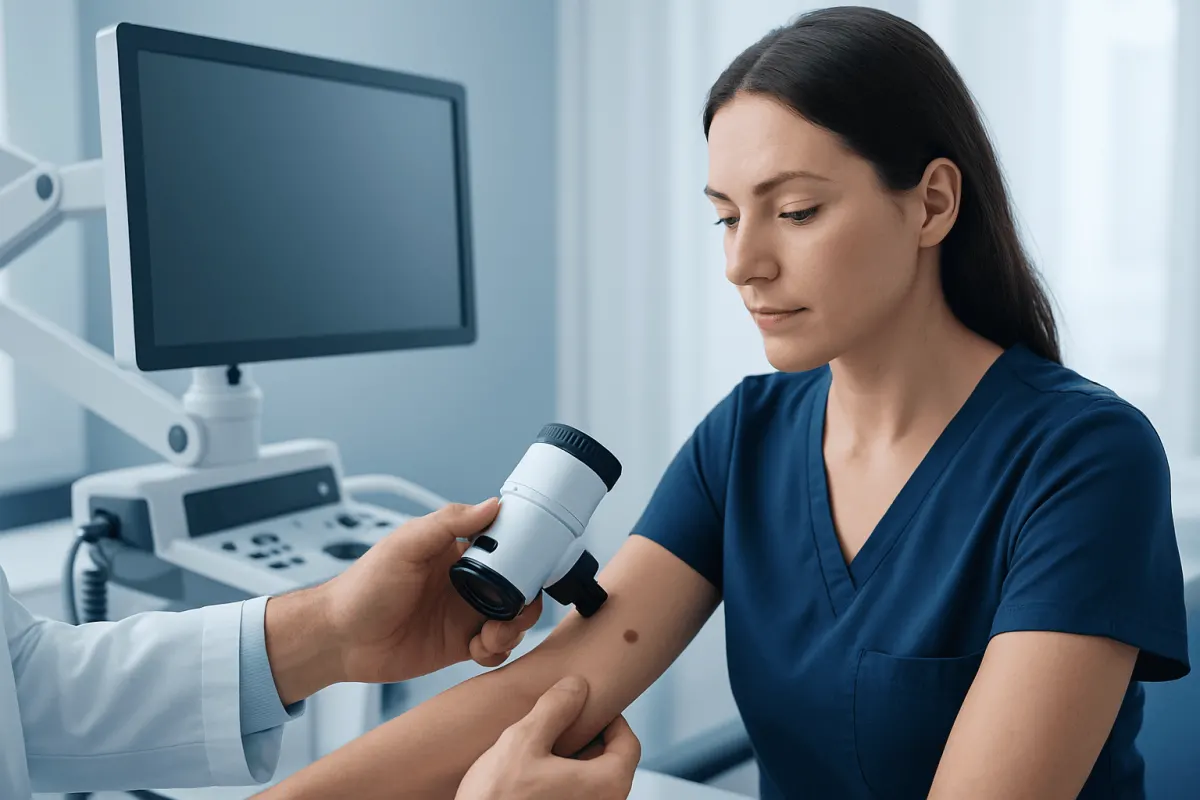
A clinician usually begins by asking about the lesion’s history, including when it appeared, whether it has changed or bled, prior sun exposure, medications, immune health, and any personal or family history of skin cancer. The skin is examined closely, often with a dermatoscope, a handheld device that magnifies and illuminates surface structures.
If BCC is suspected, the diagnosis is confirmed with a biopsy. During this minor procedure, a small sample or the entire visible lesion is removed under local anesthetic and examined in a laboratory. The pathology report identifies the cancer type and may describe features that help the care team select treatment.
The outlook for early BCC is generally very favorable when it is treated appropriately. The main concern is local growth rather than spread elsewhere in the body. Follow-up is important because a person who has had one BCC has an increased likelihood of developing another skin cancer in the future, making regular self-checks and professional skin examinations valuable.
What are the treatment options for early-stage basal cell carcinoma?
Treatment is selected according to the lesion’s size, subtype, location, borders, whether it is a first or recurrent cancer, and the person’s overall health. For many early, low-risk BCCs, surgery offers the most reliable way to remove the cancer and confirm that it has been fully excised.
Standard surgical excision removes the lesion along with a small margin of normal-looking skin. Mohs micrographic surgery removes tissue in carefully mapped layers that are checked during the procedure; it is commonly considered for cancers on the nose, eyelids, lips, ears, hands, feet, genital area, or other sites where preserving healthy tissue is particularly important. It may also be used for recurrent or higher-risk BCC.
For selected superficial, low-risk lesions, alternatives may include curettage and electrodessication, cryotherapy, prescription topical medicines, or photodynamic therapy. Radiation therapy can be considered when surgery is not appropriate or would be difficult. Advanced BCC that cannot be managed with local treatment may require specialist-led systemic therapy, although this is uncommon in early-stage disease. Skin cancer treatment planning should be individualized after pathology results are available.
What are the alternative treatment options for basal cell carcinoma?
Alternative treatment options generally refer to medically established nonsurgical approaches, not unproven remedies. Depending on the BCC subtype and site, a clinician may recommend a topical immune-response medication or topical chemotherapy medicine for superficial low-risk BCC. These treatments are applied over a prescribed period and require follow-up because the response must be assessed carefully.
Photodynamic therapy combines a light-sensitive medication with a controlled light source to destroy selected superficial cancer cells. Cryotherapy uses extreme cold, while curettage and electrodessication involve scraping the lesion and treating the base with heat. These approaches can be useful in suitable cases but may not provide the same margin assessment as surgery.
No supplement, herbal preparation, essential oil, or home remedy has been proven to cure BCC. Delaying evidence-based care while trying an unproven product may allow the lesion to grow. A dermatologist can explain the likely benefits, limitations, healing process, and cosmetic considerations of each suitable option.
Can I wait a month to have basal cell carcinoma removed?
For many confirmed, small, low-risk basal cell carcinomas, a short wait of several weeks is unlikely to change the overall outlook. However, the appropriate timing depends on the tumor’s location, size, biopsy features, growth rate, symptoms, and whether the person has immune suppression or a history of recurrent skin cancer. The clinician who reviewed the biopsy is best placed to advise on timing.
It is sensible to contact the treating clinic if the lesion is growing quickly, repeatedly bleeding, becoming painful, changing substantially, or located near the eye, nose, lip, ear, or another functionally sensitive area. The same applies if surgery was recommended because the lesion has aggressive features or unclear borders.
Rather than deciding independently to postpone care, patients should ask the clinician whether the planned timing is safe for their particular BCC and whether any earlier appointment is advisable. During the wait, the area should be protected from sun exposure and should not be picked, cut, or treated with nonprescription caustic products.
Preventing future lesions and when to seek medical care
Sun protection lowers cumulative UV exposure and supports long-term skin health. Practical measures include seeking shade when UV levels are high, wearing a broad-brimmed hat and protective clothing, using broad-spectrum sunscreen with an SPF of 30 or higher on exposed skin, and avoiding tanning beds. Sunscreen should be reapplied according to the product instructions, especially after swimming or sweating.
Monthly skin awareness is helpful. A person can check the face, scalp, ears, neck, trunk, arms, legs, hands, feet, and areas that are difficult to see with a mirror or assistance. Any changing or persistent spot should be noted. People with a history of BCC should follow the skin surveillance schedule recommended by their clinician.
Medical care should be sought for a sore that does not heal within several weeks, a spot that repeatedly bleeds or crusts, a new pearly or scar-like lesion, or any growth that is enlarging or changing. Acıbadem Health Point’s multidisciplinary specialists and JCI-accredited hospitals evaluate and treat skin cancers for international patients, with care plans based on lesion characteristics and individual needs.
Frequently asked questions
01What does basal cell skin cancer look like in its early stages?
Early basal cell carcinoma may appear as a shiny or pearly bump, a persistent scaly patch, a small sore that does not heal, or a scar-like area. It can be pink, red, brown, skin-colored, or less visibly colored depending on skin tone. A lesion that persists, grows, crusts, or bleeds should be examined.
02How quickly does basal cell carcinoma grow?
Basal cell carcinoma often grows slowly, but growth patterns differ among tumors. Even a slow-growing lesion can gradually damage nearby tissue if it remains untreated. A clinician can assess biopsy findings and location to help determine how urgently treatment is needed.
03Is early basal cell carcinoma dangerous?
Early BCC is usually highly manageable and rarely spreads to distant parts of the body. However, it is still a cancer and can grow into surrounding structures over time. Timely diagnosis and treatment help prevent more extensive local damage and may simplify treatment.
04Is a biopsy always needed for basal cell carcinoma?
A biopsy is usually needed to confirm BCC before definitive treatment, although in some situations a lesion may be completely removed as the biopsy procedure. The laboratory examination identifies the type of skin cancer and can help guide the most appropriate treatment. A clinician will explain the recommended approach.
05Can basal cell carcinoma come back after treatment?
A treated BCC can occasionally recur, especially if it was large, recurrent, located in a high-risk area, or had less clearly defined borders. A person who has had BCC can also develop a new BCC elsewhere on the skin. Regular follow-up and sun protection are therefore important.
06Can sunscreen prevent basal cell carcinoma?
Consistent broad-spectrum sun protection can reduce UV exposure, a major contributor to basal cell carcinoma. It cannot eliminate all risk, particularly from past exposure or other risk factors. Protective clothing, shade, avoiding tanning beds, and skin checks add further protection.
This article is for general information only and is not a substitute for professional medical advice. Please consult a qualified doctor about your individual situation.
Hair transplant in Turkey — costs, graft counts & a free assessment
JCI-accredited · board-certified surgeons · reply within 24h
Add us as a Preferred Source to see more of our trusted health content across Google Search, AI Overviews and Discover.