

Astigmatism: Definition, Symptoms and Treatment
- 8 min read
- Published November 29, 2026
Key Takeaways
- Astigmatism happens when the cornea or lens has an uneven shape, affecting how light focuses on the retina.
- Symptoms can include blurry vision, eye strain, headaches, and difficulty seeing clearly at night.
- An eye doctor can diagnose astigmatism with a simple examination and vision testing.
- Many people manage astigmatism well with glasses or contact lenses; some may be candidates for procedural treatment.
- Regular eye checks help track changes in vision and guide the safest treatment choice.
Astigmatism is a common refractive error that occurs when the eye does not focus light evenly, often causing blurred or distorted vision at any distance. It is usually manageable with glasses, contact lenses, or certain procedures after a careful eye examination.
Overview
Astigmatism is a very common reason vision becomes blurred, stretched, or slightly uneven. Instead of light coming to a single sharp focus, the eye focuses it in more than one direction, which can make objects look distorted at different distances.
In simple terms, the eye has a shape that does not curve perfectly evenly. That uneven curve most often involves the cornea, the clear front surface of the eye, but it can also involve the lens inside the eye. When a person searches for an astigmatism definition, this is the key idea: the eye’s focusing surface is not symmetrical, so vision is not as crisp as it should be.
Astigmatism is not an eye disease in the usual sense, and it does not mean the eye is damaged. Many people have some degree of it from childhood or develop it gradually over time. Because it can coexist with nearsightedness or farsightedness, a person may notice that reading, driving, or screen use feels more tiring than before.
Symptoms
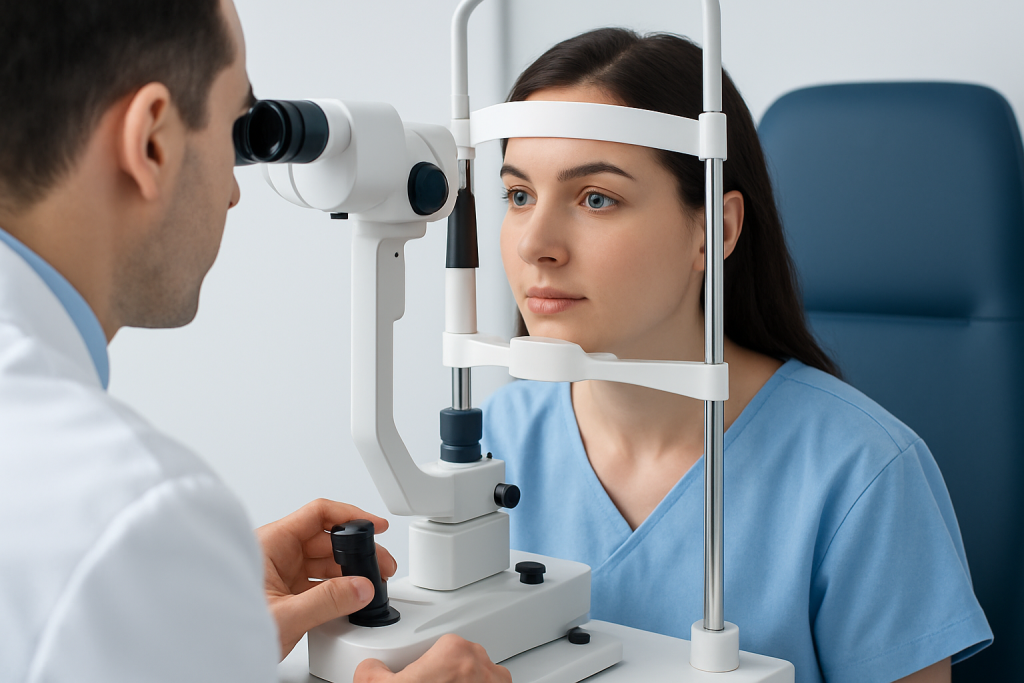
Symptoms often depend on how much astigmatism is present and whether it occurs alone or along with another refractive error. Some people notice only a mild blur, while others feel that their vision is consistently out of focus even with good lighting.
Common signs include blurred or distorted vision, squinting to see more clearly, and tired eyes after reading or computer use. Headaches can also appear, especially after long periods of visual concentration. Night driving may become more challenging because lights can seem streaked, fuzzy, or haloed.
Children may not always describe the problem clearly. They might avoid reading, lose their place on a page, sit very close to the television, or seem less interested in schoolwork that requires sustained visual effort. In many cases, a routine eye examination reveals astigmatism before the child realizes their vision is different from other people’s.
Causes & Risk Factors
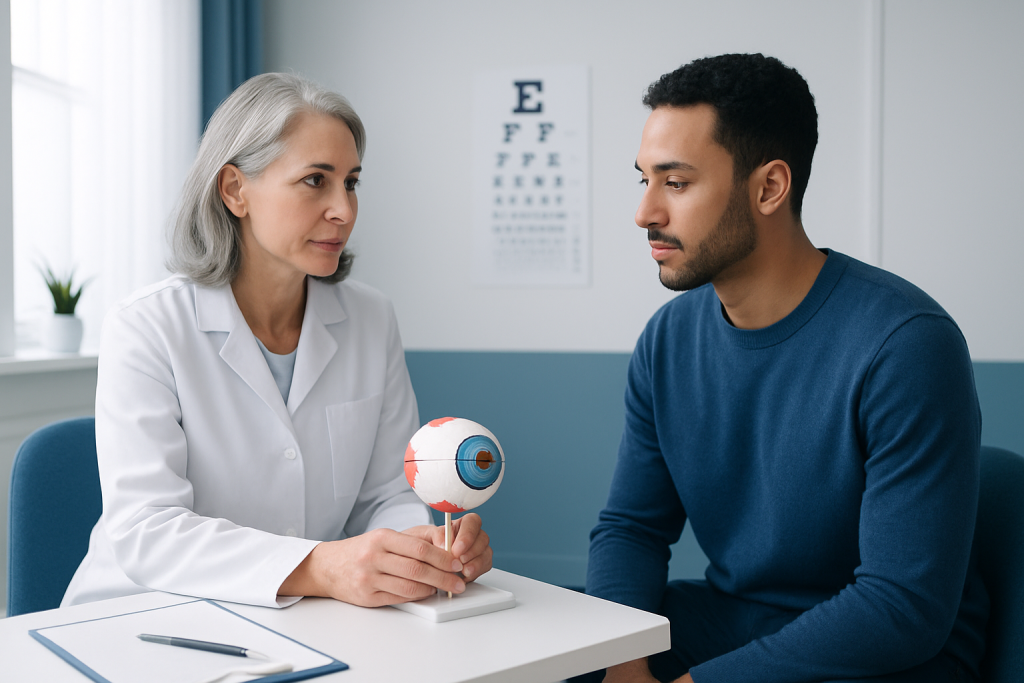
Astigmatism usually comes from the natural shape of the cornea or lens. A perfectly round cornea focuses light evenly, while a more oval shape bends light differently in separate meridians. That uneven curvature is what creates the visual distortion.
The condition is often inherited, which means family history can play a role. It may be present from birth and stay stable for years, or it may change slowly with growth, aging, or after certain eye conditions. It can also be seen after eye injury, some types of eye surgery, or in conditions that affect corneal shape.
Risk factors can include a family history of astigmatism, other refractive errors, and some corneal disorders. Most people with astigmatism do not have a serious underlying problem, but an eye specialist may look more closely if the shape of the cornea seems unusual or vision changes more quickly than expected.
Diagnosis
Diagnosis begins with a standard eye examination. The clinician checks how well each eye sees letters or symbols at different distances and then measures how the eye focuses light. These tests are straightforward and usually painless.
A refraction test helps determine whether glasses or contact lenses can improve vision. The eye doctor may also examine the cornea and lens using specialized instruments to confirm the pattern of curvature. In some cases, corneal mapping or topography is used to create a more detailed picture of the eye’s front surface.
For someone traveling from another country for care, it is helpful to bring any previous prescriptions, contact lens details, and records of prior eye surgery or injury. That background can help the team compare old and new measurements and choose the most appropriate plan without repeating unnecessary steps.
Treatment Options
Treatment depends on how much astigmatism affects daily life. Many people do well with eyeglasses, which use specially shaped lenses to compensate for the uneven focus of the eye. This is often the simplest and safest way to improve clarity.
Soft toric contact lenses are another common option. They are designed to stay aligned on the eye so they can correct the specific direction of astigmatism. For some people, rigid gas permeable or scleral lenses may provide sharper vision, particularly when the cornea has an irregular shape.
In selected cases, refractive procedures may be considered. These can include laser vision correction or lens-based approaches, but they are not suitable for everyone. The best choice depends on corneal thickness, prescription stability, eye health, age, and lifestyle needs, so a thorough consultation is essential before any procedure is planned.
When international patients seek care, treatment planning often includes not only the procedure itself but also a clear recovery timeline, follow-up visits, and guidance on what can realistically be managed after returning home. At Acibadem Health Point, multidisciplinary specialists and JCI-accredited hospitals diagnose and treat astigmatism for international patients with coordinated care.
Prevention & Self-care
Astigmatism cannot usually be prevented because it is often related to the natural shape of the eye. However, good eye care can help detect it early and reduce day-to-day strain. Regular eye examinations are especially important for children, students, drivers, and anyone whose work depends on clear vision.
Once astigmatism is diagnosed, self-care focuses on using the prescribed correction consistently and keeping follow-up appointments. If glasses or contact lenses are not helping as expected, the prescription may need adjustment. It is also wise to follow contact lens hygiene guidance carefully to lower the risk of irritation or infection.
- Use the current prescription as directed, even if symptoms seem mild.
- Schedule eye checks if reading, driving, or screen use becomes harder.
- Protect the eyes from injury with appropriate eyewear during sports or risky activities.
- Report persistent dryness, discomfort, or sudden blur to an eye specialist.
People recovering after a procedure should follow the surgeon’s instructions closely, especially about eye drops, activity limits, and the timing of return visits. Clear aftercare is particularly valuable for international patients, because small issues are easier to manage when the follow-up plan is understood before traveling home.
When to See a Doctor
An eye doctor should be seen whenever vision is not as sharp as expected, especially if squinting, headaches, or eye strain are becoming routine. A child who struggles with school tasks, sits unusually close to screens, or complains of blur should also have an eye examination.
Prompt assessment is important if vision changes suddenly, one eye seems much blurrier than the other, or new symptoms appear after an eye injury or surgery. Those patterns may suggest something more than simple astigmatism and deserve professional review.
Anyone considering contact lenses, laser vision correction, or another procedure should have a full consultation first. The goal is not only to improve vision, but to make sure the chosen approach matches the eye’s shape, overall health, and long-term needs.
Frequently asked questions
01What is the simple definition of astigmatism?
Astigmatism is a vision condition in which the eye’s cornea or lens has an uneven curve. Because light does not focus evenly on the retina, vision can appear blurry or distorted.
02Is astigmatism the same as being near-sighted or far-sighted?
No, but it can happen together with either condition. Near-sightedness and far-sightedness describe how clearly a person sees at different distances, while astigmatism describes an uneven focus caused by the shape of the eye.
03Can astigmatism get worse over time?
It can change gradually in some people, especially during childhood, adolescence, or later in life. That is one reason regular eye exams matter, even when symptoms seem stable.
04Do glasses always fix astigmatism?
Glasses often improve vision very well, but the best correction depends on the amount and type of astigmatism. Some people may do better with toric contact lenses or, in selected cases, a procedure recommended by an eye specialist.
05Is astigmatism dangerous?
Astigmatism itself is usually not dangerous. The main concern is making sure the blurred vision is correctly diagnosed and treated, and that no other eye condition is being missed.
06When should someone with astigmatism see an eye specialist?
An eye specialist should be seen if vision is affecting daily life, if symptoms are changing, or if there is a sudden shift in sight. Children, drivers, and people considering treatment procedures should also have professional assessment.
This article is for general information only and is not a substitute for professional medical advice. Please consult a qualified doctor about your individual situation.
Explore treatments in Turkey — costs, top hospitals & a free quote
JCI-accredited · board-certified surgeons · reply within 24h
Add us as a Preferred Source to see more of our trusted health content across Google Search, AI Overviews and Discover.



How can we help you today?
Meet an Acibadem specialist by secure video, before you travel.
Book a video visit