Anxiety Chest Pain: Causes, Relief and When to Worry

Key Takeaways
- Anxiety chest pain often feels like tightness, pressure, burning, or sharp discomfort and may come with fast breathing, palpitations, or dizziness.
- Stress and panic can trigger chest pain through muscle tension, rapid breathing, and the body’s fight-or-flight response.
- A new, severe, or unusual chest pain should always be taken seriously because anxiety and heart problems can feel similar.
- Breathing exercises, rest, hydration, and reducing triggers may help ease anxiety-related chest discomfort.
- A doctor should evaluate chest pain that lasts, keeps returning, occurs with fainting or shortness of breath, or feels different from a person’s usual anxiety symptoms.
Anxiety chest pain is a common physical symptom of stress, panic, or prolonged tension, and it can feel unsettling even when it is not caused by a heart problem. Understanding how it feels, what triggers it, and when to seek medical care helps people respond with more confidence and safety.
Overview
Anxiety chest pain is chest discomfort that appears during periods of stress, worry, or panic. It may feel like tightness, pressure, aching, burning, stabbing, or a heavy sensation, and it can be frightening because the chest is a place many people associate with heart problems.
The important first step is to recognize that anxiety can cause very real physical symptoms. When the nervous system stays on high alert, the body may tighten muscles, change breathing patterns, and increase the heartbeat, all of which can create pain or discomfort in the chest. At the same time, chest pain should never be dismissed automatically as anxiety, especially if it is new, intense, or different from a person’s usual pattern.
For international patients deciding whether to seek care abroad or at home, it helps to know that a careful assessment can separate anxiety-related discomfort from cardiac, lung, digestive, or muscle-related causes. That evaluation usually begins with a symptom history and may include heart and breathing checks if a clinician thinks they are needed.
Symptoms
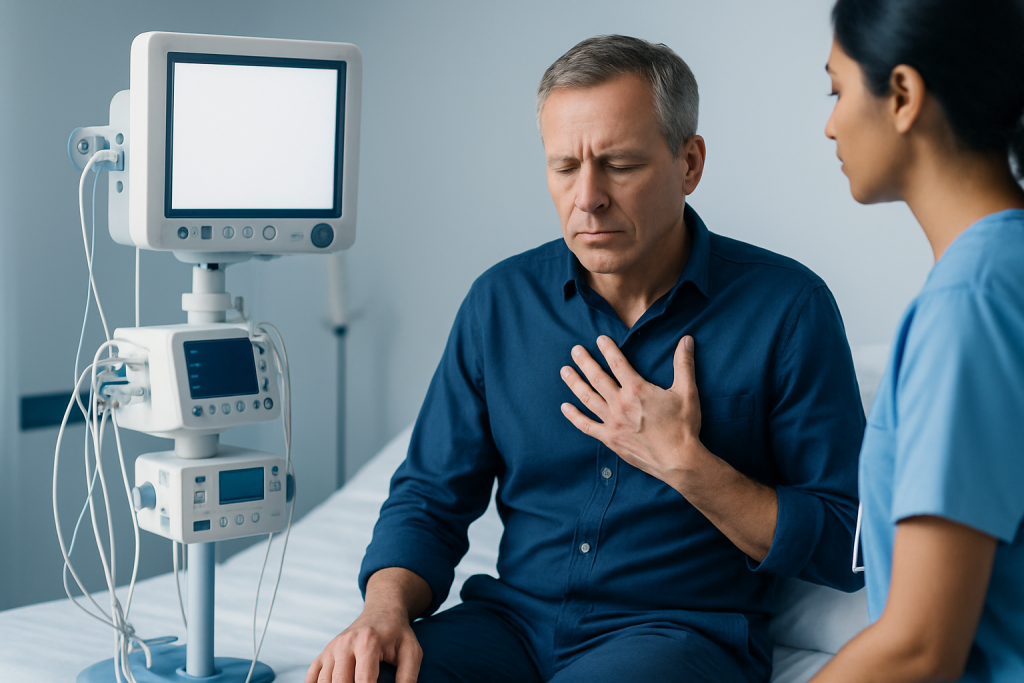
Anxiety chest pain does not look the same in every person. Some people notice a band-like tightness across the chest, while others describe a sharp poke, a burning feeling, or a sense that breathing is not getting enough air. The discomfort may be constant for a short time or come and go during moments of worry.
It often appears together with other anxiety signs. These may include a racing heartbeat, sweating, trembling, nausea, lightheadedness, tingling in the hands or face, dry mouth, or a sense of doom. During a panic attack, symptoms can peak quickly and feel much more intense than the situation seems to justify.
Helpful clues can include when the pain begins and what else is happening at the same time. If the pain starts during an argument, while rushing, after poor sleep, or during a panic episode, anxiety may be contributing. If it happens with physical exertion, spreads to the arm or jaw, or is accompanied by severe breathlessness, another cause must be considered.
Causes & Risk Factors

Several body mechanisms can turn anxiety into chest pain. The muscles of the chest and shoulders may tense, especially during prolonged stress, creating soreness or a squeezing sensation. Fast, shallow breathing can also lead to chest tightness and sometimes tingling or dizziness, which then increases fear and makes the symptoms feel stronger.
The fight-or-flight response is another major factor. When the brain senses danger, it releases stress hormones that raise heart rate and alertness. This response is useful in real emergencies, but when it is triggered repeatedly by anxiety, the body may remain in a strained state that produces chest discomfort.
Certain patterns can make anxiety chest pain more likely. These include panic disorder, chronic stress, sleep deprivation, high caffeine intake, smoking, major life changes, unresolved grief, and a history of health anxiety. People with asthma, acid reflux, or muscle strain may also notice chest symptoms more easily because several conditions can overlap and amplify one another.
Diagnosis
Because chest pain can come from many sources, diagnosis begins with a careful conversation. A clinician may ask when the pain started, what it feels like, where it is located, whether it spreads, and what symptoms happen alongside it. Questions about recent stress, panic attacks, exercise, meals, breathing changes, and medical history help build the full picture.
A physical examination may be enough in some cases, but additional tests are often used when the cause is unclear. These may include an electrocardiogram, blood tests, chest imaging, or other heart and lung assessments depending on the situation. The goal is not to assume the pain is anxiety, but to rule out conditions that need specific treatment.
For people traveling from another country, keeping a written record of symptoms can make evaluation smoother. Notes about timing, duration, triggers, medications, and any previous test results help the care team work efficiently, especially when follow-up may need to continue after the patient returns home.
Treatment Options
Treatment depends on whether anxiety is the main cause and how often symptoms occur. When chest pain is linked to panic or stress, care usually focuses on calming the nervous system and reducing future episodes. This may involve counseling, cognitive behavioral therapy, relaxation training, or other psychological support.
Some people also benefit from medication prescribed by a qualified clinician, especially when anxiety is frequent, severe, or part of a longer-term condition. Medication choices vary and should be personalized; a doctor can explain benefits, possible side effects, and how they fit with other health conditions. Self-treatment with leftover or borrowed medicine is not safe.
Supportive medical care may also address related issues such as reflux, asthma, poor sleep, or muscle tension if they are making chest symptoms worse. In many cases, a combined approach works best, particularly when a person has both emotional stress and physical triggers.
Prevention & Self-care
Not every episode can be prevented, but regular habits can make anxiety chest pain less frequent and less intense. Slow breathing, grounding techniques, light physical activity, consistent sleep, and reducing caffeine or nicotine can all help steady the body’s stress response. Even a short pause to sit upright and breathe evenly may ease chest tightness during a spike of anxiety.
It can also help to notice patterns rather than only the symptom itself. Tracking when chest discomfort appears, what was happening beforehand, and what helped afterward can reveal common triggers such as deadlines, travel stress, conflict, or skipped meals. That information is useful both for self-management and for conversations with a doctor or therapist.
Practical self-care works best when it is realistic. A person does not need a perfect routine; instead, small consistent steps tend to be more sustainable, especially during international travel, work pressure, or recovery after a stressful event.
- Practice slow, controlled breathing during rising anxiety.
- Limit stimulants such as excess caffeine if they worsen symptoms.
- Keep meals, hydration, and sleep as regular as possible.
- Use stress-management tools recommended by a mental health professional.
- Seek follow-up care if symptoms keep returning or start changing.
When to See a Doctor
Chest pain should be assessed by a doctor if it is new, unexplained, recurring, or different from a person’s usual anxiety symptoms. Medical review is also important when pain lasts longer than expected, becomes more frequent, or interferes with everyday life. Even when anxiety is known to be present, new chest symptoms deserve attention rather than assumptions.
Emergency care is needed if chest pain is severe, comes with fainting, blue lips, marked shortness of breath, confusion, or pain spreading to the arm, back, neck, or jaw. These symptoms do not prove a heart problem, but they are not safe to ignore. A prompt evaluation is the best way to protect health and reduce uncertainty.
For patients considering care across borders, a coordinated team can help determine whether the issue is anxiety, a heart-related concern, or another condition entirely. Acibadem Health Point’s multidisciplinary specialists and JCI-accredited hospitals diagnose and treat this condition for international patients, with care planning that supports both treatment and follow-up.
Living With Anxiety Chest Pain
Once serious causes have been excluded, many people feel relieved to learn that anxiety can explain chest symptoms without making them imaginary. The pain is still real, but it often improves when the underlying anxiety is treated and the body’s stress response becomes more manageable.
Long-term improvement usually comes from pairing medical guidance with practical coping skills. Learning what the body’s warning signals mean, using calming techniques early, and addressing the source of chronic stress can reduce the chance that chest pain becomes a repeated cycle of fear and tension.
People who travel for treatment may also need a simple recovery plan they can continue at home. Clear instructions, follow-up appointments, and a way to contact the care team after discharge help make that transition safer and less stressful.
Frequently asked questions
01What does anxiety chest pain usually feel like?
It may feel like tightness, pressure, burning, aching, or a sharp discomfort in the chest. Some people also notice a fast heartbeat, shortness of breath, dizziness, or tingling at the same time. The sensation can be brief or last longer, depending on the trigger and the person’s stress level.
02How can someone tell anxiety chest pain from heart pain?
They can feel similar, so it is not always possible to tell at home with confidence. Anxiety pain is more likely to happen during stress or panic and may improve with calming techniques, while heart-related pain may be linked to exertion or spread to other areas. Any new, severe, or unusual chest pain should be medically assessed.
03Can anxiety cause chest pain every day?
Yes, ongoing stress or frequent panic attacks can lead to repeated chest discomfort. Muscle tension, shallow breathing, and constant alertness can keep the chest feeling sore or tight. If this happens often, a doctor or mental health professional can help identify the cause and plan treatment.
04What helps anxiety chest pain in the moment?
Slow breathing, sitting upright, and trying to relax the shoulders may help ease the symptoms. Some people also find grounding exercises useful, such as naming things they can see or hear. If the pain is severe or feels unusual, medical care should not be delayed.
05Should a person go to the emergency room for chest pain from anxiety?
If they are not sure the pain is from anxiety, it is safer to seek urgent medical evaluation. Emergency care is especially important when the pain is severe, lasts longer than expected, or comes with fainting, major breathlessness, or pain spreading to the arm, jaw, neck, or back. Anxiety can cause strong symptoms, but heart and lung problems must be ruled out when needed.
06Can therapy help reduce anxiety chest pain?
Yes, therapy can be very effective when anxiety is the main driver. Approaches such as cognitive behavioral therapy can help people change the thought and breathing patterns that trigger chest symptoms. For many patients, therapy works best alongside good sleep, exercise, and medical follow-up when needed.
This article is for general information only and is not a substitute for professional medical advice. Please consult a qualified doctor about your individual situation.
Persistent digestive symptoms? Get evaluated in Turkey
JCI-accredited · board-certified surgeons · reply within 24h
Add us as a Preferred Source to see more of our trusted health content across Google Search, AI Overviews and Discover.