Acid Reflux Foods to Avoid: What to Eat and What to Avoid

Key Takeaways
- Common reflux triggers include fatty meals, fried foods, tomato-based dishes, citrus, chocolate, caffeine, alcohol, peppermint, and carbonated drinks.
- What triggers reflux can vary from person to person, so a symptom and food diary is often more useful than a one-size-fits-all diet.
- Smaller meals, staying upright after eating, and avoiding late-night eating can reduce symptoms for many people.
- Persistent heartburn, trouble swallowing, vomiting, chest pain, or unintentional weight loss should be assessed by a doctor.
- Diet changes can help, but frequent or severe reflux may need medical treatment and a check for GERD or other digestive conditions.
Acid reflux foods to avoid are usually the ones that relax the lower esophageal sphincter, increase stomach acid, or make symptoms feel worse after meals. A practical reflux-friendly approach focuses on identifying personal triggers, choosing gentler foods, and knowing when symptoms may need medical evaluation.
Overview
For someone searching for acid reflux foods to avoid, the short answer is that the most common troublemakers are fatty or fried foods, tomato-based sauces, citrus fruits and juices, chocolate, caffeine, alcohol, mint, and carbonated drinks. These foods do not affect every person in the same way, but they often worsen symptoms by increasing pressure in the stomach or making it easier for stomach contents to flow back into the esophagus.
Acid reflux happens when the contents of the stomach move upward and irritate the lining of the esophagus. Occasional reflux can happen after a large meal or a rich dinner, while frequent symptoms may point to gastroesophageal reflux disease, often called GERD. Diet is only one part of the picture, but it is often the place where people first notice a pattern and regain some control.
Because reflux can be influenced by travel schedules, meal timing, stress, and unfamiliar foods, many international patients find it helpful to think in practical terms: which meals reliably aggravate symptoms, which ones feel soothing, and how to keep routines steady when eating away from home. That makes the plan more realistic than following a rigid list that may not fit everyday life.
Symptoms

Acid reflux does not always look the same from one person to another. The classic symptom is a burning feeling in the chest, often called heartburn, but reflux may also cause a sour or bitter taste in the mouth, burping, throat irritation, or a sensation that food is coming back up.
Some people notice symptoms after specific foods, while others feel discomfort mainly after large meals, late-night eating, or bending over soon after eating. Reflux can also show up as a chronic cough, hoarseness, or a need to clear the throat, especially when stomach contents irritate the upper airway.
It is useful to watch for patterns rather than isolated episodes. If symptoms happen often, interrupt sleep, or seem to be getting more frequent, the issue may be more than a simple food intolerance and deserves medical attention.
Causes & Risk Factors
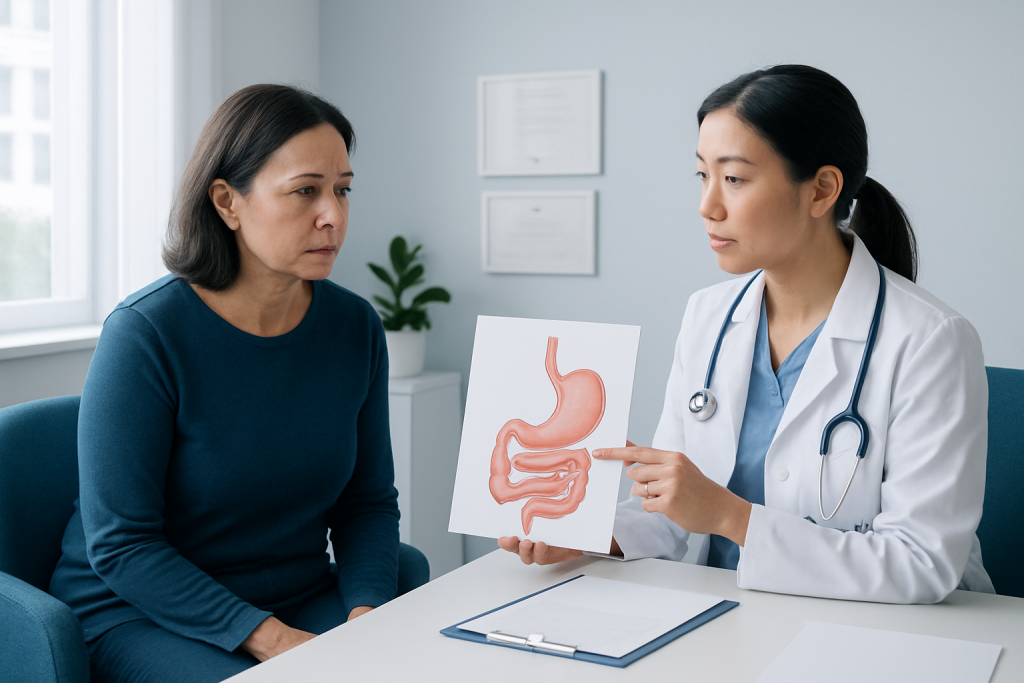
Food triggers are important, but they are only one part of why reflux develops. The lower esophageal sphincter is a ring of muscle that acts like a valve between the esophagus and the stomach. When it relaxes at the wrong time, stomach contents can move upward and cause symptoms.
Certain foods may contribute by relaxing this valve, slowing stomach emptying, or making the stomach more distended. For example, high-fat meals, large portions, and fizzy drinks can increase abdominal pressure and make reflux more likely. Tomato products, citrus, and spicy foods may irritate an already sensitive esophagus, even if they do not directly increase acid production.
Other risk factors include being overweight, pregnancy, smoking, a hiatal hernia, some medications, and eating close to bedtime. Stress can also make symptoms feel more noticeable, and a person who is traveling may encounter all of these factors at once: different meal times, richer foods, and less chance to lie down or move around after eating.
- Common food triggers: fried foods, creamy sauces, pizza, chocolate, coffee, tea, alcohol, citrus, tomato sauces, and peppermint
- Meal pattern triggers: large portions, fast eating, late dinners, and snacking just before sleep
- Body-related triggers: extra abdominal pressure, pregnancy, or a hiatal hernia
Diagnosis
Doctors usually begin by reviewing the symptom pattern, diet, and timing of episodes. In many people, the story itself provides strong clues: reflux that repeatedly follows certain meals, improves with lifestyle changes, or is accompanied by typical heartburn may suggest GERD.
If symptoms are persistent, severe, or atypical, additional testing may be recommended. This can include an upper endoscopy to look at the esophagus and stomach, or other tests to measure acid exposure and check how well the esophagus is moving. These evaluations help rule out conditions that can resemble reflux, such as peptic ulcer disease, gallbladder problems, or eosinophilic esophagitis.
For people planning care across borders, diagnosis may also involve reviewing records from home, prior medication use, and any recent imaging or endoscopy reports. A clear summary of what was eaten, when symptoms began, and what has already been tried can make consultations more efficient and accurate.
Treatment Options
Treatment usually starts with practical changes that reduce symptom triggers. Doctors often recommend identifying and limiting the foods that most consistently cause discomfort, eating smaller meals, and avoiding lying down soon after eating. For many people, these steps are enough to noticeably reduce flare-ups.
When diet and habits are not enough, medicines may be considered. These can include antacids for quick relief, medications that reduce acid production, or other therapies chosen by a doctor based on the person’s symptoms and medical history. The right option depends on whether the reflux is occasional, frequent, or causing complications.
In a small number of cases, further evaluation or procedures may be needed, especially if reflux is severe, linked to a hiatal hernia, or not responding well to standard treatment. The goal is not simply to silence heartburn for a day, but to protect the esophagus and help the person return to normal eating and sleeping.
What to Eat and What to Avoid
A reflux-friendly meal plan does not need to feel restrictive. Many people do better with foods that are gentle, lower in fat, and less acidic. Examples often include oatmeal, bananas, melons, rice, steamed vegetables, lean proteins, whole grains, and soups that are not heavy or spicy.
The foods most often avoided or limited are those that commonly worsen symptoms. Fatty cuts of meat, fried foods, creamy sauces, full-fat dairy, tomato-based pasta sauces, citrus fruits and juices, chocolate, peppermint, onions, garlic for some people, coffee, energy drinks, alcohol, and carbonated beverages are frequent triggers. Still, the only food that truly matters is the one that reliably brings symptoms on for that individual.
- Often better tolerated: oatmeal, bananas, applesauce, rice, baked chicken or fish, non-citrus fruit, cooked vegetables, toast, and low-fat yogurt if tolerated
- Often best to limit: fried foods, pizza, creamy desserts, tomato sauces, orange juice, grapefruit, chocolate, mint, coffee, wine, beer, and soda
- Helpful habits: smaller portions, slower eating, and leaving time before bedtime after the evening meal
A food diary can help separate coincidence from true triggers. For example, a meal eaten in a hurry before boarding a flight may cause reflux not only because of the food itself, but also because of stress, posture, and a full stomach.
Prevention & Self-care
Self-care works best when it focuses on repeatable habits rather than perfection. Eating smaller meals, avoiding late-night snacks, and staying upright for a while after eating are simple measures that often help. Some people also benefit from elevating the head of the bed if nighttime reflux is a problem.
It is also worth looking beyond food. Tight clothing around the waist, smoking, and excess weight can all add pressure to the stomach and make reflux worse. If symptoms are more common during travel, planning familiar reflux-friendly snacks and allowing time for calm meals can make a meaningful difference.
Keeping a brief diary of meals, symptoms, sleep, and activity can reveal patterns that are easy to miss otherwise. This approach is especially useful when symptoms vary across locations, because it helps distinguish between true triggers and the disruption that often comes with changing time zones, meal schedules, or cuisines.
When to See a Doctor
Medical advice is important if heartburn happens often, interferes with sleep, or is not improving despite dietary changes. A doctor should also evaluate symptoms that begin for the first time later in life or that seem to be gradually worsening.
Some warning signs deserve prompt attention: difficulty swallowing, food getting stuck, vomiting, black stools, unintentional weight loss, anemia, or chest pain that could be related to the heart. Even when symptoms seem typical of reflux, ongoing discomfort should not simply be managed indefinitely without a checkup.
People traveling for care may want to seek a specialist if they need a clearer diagnosis, have tried several approaches without relief, or want coordinated follow-up after returning home. At Acibadem Health Point, multidisciplinary specialists and JCI-accredited hospitals diagnose and treat reflux and related digestive conditions for international patients with coordinated evaluation and follow-up. The aim is steady, evidence-based care that fits both symptoms and lifestyle.
Frequently asked questions
01What are the main acid reflux foods to avoid?
Common triggers include fried and fatty foods, tomato-based sauces, citrus, chocolate, caffeine, alcohol, mint, and carbonated drinks. Not everyone reacts to the same foods, so it helps to notice which items reliably cause symptoms. A food diary can make those patterns easier to see.
02Can I still eat spicy food if I have acid reflux?
Some people tolerate small amounts of spice, while others notice immediate burning or discomfort. Spicy foods are not universal triggers, but they are worth limiting if they repeatedly cause symptoms. The most useful guide is how the person’s own body responds.
03What foods are usually gentle on the stomach with reflux?
Many people do well with oatmeal, bananas, rice, steamed vegetables, lean proteins, toast, and non-acidic fruits. Low-fat, simply prepared foods are often easier to tolerate than rich or heavily seasoned meals. The best choices are the ones that leave the person comfortable after eating.
04Does eating late at night make reflux worse?
For many people, yes. A full stomach combined with lying down soon after eating can make reflux more likely. Leaving enough time between the last meal and bedtime often helps reduce nighttime symptoms.
05When is reflux more than just a food problem?
If symptoms happen frequently, wake the person at night, or do not improve with diet changes, reflux may be part of GERD and should be assessed. Trouble swallowing, vomiting, weight loss, or chest pain are reasons to seek medical care sooner. Those symptoms deserve a proper medical evaluation rather than trial-and-error alone.
06Can stress cause acid reflux?
Stress does not usually create acid reflux by itself, but it can make symptoms feel worse or more noticeable. It may also change eating patterns, increase snacking, or lead to faster meals, all of which can contribute. Managing stress can be a helpful support, but it is not a substitute for medical evaluation when symptoms persist.
This article is for general information only and is not a substitute for professional medical advice. Please consult a qualified doctor about your individual situation.
Persistent digestive symptoms? Get evaluated in Turkey
JCI-accredited · board-certified surgeons · reply within 24h
Add us as a Preferred Source to see more of our trusted health content across Google Search, AI Overviews and Discover.