What Is Colon Plaque? A Complete Medical Guide

Key Takeaways
- Colon plaque is not an official diagnosis and should be clarified by a doctor.
- The term may refer to stool residue, mucus, inflammation, polyps, or other colon findings.
- Symptoms such as bleeding, persistent abdominal pain, or changes in bowel habits deserve assessment.
- Diagnosis usually depends on history, examination, stool tests, imaging, or colonoscopy.
- Healthy bowel habits and timely screening support colon health, but they do not replace medical evaluation.
Colon plaque is not a standard medical diagnosis, so the term can mean different things depending on where it was seen or heard. In most cases, people are referring to a coating, buildup, or abnormal finding in the colon that needs proper medical evaluation rather than self-treatment.
Overview
“Colon plaque” is not a standard medical term used in gastroenterology. When people search for it, they are usually trying to describe something they were told about the colon, such as a buildup seen on a scan, stool residue that looked like coating, or an abnormal area found during an examination.
The most important first step is to translate the phrase into a real medical finding. A doctor may need to determine whether the issue is simple constipation, mucus in the stool, inflammation of the colon lining, a polyp, diverticular disease, or another condition entirely. The treatment depends on the underlying cause, not on the phrase itself.
For international patients, this distinction matters because medical terms can vary between clinics, reports, and languages. A clear review of symptoms, prior test results, and images often helps the care team explain what was actually seen and whether it needs treatment, monitoring, or no action at all.
What People May Mean by Colon Plaque

In everyday conversation, “colon plaque” may be used loosely to describe a visible layer or buildup inside the bowel. It is not the same as atherosclerotic plaque in blood vessels, and it does not refer to a recognized disease name in the colon.
Sometimes the term is used after a scan or endoscopy to describe stool, mucus, or inflamed tissue that appears to coat part of the colon. In other situations, it may be used incorrectly when the real issue is a polyp, diverticulosis, colitis, or fecal loading from constipation.
Because the phrase is vague, a careful medical history is important. Patients are usually helped most when they bring the exact wording from a report, a photo of the document, or a translated copy if care was received abroad.
Symptoms and Possible Clues
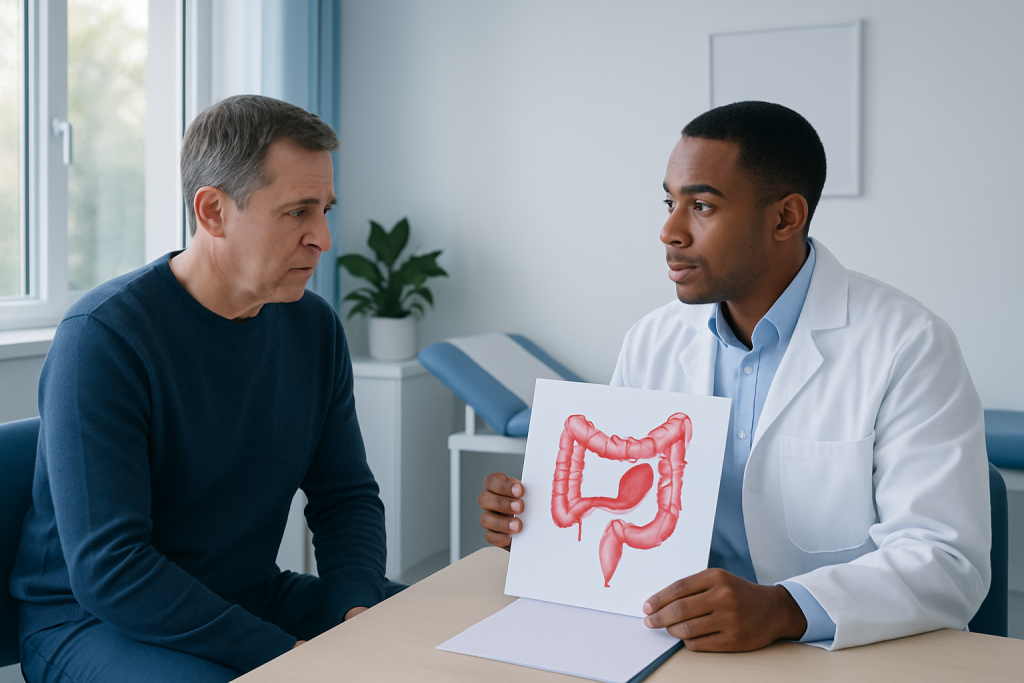
There is no single symptom pattern for “colon plaque” because it is not a diagnosis. The symptoms depend on what is actually happening in the colon. Some people have no symptoms at all and learn of a finding only during routine screening.
When a real colon problem is present, common clues may include abdominal discomfort, bloating, constipation, diarrhea, a feeling of incomplete emptying, or changes in stool shape or frequency. Blood in the stool, black stool, unexplained weight loss, fever, or ongoing fatigue deserve medical attention.
It is also helpful to notice when symptoms began and what makes them better or worse. These details can help a gastroenterologist decide whether the concern is likely functional, inflammatory, infectious, or structural.
Causes and Risk Factors
Since “colon plaque” is not a formal diagnosis, there are no specific risk factors for it itself. The relevant risks depend on the underlying condition a doctor is considering.
For example, constipation and stool buildup can be associated with low fluid intake, low fiber intake, reduced movement, certain medications, and travel-related changes in routine. Colon polyps and colorectal cancer become more likely with age, family history, some inherited conditions, and prior polyp findings. Inflammatory bowel disease may be linked to immune and genetic factors, while diverticular disease is more common with age and chronic constipation patterns.
- Low-fiber eating patterns
- Longstanding constipation
- Family history of colon disease or colorectal cancer
- Smoking and excess alcohol use
- Inflammatory bowel conditions
- Age-appropriate screening needs
Diagnosis
Doctors do not diagnose “colon plaque” as a standalone condition. Instead, they investigate the symptom or report that led to the question. The goal is to identify whether the colon is affected by stool retention, inflammation, growths, infection, or another abnormality.
Evaluation often begins with a detailed symptom review and abdominal examination. Depending on the situation, a clinician may recommend stool tests, blood tests, imaging, or colonoscopy. If a person already has a report in another language or from another country, translating the report accurately can be very helpful.
Colonoscopy remains one of the most useful tools when a structural colon problem is suspected. It allows direct viewing of the lining and, when needed, biopsy of suspicious tissue. That is often the clearest way to separate harmless residue from a medical finding that requires treatment.
Treatment Options
Treatment depends entirely on the cause. If the issue is constipation with retained stool, a doctor may suggest lifestyle changes, bowel-regimen adjustments, or medication review. If the finding is an inflammatory condition, treatment may focus on reducing inflammation and monitoring symptoms over time.
If a polyp is found, it may be removed during colonoscopy and then sent for laboratory analysis. If an infection is present, care may involve targeted treatment after the cause is identified. If the concern is something more serious, such as a precancerous or cancerous lesion, the plan may include surgery, oncology input, or coordinated follow-up.
Because treatment is diagnosis-specific, it is best not to use laxatives, cleanses, or supplements in an attempt to “clear plaque” without medical guidance. What seems like a cleansing approach can sometimes delay the proper diagnosis or worsen symptoms in sensitive patients.
Prevention and Self-Care
There is no proven way to prevent “colon plaque” because it is not a defined disease. Still, general colon health habits can lower the chance of constipation, help bowel regularity, and support overall digestive wellness.
A balanced diet with adequate fiber, enough fluids, and regular physical activity can be useful for many people. It also helps to respond to ongoing constipation early rather than waiting for symptoms to become persistent. For people with family history or age-related risk, following screening recommendations is one of the most important preventive steps.
- Eat a varied diet that includes fiber-rich foods when tolerated
- Stay hydrated, especially during travel or hot weather
- Keep a consistent bowel routine
- Review medications that may slow the bowel with a doctor
- Attend recommended colon cancer screening appointments
When to See a Doctor
A doctor should evaluate any persistent change in bowel habits, especially if it lasts more than a short period or occurs repeatedly. The same applies if there is rectal bleeding, unexplained anemia, ongoing abdominal pain, or stool changes that are new and not explained by diet.
Medical review is especially important if someone has already been told about an abnormal colon finding and does not know what it means. A specialist can explain the report in plain language, confirm whether follow-up is needed, and advise whether the person can safely travel, wait, or proceed with testing before returning home.
People who are coming from abroad often benefit from coordinated care, because the next step may involve reviewing prior imaging, arranging a colonoscopy, or setting up follow-up after the trip. Acibadem Health Point’s multidisciplinary specialists and JCI-accredited hospitals diagnose and treat digestive conditions for international patients, with care plans tailored to the individual situation.
Frequently asked questions
01Is colon plaque a real medical diagnosis?
No, colon plaque is not a standard medical diagnosis. It is usually an informal or mistaken term used to describe another colon finding, such as stool buildup, mucus, inflammation, or a polyp. A doctor can help identify the exact issue.
02Can colon plaque be removed with a cleanse?
There is no evidence-based cleanse for “colon plaque” because the term itself is not a diagnosis. Some cleanses can irritate the bowel or delay proper treatment. It is safer to ask a doctor what the real finding is before trying any bowel-cleaning product.
03What tests are used to check the colon?
Depending on the symptoms, doctors may use stool tests, blood tests, imaging, or colonoscopy. Colonoscopy is especially useful when a visible problem in the colon lining needs to be confirmed or removed. The choice of test depends on the patient’s history and exam findings.
04Can constipation feel like a buildup in the colon?
Yes, constipation can create a sensation of fullness, pressure, or blockage. Some people describe this as a buildup or coating in the colon, even though the issue is actually slowed stool movement. Persistent constipation should be assessed if it does not improve with routine measures.
05When is a colon problem urgent?
Urgent evaluation is needed for heavy rectal bleeding, severe abdominal pain, black stool, fainting, or signs of dehydration. It is also important to seek care if there is unexplained weight loss or a sudden major change in bowel habits. These symptoms do not always mean something serious, but they should not be ignored.
06Should someone worry if a report mentions a colon abnormality?
Not every colon abnormality is dangerous, but it should be explained clearly. Some findings are minor and only need observation, while others need treatment or follow-up. A gastroenterologist can interpret the report and recommend the next step.
This article is for general information only and is not a substitute for professional medical advice. Please consult a qualified doctor about your individual situation.
Persistent digestive symptoms? Get evaluated in Turkey
JCI-accredited · board-certified surgeons · reply within 24h
Add us as a Preferred Source to see more of our trusted health content across Google Search, AI Overviews and Discover.