A Lump on a Testicle: Could It Be Cancer?
A lump on or in a testicle is not always cancer, but it should be assessed promptly by a clinician. Most evaluations begin with an examination, scrotal ultrasound and blood tests, with treatment and recovery depending on the underlying cause.
Overview: does a lump on a testicle mean cancer?
A lump on testicles cancer concern is understandable, but a lump does not automatically mean cancer. Changes may result from harmless cysts, enlarged veins, fluid around the testicle, inflammation, infection or an injury. However, a new lump that feels firm or is located within the testicle needs prompt medical assessment because Chemotherapy for Testicular Cancer: How It Works, Results and What to Expect" class="ahp-ilk">testicular cancer can sometimes begin as a painless lump or swelling.
Testicular cancer is an uncommon cancer that develops in cells of a testicle. It most often affects younger and middle-aged adults, although it can occur at other ages. It is important not to rely on self-examination alone to determine the cause: the position, firmness and meaning of a lump can be difficult to judge without imaging.
The evaluation is usually straightforward. A clinician examines the scrotum and groin, then commonly arranges a scrotal ultrasound. If cancer is suspected, referral to a urologist is urgent but usually allows time for clear discussion of diagnosis, fertility, treatment choices and recovery.
Possible symptoms and other causes of a testicular lump
A cancerous testicular mass is often painless. It may feel like a hard area or distinct lump in one testicle, or one testicle may become larger, heavier or firmer than usual. Some people notice a dull ache in the lower abdomen or groin, a feeling of heaviness in the scrotum, or swelling. Pain can occur, but pain alone is less typical of testicular cancer and may have many other explanations.
Non-cancerous causes are common. For example, an epididymal cyst or spermatocele develops in the coiled tube behind the testicle; a hydrocele is fluid around the testicle; and a varicocele is enlarged scrotal veins. Epididymitis and orchitis are inflammatory conditions that can cause tenderness, warmth, swelling and sometimes urinary symptoms or fever.
A lump on a testicle after getting hit may be bruising, swelling or a collection of blood, but injury can also draw attention to a pre-existing mass. Similarly, a lump on a testicle after testicular torsion surgery or another scrotal procedure may reflect healing tissue, swelling, fluid or scar formation. New, persistent, enlarging or hard changes should be reviewed rather than assumed to be a normal result of injury or surgery.
Risk factors and special situations
The clearest known risk factor for testicular cancer is an undescended testicle, including when it was corrected in childhood. A personal history of testicular cancer, a close family history, certain fertility problems and some genetic conditions can also increase risk. Most people diagnosed with testicular cancer do not have an obvious risk factor.
A lump in a testicle after prostate cancer should not be assumed to be related to the previous cancer or its treatment. Testicular spread from prostate cancer is uncommon, while benign scrotal conditions and a new primary testicular problem remain possible. A urologist can assess the individual situation using examination, imaging and review of prior cancer history.
After a previous operation, including a lump on a testicle after surgery or a lump on a testicle removal, the key question is where the change is located. It may arise in the scar, remaining scrotal tissues, epididymis, spermatic cord or the remaining testicle. Any new scrotal mass after surgery deserves medical review, particularly if it grows, becomes firm or is associated with pain, redness or fever.
How doctors diagnose a testicular lump
Assessment begins with questions about when the change appeared, pain, injury, infection symptoms, prior operations, fertility concerns and personal or family history. During examination, the clinician may assess both testicles, the epididymis, scrotal skin, abdomen and nearby lymph nodes. Transillumination, where a light is shone through the scrotum, may sometimes help identify fluid, but it does not replace ultrasound.
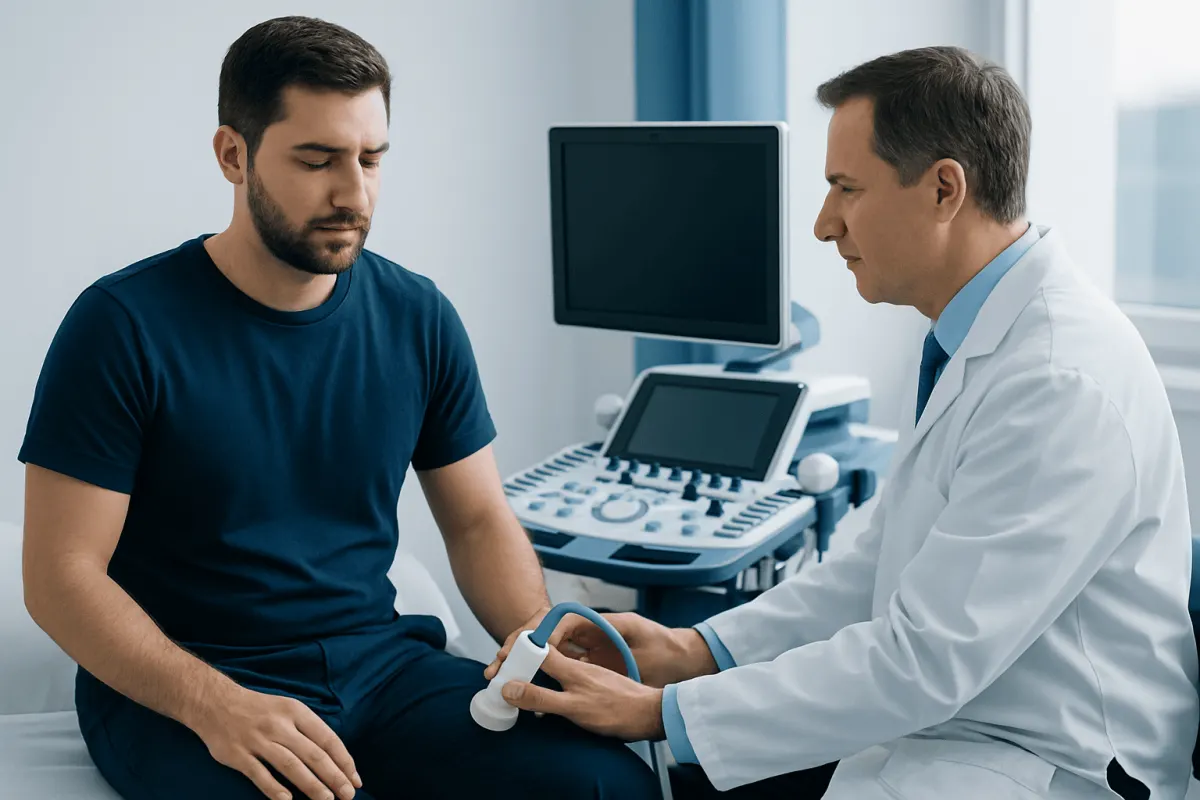
A scrotal ultrasound is the main imaging test. It can show whether a lump is inside the testicle, where cancer is more concerning, or outside it, where benign causes are more frequent. Ultrasound does not expose the testicles to ionizing radiation and is generally quick and painless.
If an ultrasound suggests a testicular tumour, blood tests may measure tumour markers, commonly alpha-fetoprotein, beta-human chorionic gonadotropin and lactate dehydrogenase. These markers support diagnosis and later monitoring, but normal results do not rule out cancer. CT or other scans may be used after diagnosis to check whether cancer has spread. A needle biopsy through the scrotum is generally avoided when testicular cancer is suspected because standard management is usually removal of the affected testicle through a groin incision.
Treatment procedure and expected results
For a testicular mass that appears cancerous, the usual initial procedure is a radical inguinal orchiectomy. Under anaesthesia, the surgeon removes the affected testicle through an incision in the groin rather than through the scrotum. The tissue is examined in a laboratory to identify the precise type of cancer and guide further care. A testicular prosthesis may be discussed for people who would like one.
Many people need no further treatment after surgery and instead have active surveillance with regular examinations, blood tests and scans. Depending on the cancer type, stage and individual risk features, further treatment can include chemotherapy, radiotherapy in selected cases, or surgery to remove involved lymph nodes at the back of the abdomen. These choices are made with a specialist team and aim to balance cure with avoidance of unnecessary treatment.
Results are generally very good, including when treatment beyond surgery is needed. The exact outlook depends on the tumour type, stage, marker levels and response to treatment. A detailed pathology report and staging assessment allow the oncology team to explain the expected plan and follow-up schedule clearly.
Before orchiectomy, chemotherapy or radiotherapy, clinicians may discuss sperm banking, especially if the other testicle is absent or has reduced function, or if treatment could affect fertility. One healthy remaining testicle usually produces enough testosterone and sperm for normal sexual function and fertility, though individual testing and support are available.
Recovery, follow-up and self-care
Recovery after orchiectomy varies, but many people go home on the day of surgery or after a short hospital stay. Temporary groin and scrotal discomfort, bruising and swelling are common. The surgical team provides individualized advice about wound care, supportive underwear, bathing, driving, work, exercise and sexual activity. Heavy lifting and strenuous exercise are usually avoided until healing is established.
Contact the surgical team urgently for worsening pain, increasing swelling, spreading redness, wound discharge, fever, difficulty passing urine, shortness of breath or other unexpected symptoms. These symptoms do not necessarily indicate a serious complication, but they should be assessed promptly.
Follow-up is an essential part of care. Appointments may include tumour-marker blood tests, scans and physical examinations at planned intervals. This monitoring can detect recurrence early and also provides an opportunity to discuss fatigue, emotional wellbeing, body image, sexual health, fertility and hormone-related symptoms.
There is no proven home method to prevent testicular cancer. People can become familiar with what is normal for them and seek assessment for new changes without delay. Acıbadem Health Point’s multidisciplinary specialists and JCI-accredited hospitals diagnose and treat testicular conditions for international patients.
When to seek medical care
Arrange a medical appointment promptly for a new lump, persistent swelling, a change in testicle size or shape, a hard area, unexplained heaviness, or an ache in the testicle, groin or lower abdomen. This includes changes noticed after an injury, torsion repair, Cancer Treatment: Options for Every Stage" class="ahp-ilk">prostate cancer treatment or another operation. Prompt assessment is important even if the lump is painless.
Seek urgent medical care for sudden severe testicular pain, especially when accompanied by nausea, vomiting, swelling or a high-riding testicle. These can be signs of testicular torsion, where blood supply to the testicle may be affected and urgent treatment is needed. Fever with scrotal pain, redness and swelling should also be assessed urgently because infection may require treatment.
It is reasonable to feel worried while waiting for assessment, but most scrotal changes have causes other than cancer. Avoid repeatedly squeezing or checking a painful area, and do not delay care in the hope that a persistent lump will disappear on its own.
Frequently asked questions
01Is a painless lump on a testicle usually cancer?
A painless hard lump within a testicle can be a sign of testicular cancer, but it is not the only possible cause. Cysts, fluid collections and other non-cancerous conditions can also cause a noticeable change. A prompt examination and ultrasound are needed to clarify the cause.
02Can an injury cause a lump on the testicle?
A direct blow can cause bruising, swelling or a blood collection that feels like a lump. Injury can also make a person notice a lump that was already present. If a lump persists after pain and bruising improve, or if there is severe pain or swelling, medical assessment is important.
03What is the first test for a suspected testicular cancer lump?
Scrotal ultrasound is usually the first and most useful test. It helps determine whether the lump is in the testicle or in surrounding structures and whether its features need urgent urology review. Blood tests for tumour markers may also be performed when cancer is suspected.
04Will removal of one testicle affect testosterone or fertility?
Most people with one healthy remaining testicle maintain normal testosterone production, erections and the ability to father children. Fertility can be affected in some cases by the cancer itself or additional treatment. Sperm banking and fertility testing can be discussed before treatment.
05How long does recovery take after testicle removal surgery?
Many people return to light daily activities within days to a couple of weeks, while recovery from strenuous activity may take longer. Timing depends on the operation, healing, the nature of a person’s work and whether further treatment is needed. The surgeon’s aftercare instructions should guide return to exercise and lifting.
06Can a lump appear after testicular torsion surgery?
Swelling, scar tissue or fluid changes can occur after torsion surgery, but a new or persistent lump should not be self-diagnosed as normal healing. A clinician can examine the area and arrange ultrasound if needed. Sudden pain or significant swelling requires urgent assessment.
This article is for general information only and is not a substitute for professional medical advice. Please consult a qualified doctor about your individual situation.
Oncology care in Turkey — second opinion and treatment plan
JCI-accredited · board-certified surgeons · reply within 24h
Add us as a Preferred Source to see more of our trusted health content across Google Search, AI Overviews and Discover.