3-Unit Bridge vs Implant for One Missing Tooth
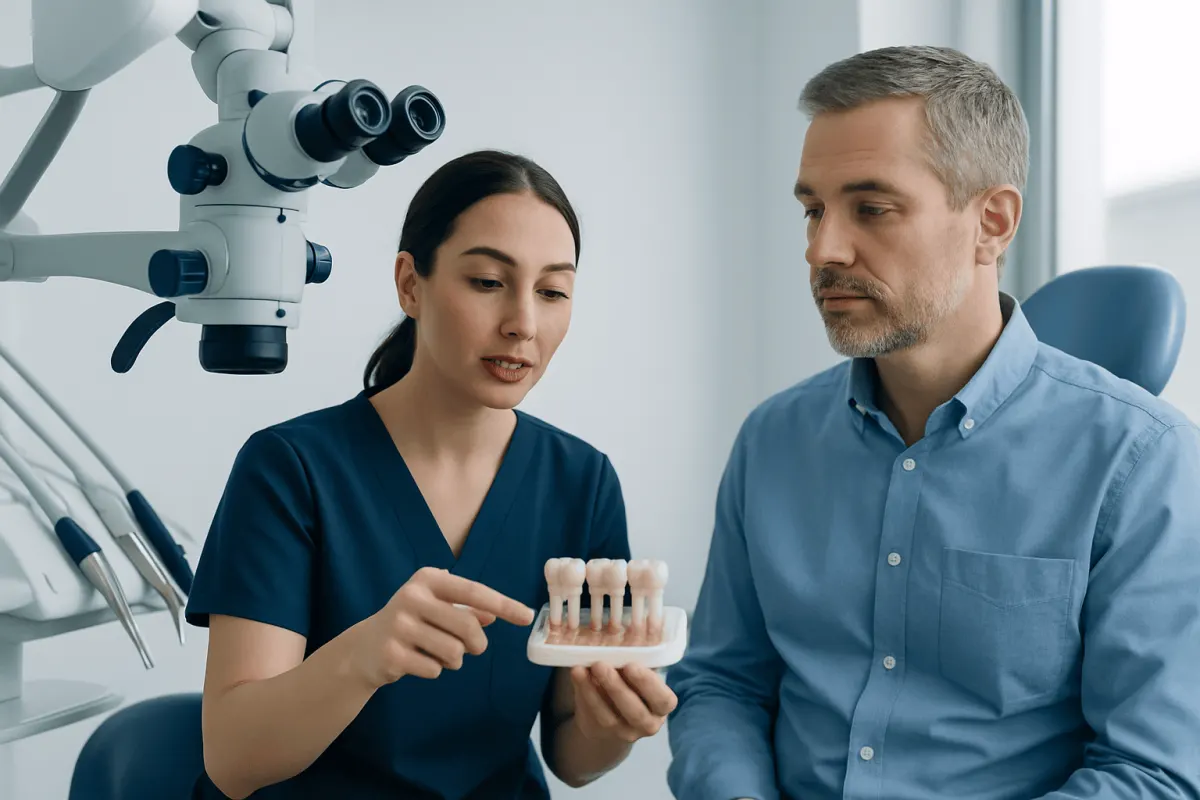
For one missing tooth, a dental implant replaces the tooth root and is independent of neighboring teeth, while a 3-unit bridge uses crowns on the teeth beside the gap to support a replacement tooth. The best choice depends on the health of adjacent teeth and gums, bone availability, bite, timeline, and personal preferences.
3 Unit Bridge vs Implant: Side-by-Side Comparison
3 unit bridge vs implant is a common decision after losing one tooth. Both options can restore appearance, speech, and chewing, but they work differently: a 3-unit bridge is anchored to the neighboring teeth, while an implant is placed in the jawbone and supports a crown on its own.
The right treatment is not automatically the same for every person. A dentist considers the reason for tooth loss, the health and restoration history of adjacent teeth, gum and bone health, bite forces, treatment timing, and the person’s ability to maintain daily oral hygiene.
| Feature | 3-unit bridge | Single-tooth implant |
|---|---|---|
| How it is supported | By crowns placed over teeth on both sides of the gap | By a titanium or ceramic fixture placed in jawbone |
| Effect on nearby teeth | Usually requires shaping supporting teeth | Usually leaves nearby teeth unchanged |
| Timeline | Often completed over a shorter treatment period | Usually includes a healing period before the final crown |
| Bone preservation | Does not replace the missing root | Can help maintain bone stimulation at the missing-tooth site |
| Cleaning needs | Requires cleaning beneath the replacement tooth | Requires careful brushing and cleaning around the crown and gumline |
| Best suited to | Some patients with neighboring teeth that already need crowns | Many patients with suitable bone, healthy gums, and stable overall oral health |
Neither option is inherently “better” in every situation. A well-designed bridge can be an appropriate long-term restoration, and an implant can be an excellent option when its surgical and healing requirements are suitable.
How a Dentist Decides Between a Bridge and an Implant
A clinical examination begins with the gums, surrounding teeth, bite, and location of the missing tooth. Dental X-rays and, when needed, three-dimensional imaging help assess bone height and width, the position of nerves or sinuses, and signs of infection or disease. The dentist also checks whether the teeth next to the space have large fillings, cracks, wear, decay, or existing crowns.
If neighboring teeth are healthy and intact, preserving them may favor an implant. If they already need crowns because of extensive damage or previous treatment, a 3-unit bridge may be a reasonable way to restore several needs in one plan. The condition should be stabilized first when tooth loss is linked to gum disease, untreated decay, or infection.
Medical factors matter too. Healing can be affected by uncontrolled diabetes, smoking, some medications, immune conditions, prior radiation to the jaws, and untreated gum disease. These factors do not always rule out implants, but they may change the timing, preparation, monitoring, or choice of restoration.
- For a bridge: the supporting teeth need enough strength and healthy periodontal support.
- For an implant: there must be sufficient healthy bone or a realistic plan to rebuild it, along with good plaque control and gum health.
- For either option: a stable bite and regular dental follow-up support durability.
What Looks Better, Bridge or Implant?

Both a bridge and an implant crown can be made to look very natural. Shade, shape, surface texture, gum contour, and the skill of the dental team often influence the visible result more than the choice of restoration alone. In highly visible front teeth, careful planning is especially important because small differences in gum level can affect symmetry.
An implant may offer an aesthetic advantage because it replaces a single tooth without linking it to neighboring teeth. It can also help support the gum tissues over time when bone and soft tissue are healthy. However, implant treatment in the smile zone can be technically demanding, particularly if bone or gum tissue has already been lost.
A bridge can also achieve an excellent appearance, particularly when adjacent teeth need crowns or when implant surgery is not suitable. It is important that the bridge margins fit accurately and that the replacement tooth is shaped to allow the gums to remain healthy. A dentist can discuss realistic cosmetic expectations after assessing the individual smile, gum line, and bite.
What I Wish I Knew Before Dental Implants?
Dental implants are a treatment process rather than simply a replacement tooth. The implant is placed surgically, then allowed to integrate with bone before it receives a final crown in many cases. Some people may need treatment for gum inflammation, an extraction healing period, or bone grafting before implant placement, which can extend the overall timeline.
Implants need lifelong care. They cannot develop tooth decay, but the gums and bone around them can become inflamed or infected. Daily brushing, cleaning between teeth, regular professional examinations, and avoiding tobacco are important. People who clench or grind their teeth may also need a protective night guard to reduce stress on the crown, implant, and surrounding bone.
Implant treatment has surgical risks, including discomfort, swelling, infection, delayed healing, and, less commonly, damage to nearby structures. These risks are assessed and reduced through careful planning, but no dental procedure can guarantee a particular result. Asking about treatment stages, expected healing, maintenance, and alternatives can help patients make an informed decision.
How Long Does a 3 Unit Bridge Last?
A 3-unit bridge can last many years, but its lifespan varies. It depends on the condition of the supporting teeth, quality of fit, bite forces, material choice, daily cleaning, diet, smoking status, and regular dental care. A bridge may eventually need repair or replacement because of wear, chipping, loosening, recurrent decay around a supporting crown, or changes in the gums and bite.
One key consideration is that the entire bridge relies on both supporting teeth. If one of these teeth develops a serious problem, the bridge may be affected as a whole. This does not mean bridges are unreliable; it means ongoing prevention and early treatment of gum disease or decay are particularly important.
To care for a bridge, patients should brush twice daily with fluoride toothpaste and clean under the false tooth using an interdental brush, floss threader, or water flosser as advised by a dental professional. Regular examinations can identify leakage around crown edges, gum inflammation, or bite changes before they become more complex.
Why Is a Dental Bridge Not Recommended?
A dental bridge is not universally discouraged, but it may not be recommended in certain clinical situations. For example, it may be less suitable when the teeth beside the gap are healthy and untouched, because preparing them for crowns removes some natural tooth structure. It may also be unsuitable if supporting teeth are loose, have advanced gum disease, have a poor long-term prognosis, or cannot support the additional chewing load.
Cleaning beneath a bridge takes extra attention, and poor access for hygiene can increase the risk of gum inflammation and decay at the edges of the supporting crowns. A bridge also does not replace the missing tooth root, so it does not provide direct stimulation to the bone in the empty space. Over time, bone and gum contours in that area may change.
Still, a bridge can be recommended when implant surgery is not appropriate, when bone or medical factors make implant treatment more complex, when a shorter route is needed, or when nearby teeth already require crowns. The decision should be based on the likely long-term health of the whole mouth rather than on one feature alone.
Care, Prevention and When to Seek Medical Care
Whether a person chooses a bridge or implant, protecting the remaining teeth and gums is essential. Good daily plaque removal, fluoride toothpaste, a balanced diet with limited frequent sugary snacks or drinks, and routine dental visits lower the chance of decay and gum problems. A mouthguard may be helpful for sports and for some people with nighttime grinding.
When to seek medical care: prompt dental assessment is advisable for toothache, facial swelling, pus, fever with dental symptoms, a loose crown or bridge, bleeding or swollen gums, an implant crown that feels loose, difficulty chewing, or a new bad taste or persistent bad breath. Facial swelling with trouble breathing or swallowing requires urgent emergency care.
A dentist or prosthodontist can explain whether dental implant treatment or a fixed bridge better fits the individual clinical picture. Acıbadem Health Point’s multidisciplinary dental specialists at JCI-accredited hospitals diagnose and treat missing-tooth concerns for international patients, with treatment plans tailored after a full oral assessment.
Frequently asked questions
01Is a 3-unit bridge cheaper than an implant?
Costs vary widely by location, materials, imaging needs, preparatory treatment, laboratory work, and the complexity of the case. A bridge may have fewer surgical stages, while an implant may involve surgery or bone preparation. A written treatment plan helps compare the full scope of care rather than only the initial restoration.
02Can a 3-unit bridge be replaced with an implant later?
Sometimes, but suitability depends on the bone and gum condition at the missing-tooth site and the health of the neighboring teeth. Bone changes can occur after a tooth is lost, so additional preparation may be needed. A dentist can assess this with an examination and appropriate imaging.
03Is an implant painful?
Implant placement is usually performed with local anesthesia, so pain should be controlled during the procedure. Mild to moderate tenderness, swelling, or bruising can occur afterward and is usually temporary. The dental team provides individualized aftercare instructions and should be contacted if symptoms worsen or do not improve.
04Can I eat normally with a 3-unit bridge or implant?
Both can improve chewing once treatment is complete and the restoration is stable. People should follow instructions about softer foods during healing and avoid biting very hard foods with a newly placed restoration. Long-term success also depends on a balanced bite and regular maintenance.
05Do dental implants require special cleaning?
Implants need thorough daily cleaning around the crown and gumline, similar to natural teeth. Interdental brushes, floss designed for the space, or other aids may be recommended depending on the crown shape and gum anatomy. Professional cleanings and periodic examinations remain important.
06Can gum disease affect a bridge or implant?
Yes. Gum disease can weaken the supporting teeth of a bridge and can also affect the tissues around an implant. Treating active gum inflammation and maintaining excellent oral hygiene are important before and after either restoration.
This article is for general information only and is not a substitute for professional medical advice. Please consult a qualified doctor about your individual situation.
Explore treatments in Turkey — costs, top hospitals & a free quote
JCI-accredited · board-certified surgeons · reply within 24h
Add us as a Preferred Source to see more of our trusted health content across Google Search, AI Overviews and Discover.