

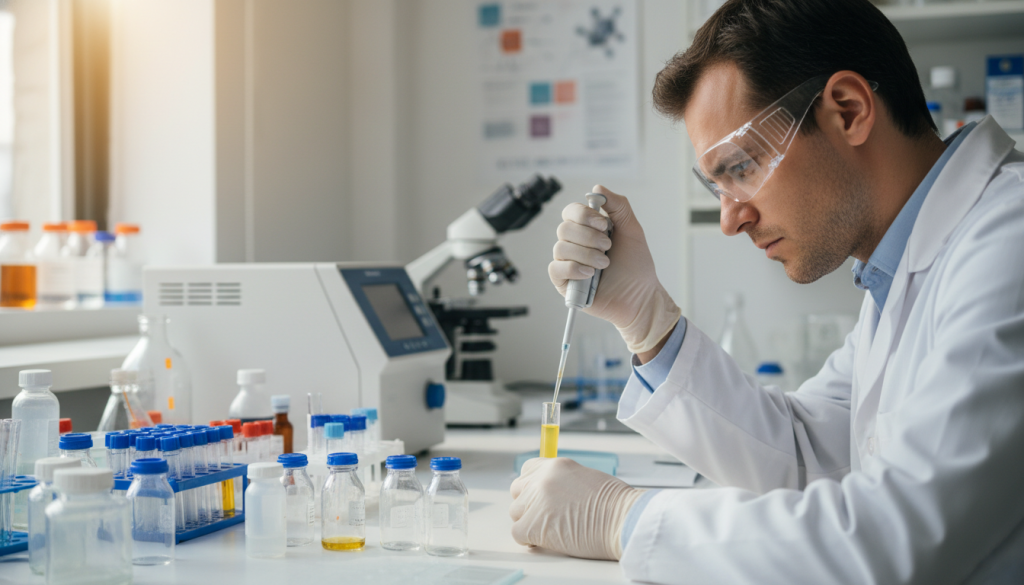
Modern medicine uses precise tools to check your internal health. Urinary biomarkers are key indicators found in waste samples. They give doctors important insights into how your body works every day.
At Acıbadem Healthcare Group, we think knowledge is the key to wellness. We aim to make these tests clear so you can make smart health choices. Our goal is to give you top-notch, easy-to-understand medical education. This way, you can feel sure about your health path.
Key Takeaways
- These tools are a non-invasive way to track your health.
- Biological signs in samples show early signs of health issues.
- We focus on teaching patients to understand their test results.
- Easy-to-get medical info helps doctors and patients work better together.
- Our team uses these insights to make treatment plans that fit you.
Understanding the Science of Urinary Biomarkers
Urinary biomarkers are like messengers from our body. They show us what’s happening inside. These substances are like molecular footprints left by our body’s processes. By studying them, we learn how our organs work every day.
A biomarker is any substance we can measure to track our health. They can show normal processes, signs of disease, or how we react to medicine. The kidneys filter our blood, making urine a snapshot of our metabolic health.
By examining these molecular signs, we find changes before we feel sick. This early detection is key in modern medicine. It lets doctors act before symptoms show up. This way, we can give better, more tailored care.
The table below shows the types of biomarkers we use to check health and disease:
| Biomarker Category | Primary Function | Clinical Application |
|---|---|---|
| Diagnostic | Detects presence of disease | Early infection screening |
| Prognostic | Predicts future outcomes | Assessing disease progression |
| Predictive | Evaluates treatment response | Personalized drug therapy |
| Safety | Monitors organ toxicity | Drug development trials |
Knowing about these markers helps us connect complex biology to practical patient care. We’re dedicated to using this science to better your health. Our research helps us listen better to what our bodies are saying.
The Evolution of Urine Analysis
Urine analysis has changed a lot over the years. For a long time, doctors just looked at urine to find health clues. They checked its color, clarity, and smell to guess what was wrong.
Even though these old methods were basic, they were the start of how we test urine today. As we learned more about the body, we could find specific signs of sickness. This made diagnosing diseases more accurate.
Now, the urine test is very precise. It can spot tiny changes in proteins and other substances. This makes it a key tool in medicine today. It helps find diseases early, before symptoms show up.
This change in testing is a big step forward in keeping people healthy. A urine analysis is no longer just a simple check. It’s a way to see what’s happening inside the body. This helps patients make better choices for their health.
Urinary Biomarkers for Kidney Disease Detection
Our ability to check kidney health has changed a lot. We now use urinary biomarkers to spot problems early. These special proteins and enzymes are like early warning signs.
For a long time, doctors used serum creatinine levels to check kidney function. But creatinine levels can stay normal even when kidneys are badly damaged. Now, we use new, more sensitive markers to find kidney disease early.
Using these markers helps a lot. They give us a better view of what’s happening inside the kidneys. This helps us create better care plans for our patients.
Early detection is key to treating kidney disease well. With urinary biomarkers, we can catch problems before they get worse. This means we can help our patients live better lives.
Diagnostic Markers for Urinary Tract Infections
New diagnostic markers have made finding urinary tract infections quicker. For years, doctors used old methods to find the bacteria causing these infections. These methods took days to give results, making patients wait.
Now, we’re moving to molecular techniques that are more sensitive and fast. These new tests can spot pathogens quickly. They look at genetic material from a sample, giving clear results fast.
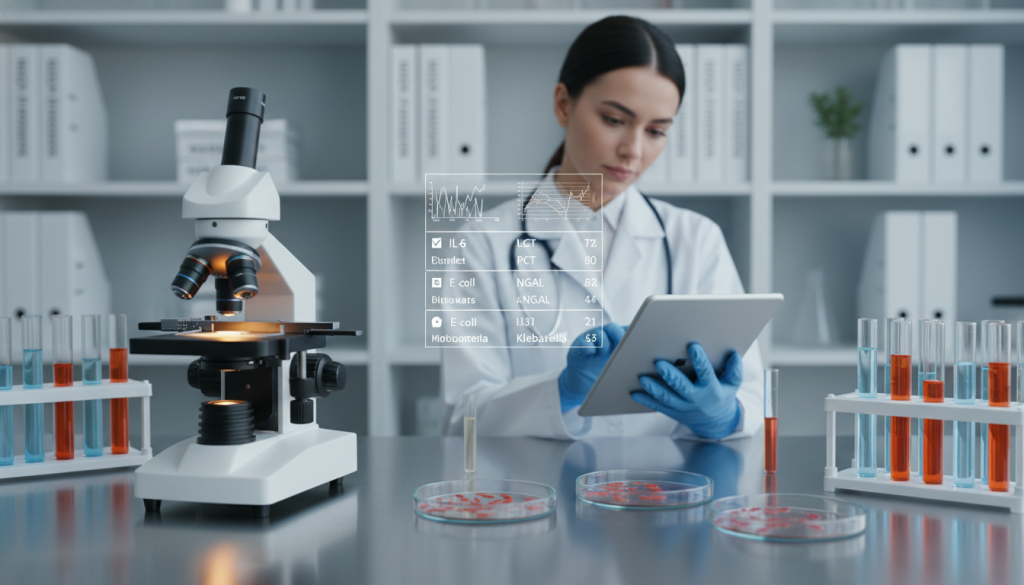
This change in testing is a big step for patient care. Waiting for test results can be stressful. That’s why these new tests are so important. They let doctors start treatment quickly.
These advanced tests help find the exact bacteria causing your infection. This means doctors can choose the right medicine for you. It’s all about making your recovery faster and easier.
Advancements in Urinary Proteomics
The study of proteins in urine is changing how we see health. By studying all proteins in urine, we get a comprehensive view of a patient’s health. This field, urinary proteomics, helps find diseases early, before symptoms show.
Looking at protein maps helps us move toward personalized medicine. We check thousands of proteins at once to understand a person’s health. This detailed data lets doctors tailor treatments for each person.
Going from simple tests to detailed molecular analysis is a big step forward. Urinary proteomics is a non-invasive way to see changes in the body. The table below shows how it’s different from standard urinalysis.
| Feature | Standard Urinalysis | Urinary Proteomics |
|---|---|---|
| Scope of Analysis | Limited (1-5 markers) | Broad (thousands of proteins) |
| Diagnostic Depth | Basic screening | Deep molecular profiling |
| Clinical Goal | Acute infection detection | Early disease prediction |
| Data Complexity | Low | High |
We think adding these advanced methods to regular care will help patients and doctors. By understanding protein language, we can improve health and medical care. This change in diagnostics is key to our focus on modern, patient-centered care.
The Role of Urinary Metabolomics
Urinary metabolomics gives us a peek into the chemical processes in our bodies. It studies small-molecule metabolites, the final products of gene expression. By looking at these substances, we see how our genes and environment interact.
These metabolic profiles are like a snapshot of our body’s state. Unlike static genetic tests, they show how our systems work in real-time. This info is key for doctors to spot the early signs of chronic illnesses.
By spotting patterns in these small molecules, we can catch health changes early. Urinary metabolomics makes patient care more personal. It lets us tailor treatments based on each person’s unique health signature.
| Feature | Traditional Analysis | Urinary Metabolomics |
|---|---|---|
| Primary Focus | Single markers | Metabolic profiles |
| Data Type | Static snapshot | Dynamic physiological state |
| Clinical Goal | Disease confirmation | Early metabolic shift detection |
| Scope | Limited | Comprehensive |
We think using these insights in everyday practice will change how we handle long-term conditions. As we learn more about these pathways, we can catch problems sooner. Empowering patients with this level of detail is at the heart of our mission to better health outcomes.
Urinary Biomarkers in Oncology
Modern medicine is finding clues about tumors in our urine. This means cancer surveillance could soon be less stressful for patients. By looking at specific molecules, we can track disease behavior without painful tissue samples.
These tools are like a non-invasive “liquid biopsy.” Clinicians can now monitor tumor growth through simple tests. This makes long-term cancer management more comfortable for patients.
Urinary proteomics is a promising area of research. It helps identify unique proteins shed by tumors. This lets us detect health changes and see if treatments are working.
Urinary metabolomics gives us a chemical snapshot of the body. It shows the unique environment created by tumors. By tracking these changes, we can make care plans more precise and effective.
We think these technologies will change oncology. Our aim is to offer patient-centered surveillance that’s both accurate and considers quality of life. By using these advancements, we help patients take an active role in their healing.
Clinical Utility of Urinary Biomarkers
Understanding Urinary Biomarkers helps us give better care to our patients. These tools are key in linking lab results to actionable clinical decisions. By using them, we aim for care that’s both precise and tailored to each patient.
Traditional urine analysis has been a mainstay in diagnosis. But, with modern molecular markers, we can spot changes early. This early detection lets us act fast, improving patients’ health over time.
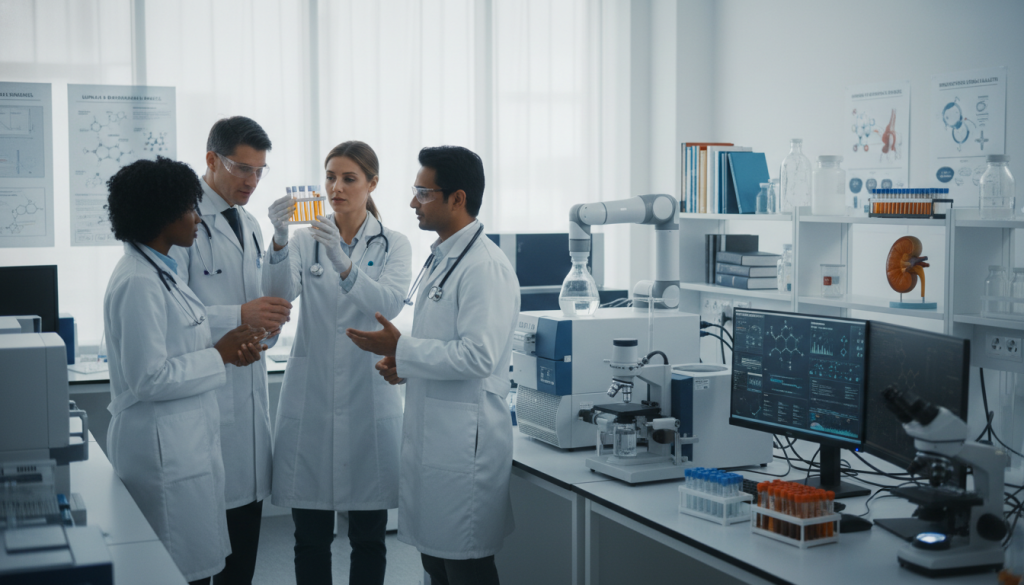
By using Urinary Biomarkers in our diagnosis, we can tailor treatments. This move away from a one-size-fits-all approach means patients get treatments that match their needs. We see this as the future of patient-centered healthcare.
The table below shows how advanced testing boosts our diagnostic skills:
| Diagnostic Feature | Traditional Urine Analysis | Biomarker-Enhanced Testing |
|---|---|---|
| Detection Sensitivity | General screening | High molecular precision |
| Clinical Timing | Reactive (symptom-based) | Proactive (early detection) |
| Treatment Impact | Standardized protocols | Personalized interventions |
| Data Complexity | Basic visual/chemical | Advanced proteomic/metabolic |
The success of urine analysis in clinics depends on understanding the whole patient. We’re dedicated to using these scientific breakthroughs to improve daily care. This way, every patient gets the best from the latest in diagnostic science.
Challenges in Biomarker Discovery and Validation
Turning a discovery into a routine medical tool needs careful testing. The journey of biomarker discovery is complex and requires great attention to detail. Scientists aim to find biological signs that show a patient’s health clearly.
For kidney disease, finding the right marker is critical. It must be very sensitive to spot early signs and very specific to avoid mistakes. Meeting these standards is key for safe and accurate diagnosis.
The path to biomarker discovery includes several validation steps. Researchers must show that a marker works well in different patients. This rigorous testing ensures the tool works as expected in real-world use.
To grasp the challenges, let’s look at the main validation stages for kidney disease and other conditions:
| Validation Stage | Primary Goal | Key Requirement |
|---|---|---|
| Analytical Validation | Technical Accuracy | Reproducible Results |
| Clinical Validation | Diagnostic Utility | High Sensitivity |
| Clinical Utility | Patient Outcomes | Improved Care |
Our aim is to offer reliable diagnostic tools for healthcare. The journey from lab to patient is long, but each validation step brings us closer. We’re dedicated to the transparency and scientific integrity needed for these advancements.
Regulatory Pathways for New Diagnostic Markers
The path from biomarker discovery to patient care is strict. In the U.S., the Food and Drug Administration (FDA) oversees these innovations. They make sure tests are accurate before they’re used in clinics.
Validating diagnostic markers means lots of clinical trials and data checks. Researchers must show their results are accurate and useful for patients. This rigorous scientific scrutiny protects public health.
This journey to being used in clinics is based on safety and openness. By following these rules, the medical field makes sure new biomarker discovery tools are trustworthy. This focus on quality helps doctors make choices that keep you healthy in the long run.
| Regulatory Stage | Primary Goal | Outcome |
|---|---|---|
| Analytical Validation | Test Accuracy | Reliable Data |
| Clinical Validation | Disease Correlation | Diagnostic Value |
| FDA Review | Safety Standards | Clinical Approval |
Integrating Urinary Biomarkers into Routine Care
We are moving into a time where routine check-ups give us deeper insights. By adding Urinary Biomarkers to standard care, we can change how we watch over patient health. This change helps us be more proactive in keeping people well, instead of waiting for symptoms.
Starting to use these tools means updating how we do lab work. When someone gets a routine urine test, doctors can ask for special tests. These tests show more about how organs are working and overall health.
Doctors are key in making this change by teaching patients about these tests. Using Urinary Biomarkers lets us spot small changes in kidney or metabolic health early. This early spotting is key to personalized medicine, making sure treatments work well and on time.
To make this work, we need clear talk between labs and doctors’ offices. As we get better at this, the old urine test becomes a strong tool for finding problems. Here’s a table showing how these new methods are better than old ways.
| Feature | Traditional Screening | Advanced Biomarker Testing |
|---|---|---|
| Primary Focus | Basic infection detection | Systemic health monitoring |
| Detection Speed | Reactive (symptom-based) | Proactive (early warning) |
| Clinical Value | General assessment | Highly personalized insights |
| Data Depth | Limited markers | Comprehensive molecular data |
The main goal is to make these advanced tests a normal part of care. By using these new tools, we help doctors and patients make better choices. This teamwork leads to better health for everyone in the long run.
Future Directions in Urinary System Disorders Research
We are on the brink of a new era in treating urinary system disorders. We’re moving towards personalized medicine, using advanced technology to help patients. This change will bring faster and more accurate diagnoses.
Artificial intelligence is changing how we read complex data. Intelligent algorithms can spot patterns in patient samples that we can’t see. This is great for catching urinary tract infections early, before they get worse.
High-throughput sequencing is another big step forward. It lets us quickly and precisely map a sample’s genetic makeup. By applying this to urinary system disorders, we can find unique biomarkers for different diseases.
We’re hopeful these advancements will revolutionize how we treat patients. As we improve our diagnostic tools, we can offer more precise treatments for urinary tract infections and other long-term conditions. Our aim is to make sure every patient gets the best care based on solid evidence.
| Technology | Primary Application | Expected Benefit |
|---|---|---|
| Artificial Intelligence | Pattern Recognition | Faster Diagnosis |
| High-Throughput Sequencing | Genetic Mapping | Precision Medicine |
| Proteomics | Protein Profiling | Early Detection |
| Metabolomics | Metabolic Tracking | Therapy Monitoring |
Ethical Considerations in Biomarker Testing
When we use new tests for urinary system disorders, we must put patient rights first. As technology advances, our duty to protect patients grows. We believe that progress should never harm a person’s dignity.
We take patient privacy and data security very seriously. We have strict rules to keep personal health info safe. Trust is the foundation of the doctor-patient relationship, and we do our best to keep that trust through secure data handling.
We also focus on informed consent. We make sure patients understand their test results before any action. It’s our job to explain complex medical info in simple terms. This way, patients can make informed healthcare decisions with confidence.
At Acıbadem Healthcare Group, we value ethical handling of patient info. We know that treating urinary system disorders needs both skill and empathy. By combining innovation with care, we aim to create a safe space for everyone.
Conclusion
Modern medicine is changing fast thanks to new urinary biomarkers. These tools let us see inside the body without surgery. This is a big step forward in health care.
Acıbadem Healthcare Group is all in on using these advances to help patients. We think that precise tests lead to better treatments. This way, people can take charge of their health.
Talk to your doctor about these new tests. Knowing about them helps you choose the best path for your health. Your path to better health begins with learning about these tools.
FAQ
Q: What exactly are urinary biomarkers and why are they important?
A: Urinary biomarkers are tiny signs in your urine test that show your health. At Acıbadem Healthcare Group, we use them to see how your body is working. They help us catch health problems early, before you even notice symptoms.
Q: How do these markers help in the early detection of kidney disease?
A: Old tests might not catch kidney problems until it’s too late. But, new diagnostic markers can spot kidney disease early. This lets us take better care of your kidneys and improve your health in the long run.
Q: How has modern urine analysis changed from traditional methods?
A: Urine analysis has changed a lot. Now, we use advanced tech to find tiny signs in your urine. This makes a simple urine test into a powerful tool for doctors to make better decisions.
Q: Can urinary biomarkers improve the treatment of urinary tract infections?
A: Yes, they can. New diagnostic markers help us find infections faster. This means we can start treatment sooner, making it more effective.
Q: What is the role of urinary proteomics in personalized medicine?
A: Urinary proteomics studies all proteins in your urine. It helps us find unique signs of health problems. This way, we can tailor treatments just for you.
Q: How does urinary metabolomics differ from other types of testing?
A: Urinary metabolomics looks at tiny molecules in your urine. It shows what your body is doing right now. This helps doctors at Acıbadem Healthcare Group understand your health better.
Q: Are urinary biomarkers used in cancer detection?
A: Yes, they are very important in cancer care. We use them as a non-invasive way to find and track cancer. This approach is kinder than traditional biopsies.
Q: What is involved in the process of biomarker discovery and validation?
A: Finding a biomarker is a tough process. A marker must be tested many times to make sure it works well. This ensures the tools we use are safe and accurate.
Q: How are new diagnostic markers regulated for patient safety?
A: In the U.S., the FDA checks new diagnostic markers carefully. They make sure every urine test is safe and works well. We only use tests that have been proven to be safe and effective.
Q: How will artificial intelligence impact the future of urinary system disorders?
A: Artificial intelligence and advanced sequencing will change how we treat urinary system disorders. They will help us find new ways to understand and treat health problems. This will help us provide the best care at Acıbadem Healthcare Group.
Q: What ethical considerations are involved in biomarker testing?
A: We take patient privacy and data ethics very seriously. We make sure patients know what their test results mean. At Acıbadem Healthcare Group, we protect your information and involve you in your care.