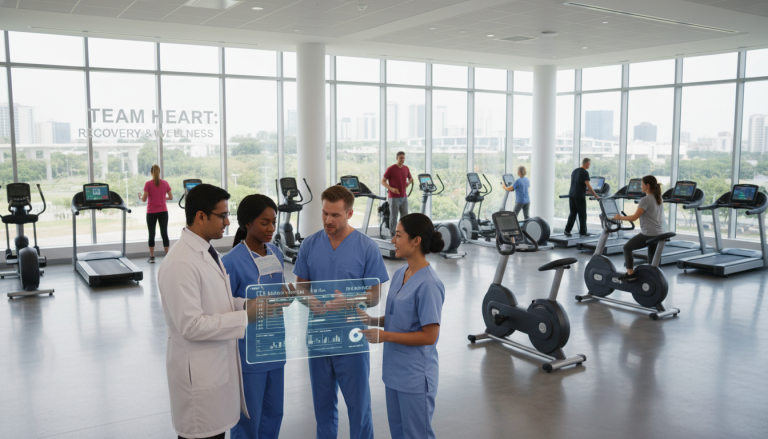






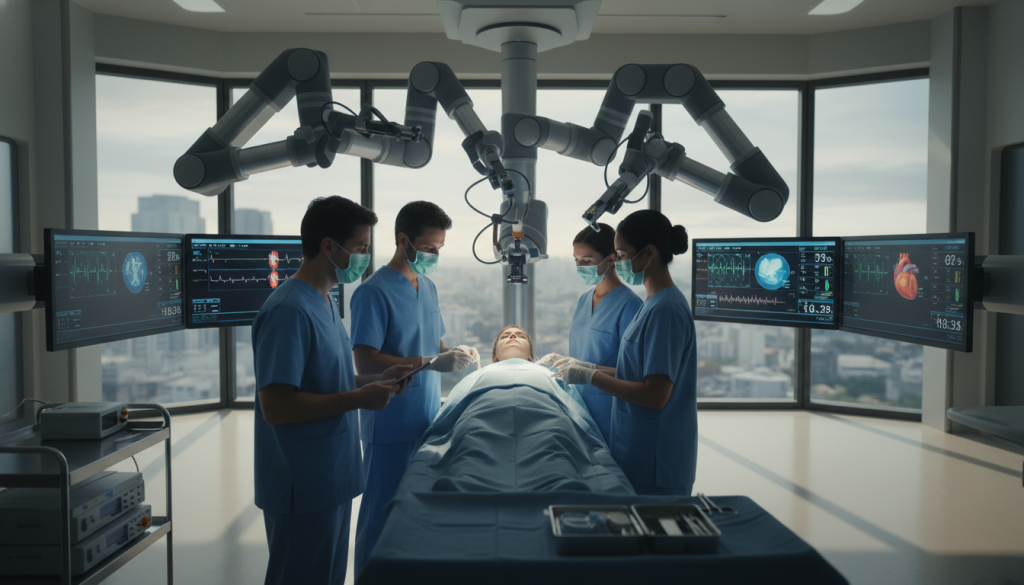
Modern healthcare is changing by using advanced robotic tools in surgeries. We make sure every patient gets state-of-the-art care that fits their needs. This mix of technology and human skill helps patients heal faster and stay healthy longer.
Our team of interventional cardiology experts puts safety first from the start. We think a good surgery plan starts before the patient goes into the OR. Our team plans every step of the surgery carefully.
This careful planning helps our interventional cardiology team reduce risks and make the most of new surgical methods. We’re committed to giving world-class medical solutions that help patients recover quickly and stay healthy over time.
Key Takeaways
- Integration of robotic platforms enhances surgical precision and patient safety.
- Personalized care plans are developed during the initial consultation phase.
- Minimally invasive techniques lead to faster recovery times for heart patients.
- Comprehensive screening processes ensure optimal outcomes for every individual.
- Institutional commitment focuses on long-term wellness and sustainable health solutions.
The Evolution of Minimally Invasive Heart Surgery
Heart surgery has changed a lot, focusing on less harm and keeping high standards. Old days needed big cuts, long healing times, and lots of pain. Now, we aim for faster healing and better life quality.
This move to minimally invasive heart surgery is a big step in medicine. Surgeons use special tools and new imaging to fix big problems through small cuts. This way, they hurt the chest and nearby tissues less, helping patients heal faster.
We lead in this tech change. We always use the newest methods to make sure each surgery is precise. This way, we make our patients’ experiences safer and more comfortable, sticking to our goal of top-notch heart care.
The Role of Interventional Cardiology in Robotic Procedures
Interventional cardiology is key for the precision needed in today’s robotic surgeries. It combines advanced diagnostic insights with robotic systems. This ensures every action is precise and deliberate.
Our teams use high-resolution imaging to guide robotic tools with incredible accuracy. This is vital for working with the heart’s delicate structures. The ability to see anatomy in real-time lets surgeons do complex repairs safely.
Working together, our surgical and diagnostic teams offer the best care. When cardiology experts team up with robotic surgeons, patients recover faster and safer. We’re dedicated to using the latest technology to better patient outcomes.
This partnership sets a high standard in modern medicine. It aligns diagnostic data with robotic actions, focusing on safety and long-term heart health. Our commitment to innovation keeps improving how we treat heart conditions.
Comprehensive Heart Screening and Diagnostic Protocols
Every successful robotic procedure starts with a detailed heart screening. We focus on accurate diagnostics to check the heart’s function before surgery. This helps our teams fully understand each patient’s health.
We use top-notch imaging to map the heart’s complex structure. This early risk detection lets us customize our surgeries. It’s key to our safety and excellence, including in pediatric cardiology.
A detailed heart checkup is our first step in providing top medical care. Our tests give us the data to guide our team. This careful planning improves patient care.
| Diagnostic Tool | Primary Function | Clinical Benefit |
|---|---|---|
| Echocardiography | Structural Imaging | Real-time valve assessment |
| Cardiac MRI | Tissue Characterization | High-resolution mapping |
| CT Angiography | Vascular Visualization | Precise coronary analysis |
| Stress Testing | Functional Evaluation | Detects ischemia risks |
This heart checkup lets us tailor care for each patient. By using these insights, we make every heart screening safer and more effective. Our commitment to technology and safety is at the heart of our mission.
Evaluating Patient Candidacy for Robotic Treatment
Choosing the right patient for robotic heart surgery is key to our excellence. We have a detailed, multi-step process to make sure each heart treatment fits the person’s needs. This careful check helps us see if robotic-assisted tech is right for them.
Our teams look at many important things, like the patient’s heart health and body shape. We use detailed images and tests to see if the surgery can be done through small cuts. Patient safety is always our top concern during this time.
We also think about what kind of heart treatment is needed. Not every problem needs the same fix. Our experts compare the risks and benefits of different surgeries. This careful choice helps avoid problems and helps patients heal faster.
Our main aim is to keep the heart stable for a long time with the least harm. By picking the right patients for robotic surgery, we boost the chance of a good outcome. We’re committed to giving innovative, top-notch care that helps our patients stay healthy and happy.
Pre-Surgical Optimization and Vascular Health Management
Before surgery, our medical teams focus on making the body ready. This is key for robotic-assisted procedures. We work on vascular health to ensure a stable environment for better surgery results.
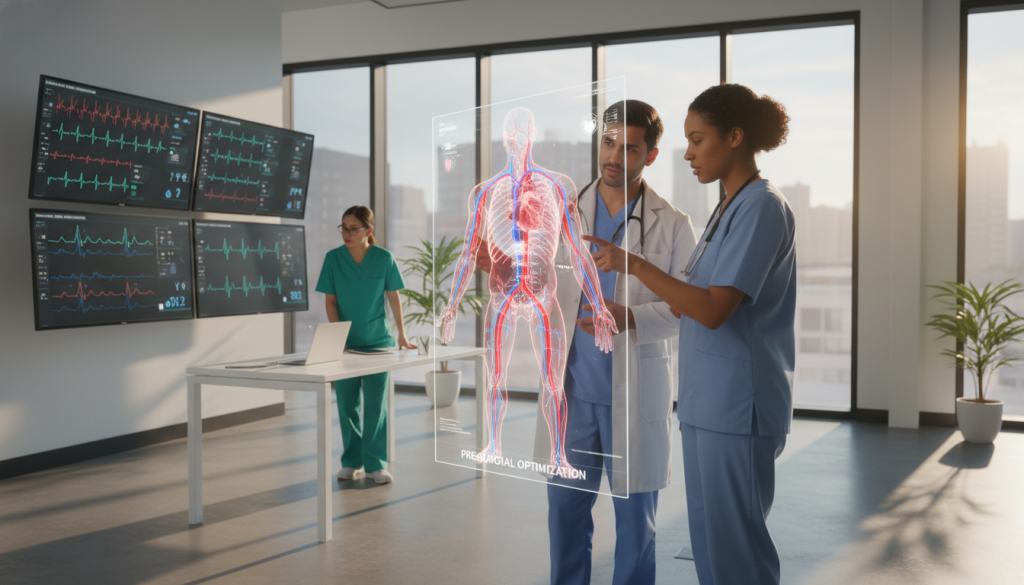
We use strict protocols to check and improve blood flow before surgery. These steps help reduce risks and make the patient safer. Learn more about our heart bypass surgery advanced diagnostic at Acibadem to see our high standards.
Keeping vascular health in check is a big deal for us. Our experts help manage blood pressure, inflammation, and other health markers. This helps the heart system be strong for surgery.
By improving these health areas, we lower the chance of problems after surgery. Our focus on pre-surgical optimization leads to a smoother recovery. We aim to provide top-notch care, keeping your vascular health our main focus.
The Importance of Cholesterol Management Before Surgery
Managing cholesterol levels is key to improving blood vessel health before surgery. Metabolic preparation is a core part of our safety plan. It helps make the heart surgery area safer for robotic procedures.
We work closely with patients to hit specific cholesterol targets. This effort helps cut down on artery blockages. Reducing systemic inflammation is also a big part of our pre-surgery care.
Every patient gets a custom cholesterol plan based on their health. We keep a close eye on how they’re doing. This focus on metabolic optimization makes surgery safer and more effective.
| Lipid Marker | Target Range | Clinical Significance |
|---|---|---|
| LDL Cholesterol | Below 70 mg/dL | Reduces plaque progression |
| HDL Cholesterol | Above 50 mg/dL | Promotes vascular health |
| Triglycerides | Below 150 mg/dL | Lowers metabolic risk |
We stick to strict standards to get the blood vessels ready for robotic surgery. Our goal is long-term patient wellness and good surgery results. We keep a close watch to ensure top-notch heart care.
Advanced Imaging Techniques for Surgical Planning
Precision in robotic heart surgery starts before the first cut. Our medical teams use sophisticated imaging modalities to plan each patient’s surgery. These advanced tools help tailor each procedure to the patient’s unique anatomy.
Technologies like 3D echocardiography and high-resolution cardiac CT scans are key. They let our surgeons see the heart in great detail. This clarity is essential for planning the complex moves needed in robotic-assisted surgeries.
Using these digital tools, we make surgeries safer and more efficient. Surgeons can practice movements and prepare for challenges before surgery. This approach reduces risks and leads to better results for our patients.
We’re always looking to improve with new medical technology. We keep updating our imaging methods to get the most accurate data. Our focus on technological innovation means our teams are ready to provide top-notch cardiac care.
Multidisciplinary Team Coordination and Communication
Every successful robotic heart procedure starts with unified communication and teamwork. Our healthcare model is built on the work of surgeons, anesthesiologists, and nurses working together. They act as one team, making sure every part of the patient’s care is done with precision and care.
We have strict communication protocols to keep everyone on the same page. This means no confusion during the surgery. Our teamwork is key to our goal of excellence and keeping patients safe.
Having different medical experts in the room helps us plan better. Each person brings their own view, helping us solve problems quickly. This teamwork is what keeps our care at the top level in complex heart cases.
We’re not just about the surgery. We also value open talk and respect among staff. This creates a place where every patient gets the best care from a well-coordinated team.
Patient Education and Setting Realistic Expectations
We focus on clear communication in our robotic heart surgery approach. We give out detailed educational materials to make sure everyone knows what to expect. Knowledge is the most effective tool we offer to ease worries and build trust with our patients and their families.
Our team explains how robotic technology offers precision, smaller cuts, and less chest trauma. We share the technical details of the surgery to show its benefits over traditional methods. Clear communication helps patients see the value of our advanced tools.
It’s also key to set realistic recovery expectations. Robotic surgery often means a quicker return to normal life, but everyone heals differently. We guide patients through their recovery with personalized plans from our experts.
When patients know what to expect in their recovery, they feel more in charge of their health. This mindset creates a collaborative environment where doctors and patients work together for better heart health. We’re here to support you every step of the way.
| Recovery Phase | Typical Expectation | Patient Role |
|---|---|---|
| Immediate Post-Op | Hospital monitoring for 2-4 days | Follow nursing instructions |
| Early Recovery | Gradual increase in light activity | Adhere to movement guidelines |
| Full Return | Resuming normal routines in 4-6 weeks | Attend all follow-up appointments |
Anesthesia and Pain Management Strategies
We use the latest medicines to make surgery smooth and pain-free for our patients. Our anesthesia protocols are carefully made to reduce pain and help patients recover quickly. We aim for precision to create a reassuring environment for everyone’s physical and emotional health.
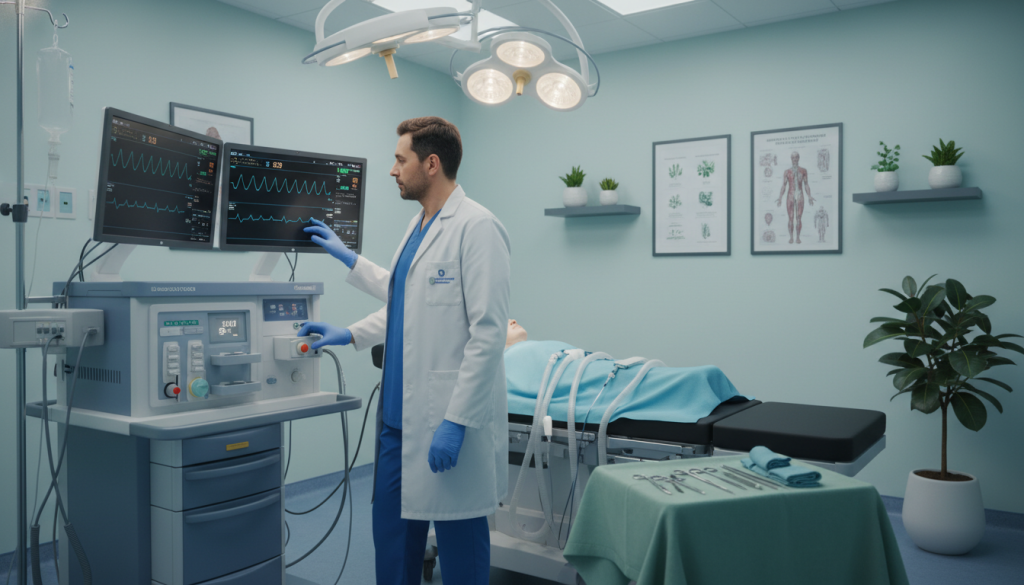
The anesthesiology team uses modern, quick-acting medicines. These help patients wake up faster from sedation. This method lowers the chance of side effects like feeling groggy or sick after surgery.
Patients get to recover faster, which is key for moving around and healing well. We put patient comfort at the heart of what we do. Every step of the anesthesia process is watched closely to keep everyone safe and follow rules.
This focus on doing things right makes sure the surgery is a positive and well-managed experience for everyone involved.
The Robotic Surgical Suite and Technology Overview
Our robotic surgical suites are at the top of modern medical engineering. They are designed with the patient in mind. These special rooms have the latest medical technology.
They offer a clean, controlled space for surgeries. This setup ensures every procedure is done with great precision.
The robots used in our facility give superior visualization compared to old methods. Surgeons get clear, 3D views of the body’s details. This helps them work more accurately than before.
The dexterity of robotic instruments is a big plus for complex surgeries. These tools move like a human hand but better. They allow our teams to do detailed work through small cuts.
We always look to improve and stay ahead in technology. We keep our systems up-to-date for our patients and the healthcare world. This focus on excellence helps us provide top-notch care responsibly.
| Feature | Traditional Surgery | Robotic-Assisted Surgery |
|---|---|---|
| Visualization | Direct view/Standard optics | 3D High-Definition |
| Instrument Range | Limited/Rigid | Multi-axis/High dexterity |
| Incision Size | Large/Open | Small/Minimally invasive |
| Precision | Manual control | Computer-assisted/Stable |
Post-Operative Monitoring and Early Mobilization
Our patients get constant care from our skilled nursing team, no matter the surgery. The first hours after surgery are key. Our team works hard to keep the heart stable, helping the healing process.
We use top-notch tech to watch vital signs closely. This rigorous attention to detail lets us catch small changes fast. It keeps our patients safe.
Moving early is a big part of our recovery plan. It helps avoid problems like blood clots and breathing issues. This way, patients get back to their daily lives faster.
Our team makes a special plan for each patient’s movement. The goal is the same for all, whether it’s a robotic or angioplasty recovery. We think moving early is key to a healthy heart.
| Recovery Phase | Primary Focus | Expected Outcome |
|---|---|---|
| Immediate Post-Op | Hemodynamic Stability | Stabilized Vital Signs |
| Early Mobilization | Physical Movement | Improved Circulation |
| Intermediate Care | Functional Independence | Return to Daily Tasks |
Transitioning from Hospital Care to Home Recovery
Going from the hospital to your home is a big step in your heart recovery. We make sure you have a structured discharge process. This way, you feel ready and supported as you start your daily life again. Our team helps you move from the hospital’s watchful eye to caring for yourself at home.
When you leave the hospital, you’ll get a detailed plan for your medicines. It’s very important to take your medicines exactly as told. This keeps your heart healthy and avoids problems. We give you clear notes on when to take your medicines, what side effects to watch for, and why you’re taking each one.
For the first few weeks at home, you’ll need to follow some rules. You should move around a bit but avoid hard work or lifting. Our team will give you a personalized activity guide. It helps you get more active while your body heals.
It’s key to know when to call for help. If you have ongoing chest pain, trouble breathing, or infection signs, call us or go to the emergency room. We’re fully committed to your health and offer 24/7 support. You’re never alone in your recovery.
Long-Term Vascular Surgery Follow-Up and Monitoring
Keeping your surgical repair strong is key. We see healing as a journey that goes beyond the first recovery. Regular check-ups help us catch any changes in your heart health early.
Our team sets up follow-up visits to check on your surgery site. These meetings help us see how well the repair is holding up. Regular checks help keep your results good for years.
We’re all about creating long-lasting healthcare solutions for you. This partnership shows our commitment to excellence and your safety. You can trust that our experts are watching your progress closely.
This long-term plan gives you peace of mind. We encourage you to stay in touch with our team. Your heart health is our main goal, and we’re proud to be with you every step of the way.
Comparing Robotic Outcomes to Traditional Procedures
Comparing clinical outcomes shows the big win of robotic-assisted surgery over old methods. Our place uses careful data analysis to give patients the best treatment. With new tech, we see better recovery times for complex heart surgeries.
We look at important stats like blood loss, hospital stay, and getting back to normal life. Minimally invasive ways cut down on the harm of old sternotomy methods. This leads to easier healing and quicker return to daily life.
The table below shows the main differences we see in our work. It’s why we push for robotic bypass surgery and minimally invasive as top-notch care.
| Metric | Traditional Surgery | Robotic-Assisted |
|---|---|---|
| Hospital Stay | 5-7 Days | 2-3 Days |
| Blood Loss | Higher | Significantly Lower |
| Recovery Time | 6-8 Weeks | 2-3 Weeks |
We trust these results a lot. We keep working to make our surgery better with the latest in medicine. By using advanced robotic platforms, we help patients get a healthier heart faster.
Empowering Patients for a Healthier Cardiac Future
Getting your heart healthy needs teamwork between new medical tech and your effort. Our goal is to offer top-notch care by mixing robotic accuracy with expert advice. We think the best results come when new ideas meet your hard work.
Patients are key in their own healing. Sticking to personal health plans and regular check-ups is critical. These actions help keep the good effects of your treatment going strong, improving your life quality.
We’re committed to creating lasting healthcare for the future. By working together, we aim to make our patients and communities healthier. Your path to a stronger heart starts with every good choice you make today!
FAQ
Q: How does the medical team ensure patient safety during the preparation for robotic heart surgery?
A: Our team starts with a care plan for each patient. We use advanced robotic tools and focus on long-term health. This ensures treatments fit each patient’s needs for a safe recovery.
Q: What are the primary advantages of transitioning to minimally invasive heart surgery?
A: Minimally invasive heart surgery is less damaging than traditional methods. It reduces scarring and speeds up recovery. Our surgeons aim for better results and less pain for our patients.
Q: What role does a heart screening play in the pre-surgical process?
A: Heart screenings are key in our diagnostic process. They use high-resolution imaging to map the heart. This helps us plan surgeries carefully, ensuring the best care for our patients.
Q: Who is considered an ideal candidate for robotic treatment?
A: We choose patients based on their heart health and specific needs. Our team picks those who will get the most from robotic surgery. This helps ensure the best outcomes for our patients.
Q: Why is vascular health management prioritized before a surgical procedure?
A: Stabilizing the circulatory system before surgery is critical. We follow strict protocols to reduce risks. This prepares the body for the surgery, making it more predictable.
Q: How does cholesterol management impact the success of cardiac interventions?
A: Managing cholesterol is essential for vascular health. Our teams help patients reach the right lipid levels. This prepares the body for surgery and supports long-term recovery.
Q: What technologies are used to plan complex robotic cardiac procedures?
A: We use advanced imaging like 3D echocardiography and CT scans. These tools help our surgeons plan with precision. They ensure safety and efficiency in robotic treatments.
Q: How does the multidisciplinary team coordinate during a patient’s care journey?
A: Our team works together closely. Surgeons, anesthesiologists, and nurses follow strict protocols. This ensures every patient gets the care they need, reflecting our commitment to their well-being.
Q: What can patients expect during their angioplasty recovery or post-operative phase?
A: Patients receive constant care during recovery. Our nurses focus on preventing complications. This helps patients smoothly transition from hospital care to living independently at home.
Q: How does the institution maintain a sustainable and technologically advanced infrastructure?
A: We invest in modern robotic suites and green infrastructure. This commitment ensures top-notch care for future generations. It also protects our planet’s resources.
Q: What is the process for transitioning from hospital care to home recovery?
A: We educate patients on medication, activity, and monitoring. This prepares them for a smooth transition. We support them with the knowledge and resources they need.
Q: Why is long-term follow-up necessary after vascular surgery?
A: Long-term checks are vital for the success of the surgery. Regular visits help us monitor the heart and adjust care plans. This shows our ongoing dedication to our patients’ health.